Every format war is fought with exclusives, and the Neo Geo CD’s tragedy is that it barely got to fight. SNK’s disc machine spent most of its life selling cheaper versions of cartridge games — an honourable strategy that gave it no unique reason to exist in the eyes of anyone who already owned the AES. But across its catalogue of roughly 160 releases hide a handful of games that were made only for the disc: two major productions, one full-scale RPG, a scattering of smaller titles, and one famous ghost. Together they form the most interesting shelf in the library, because they are the only Neo Geo CD software that answers the question every other disc dodges: what was this format for?
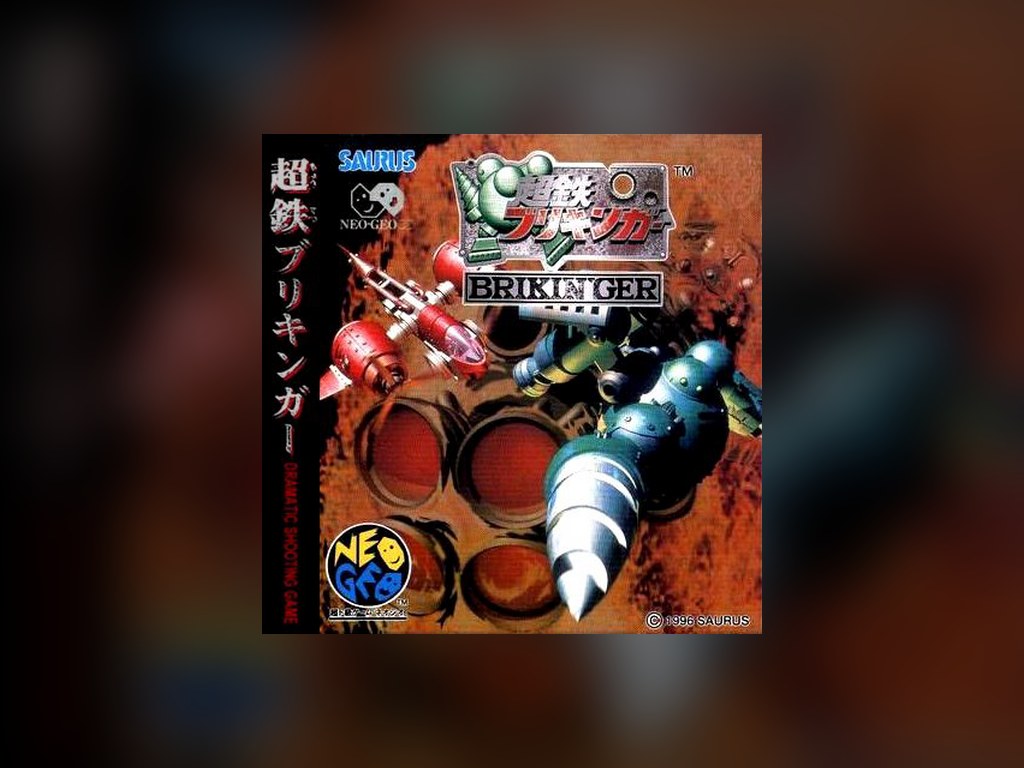
The headline trio are reviewed at full length elsewhere in this collection, and their capsule cases make the argument between them. Ironclad (1996) is the proof of concept — a horizontal shooter by Saurus designed around the drive, with branching routes, seven endings and a soundtrack composed for CD, exclusive for thirteen years until a Wii Virtual Console release carried it out of the format in 2009. Crossed Swords II (1995) is the sequel the arcade never received, ADK extending its first-person sword opera only here. And Shinsetsu Samurai Spirits: Bushido Retsuden — Samurai Shodown RPG (1997) — is the economic argument incarnate: a 40-hour console RPG, a genre the cartridge system could not commercially support at all, and for Western players a sealed book until its complete fan translation arrived in the 2020s.

The second shelf: quiz, mahjong and the Neo Geo CD Special
Beneath the headline trio sits a stranger second division. Quiz King of Fighters turns SNK’s flagship cast into a Japanese quiz-show format, unthinkable as a cartridge at AES prices and viable only as a budget disc. The mahjong titles — Janshin Densetsu and its Jongmaster stablemates — served a domestic Japanese audience the arcade never could. ADK World gathered mini-games and fan-service experiments for the home crowd. The Neo Geo CD Special disc itself — a sampler of demos, music and promotional material given away with the system in Japan — is now a collectable artefact of the format’s launch optimism. None of these are masterpieces; all of them are evidence of a home-console software ecology trying to be born inside an arcade library, priced for living rooms and aimed at living-room appetites.
Ports muddy the exclusivity waters honestly, and the record should be kept straight: several ‘CD games’ began as the only home versions of arcade titles in their window (the CD was the first home for a number of mid-nineties releases before later compilations caught up), while others arrived on Saturn or PlayStation in parallel. The true, lifelong exclusives are the core four — Ironclad, Crossed Swords II, the RPG, and the ghost below — plus the quiz and mahjong shelf. It is not a long list. It is, pound for pound, the most historically loaded short list in 1990s gaming.

Zintrick: the game that escaped
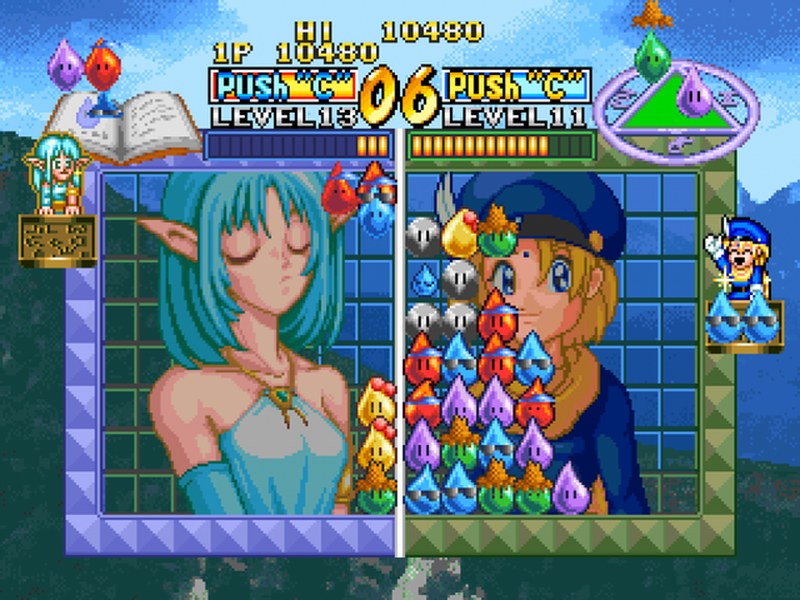
Oshidashi Zintrick — Zintrick — is the format’s great ghost story. ADK’s competitive puzzler, a falling-block battler with a push-the-column twist and the studio’s characteristic charm, was completed for the Neo Geo CD in 1996 and then cancelled at the threshold: production discs had already been manufactured when the decision landed. What happened next is the stuff of collector legend — finished discs escaped into the world rather than being destroyed, surfacing in Japanese shops and eventually in the hands of the scene, so that a game that was never released became, by the slow alchemy of scarcity, one of the most valuable and most played unreleased titles of its generation. The Libretro thumbnail sets this collection’s screenshots are drawn from carry Zintrick captures as a matter of course; the ghost has a high-score table now.
Zintrick’s afterlife completed itself in the modern era, when the game finally received proper commercial re-release attention alongside ADK’s other work — the cancellation formally undone a quarter-century late. Its story is the exclusives argument in miniature: the CD’s economics let a mid-size Japanese studio finish a game the cartridge market would never have funded, and even cancellation could not unmake it. The disc, cheap and capacious, was a patron as much as a format.
Why the exclusives decide the format’s reputation
Strip the exclusives away and the Neo Geo CD is a discount mechanism — a fine one, but a mechanism. With them, it is a platform: the only place its era offered an SNK RPG, a disc-native shooter of Ironclad’s calibre, and a sequel to Crossed Swords. The tragedy of timing writes itself — had two or three more productions of Ironclad’s ambition arrived in 1995 rather than one in 1996, the format’s obituary would need different adjectives. As it stands, the exclusives shelf is where collectors start and where this collection’s reviews keep returning. Only on CD turned out to be a short list. It is also, not coincidentally, the essential one.
What counts as exclusive — an honest taxonomy
Precision matters here, because ‘exclusive’ is the most abused word in collector marketing. Tier one, the true exclusives — made for the CD and unavailable anywhere in their era — are the core four of this feature: Ironclad, Crossed Swords II, Samurai Shodown RPG and the escaped Zintrick, joined by the quiz, mahjong and sampler shelf. Tier two is the timed and regional exclusives: games the CD hosted first or alone in certain territories while arcades or rival formats caught up — a category that shifts with every re-release and should always be dated when claimed. Tier three, the honest footnote, is the CD-only content inside conversions: arranged soundtracks, bonus modes and presentation extras that make specific discs meaningfully different from their cartridges without making them different games. Most of this library’s ‘CD versions’ carry tier-three exclusivity in their audio alone.
The taxonomy matters because it prices the shelf correctly. Tier-one discs carry the format’s history and its premium; tier-three value hides in plain sight, in the arranged scores of games whose cartridges cost ten times more. And the direction of travel is one-way: every modern compilation that rescues an Ironclad or a Zintrick makes the original disc more historically interesting, not less — the artefact of the years when the only door to these games was a single-speed drive and a juggling monkey standing in front of it.
One more name belongs in this feature’s margins, because it proves the exclusives were a strategy and not an accident: SNK’s own promotional machinery treated the CD’s originals as selling points in Japan, bundling and advertising the format around software the arcades could not offer, and the RPG in particular was positioned as the machine’s coming-of-age — a console game, for a console, at console length and console price. The strategy was right. The calendar was wrong: by the time the RPG arrived in 1997 the market’s attention had moved to newer machines, and the exclusives shelf closed at a handful of titles. What remains is quality where quantity was planned — and a handful, at this quality, is a legacy most formats would sign for.