Everyone knows the Neo Geo Pocket Color’s headline act — the fighters, Sonic, the Metal Slugs. This list is not about them. It is about the second shelf: the games that sold in smaller numbers, reviewed in smaller paragraphs, and in several cases never left Japan at all, where SNK’s little machine indulged its strangest ideas. A virtual pet who hates you. A submarine RPG released in two rival editions. A snowboarding game on a system with no 3D. A slot machine, taken seriously. These are the hidden gems — none of them drawn from the system’s famous sixteen, all of them worth your curiosity.
A note on hunting: several of these are Japanese releases with little or no English text, and we say so where it matters. All of them are cheaper than the system’s grails, and all of them show a side of the NGPC that the fighting games never could.
How were these chosen? Three rules. First, no game reviewed elsewhere in this system’s essential sixteen — the famous shelf is famous already. Second, each entry had to contain a big idea: a design, a conceit or a piece of hardware cheek that punched above the cartridge’s size. Third, it had to be playable and findable today without grail money. What survived those rules is, we think, the most characterful ten cartridges in the library — the ones that make the NGPC feel less like a fighting machine with guests and more like a whole little world.
Ganbare Neo Poke-Kun
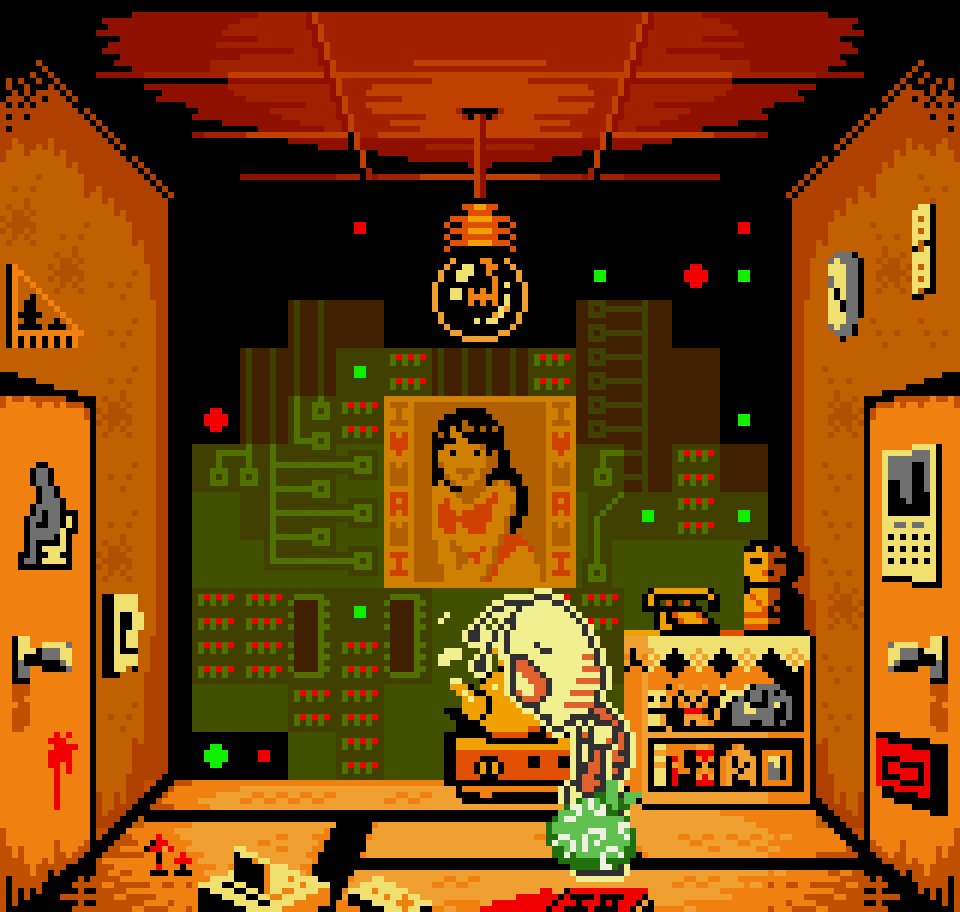
The strangest cartridge SNK ever made. Ganbare Neo Poke-Kun (2000, Japan only) is a life-simulation about Poke-kun, a small, put-upon creature who lives inside your handheld — literally: the fiction is that he inhabits the machine, and your job is to manage his tiny apartment life, his jobs and his dignity while the game torments him with burglars, disasters and indignities. You don’t so much play Poke-kun as share a wall with him. Between life-sim duties sit thirty mini-games parodying the SNK catalogue and gaming itself. It never left Japan, its humour is largely visual, and it is the most charmingly weird thing on the system — a Tamagotchi raised by comedy writers who held a grudge.
Playability without Japanese: better than feared. The mini-games announce themselves visually, the life-sim runs on icons and routine, and community guides cover the rest. Of all the Japan-only cartridges on this list, this is the one whose language barrier matters least — misery, in any tongue, is funny.
Crush Roller
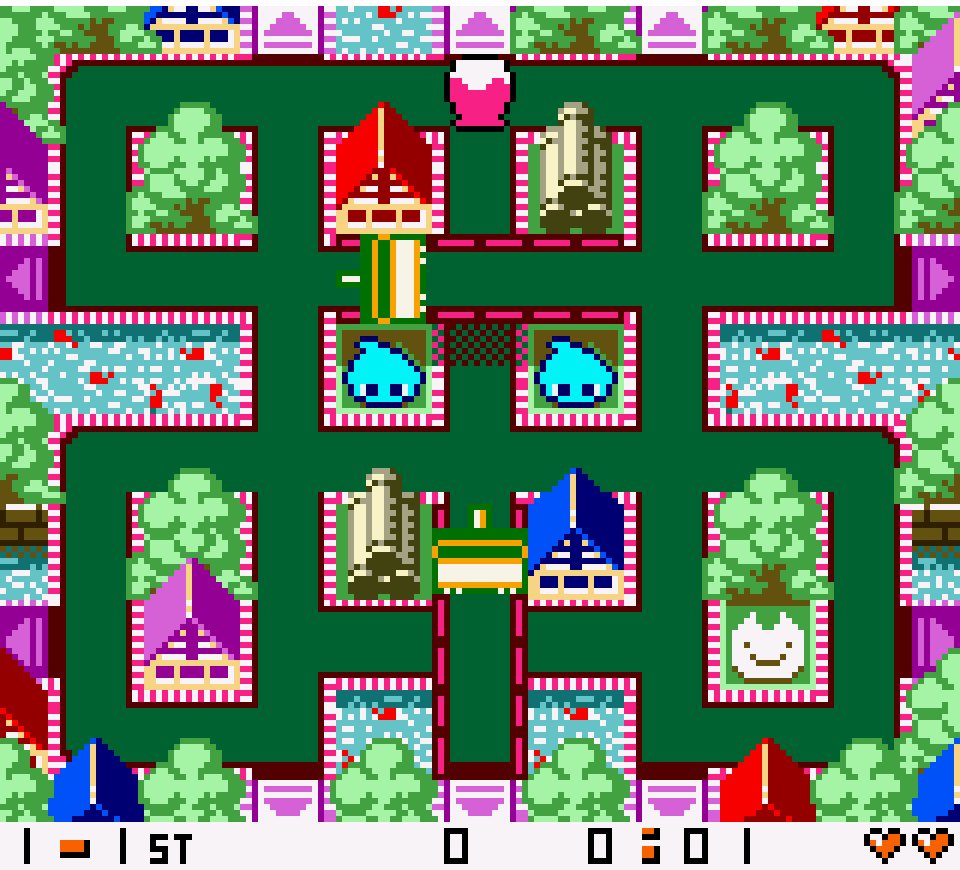
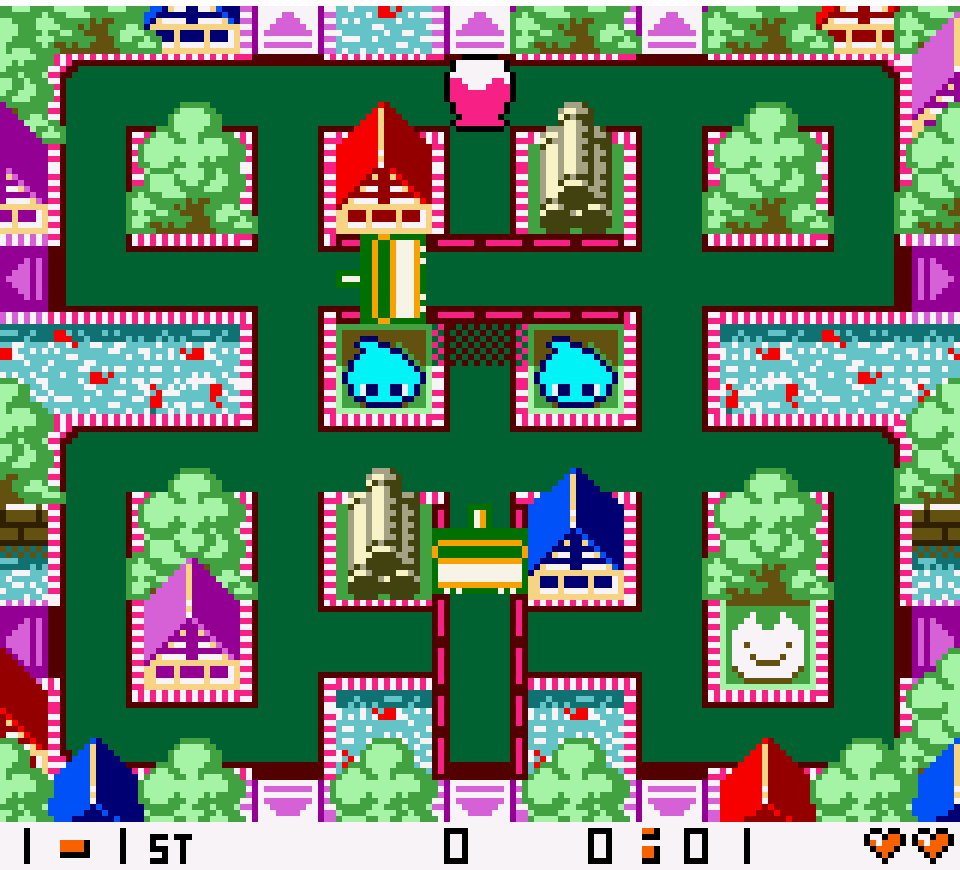
Known in arcades as Make Trax (and in its first life, Crush Roller), this ADK conversion of the 1981 maze-chase has you painting every corridor of a street maze while two killer fish hunt you and a parade of animals wanders through smudging your work. The twist that keeps it evergreen: the rollers at the maze’s edges can be used to crush your pursuers, and bonus creatures — a cat, a bird, a tyre track of chaos — appear to undo your painting. It is a pre-Pac-Man design that plays nothing like Pac-Man, generous with extra lives and utterly compulsive in five-minute bursts. The NGPC version is faithful, bright and criminally overlooked.
Value note: Crush Roller sits in the library’s bargain tier in every region, a legacy of its low profile. It is, pound for pound, among the best entertainment-per-cost ratios on the system — an arcade-perfect maze game that most NGPC asking prices treat as a makeweight.
Dive Alert
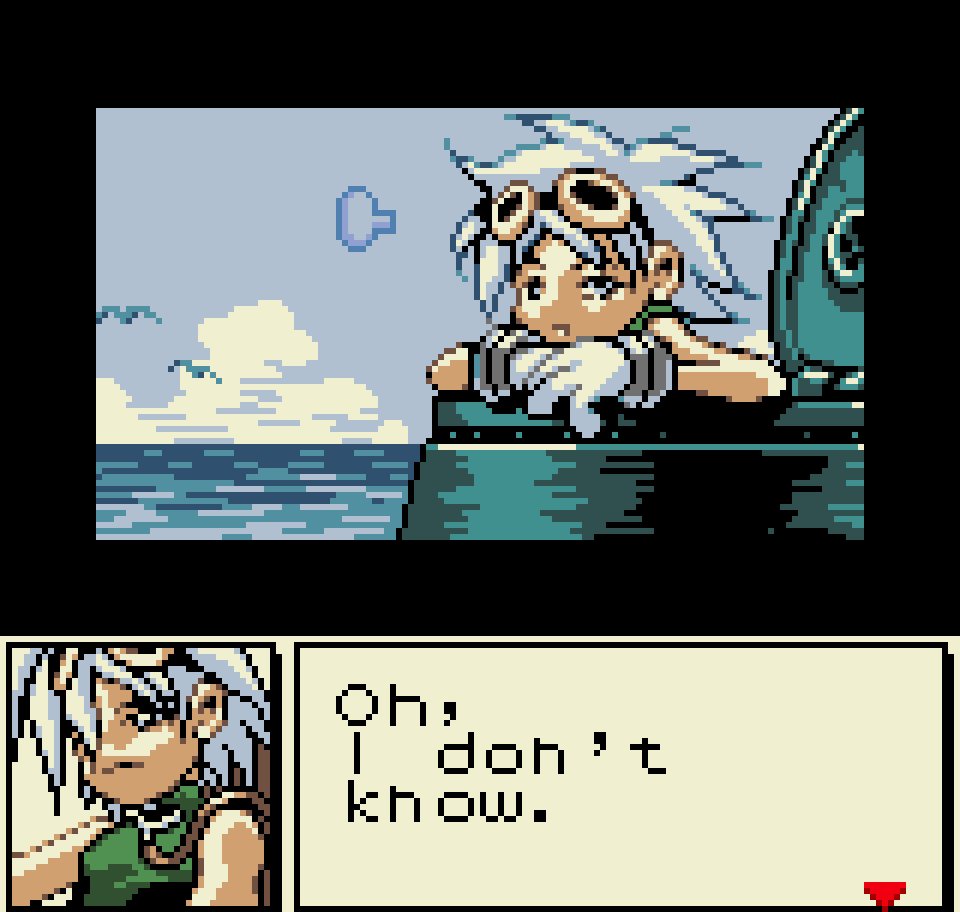
Sacnoth — the studio behind Faselei! — made this submarine RPG in 1999, and pulled a trick Pokémon would envy: it shipped in two editions, Matt’s Version and Becky’s Version in the West (Burn and Rebecca editions in Japan), with different story emphases and exclusive content, years of link-cable trading implied. You command a submarine through a flooded post-apocalyptic world, fighting real-time torpedo battles, upgrading your boat and following a surprisingly sombre story. It is slow, text-heavy and completely unlike anything else on the system: an aquatic strategy RPG with an elegiac streak, and one of the library’s genuine deep cuts.
The two-edition structure rewards completists with a genuine choice: the versions differ in scenario emphasis and exclusive equipment, and link play between editions was the intended full experience. Start with either; the ocean is big enough for both, and prices remain kind.
Pocket Reversi
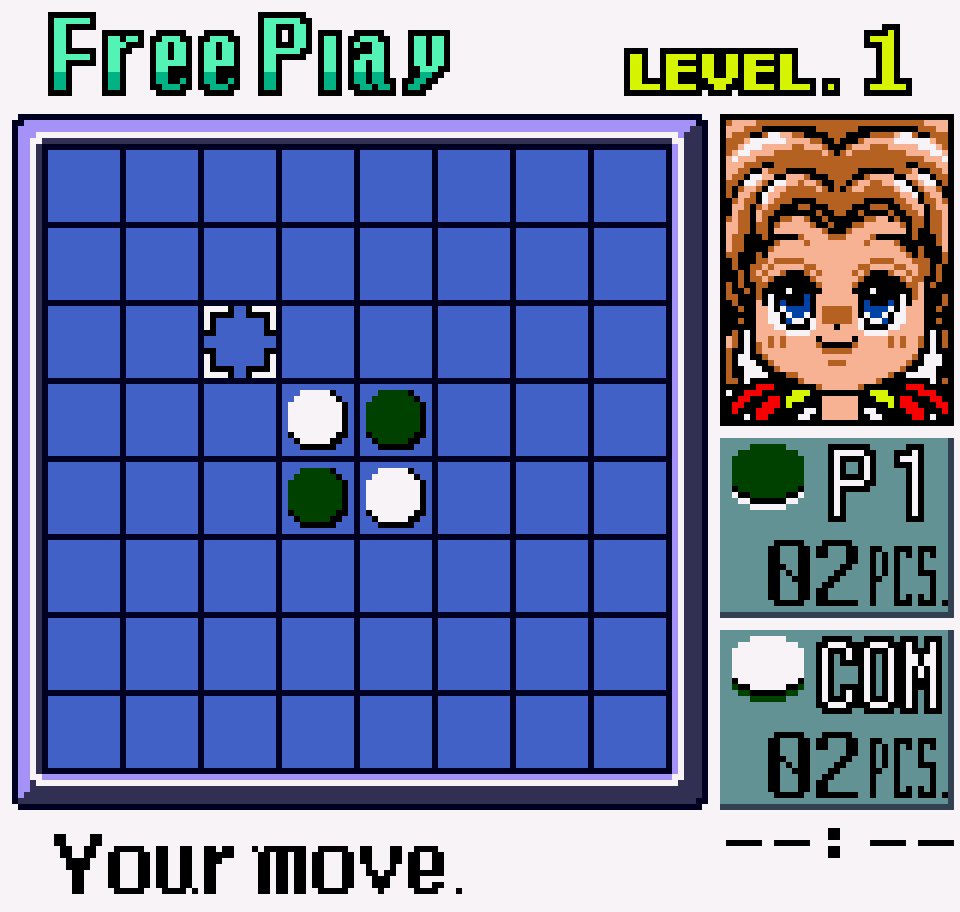
Reversi — Othello to board-game shelves — sounds like the least exciting cartridge imaginable, until you meet this version’s opposition. Success’s Pocket Reversi (2000) wraps the classic disc-flipping duel in a characterful package of CPU personalities who play with distinct styles and visible temperaments, backed by a clean board presentation that makes every flip readable at a glance. Reversi is a game of corners and patience, and this edition teaches it beautifully. Its UK release makes it the rare NGPC board game with an English edition — and one of the scarcer European cartridges, which has turned a quiet puzzler into a quiet collector’s item.
Do not let the board-game modesty fool you about the AI: the top personalities play a sharp, corner-hungry game that will take discs off casual players for weeks. Reversi’s rule — a minute to learn — hides the usual lifetime, and this cartridge administers the whole education.
Dynamite Slugger
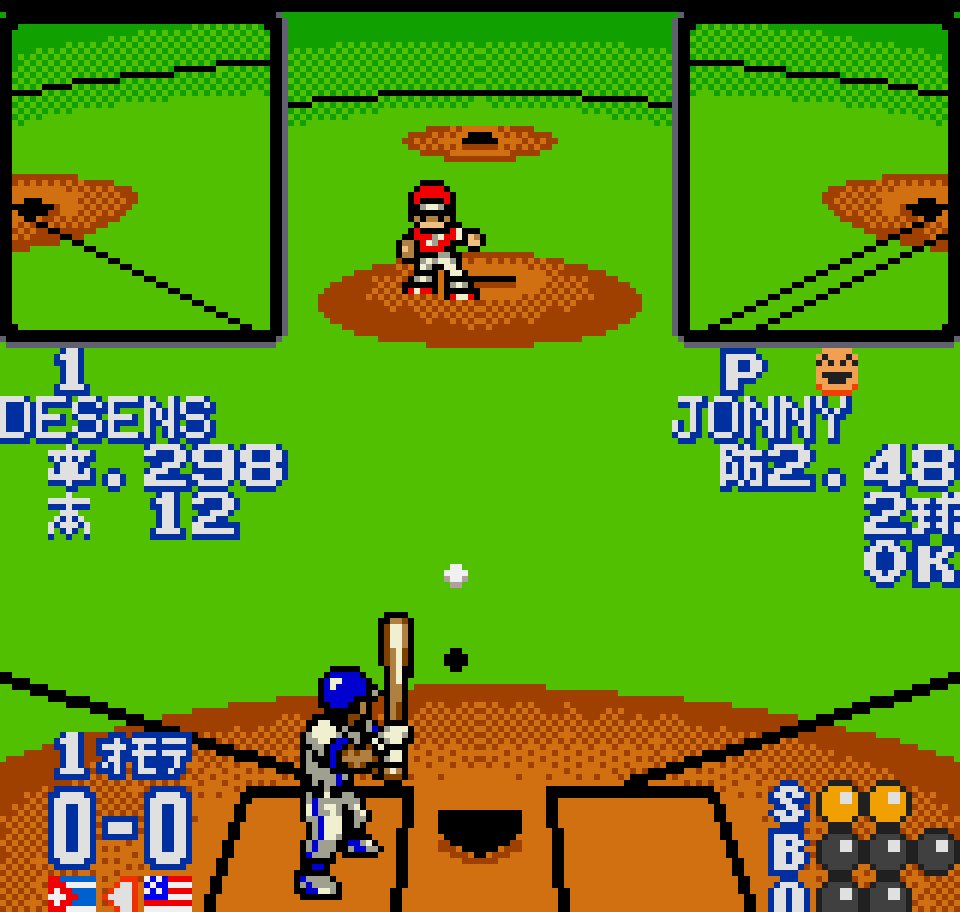
ADK’s arcade baseball, pocketed (2000). Where the system’s Baseball Stars Color plays the sport with RPG-flavoured season ambitions, Dynamite Slugger is the arcade purebred: fast innings, big swings, timing-based pitching duels and presentation with genuine stadium bounce. The batting model is the star — a simple, readable timing system that makes every crack of the bat feel earned and every strikeout feel like your own fault, which is baseball in a sentence. It reached Japan and Europe in English-friendly form and remains the pick-up-and-play sports cartridge the library’s golf game gets all the press for. Nine innings, no filler.
Session shape is its secret weapon: a full game runs at arcade pace, which makes Dynamite Slugger the sports cartridge for people who found golf’s eighteen holes a commitment. It is also, quietly, one of the prettiest sports games on the system — big sprites, readable stadiums, real bounce.
Shanghai Mini
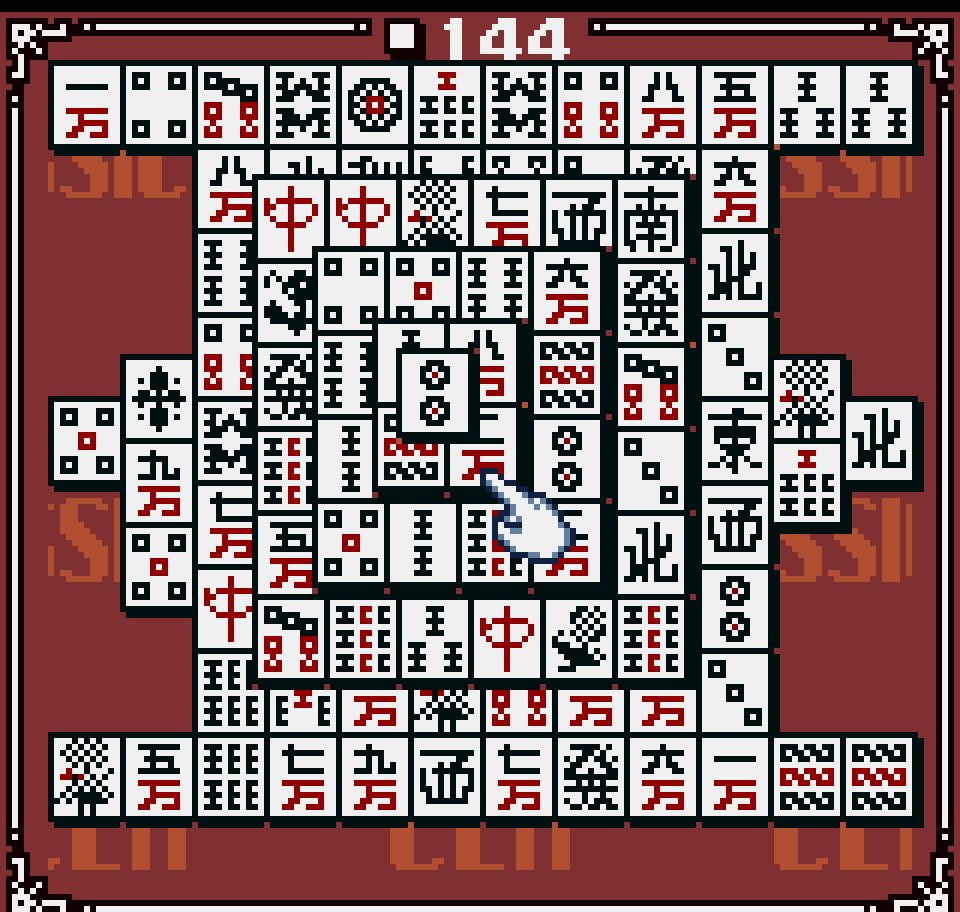
The mahjong solitaire, done right. Activision’s Shanghai — the tile-matching patience game that has colonised every platform since 1986 — arrived on the NGPC in 1999 in this Sunsoft-published Mini edition, and it is a model conversion: crisp tile rendering (the hard part on a small screen, and the part most versions fumble), multiple tile sets and layouts, and a pace of play built for commutes. There is no story, no characters, no nonsense — just you, 144 tiles, and the ancient question of whether that last pair is really free. Some games are gems because they dazzle. This one is a gem because it is perfect at being exactly itself.
Its afterlife is the tell: Shanghai Mini is the cartridge long-term owners report still lives in their machine’s slot between bigger games, the default five minutes. Tile sets and layouts stretch the hours far beyond what a puzzle this pure has any right to offer.
Picture Puzzle
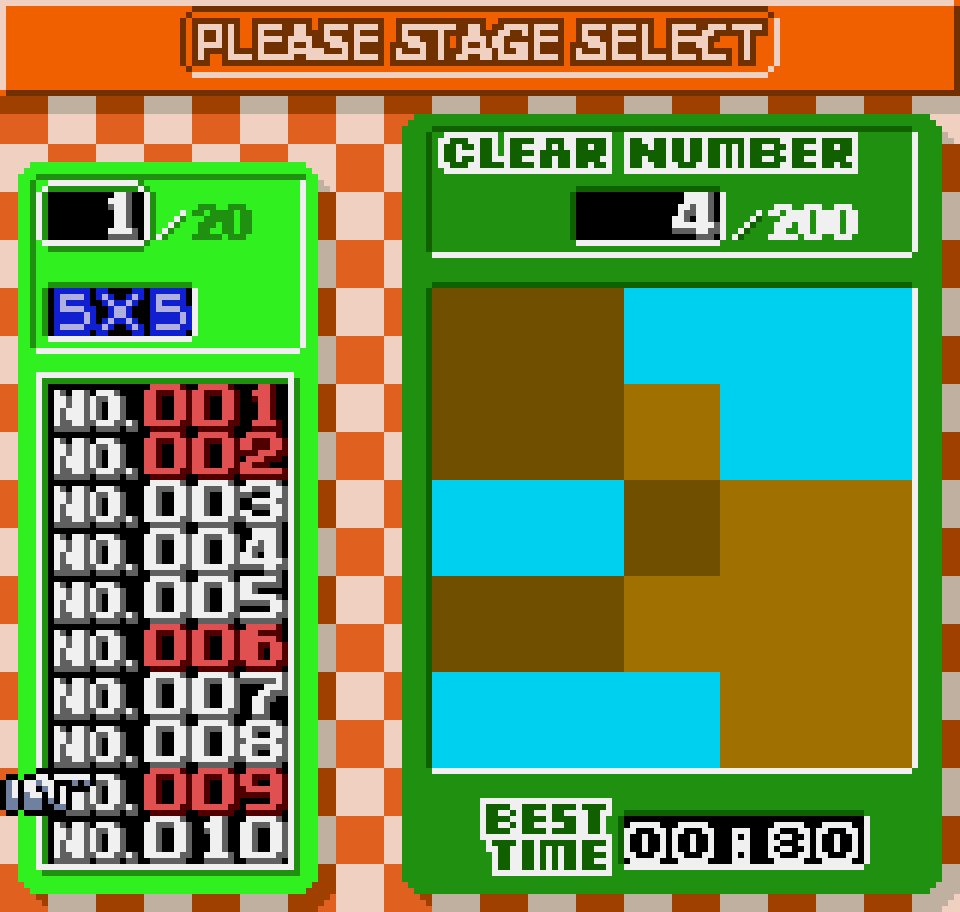
Success’s nonogram game — Picross, in the wider world’s vocabulary — and the NGPC’s brainiest cartridge. Picture Puzzle (2000) gives you grids, number clues along every row and column, and the meditative logic of deducing which cells to fill until a picture resolves out of the arithmetic. Two hundred puzzles, escalating from gentle 5×5 tutorials to serious 15×15 undertakings, with a timer for those who like their meditation competitive. It reached the West in English and remains the system’s essential logic game — the cartridge for the owner who has beaten the fighters and wants a different kind of discipline. Quiet, rigorous, endless.
For Picross veterans: the puzzle count and the larger grids put this in the same league as Nintendo’s own handheld nonogram editions of the era, with a cleaner interface than several. For newcomers: the early 5×5 boards are the gentlest logic teacher the genre has produced.
Cool Boarders Pocket
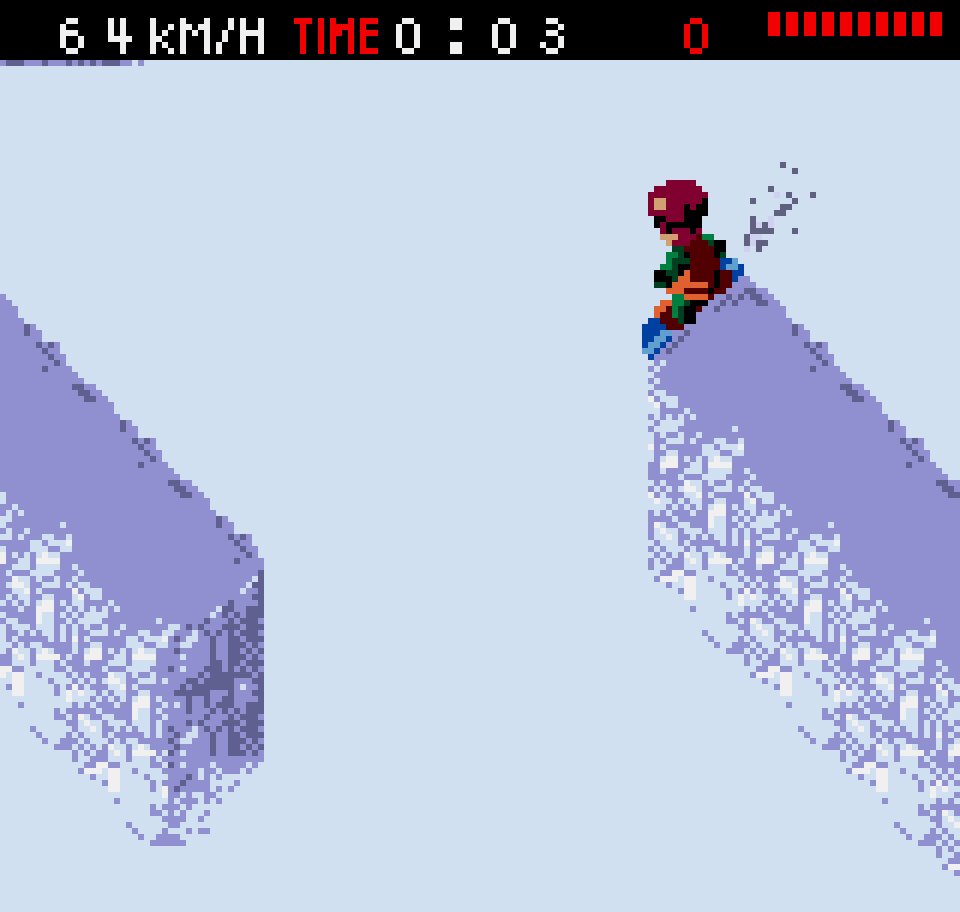
Snowboarding, on a 2D handheld with a screen the size of a postage stamp: UEP Systems’ Cool Boarders Pocket (2000) is the library’s most improbable sports conversion and it works far better than it should. The trick is perspective — a into-the-screen downhill view rendered with scaling sprites, gates to carve between, ramps for the series’ signature trick attempts, and a speed sensation the hardware has no right to produce. It is understandably simpler than its PlayStation siblings, but as a demonstration of what determined developers could squeeze from the little machine — and as a genuinely fun downhill racer in its own right — it earns its place. Japan and Europe only; the snow, thankfully, needs no translation.
The licence mattered at the time — Cool Boarders was a PlayStation flagship, and its presence on SNK’s machine was another of the era’s cross-company surprises. The game behind the badge is a small technical dare that lands: proof that ‘impossible port’ was the NGPC library’s favourite genre.
Neo Cherry Master Color
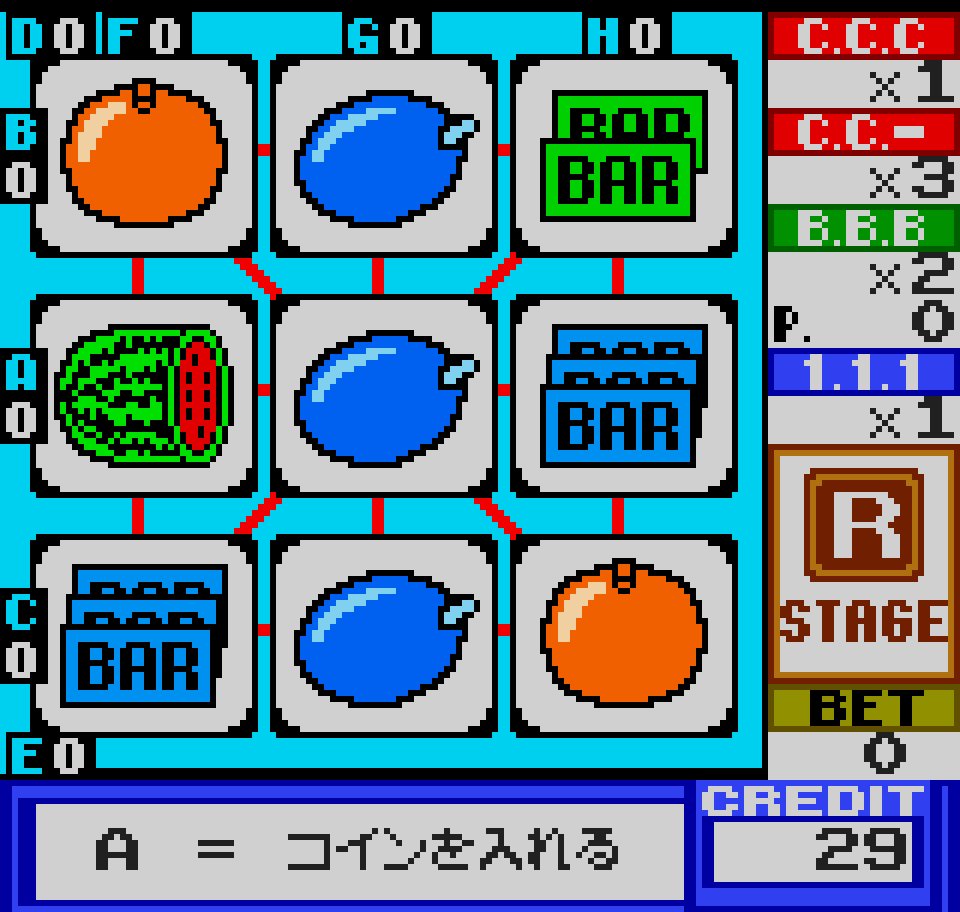
A slot machine. That’s the game. Neo Cherry Master Color takes the fruit-machine format — cherries, bars, sevens, a credit meter and a big red lever’s worth of anticipation — and executes it with a completeness that loops back around into fascination. There are stage goals, a progression of machines, hold-and-nudge decisions that give the reels just enough agency to keep you complicit, and presentation that treats the casino floor like an RPG dungeon. It will not convert slot sceptics, but as a piece of the NGPC’s range — the machine that also hosted Ogre Battle hosted this, proudly — it is unbeatable evidence that SNK’s pocket library contained multitudes. Harmless, hypnotic, weirdly collectible.
There is even a lineage here: the Cherry Master name descends from the video-slot machines of arcades and bars, and the NGPC edition is their legitimate heir — a piece of gaming’s other history, the coin-op underworld, preserved in SNK clamshell plastic. Multitudes, as promised.
Puzzle Link
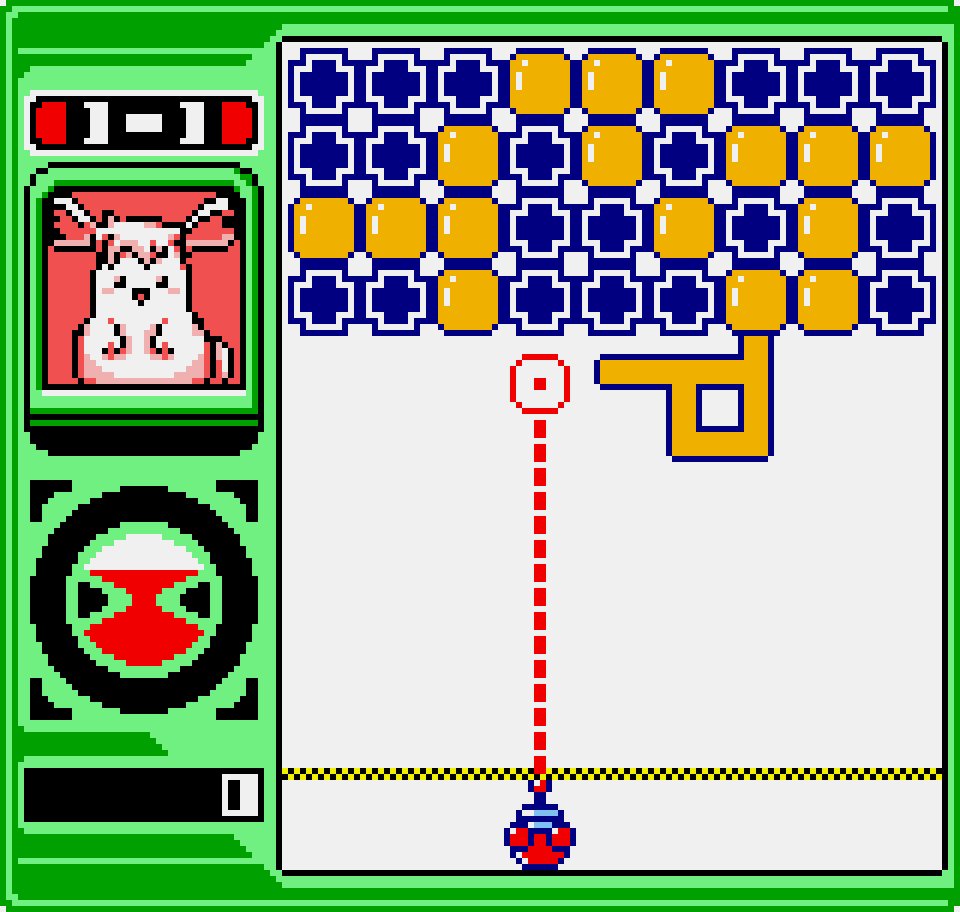
Yumekobo’s connector-puzzler is the NGPC’s most original puzzle design: a line of coloured tiles marches across the screen, and you fire matching tiles from a launcher to build connections — link three or more of a colour to the advancing line’s anchor and the whole chain vanishes before it overwhelms you. It plays like a tug-of-war between your launcher and the board, with a tempo distinct from every falling-block and bubble game on the system, plus a versus mode and a card-collection wrapper that ties it to the era’s other pocket pursuits. A Japan-first design that earned a Western release and a sequel — and still the first game we reach for when someone claims the library was only fighters.
The sequel, Puzzle Link 2, expanded the formula for the system’s final year — but the original’s purity is the connoisseur’s pick, and its Western release means no language barrier stands between you and the library’s most original puzzler. Link three. Clear the line. Repeat, faster.
Ten games, and between them a pet, a submarine, a snowboard and a slot machine. That is the NGPC’s hidden truth: the fighters paid for the laboratory, and the laboratory produced some of the most inventive small games of its generation. The famous sixteen will always headline. But the soul of the machine is down here on the second shelf, in the tiny carts with the big ideas.