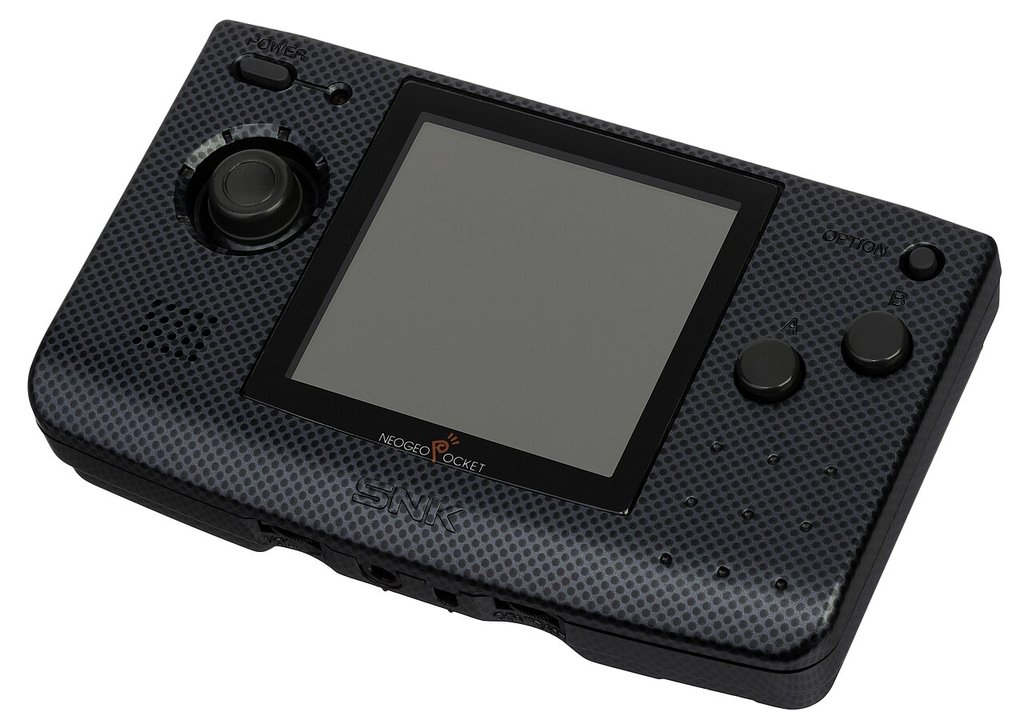
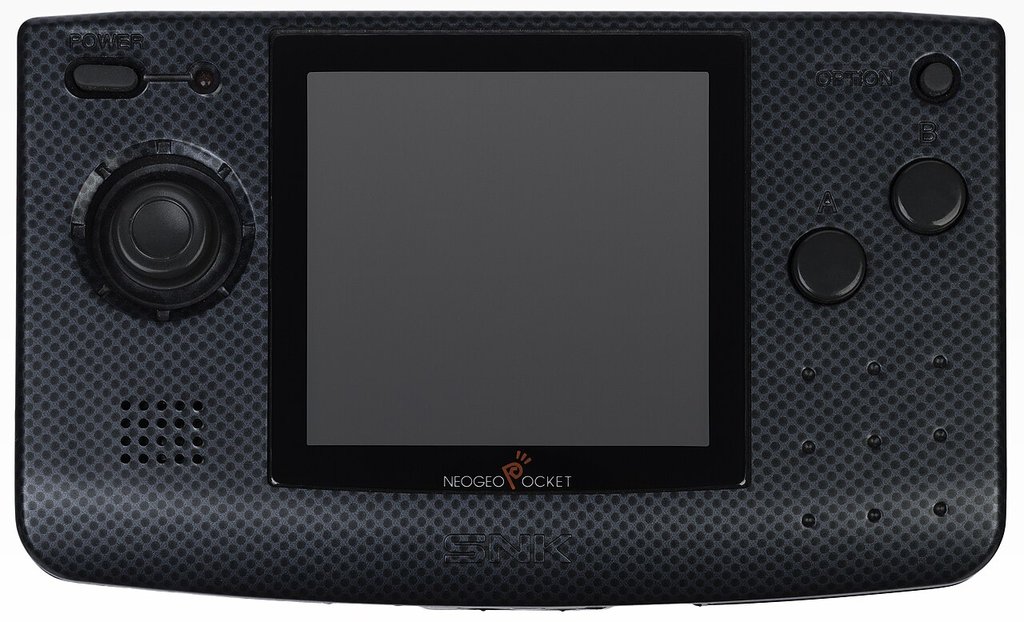
There are, strictly speaking, two Neo Geo Pockets, and confusing them is the beginner’s first mistake. The original Neo Geo Pocket, released in Japan in October 1998, is a monochrome machine. The Neo Geo Pocket Color, which replaced it a mere five months later in March 1999, is the one the world remembers. Same shell language, same clicky stick, same company — but the five-month gap between them contains a whole education in how fast handheld gaming moved at the end of the nineties.
The monochrome machine was no rough draft in the hand. It used the same Toshiba 16-bit architecture that would power its successor, the same superb micro-switched stick, and a reflective monochrome screen — eight shades of grey — that was sharp, frugal with batteries and very much of its Game Boy-shaped moment. Its launch line-up was small but serious: King of Fighters R-1, a Baseball Stars, a golf game and a handful of others, all SNK home-grown. The problem was timing. Nintendo had launched the Game Boy Color the same month. SNK had built a beautiful black-and-white answer to a question the market had just stopped asking.
The five-month pivot
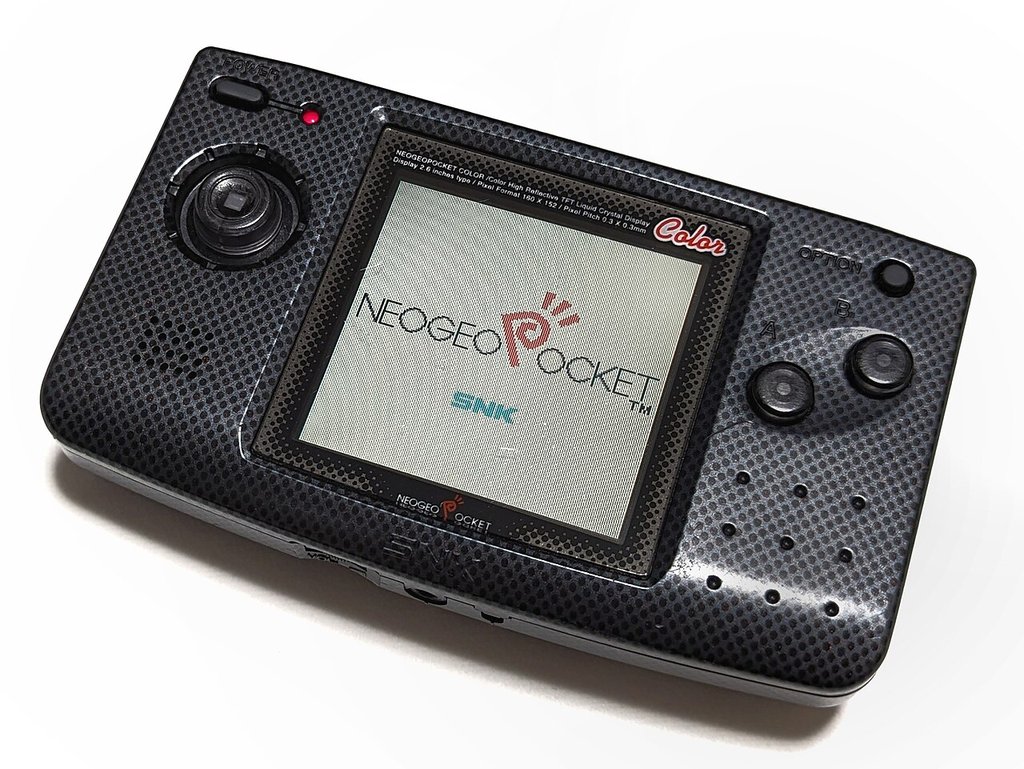
SNK’s response was the fastest hardware pivot of the era. The Color kept the original’s body, controls and architecture and replaced the screen with a colour display capable of showing 3,932 colours at once — modest beside a television, revelatory beside a Game Boy Color — while keeping battery life in the dozens of hours. Crucially, it was fully backward compatible: the monochrome library played on, and most Color-era cartridges were dual-compatible, running (in greyscale) on the old machine too. Owners of the five-month console were not abandoned; they were grandfathered.
The Color is the machine that got the world tour: Japan in March 1999, North America that August in six shell colours at $69.95, Europe in October. It is the machine with the eighty-game library, the Sega partnership and the legend. The monochrome original, by contrast, never officially left Japan and Hong Kong, and its exclusive library is tiny — which, inevitably, has made it catnip for completist collectors.
The original Pocket was a beautiful answer to a question the market had just stopped asking. SNK’s response — a colour successor in five months — was the fastest pivot of the era.
The Slim, and telling them apart
There is a third sibling: the New Neo Geo Pocket Color, the ‘Slim’, a Japan-only revision of the Color with a slightly smaller, sleeker shell, a clearer speaker and marginally tidier ergonomics. Same screen, same library, same stick. In the hand it feels like the Color after a good tailor. Collectors prize it; players should know it plays identically.
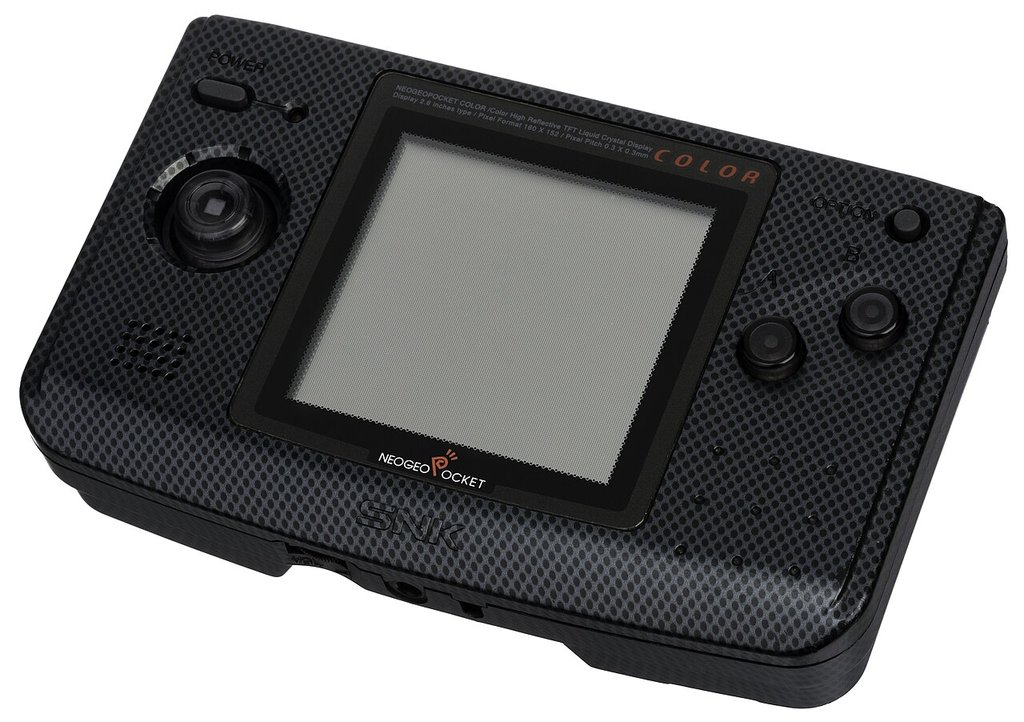
Identification, for buyers, is simple once you know the tells. Monochrome machines lack the ‘COLOR’ branding beneath the screen and carry a smaller, greyer display window; Colors announce themselves on the shell; Slims are the compact Color variant with subtly different curves and speaker grille. All three share the cartridge format and the stick — the family resemblance is the point. The five-month original is a historical document; the Color is the gaming machine; the Slim is the connoisseur’s edition of the same.
Which one history kept
Playing the monochrome library today
For the curious, the mono library is a rewarding afternoon’s archaeology. R-1 plays as the rough draft of a masterpiece — the same pocket fighting idea, stiffer and greyer, fascinating for what the Color’s team chose to fix. The mono Baseball Stars and golf hold up as designs in their own right, and the dual-compatible Color cartridges, run on mono hardware, offer the strange pleasure of watching colour games think in grey. None of it is essential, exactly; all of it is the kind of context that turns a collection into an education.
Values reflect the story: mono machines, being Japan-only and short-lived, are scarcer than Colors but less demanded, and a clean example costs less than its rarity suggests — one of the market’s remaining gentle bargains. Buy one as the Color’s companion, keep both sticks clicking, and you own the complete five-month saga: the question, and the answer, in matching shells.
The monochrome machine also bequeathed the Color its best hidden feature: confidence. Because the platform, tooling and developer relationships were proven in 1998, the Color’s first year could be about games rather than groundwork — which is how a five-month-old successor fields Sonic, two Metal Slugs’ worth of momentum and a Dreamcast cable while its rivals were still writing launch-window apologies. Hardware history usually punishes the rushed sequel. The NGPC is the exception that interrogates the rule: rushed, yes — but rushed from a standing start, on foundations five months deep and years in the dreaming.
To hold both machines today is to hold the argument in your hands. The mono Pocket is the better object — cleaner, simpler, a single idea. The Color is the better machine — the idea, fulfilled in 3,932 colours. The Slim is the idea, tailored. Most hardware families sprawl across a decade to tell their story. This one told it in five months, then spent twenty-five years being right.
And if you are deciding, today, which Pocket to hunt: buy the Color to play, the Slim to cherish, and the monochrome original to understand. Then put them in a row — 1998, 1999, 2000 — and look at what one small company tried to do in the two years the market gave it. Few rows of hardware anywhere say so much, so fast, so well.
The shells tell the story at a glance, which is why collectors display the pair together: identical silhouettes, identical sticks, one screen grey and one glowing with colour — a before-and-after photograph you can hold. Hardware design rarely gets to make its argument this cleanly. Between the two shells sits five months, one panicked pivot, and the whole fate of a company that bet it could outrun Nintendo’s present with its own future. It nearly did. The ‘nearly’ is the most interesting word in handheld history.
Two machines, one idea, no regrets: the Pockets, plural, forever.
And the argument the pair makes together has only strengthened with time: that a handheld lives or dies by what is under the player’s thumb and on its screen, and that five months of iteration, honestly applied, can turn a good machine into a beloved one. The Pockets are that argument, preserved in two shells.
One idea, two speeds, and a stick that clicked through both: the Pocket family is the handheld industry’s most eloquent five months. Collect them, play them, and argue about them — the machines reward all three, in monochrome and in colour alike.
History kept the Color, and fairly — but the monochrome Pocket deserves its paragraph in the record. It proved SNK’s handheld concept in public, built the developer relationships and the tooling, and its tiny library includes the R-1 that taught the Color’s fighters how to walk. Two Pockets, five months apart: one a brave first draft, the other the finished idea. The family, together, is the most characterful in handheld history.