
At a glance: Ni no Kuni: Wrath of the White Witch · PlayStation 3 · Level-5 / Studio Ghibli / Bandai Namco, 2013 · Role-playing game · Score: 9.0/10
There is a moment, about an hour into Ni no Kuni, when the game opens its first full Studio Ghibli animated sequence — not an imitation, not a tribute, but the real studio’s hand-drawn work, scored by Joe Hisaishi — and you understand that you are playing something that should not exist. Level-5, Japan’s RPG craftsmen, persuaded the most beloved animation house on Earth to co-build a fifty-hour role-playing game: Ghibli animated the cutscenes and designed the world, Level-5 built the systems, and Hisaishi, Ghibli’s composer, wrote an orchestral score performed by the Tokyo Philharmonic. The result, finally localised for the PS3 in 2013, is the most beautiful Japanese RPG of its generation, and one of the warmest games ever made.
Oliver, and the other world
Oliver is a boy from Motorville, a town of cars and kindness, who loses his mother in the game’s devastating first act and is given, by a doll’s tears coming true, a door: to a parallel world where every soul in his town has a counterpart, where his mother may yet be saved in the person of a great sage, and where a white witch’s enforcer, Shadar, is breaking hearts and locking the pieces away. Guided by Drippy — the self-proclaimed Lord High Lord of the Fairies, a lantern-nosed Welsh-accented force of nature who steals every scene he enters — Oliver becomes a wizard with the Wizard’s Companion, an in-game spellbook (recreated in the special edition as a physical book, one of the era’s great collector pieces) that the game genuinely teaches you to use: drawing runes to cast, researching familiars, reading the world’s lore as story rather than database.

A Ghibli film you can walk around in
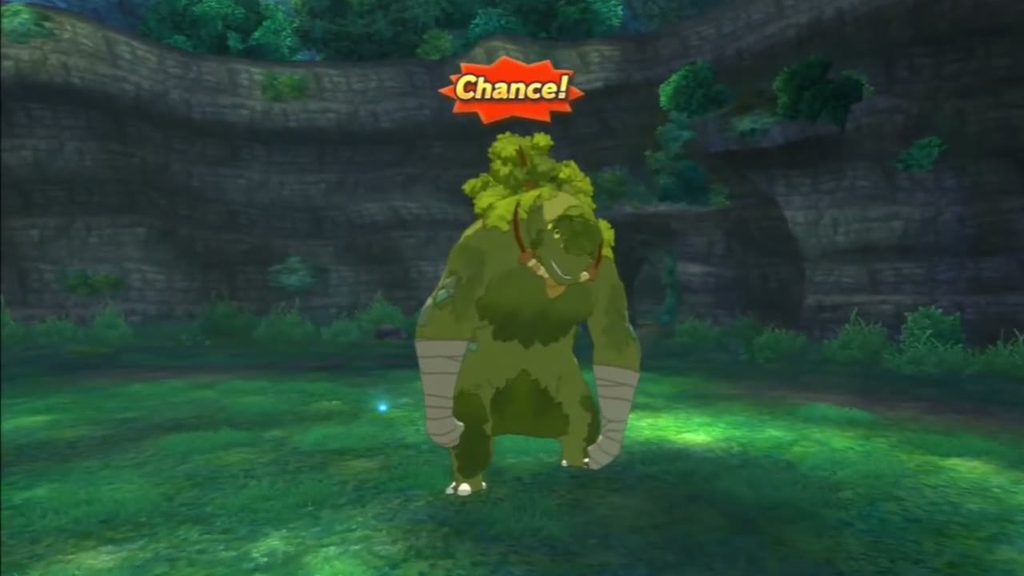
The visual achievement is total. Cel-shaded characters move through painted landscapes with the soft geometry of a Ghibli background plate — the rolling hills, the desert city of Al Mamoon with its milk fountains, the autumn forests and the whale-sized airship routes between them — and the animated sequences, used sparingly at the story’s hinges, land with the force of a cinema screen in the middle of your game. Hisaishi’s score is not background music; it is authorship, the same voice that scored Totoro and Spirited Away writing themes that follow Oliver across both worlds. The English dub is superb, the localisation witty, and the whole production radiates a seriousness about its young audience: this is a story about grief, told to children without flinching, by the two studios in the world most qualified to do it.
Ni no Kuni is a game about a boy learning that saving someone and letting them go are different kinds of love. That it is also a fifty-hour monster-collecting RPG is its miracle, not its contradiction.
Battles, familiars and the long road
Under the film sits a hearty Level-5 system. Combat is real-time with a command layer: Oliver and his companions each bring up to three familiars — collectible, feedable, evolvable creatures in the great monster-raising tradition — and fights become a rotation of stamina, commands and positioning, with Oliver’s own spells growing from a fireball to world-class artillery. The system is generous to a fault in the early game and spikes, famously, at a few boss walls where the AI companions’ enthusiasm for death must be managed with tactics settings and patience. Errands and bounty hunts pour from every town, the alchemy pot eats your evenings, and the post-game opens a casino, a colosseum ladder and superbosses in the finest series tradition. It is a full-fat, old-school JRPG structure wearing the most beautiful skin the genre has ever had.
Honest frictions
The pacing sags in the second act’s heart-piece fetch structure, where the plot’s emotional engine idles while Oliver repairs a sequence of broken hearts town by town. Familiar AI pathing will occasionally lose a battle for you, and the tame rates for rare creatures are a grind with a Welsh accent. None of it is structural damage; it is the texture of a 2011 Japanese RPG, designed before the genre’s modern quality-of-life wave, and the remaster that later smoothed some of it also confirms how little needed changing. On PS3, load times are kind, the frame rate steady, and the dual-world map system — Oliver’s town and its mirror, people and their soul-twins — remains a storytelling device of real elegance.
The edition that defined the PS3’s RPG shelf
The PS3’s JRPG library is thinner than its predecessors’ — the genre had a hard generation — which makes Ni no Kuni’s position on it unassailable. It is the console’s one undisputed classic in the form: not a port, not a spin-off, but a ground-up flagship built by two legendary studios for this machine. Its sequel, an excellent game, swapped the Ghibli partnership for homage and lost a fraction of the light; the original remains the singular object.
The Wizard’s Companion effect
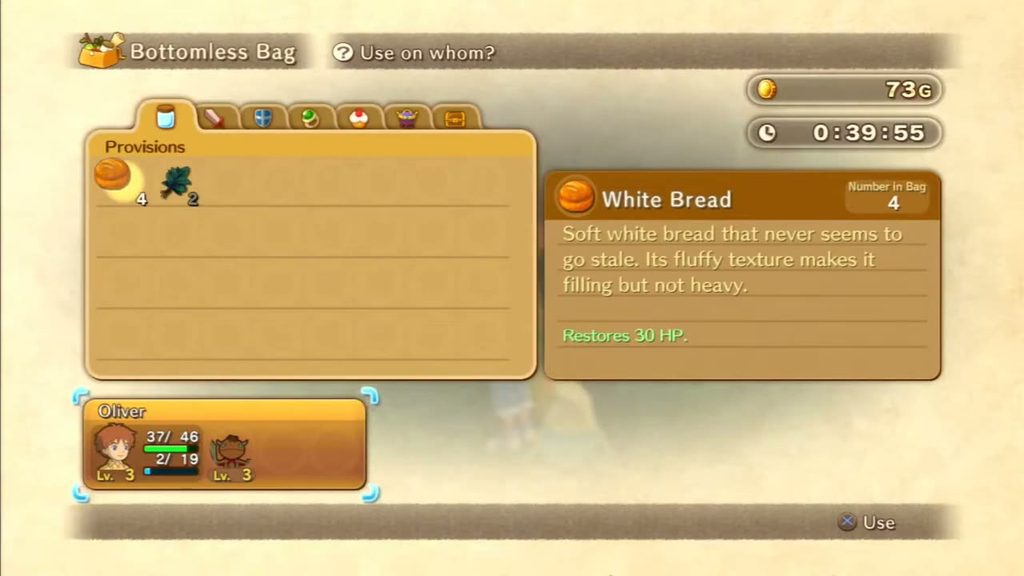
A smaller marvel deserves recording, because no summary of this game is complete without it: the book. The Wizard’s Companion exists inside the game as a fully readable tome — bestiary, spell list, alchemy recipes, the Nazcaan script Oliver slowly learns to read, folk tales from the other world — and the design keeps sending you back into its pages as a pleasure rather than a menu. Players printed it, bound it, studied it on trains. In an era when game lore was migrating to wikis, Level-5 made the lore a physical-feeling object inside the fiction, and the famous limited edition that reproduced it in hardback sold out instantly and remains one of the PS3’s most sought-after collector pieces. It is the perfect emblem of the whole production: an old-fashioned thing, made by masters, at a standard the market no longer schedules time for. The game around it has the same quality of unhurried craft — side stories with their own tiny arcs, a kingdom of cats ruled with operatic seriousness, a fairy comedian whose stand-up routines are hidden in optional scenes. Ni no Kuni is dense with the sense that its makers loved the genre’s whole history and intended to honour all of it at once. On a console whose RPG shelf needed exactly one flagship, it arrived like a royal visit.
A note on the two versions of Oliver
One choice awaits every new player at the menu: the voices. The English dub is excellent — Oliver and Drippy especially, whose Welsh lilt became the character’s identity in the West — while the Japanese track carries the original performances Ghibli’s own casting shaped. There is no wrong answer, but there are two genuinely different flavours of the same film, and the game is long enough that the choice is a commitment. Sample both in the first hour; your ears will decide before the second town.
The verdict
Ni no Kuni: Wrath of the White Witch is the PS3’s most beautiful game and its finest traditional JRPG — a grief story in Ghibli colours, a Hisaishi score you will hum for years, and fifty hours of systems built with love. If the console’s shelf gets one role-playing game with a place in history, it is this one.
Score: 9.0/10 — Studio Ghibli built a game, and it is as magical as that sentence promises.