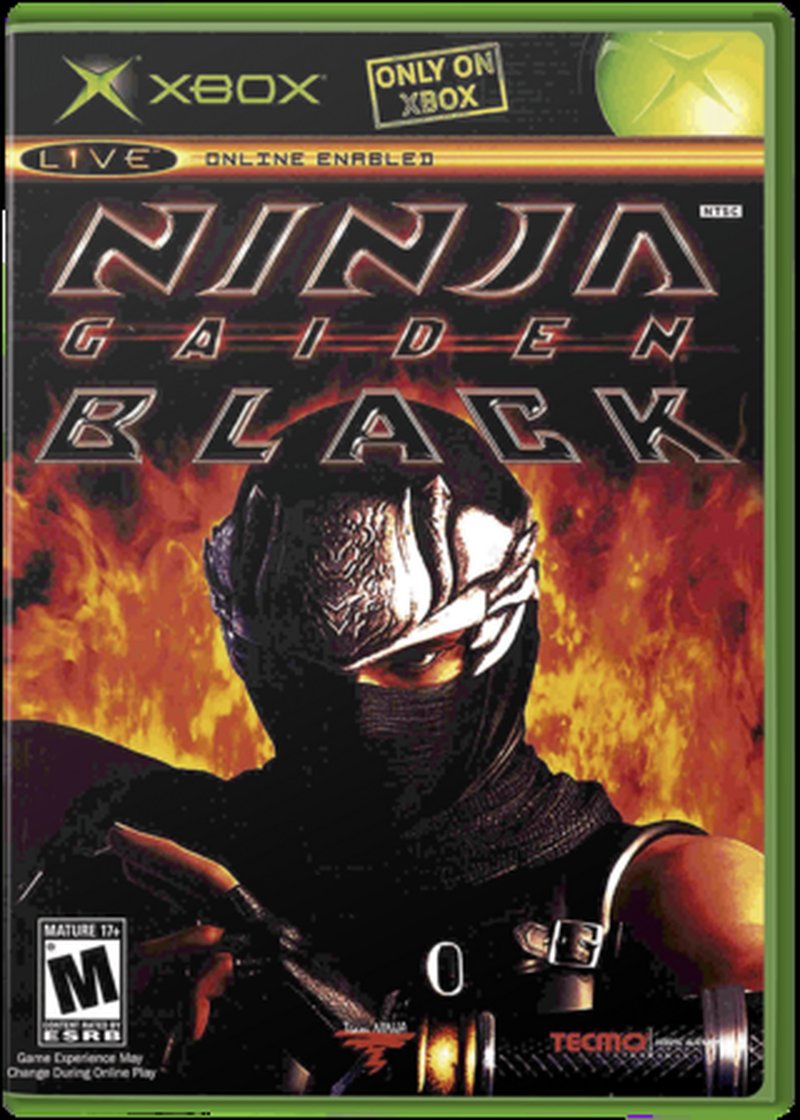
At a glance: Ninja Gaiden Black · Xbox · Team Ninja / Tecmo, 2005 · Action game · Score: 9.5/10
Ninja Gaiden Black is the definitive edition of the hardest great game on the Xbox, and possibly the finest character-action game of its entire generation. Team Ninja took 2004’s already ferocious Ninja Gaiden, listened to every complaint except “it is too hard” — that one they framed — and rebuilt it: new weapons, new enemies, smarter pacing, the Hurricane Pack content folded in, a Mission Mode of fifty challenge fights, and difficulty settings that finally let ordinary humans see the ending without diluting the summit. The result is a game that respects you exactly as much as you respect it, which is to say it will kill you in the first chapter and make you grateful for the lesson.
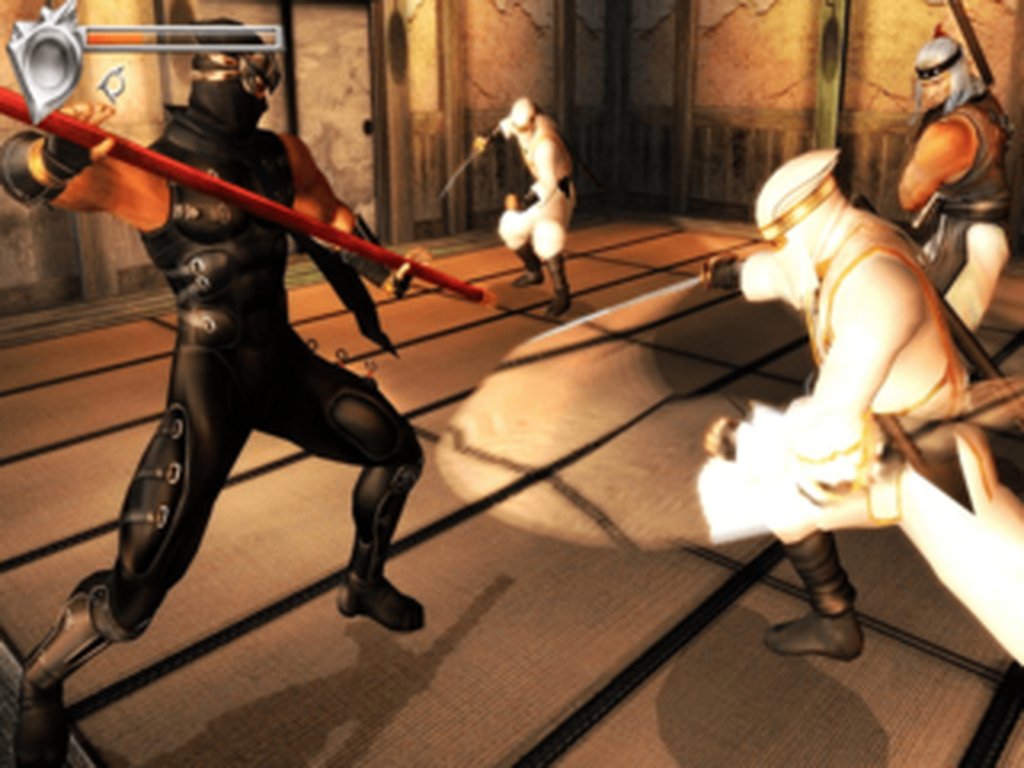
The combat system is the argument and the proof. Ryu Hayabusa moves with a fluency no contemporary matched: wall-runs flow into aerial combos, the Izuna Drop spikes an enemy headfirst into the ground, the Flying Swallow decapitates at sprint speed, and essence — the glowing energy dead enemies release — can be absorbed to charge Ultimate Techniques that clear a screen in one held breath. Every input matters because every enemy is awake. The soldiers block and throw; the ninjas counter; the fiends do things with their anatomy that should not be legal. Blocking, dodging and countering are not defensive options here — they are the grammar the combos are written in. Master Ninja difficulty, unlocked after the campaign, is less a setting than a second doctorate.
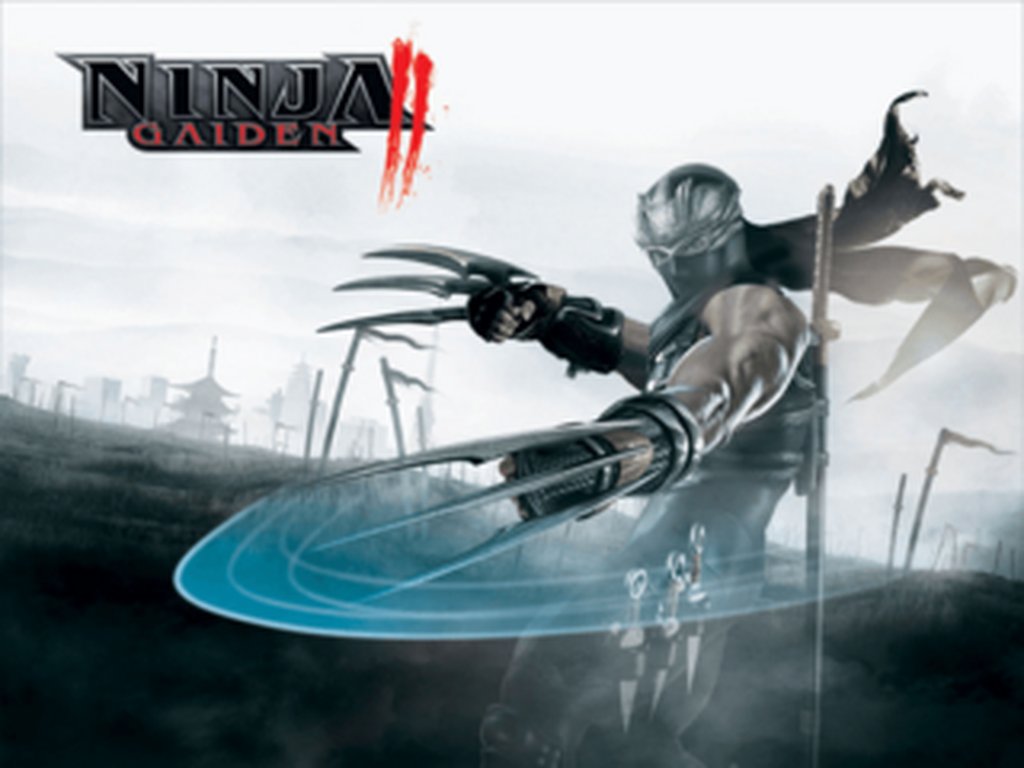
Black’s additions are surgical. The Lunar Staff and the bo-staff moveset give crowd control a new rhythm; new enemy types — the flame ninjas and the spectral piranhas that everyone hates correctly — fill the old game’s quiet stretches; Rachel’s playable missions add a heavy, deliberate counterpoint to Ryu’s speed. The camera, the original release’s one true vice, is improved rather than fixed: it still loses the plot in two infamous rooms, and honesty requires keeping that on the charge sheet. Everything else — the interconnected Tairon city design, the shopkeeper Muramasa’s upgrade economy, the scarabs hidden for the obsessive — is action-game architecture of the highest order, a single sprawling campaign that loops through its world like a Metroid game with a body count.
Difficulty as a design language
Most hard games are hard by inflation: more health, more damage, less mercy. Black is hard by education. Chapter one’s boss, Murai, has ended more playthroughs than most games’ finales, and he is a teacher, not a wall — everything he does, you can answer; the game simply insists you learn before it lets you proceed. From there the curve is honest all the way up: Alma’s cathedral duel, the twin-worm tunnels, the final gauntlet. The infamous difficulty is also, crucially, escapable: Ninja Dog mode, unlocked by dying three times in the first chapter and accepting Ayane’s pity, lowers the bar with in-game teasing that stings worse than the deaths did. Team Ninja’s wit about their own reputation is part of the game’s character.
Ninja Gaiden Black does not want you to win. It wants you to deserve to — and it has decided, precisely, what deserving looks like.
Technically this is a showpiece Xbox disc: sixty frames per second locked like a vault door, self-shadowing, water and fire effects that still photograph beautifully, and animation work — every weapon has its own full moveset, animated with martial-arts reference — that shames games a hardware generation younger. The Xbox was the only console of its era that could have hosted this at this fidelity, and Team Ninja, Microsoft’s most devoted Japanese partner, built it as a love letter to the machine. Load times are brief, the hard drive is used kindly, and the whole production runs with an arcade crispness that suits its soul.
The debits, collected: the camera, as noted, retains two or three rooms where it fights you harder than the fiends do. The narrative is stylish nonsense — a dark dragon blade, a dark disciple, a great deal of leather — functional as motivation, forgettable as literature. Save-point spacing in the late game assumes a mastery the game has not always finished teaching. And Rachel’s sections, while a welcome change of pace, slow the campaign’s best momentum. None of it survives contact with the combat. Hour for hour, there is no more skill-expressive action game on the system.
Mission Mode and the long tail
Black’s generosity after the credits is part of why it outranks its own original release. The fifty-mission Mission Mode distils the combat into pure examinations — survive the cathedral with a wooden sword, clear the arena as Rachel, fight bosses in combinations the campaign never dared — each graded, each a small argument about a different weapon or technique. Add the Karma scoring system, which grades every campaign encounter and posts your chapter scores to leaderboards hungry for optimisation, and Black becomes a game you do not finish so much as graduate from, repeatedly. Costumes, the classic NES-style trilogy homage in the unlockables, and the sheer depth of the movelist — the Dragon Sword alone has dozens of techniques, with the nunchaku, war hammer and spear gun all fully realised — give the disc a lifespan measured in years for the players it clicks with.
It also stands as a document of a partnership that defined the Xbox in Japan and beyond: Team Ninja’s loyalty gave Microsoft’s machine a run of exclusives — this, the Dead or Alive series — that proved the console could host world-class Japanese action design, not merely license it. Black is the peak of that run. On original hardware it is flawless in performance, generous in content and honest in intent. If the phrase “hard but fair” has ever described a game completely, it describes this one — and the fairness is what converts its difficulty from a barrier into the entire pleasure.
First evening advice
For the newcomer standing where every veteran once stood: play on Normal, learn to block before you learn to style, absorb essence deliberately rather than accidentally, and let Murai take the time he takes — the lesson he teaches in chapter one is the whole game in miniature. Black rewards the patient student more richly than any action game of its era. The first victory over that first boss is a rite of passage the community still recognises on sight.
Black also preserves something rarer than its difficulty: a moment when a developer’s contempt for compromise was itself the marketing. No focus group asked for the piranha fiends. The game is better for every one of them.
Verdict
Ninja Gaiden Black is the peak of the original Xbox action library and a permanent exhibit in any argument about difficulty done right: demanding because its systems are deep, fair because its rules are consistent, and thrilling because mastery, when it finally arrives, feels like a physical skill living in your hands. Buy the Black edition over the 2004 original every time — it is more game, better balanced, at the same second-hand price. Then clear your evening, accept the first boss’s tuition, and begin.