
At a glance: Project Gotham Racing 2 · Xbox · Bizarre Creations / Microsoft Game Studios, 2003 · Racing game · Score: 9.0/10
Project Gotham Racing 2 is the thinking driver’s arcade racer: a game that scores you not only on where you finish but on how beautifully you got there. Bizarre Creations took the Kudos system from Metropolis Street Racer — points for powerslides, clean overtakes, drafting and two-wheel heroics — and built around it the most complete racing package the original Xbox ever hosted: hundreds of licensed cars, eleven real cities rendered street by street, a career structure with genuine texture, and Xbox Live integration so far ahead of its time that the industry spent a decade catching up. Gran Turismo had the simulation crown and Burnout had the chaos. PGR2 had style, and it made style a skill.
The Kudos economy is the soul of it. Every event pays out in two currencies: position and panache. Chain a slide into an overtake into a clean section and the multiplier climbs; kiss a wall and the chain dies. It rewires how you drive — a PGR2 player attacks corners not just for time but for theatre, and the leaderboards reward the driver who wins beautifully over the driver who merely wins. The World Series career ladders you through classes from nimble compacts to the Ultimate series’ hypercars, with medal targets at every level and the showroom steadily filling: this was one of the first racers where unlocking the next car felt like opening a present, because the handling model gives every vehicle a personality — weight, bite, breakaway — you can read within one corner.
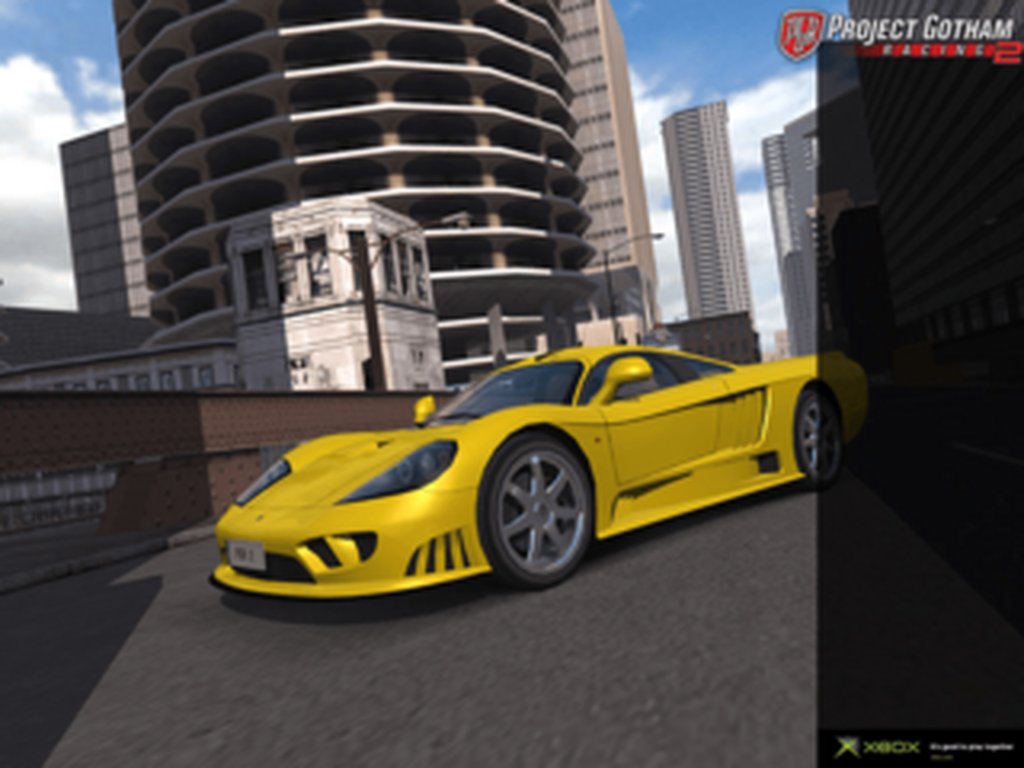
The cities are the other stars. Edinburgh, Florence, Moscow, Washington DC, Chicago, Barcelona, Stockholm, Sydney, Yokohama, Hong Kong and the Nürburgring — each recreated with a photographer’s eye for light: Florence at golden hour, Stockholm under a low Nordic sun, Hong Kong in neon rain. These are closed street circuits, so the racing stays focused, and the tracks thread landmarks into braking points until the cities become muscle memory. Weather and time-of-day variants multiply the catalogue further. On the Xbox’s hardware the draw distance, reflection work and sixty-hertz smoothness were a statement in 2003, and the game still looks handsome — clean, bright, confident — today.
Online before online was normal
PGR2’s Xbox Live design deserves its reputation as prophecy. Scoreboards for every event, ghost downloads so you could race the world’s best lap as a translucent rival, live racing with Kudos carrying into multiplayer etiquette — the game understood that competition is content. It was among the first console racers to sell downloadable expansion — the Paris and Long Beach booster packs — and its lobby culture set the template the genre still uses. The original servers are gone, but the community revival via Insignia has brought PGR2’s online modes back to life on real hardware, ghosts and all. Offline, split-screen and system link keep the social side intact with zero fuss.
PGR2’s insight was that racing fans don’t only dream of winning. They dream of the photograph of winning — the slide, the skyline, the style. It scored the dream.
The honest debits are period pieces. The handling sits deliberately between arcade and simulation and will satisfy purists of neither: cars have weight but forgive generously, and damage is cosmetic only. The AI runs on visible rails at times, defending lines with a stubbornness that can feel scripted on the tightest street circuits. The soundtrack’s licensed radio stations are charming until the loop repeats on a long session. And the career, for all its ladder charm, asks a lot of replaying familiar tracks at higher classes before the credits roll. None of this dents the core loop, which is tuned like an instrument.
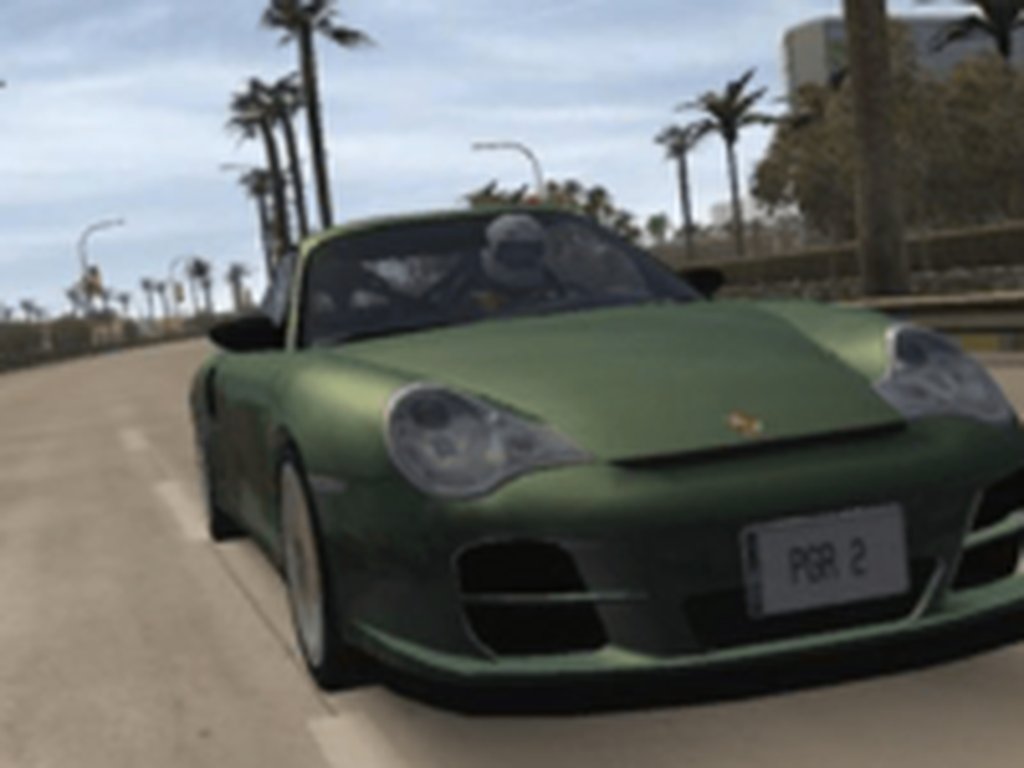
Car culture detail repays attention throughout: the showroom walks you around each machine, the garage displays your collection like a museum you earned, and the class structure teaches real automotive taxonomy — you will finish PGR2 knowing the difference between a well-balanced coupe and a widowmaker, and why both are fun. The cone challenges, overtake tests and time trials threaded through the World Series keep the campaign from being a simple race-after-race treadmill; several of the cone runs remain the sternest tests in the game.
The details that keep it alive
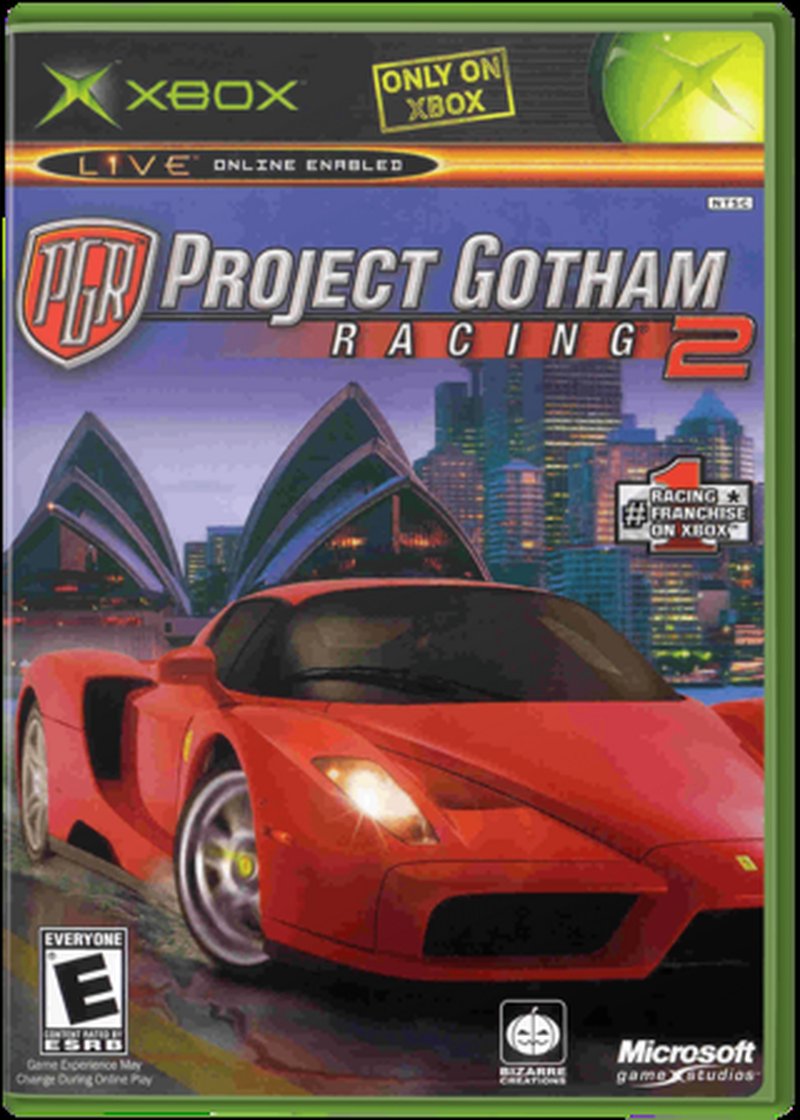
Longevity lives in PGR2’s margins. The medal structure — steel through platinum on every event — turns the World Series into two games: the one you finish and the one you master, with platinum targets demanding laps of genuine artistry. The car collection crosses 100 machines once the downloadable packs are counted, spanning sensible hot hatches to the Ferrari Enzo and the Porsche Carrera GT, and the class system keeps early cars relevant rather than obsolete. Cat-and-mouse and eliminator multiplayer variants, invented here in spirit, became genre standards. Even the menu design — clean, photographic, unhurried — treats cars as objects of desire rather than icons in a list, and the test-track showroom laps let you fall in love before you commit your Kudos. Bizarre Creations understood car culture as a feeling, not a spreadsheet.
For the modern owner the disc is inexpensive, common and complete, and its system-link support makes it a LAN-party staple that needs no servers at all. The downloadable booster packs, preserved through community archives and playable on modified or Insignia-connected systems, add Paris and Long Beach for completists. What no re-release has replaced is the specific pleasure of this handling model on this hardware through a Duke or Controller S: weighty, talkative, alive. PGR2 is the rare racer that makes you a better appreciator of driving itself — of lines, of patience, of the flourish at the exit of a corner that no stopwatch rewards and every witness remembers.
The Kudos philosophy, once more
It is worth ending where the game begins: with the idea that how you drive is a scoreable, improvable, shareable thing. Kudos turned style from a private pleasure into a public language — you could watch a stranger’s ghost and learn not just their line but their flair, and the leaderboards made elegance competitive a decade before social media made everything competitive. Simulators measure the lap; arcade racers measure the crash; PGR2 measured the driver. That is why its community’s affection has outlasted its servers, and why its discs still change hands with a recommendation attached.
First-time players should resist the supercars for one evening and learn the Kudos grammar in the hot hatches, where slides are cheap and lessons are gentle. The Ultimate series will still be there at midnight, gleaming, when your hands know what the scoreboard wants.
Verdict
Project Gotham Racing 2 is the original Xbox’s most complete racer: a style-scored arcade-sim hybrid with a museum’s garage, a travel photographer’s cities and online architecture years ahead of the field. Forza would soon take the simulation brief further and Burnout the arcade one louder, but neither replaced what PGR2 uniquely does — rewarding the beautiful lap as highly as the fast one. If you own the console, you own this game’s natural home. Drive it like you mean it, and like someone is watching. Someone is: the leaderboard.