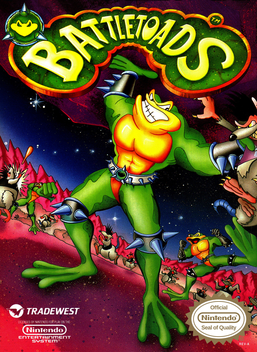
There is a short list of NES games that can end friendships, and Battletoads sits at the top of it in permanent marker. Rare’s 1991 beat-’em-up was famous for two things: some of the most inventive level design on the console, and a difficulty curve with all the mercy of a brick wall. Its two-player mode was both its greatest joy and its cruellest trick, because your partner could hit you, knock you into pits and generally convert teamwork into slapstick at the worst possible moment. In May 2017, the hacking community looked at this finely balanced machine for generating arguments and asked the obvious question: what if there were four of you? The resulting patch, credited to the hacker NakeuD2007, adds third and fourth players to the NES original — and in doing so runs headlong into every hardware limit that made two players a struggle in the first place.

Two toads were trouble enough
First, the original. Battletoads was created at Rare by Tim and Chris Stamper and published for the NES in 1991, casting players as Rash and Zitz, two of the three titular toads, rescuing their brother Pimple and Princess Angelica from the Dark Queen. It was a game that refused to sit in one genre: one level a side-scrolling brawler, the next a vertical descent on a rope, then the infamous Turbo Tunnel, a high-speed obstacle course on speeder bikes that has ended more runs than every boss in the game combined. The two-player co-operative mode was a headline feature, and a genuinely forward-looking one, but it came with fine print. Friendly attacks landed. Lives were effectively a shared concern. And in the NES version, a notorious bug waited near the end: on the eleventh stage, Clinger-Winger, the second player could find themselves unable to move properly, a flaw so severe that finishing the game in two-player mode became an exercise in workarounds. This was not a game with spare capacity. It was a game already stretched over its own ambitions.
The hack: two more toads enter
NakeuD2007’s patch takes the US version of the game and rebuilds its player handling so that three or four people can play simultaneously, with all four toads on screen together — Rash and Zitz joined by the rescued Pimple and, in effect, a fourth brawler the original cast list never provided. The hack was refined across later versions into something surprisingly configurable. Documentation for the mature release lists options for custom respawning, a colour select for each toad including extended palettes, a toggle for whether a single hit can kill, a toggle for friendly fire itself, changes to how players interact with the bottom edge of the screen, and even alternative finishing moves. That option list tells its own story: once you double the number of players in a game tuned for two, every assumption in the design — damage, death, revival, who is allowed to punch whom — becomes a question somebody has to answer, and the hack increasingly lets the players answer for themselves.

Why four players break the NES
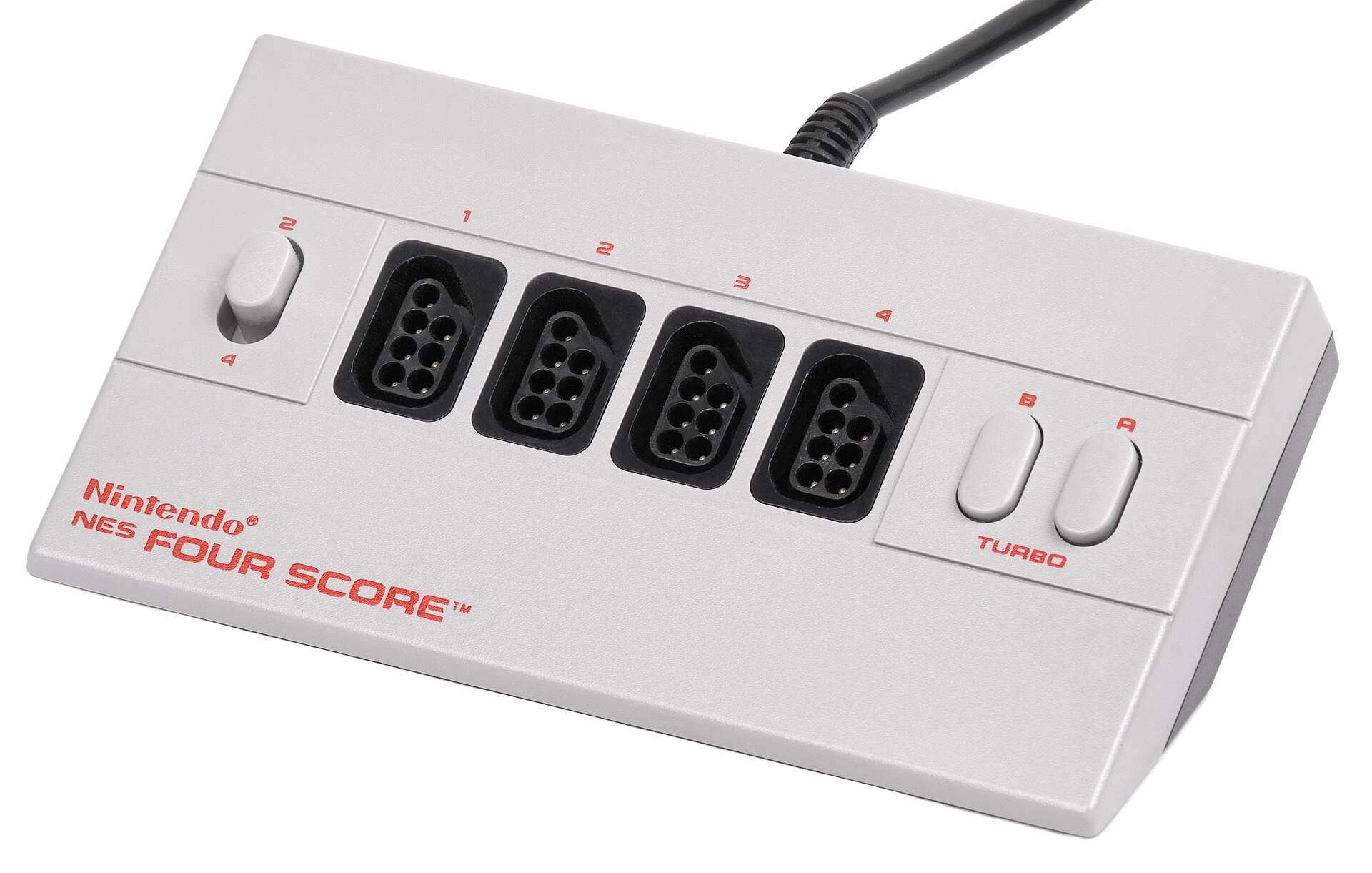
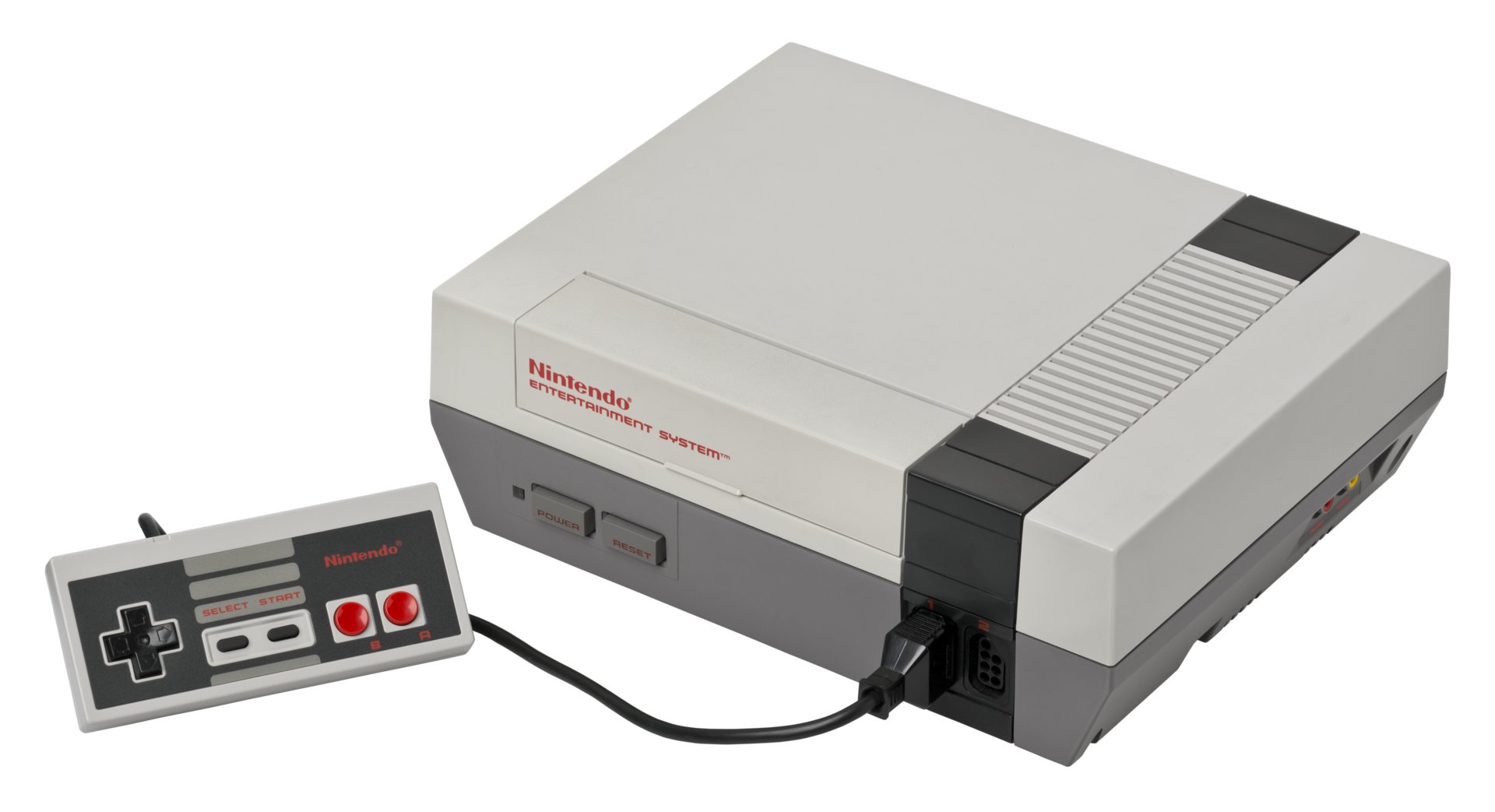
The obstacles are written into the hardware. The NES can draw only a small number of sprites on any given horizontal line before they start to flicker and vanish in rotation, and a single toad is already a cluster of sprites; put four toads, a row of enemies and a weapon or two on the same scanline and the picture begins to strobe. Contemporary reports on the hack noted exactly this: extra slowdown and flicker from the two additional toads crowding the screen. The palette budget bites too — the NES offers only a handful of sprite palettes at once, and with four heroes to colour, players reported a toad occasionally changing colour between levels as the game shuffled its limited palette slots. Then there is input. The stock NES reads two controllers; a third and fourth pad arrive through multitap accessories such as Nintendo’s Four Score, which smuggle the extra signals down the same ports. At the time of the hack’s release, coverage openly wondered whether it would even run on real hardware through such an adapter — and later emulator documentation settles the point bluntly, cataloguing the four-player build as emulator-only. This is a hack that lives where the hardware’s spirit is willing even where the silicon is not.
Four toads, one Turbo Tunnel
And what does it actually play like? The honest answer is: louder. Four players do not make Battletoads four times easier, because the game’s deadliest hazards were never really the enemies — they are the instant-kill drops, the screen scrolling at its own pace, and the level designs built around precise, solitary timing. The Turbo Tunnel with four riders is less a test of skill than a fireworks display of simultaneous failure, as speeder bikes meet the same wall in four-part harmony. Where the extra toads do change the maths is in the brawling stages, where a screen full of allied fists turns some of Rare’s nastier ambushes into riots — always assuming the friendly fire toggle is off, because with it on, the riot’s first casualties are each other. Many of the game’s set-pieces quietly assume a maximum of two heroes: two ropes, two bikes’ worth of reaction time, bosses tuned for two attackers. Four players do not solve Battletoads. They stress-test it, in public, with witnesses.
The project also belongs to a small, stubborn genre of its own: the player-count expansion hack. The same emulator documentation that catalogues NakeuD2007’s work lists company for it — a four-player rebuild of the tank game Battle City, and the author’s own follow-up applying the same treatment to Battletoads & Double Dragon. These projects share a philosophy distinct from the difficulty fixes and translation patches that fill hacking archives. They are not about correcting a game’s mistakes. They are about its social geometry: the recognition that a huge part of what a classic game was, in 1991, happened on the sofa around it — the spectators, the queue for the second controller, the arguments about whose turn it was. Doubling the player count is a way of rebuilding that sofa inside the ROM itself, and it is no accident that the games chosen for the treatment are the ones, like Battletoads, whose legends were always told in the plural.
The verdict of hindsight
With the distance of years, the four-player Battletoads hack reads as one of the purest expressions of what ROM hacking is for. It does not fix the game, rebalance it or apologise for it. It takes the thing players always wanted to shout at a classic — “this, but with all of us on the sofa” — and does the unglamorous engineering to make the shout come true, flicker, slowdown, colour-swapping toads and all. There is a pleasing coda, too: when the series was officially revived in 2020, the new Battletoads shipped with three-player co-operative play as a headline feature. The fans had asked for more toads on one screen nearly thirty years earlier, and in 2017 one hacker stopped waiting for permission. Rare built a two-player friendship-ender. NakeuD2007 simply invited the whole room to the argument.