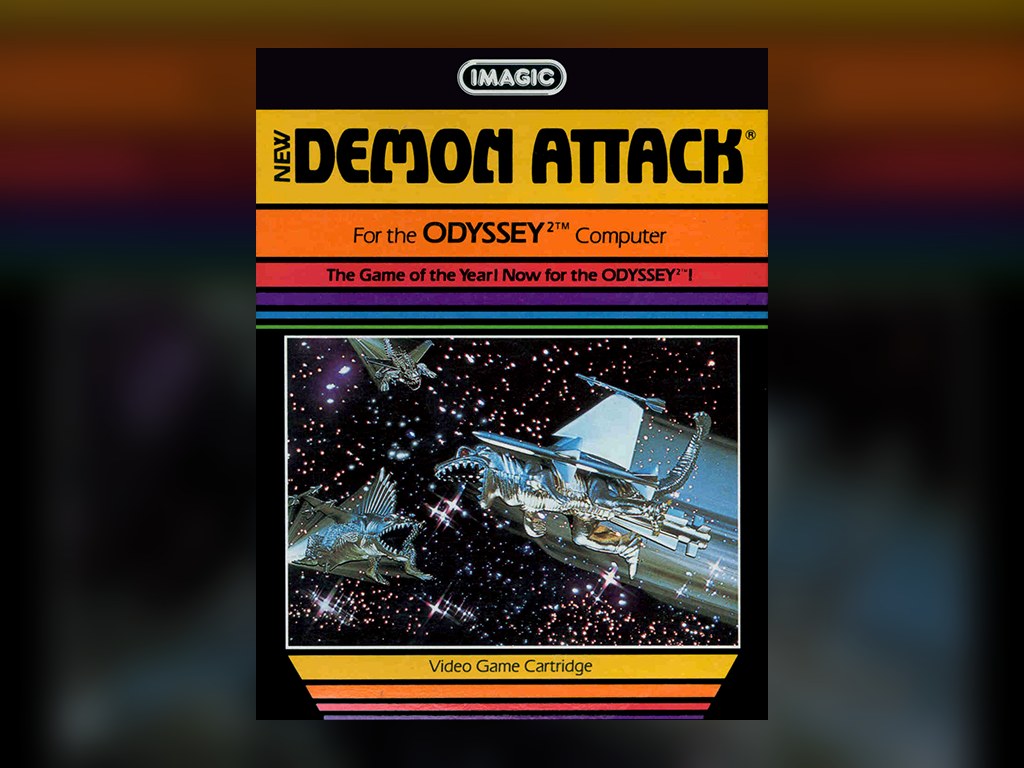
The Odyssey 2’s essential games get the shelves, the features and most of the money. This list is for the second shelf: ten cartridges that were not reviewed individually in this series — third-party conversions that arrived through unexpected doors, a board-game hybrid hiding in a finance costume, educational oddities with a voice, and the parlour conversions that filled the early library. Every one of them is cheap or interesting, and most are both. Prices, where the word comes up at all, follow the hedged ranges in our Odyssey 2 Buying Guide 2026; the point here is play value and strangeness, not investment. One rule governed the selection: nothing that already has its own review in this package, so the maze classics and the talking showcases make way for the games a new owner would otherwise walk straight past.
A note on sources before the shelf itself. The Odyssey 2’s third-party and regional story cannot be told from the American catalogue alone: Imagic’s two cartridges were the system’s first outside releases in the United States, Parker Brothers’ arcade conversions reached the machine through Europe and Brazil, and several of Magnavox’s own most interesting experiments — the finance hybrid, the talking tutors — were filed by history under ‘educational’ or ‘miscellaneous’ and walked past. Hidden gems, on this system, are usually just games whose category hid them. The ten below are ordered for reading rather than rank; the best of them — Demon Attack and Atlantis — would trouble the lower half of any honest top-ten for the whole system, and the strangest of them, Type & Tell!, is a piece of technology history that happens to live in a game cartridge.
Demon Attack
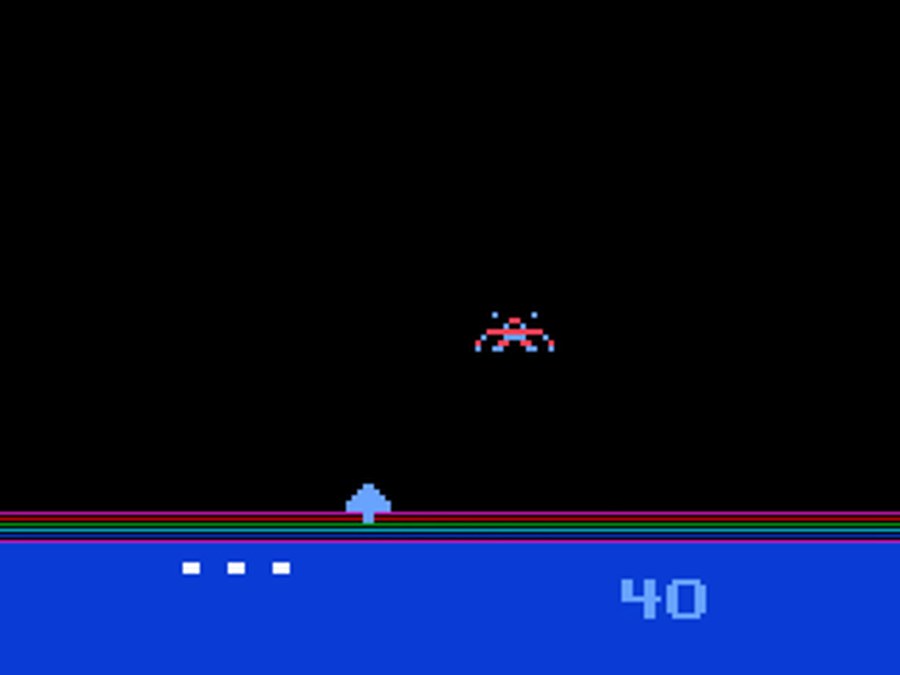
Demon Attack · Odyssey 2 / Videopac · Imagic, 1983 · Fixed shooter
Imagic built its name on the Atari 2600, and Demon Attack was its calling card — waves of bird-like demons that split, dive and multiply the menace. The Odyssey 2 version arrived in 1983 as one of the system’s first third-party releases in America, and the shock is how much of the original’s menace survives: the demons still fragment under fire into smaller, faster problems, the dive-bombing still punishes campers, and the whole screen carries an energy the early first-party shooters rarely attempted. For owners who had only known Magnavox’s own catalogue, this cartridge was proof of what outside talent could extract from the hardware — and a signpost to the multi-platform era arriving all at once.
Atlantis
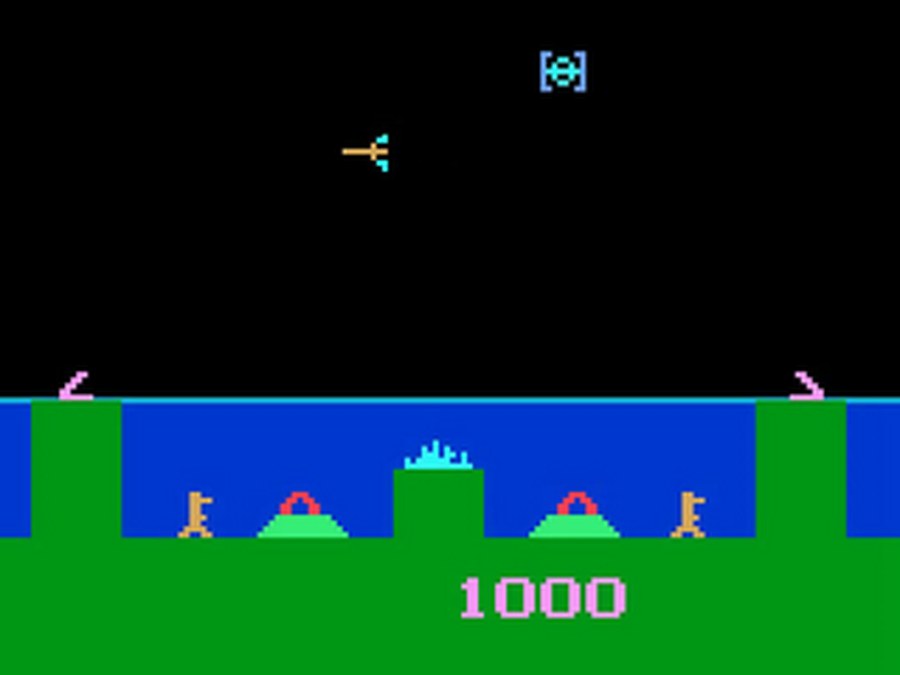
Atlantis · Odyssey 2 / Videopac · Imagic, 1983 · Fixed shooter
Imagic’s second Odyssey 2 release defends the domed city of Atlantis against the Gorgon fleet: three fixed gun emplacements — centre and flanks — firing across the sky as enemy ships cross at descending altitudes and varying speeds. You command all three guns, so the game becomes traffic control under fire: which lane, which ship, which emplacement can bear. Lose an outpost and the defence narrows; lose the centre and the end is near. It is a more strategic shooter than Demon Attack, ported with the same care, and the pair of them together form the essential third-party shelf for this system — the moment the Odyssey 2 stopped being a one-company library.
Frogger

Frogger · Odyssey 2 / Videopac · Parker Brothers, 1983 · Action
Europe and Brazil only — Parker Brothers’ Frogger never received a North American Odyssey 2 release, which makes the Videopac cartridge one of the system’s most sought-after imports. The game is the game: five lanes of traffic, a river of logs and turtles, five home bays and a timer with no mercy. The conversion is necessarily simplified — this is 8048 hardware rendering a busy arcade scene — but the structure, the escalation and the cruelty of the final jump are intact, and playing Konami’s classic on the keyboard console has a novelty that does not wear off. American collectors should note the documented PAL quirks on NTSC machines and budget for the cartridge’s import premium.
Q*bert
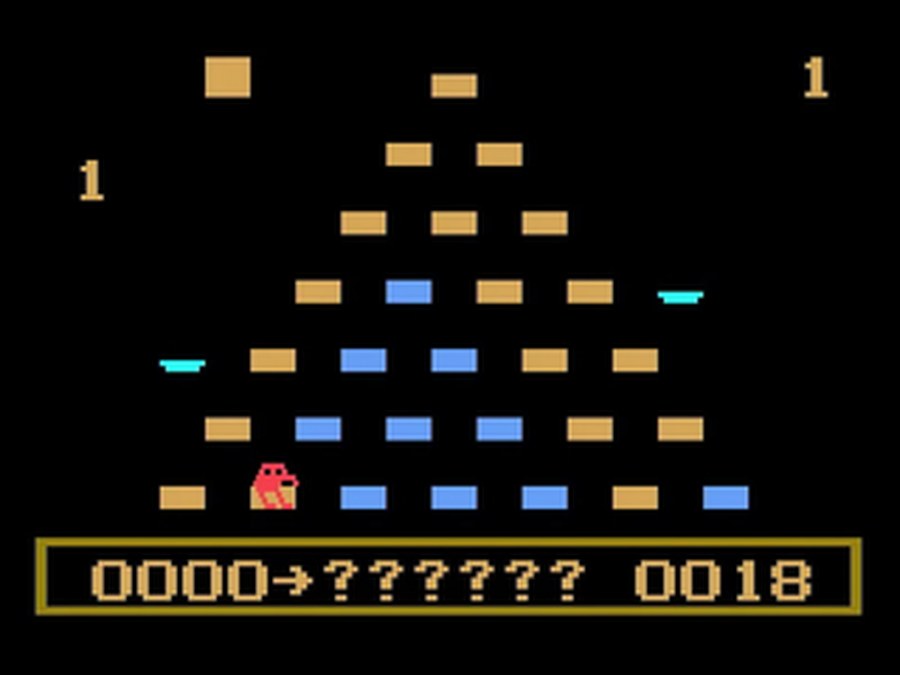
Q*bert · Odyssey 2 / Videopac · Parker Brothers, 1983 · Puzzle action
Another European-only Parker Brothers conversion, and another import premium — Q*bert on Videopac takes the isometric pyramid, the colour-changing hops and Coily’s pursuit onto hardware that was never consulted about diagonals. The Odyssey 2’s joysticks are four-way, so the pyramid’s diagonal logic becomes a control scheme to learn rather than a reflex to trust, and the conversion is honest about its simplifications. What survives is the puzzle heart of the arcade game — route planning under pursuit, one cube from safety — and a cartridge whose transatlantic scarcity has made it a trophy. It plays better than its reputation and rarer than its quality required.
Popeye
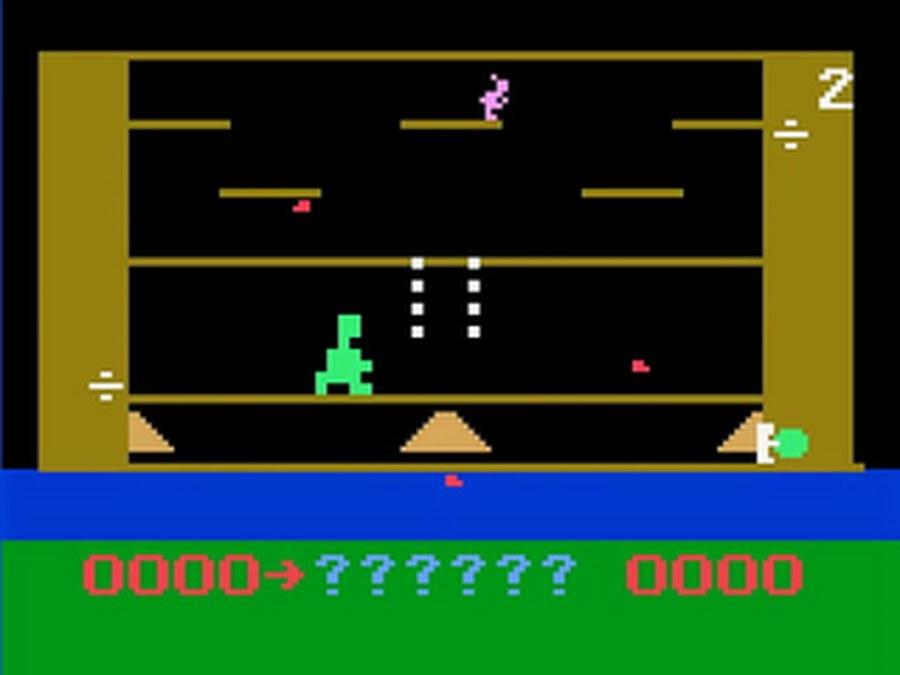
Popeye · Odyssey 2 / Videopac · Parker Brothers, 1983 · Platformer
The third of Parker Brothers’ European arcade conversions sends Popeye through the multi-level dockside collecting Olive Oyl’s hearts while Brutus stalks the platforms and the Sea Hag lobs bottles. The Odyssey 2 version compresses Nintendo’s arcade original hard — levels shrink, detail thins — yet the spinach still turns the tables, the climbing structure still reads, and the licence still charms. Alongside Frogger and Q*bert it demonstrates the strange geography of 1983: the biggest arcade names reached this console only through its European door. Complete Videopac copies are the collectible form.
The Great Wall Street Fortune Hunt

The Great Wall Street Fortune Hunt · Odyssey 2 / Videopac · Magnavox, 1982 · Board game hybrid
The one Master Strategy game not reviewed individually in this package — it anchors the series feature instead — earns its gem listing on the table, not the screen. Players trade across a board of companies with cards and a booklet in support while the console tracks the market and the money: a finance game refereed by a television, in 1982, that teaches the vocabulary of shares and speculation by making a family evening of it. Loose cartridges are half an object; complete copies, with board and components counted, are the series’ sleeper collectible and its most modern-feeling evening.
Nimble Numbers Ned!

Nimble Numbers Ned! · Odyssey 2 / Videopac · Magnavox, 1982 · Educational / action
A Voice-supported educational action game in which Ned’s number challenges arrive with spoken encouragement — the module as tutor again, this time for arithmetic. The design wraps its drills in a platform-flavoured chase, so the practice moves at game speed, and the difficulty variations let it serve a span of ages. It never crossed to Europe — an English-speaking voice cartridge had no Videopac market — which makes it a distinctly American piece of the library: the keyboard console, the talking module and the classroom ambition in one small cartridge. Sid the Spellbinder!’s numerical sibling, and nearly as likeable.
Type & Tell!
Type & Tell! · Odyssey 2 / Videopac · Magnavox, 1982 · Voice utility
Type & Tell! is barely a game and entirely a marvel: type words and sentences on the keyboard and The Voice speaks them back, assembling speech from the module’s palette at the player’s direction. In 1982 this was a parlour trick from the future — the essential first cartridge for demonstrating the module, a make-it-say-anything toy bounded by the chip’s vocabulary and pronunciation. It will not hold a modern player as a game because it never claimed to be one; as a piece of speech-synthesis history you can hold, it is unmatched on any console of the period, and every Voice collection starts here.
Casino Slot Machine!

Casino Slot Machine! · Odyssey 2 / Videopac · Magnavox, 1980 · Casino simulation
The Odyssey 2 digitised the whole parlour in its early years, and this 1980 cartridge is its one-armed bandit: a faithful slot machine simulation with the system’s clean graphics, a running bankroll and the essential psychology of the machine intact — near-misses engineered to feel like promises. There is less game here than in Pachinko!, its luck-based sibling, but as a two-player bankroll contest across an evening it does exactly the job its box promised, and early-library completists will find it one of the more atmospheric of the simple conversions: all anticipation, rendered in three reels.
I’ve Got Your Number!

I’ve Got Your Number! · Odyssey 2 / Videopac · Magnavox, 1979 · Educational
From 1979, one of the first educational cartridges for any console: number recognition and early maths presented as games for young players, using the keyboard the way the system’s designers always hoped it would be used — as the child’s interface to a patient machine. It is simple by design and by era, and its historical weight exceeds its depth: before edutainment was a market category, Magnavox was building it into a launch library. Pair it with Math-A-Magic! / Echo! for the full picture of the Odyssey 2’s classroom — the ambition that Sid and Ned later gave a voice.
Two honourable mentions belong on the record, because a ten-entry list on this system leaves deserving cartridges standing at the door. Super Cobra, Parker Brothers’ fourth European conversion, is the hardest of the imports to find and the easiest to respect — a scrolling shooter of real ambition squeezed through the Videopac door. And Smithereens!, the catapult duel with Voice support, is the talking library’s most playable omission here: two castles, two catapults, and a module shouting the score. Either could anchor an eleventh entry; that the list had to argue about its overflow is the best evidence that the Odyssey 2’s second shelf is deeper than its reputation.
How to buy the second shelf
The economics of the gems are as friendly as their reputations are quiet. The Imagic pair trade at modest prices on both sides of the Atlantic; the Parker Brothers conversions carry the import premium their European-only release guarantees, with Frogger the most attainable and Q*bert the trophy; the educational and parlour titles are among the cheapest cartridges on the system in any condition; and The Great Wall Street Fortune Hunt follows the Master Strategy rule — loose is a sample, complete is the game. A patient buyer can assemble nine of these ten for less than one fashionable cartridge on a rival system, which is the Odyssey 2’s enduring gift to collectors: its obscurities are priced like obscurities, however good they are.
Start with Demon Attack, because it converts sceptics fastest, and Atlantis straight after it. Add the Fortune Hunt when a complete copy surfaces at a fair price. Let Frogger talk you into a European order you will pretend was only about the postage. The famous Odyssey 2 games will still be there when you get back — the second shelf is where this console keeps its surprises, and surprises, on a forty-year-old system, are the rarest cartridges of all.
That is the second shelf: two Imagic shooters that proved outside developers could master the hardware, three Parker Brothers conversions that only Europe received, a stock-market board game, two pieces of the Voice’s educational wing and the parlour in cartridge form. A collection built from this list alone would look eccentric and play beautifully — which is, in the end, the Odyssey 2’s whole character in ten cartridges.