
Somewhere in the overlap between two of the world’s great collecting hobbies sits a small plastic arcade cabinet, built from bricks, wearing Sega artwork, with room inside for a miniature hero to play miniature games. The Sega Classic Arcade Machine began life as a fan proposal on LEGO Ideas — the platform where builders submit designs for public voting, with sets reaching ten thousand supporters earning an official review and a shot at production. The proposal, first posted in the mid-2010s and revisited as later Sega-themed submissions followed the same path, captured something obvious in hindsight: LEGO and the arcade are both arts of building joy at small scale, and Sega’s blue-sky era was practically designed in the colours of a brick box.
What the proposal imagined
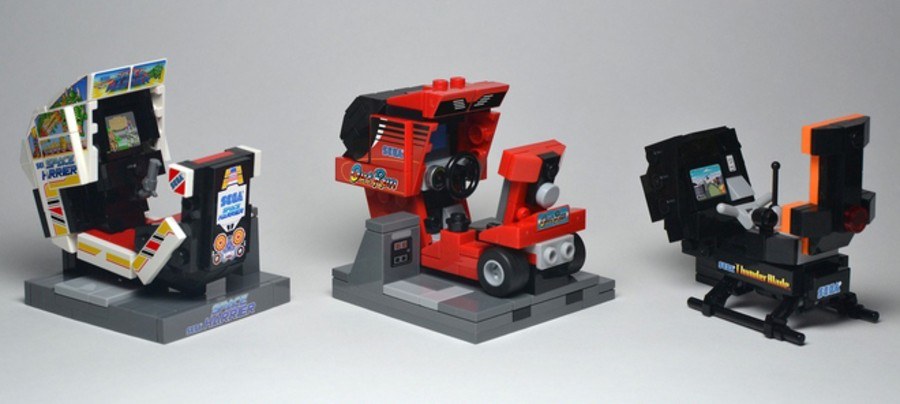
The fan design centred on a buildable upright cabinet styled after Sega’s classic machines, decorated in the spirit of the company’s golden-age artwork and sized as a display piece for a desk or shelf. The charm was in the layering: a brick-built marquee, a screen showing a tiny scene from a classic game, controls at minifigure scale, and the suggestion that Sega’s world — the hedgehog, the arcade racers, the brawlers — could be commemorated in the same medium as LEGO’s castles and spaceships. Like all Ideas submissions, it was a prototype of enthusiasm as much as of plastic: the ten-thousand-vote threshold exists precisely to prove that a niche is a market, and retro gaming submissions have repeatedly cleared it.
Why Sega and LEGO turned out to fit
The years since those early proposals have vindicated the idea comprehensively. LEGO’s gaming line grew from experiment to pillar: the Sonic the Hedgehog theme became a full range with sets from Green Hill Zone dioramas to display pieces; Nintendo partnerships produced everything from interactive figures to a brick Game Boy; and LEGO’s Icons and Ideas lines proved adult collectors will pay handsomely for display models of beloved machines — including, in the Atari 2600 set, a games console rendered in bricks complete with miniature game scenes. The Sega arcade proposal was early to a party that is now in full swing. The remaining gap in the line-up is precisely the one the fan design identified: the cabinet itself, the furniture of the golden age, as an object worth building.

The Ideas gauntlet, explained
For readers unfamiliar with the process: a LEGO Ideas submission that reaches ten thousand supporters enters a review board assessment covering brand fit, licensing, manufacturability and commercial viability. Most reviewed projects are not selected, and the reasons are usually structural rather than a verdict on quality — a licence already in negotiation elsewhere, a theme too close to an existing line, a parts count that cannot hit a price point. Sega’s own LEGO relationship, which flowered years after the arcade proposal with the Sonic range, shows the door was never closed; it simply opened onto a different product first. Fan designers, meanwhile, keep the flame: MOCs — ‘my own creations’, in community shorthand — of Sega cabinets circulate as instructions and kits through the fan marketplace, legal fan-built tributes that prove the demand persists.
The fan scene that never waited for permission
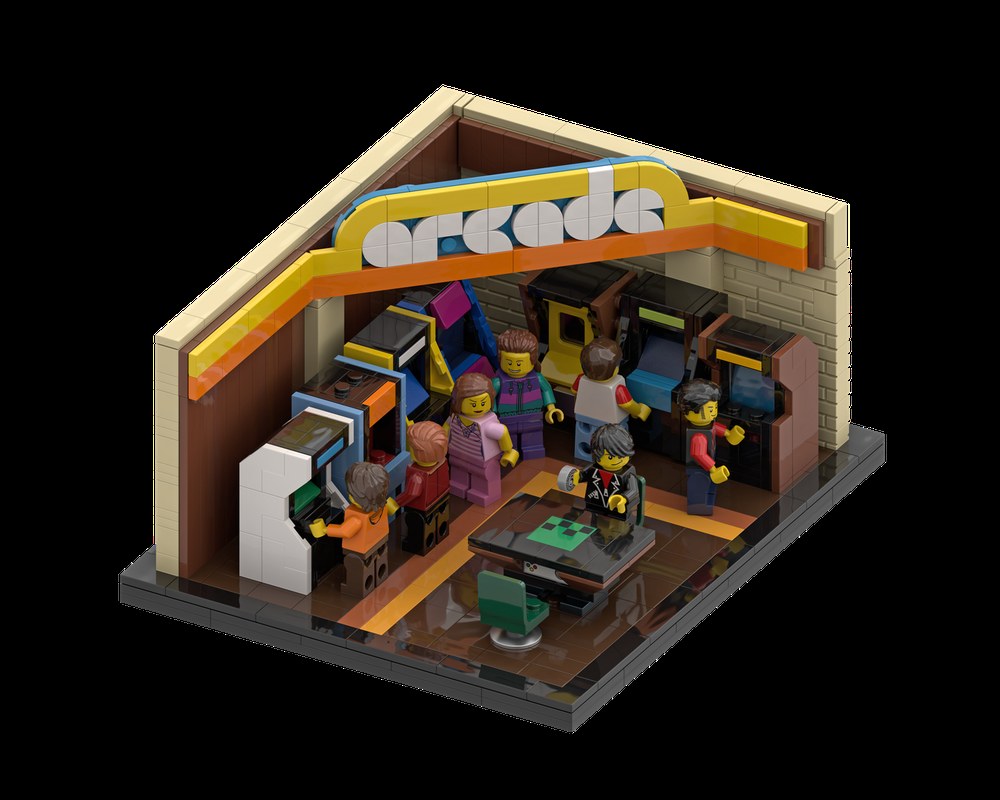
While officialdom deliberated, the fan community simply built the thing, repeatedly. The MOC ecosystem around LEGO gaming is now substantial enough to function as an unofficial product line: talented designers publish instructions for arcade cabinets in every major style — upright, cocktail, candy cab — scaled for minifigures or for the desk, and specialist marketplaces sell the custom printed elements, marquees and tiles that official sets would use. Sega subjects recur constantly in these designs, for the simple reason that Sega’s arcade artwork, all saturated blues and confident typography, translates into brick form beautifully. Some fan cabinets incorporate working electronics — tiny screens running actual games — collapsing the distance between model and machine to nearly nothing.
This matters to the official story for a practical reason: LEGO reads its fan community the way game publishers read modding scenes, as research conducted at no cost. The persistence of Sega cabinet MOCs across a decade, the sales of the Sonic and gaming Icons lines, and the demonstrated adult appetite for buildable hardware all argue the same commercial case the original Ideas proposal made with ten thousand votes. Fan proposals on LEGO Ideas have a long history of arriving early and being proven right late; the platform’s graveyard of rejected-but-beloved gaming projects is, in effect, a museum of good ideas awaiting their licensing weather. The Sega arcade machine’s weather has been improving for years.
Why bricks and arcades belong together
It is worth pausing on why the combination resonates so deeply, because the answer explains a decade of fan devotion. LEGO and the arcade are the two great modular arts of the twentieth-century childhood. Both are built from standardised parts combined into wonders; both reward the collector’s instinct to complete a set, a shelf, a row; both turned their limitations — the brick’s stud grid, the cabinet’s single screen — into unmistakable visual languages. A LEGO arcade cabinet is therefore not a model of a thing so much as a translation between two dialects of the same language, and builders feel that kinship in their hands. The Sega proposal’s supporters were not merely voting for a product. They were voting for the recognition that these two worlds had always been one — a recognition the toy industry has spent the years since catching up to, one licensed games set at a time.
What an official set should do
If LEGO ever green-lights the concept — and the trajectory of its gaming partnerships suggests the conversation stays alive — the winning formula is visible in its best gaming sets. Build the cabinet as the hero: authentic silhouette, swappable screen scenes representing multiple Sega classics, printed rather than stickered artwork where the budget allows, and a scale that sits happily beside the Atari 2600 and Game Boy models on an adult collector’s shelf. Add one minifigure-scale joke — a tiny player, a brick built from bricks — and the set understands its audience completely. Until then, the proposal remains a case study in how fan culture now works: an idea posted by a hobbyist a decade ago sketched the product strategy of two enormous companies, and the internet kept the receipt. The cabinet may yet take its place on the shelf. In LEGO, as in arcades, patience is just another form of credit.
Postscript: build the dream anyway
There is a practical moral for readers who have made it this far with their interest caught. You do not need to wait for an official box. The fan ecosystem around LEGO gaming is welcoming, well documented and full of builders at every skill level, and a Sega-flavoured cabinet is an ideal first MOC: a forgiving geometry, a glorious colour palette, and a subject that forgives approximation because its spirit is graphic rather than sculptural. Start with the marquee, builders advise, because the marquee is the promise the rest of the model has to keep. Source your printed elements from the community’s specialists, light the screen if you are feeling ambitious, and place the finished cabinet where it will be seen daily rather than admired occasionally. The original proposal’s author understood something essential: some objects earn their place not by utility but by the small, reliable lift they give a room. An official set may still come. Until it does, the bricks are available, the instructions are a search away, and the arcade, as always, rewards those who insert coin and begin.