At a glance: Ten PlayStation 3 exclusives the charts forgot — the strange, the beautiful and the unfairly buried, each one still worth hunting down.
Every console’s history gets written by its blockbusters, and the PlayStation 3’s blockbusters were very big indeed. But the machine’s soul lives further down the shelf: in the experiments Sony’s studios and partners were allowed to make when the company was spending wildly to prove its strange new hardware could do anything. Some of these ten games sold respectably and were simply outshone; some were commercial disasters on arrival and cult treasures ever since. All ten are PS3 exclusives (or were born there), none has a standalone review elsewhere on this shelf, and every one of them will tell you something about the console that the famous games cannot. Prices on the second-hand market are already moving on several of them. Consider yourself warned, and go hunting.
1. Tokyo Jungle
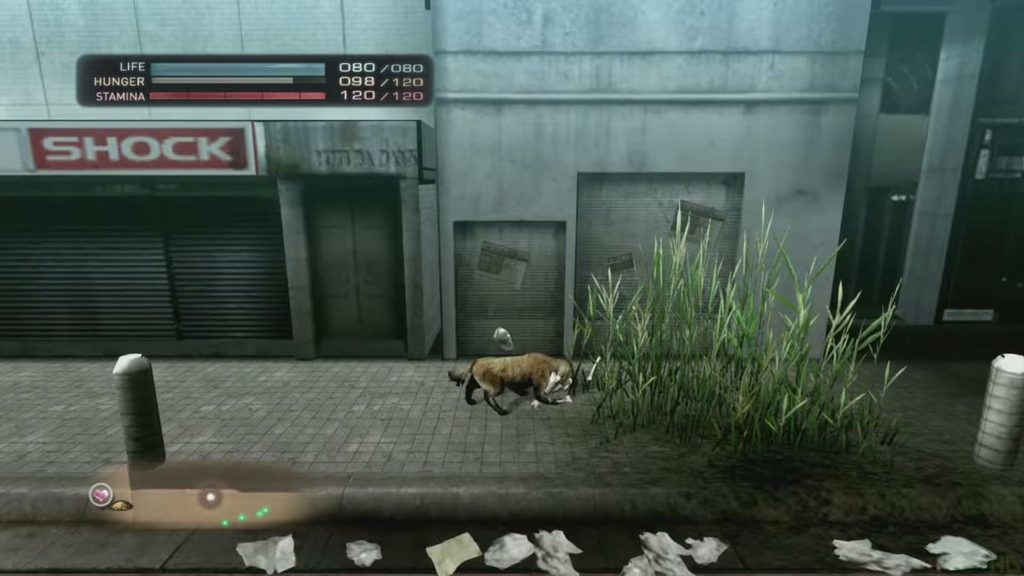
Humanity is gone, the pets and zoo animals inherited Tokyo, and you are a Pomeranian. Tokyo Jungle’s survival simulation — eat, hunt, mate, claim territory, and climb the food chain from house pet to apex predator across generations of your bloodline — sounds like a joke and plays like a nature documentary directed by a maniac. Start as a dog dodging cats and crocodiles in flooded Shibuya; unlock deer, lions, bears, and eventually dinosaurs in an unlock tree that keeps escalating its own premise. The survival mode’s generational structure, where your descendants inherit your territory and your mistakes, was years ahead of the survival genre’s mainstream. It was a download-only oddity in the West in 2012 and it remains completely unique. Nothing else on any console has ever been this game.
2. Flower

Thatgamecompany’s second game is the gentlest argument ever made for motion controls: tilt the controller, steer a petal on the wind, wake fields of sleeping flowers into bloom and music. Each level is a dream of a flower in a city windowsill, and the dreams darken — from meadows to a night valley of dead power lines — into one of the medium’s great environmental fables, told without a word. It takes an hour. Players have cried at it for fifteen years. Before Journey made the studio famous, Flower proved on the PS3 that a game could be about restoration instead of destruction, and its influence on the entire “cozy” movement that followed cannot be overstated. Play it in the dark, loud, in one sitting.
3. Heavenly Sword
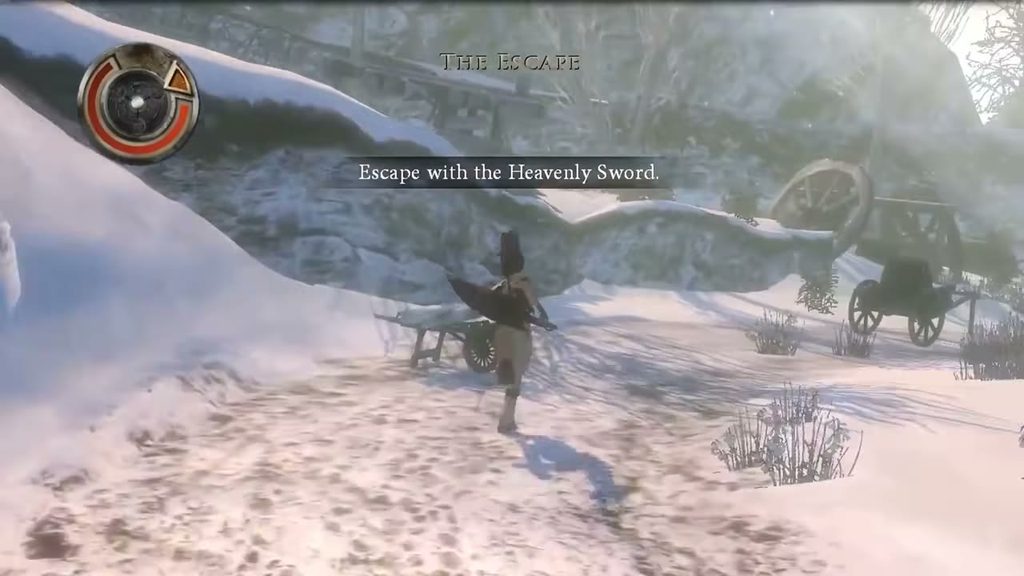
Ninja Theory’s 2007 launch-window epic was marketed as a tech demo with a sword, and history has been unfair to it. Nariko — performed by Anna Torv, with Andy Serkis as the villainous King Bohan and as the game’s dramatic director — remains one of the era’s great game performances, and the combat system, stances shifting with shoulder buttons, archery sequences steered in guided first-person, and set-pieces on a scale the young console could barely hold, is deeper than its God of War comparisons suggested. It is short, its frame rate strains, and its final hours contain some of the PS3’s most operatic boss theatre. As a fossil of the moment when game acting grew up, it is essential.
4. Folklore

A murder mystery split between a sleepy Irish village and the realms of the dead, played as two protagonists whose chapters interleave — journalist Keats and the girl Ellen, who receives a letter from her mother, seventeen years dead. Folklore’s genius is its combat grammar: defeat the folk — the spirits of the netherworlds — by yanking their ids out with a flick of the Sixaxis, then summon them as your own weapons, building a bestiary arsenal realm by realm. Game Republic’s art direction, all storybook gloom and Celtic knotwork, gives each underworld its own painterly identity. It sold poorly in 2007, was nearly impossible to find for years, and is now rightly spoken of as one of the PS3’s great lost adventures.
5. 3D Dot Game Heroes

Silicon Studio built a love letter to 8-bit Zelda in three-dimensional pixels: the kingdom of Dotnia rendered in voxels, a hero (customisable in a full character editor, block by block) whose sword grows to fill the entire screen when his health is full, and dungeons that homage the 1986 template with a wink in every room. The joke could have been one-note; the execution — cracking action, a proper overworld, minigames, a tower defence mode, and a script that adores its source material without merely quoting it — sustains a full-length adventure. It is also a time capsule of the brief, happy era when a major publisher would ship a game whose entire premise is “what if sprites were cubes?”
6. Afrika

You are a photojournalist on assignment in an unnamed African reserve, and your weapon is a camera Sony licensed for real. Afrika is a photography game of genuine patience: learn animal behaviour, bait and wait, frame the shot the magazine asked for, and watch your ranking — and budget for better lenses — climb. There is no fail state but a wasted roll of light. Rhino Studios built one of the PS3’s most peaceful objects, and the West nearly didn’t get it; it arrived quietly in 2009 as Hakuna Matata in some territories and vanished. For players burnt out on the console’s war stories, it remains the great palate cleanser of the library — a safari that respects both the animals and the player’s intelligence.
7. Siren: Blood Curse

The Forbidden Siren series’ PS3 reinvention was released in 2008 as twelve downloadable episodes — years before episodic horror was a business model — retelling the story of an American film crew trapped in a Japanese village unstuck in time, where the dead Shibito hunt by routines you can see through, literally: the sightjack mechanic splits your screen with an enemy’s viewpoint, so navigation becomes reading the patrol’s own eyes. It is the most frightening game on the console, mechanically singular, and structured with a television writer’s sense of the cliffhanger. Physical copies are scarce outside Japan and Asia; the hunt is worth it for horror devotees, and so is playing it with the lights exactly as the game prefers them: off.
8. MotorStorm: Pacific Rift
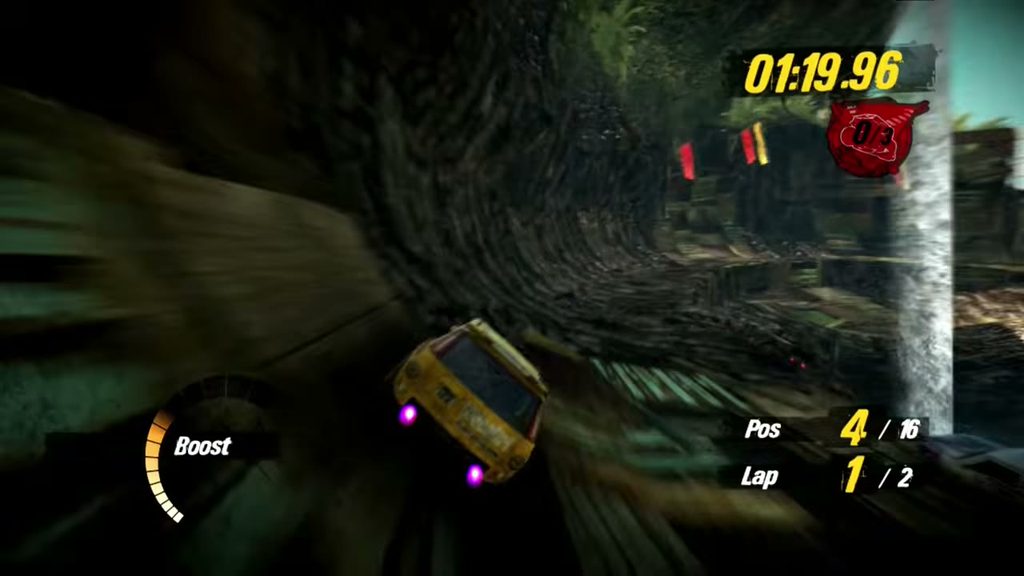
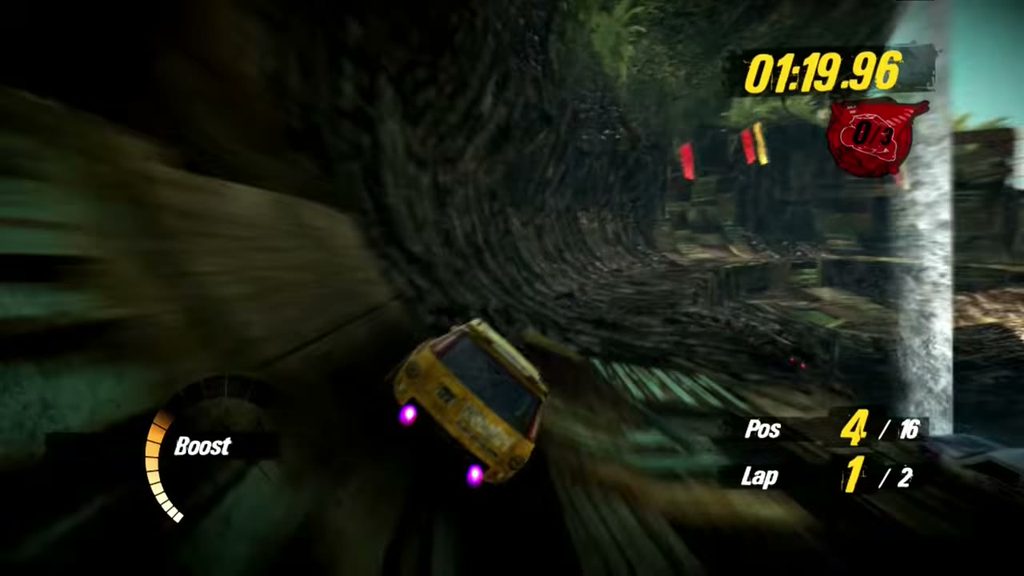
The first MotorStorm was a launch-window mud wrestle; Pacific Rift is the finished idea — a festival of off-road violence across a volcanic island, with sixteen tracks sorted by element (earth, air, fire, water), vehicle classes from bikes to monster trucks each with their own lines through the same chaos, and the boost system’s brilliant risk economy: boost runs hot, water cools it, lava and crashes end arguments. Split-screen for four, a photo mode ahead of its time, and an AI that races like it holds grudges. Evolution Studios never made a bad racer, and this is their PS3 peak — a game whose mud, speed and spite the arcade racing genre has missed ever since the studio closed.
9. Warhawk
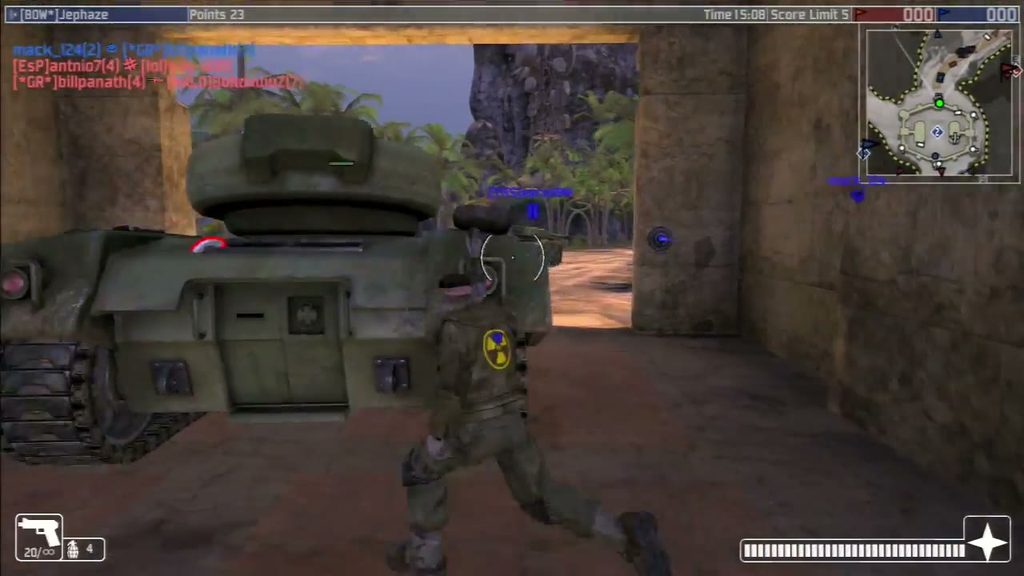
In 2007, when online console multiplayer meant a headset and a prayer, Warhawk shipped as a 32-player combined-arms war — infantry, tanks, jeeps, anti-air guns and its transforming namesake aircraft, half jet, half hover-mech — on maps that still teach lessons in scale and sightlines. It launched download-first with a boxed version bundled with a headset, pioneered dedicated-server support on the console, and built a community so durable that fan servers resurrected it after the official ones died. There is no single-player campaign to speak of, which kept it off best-of lists then and keeps it here now: as a pure multiplayer design, taught in one afternoon and deep for years, it was the PS3 online scene’s first masterpiece.
10. Rain
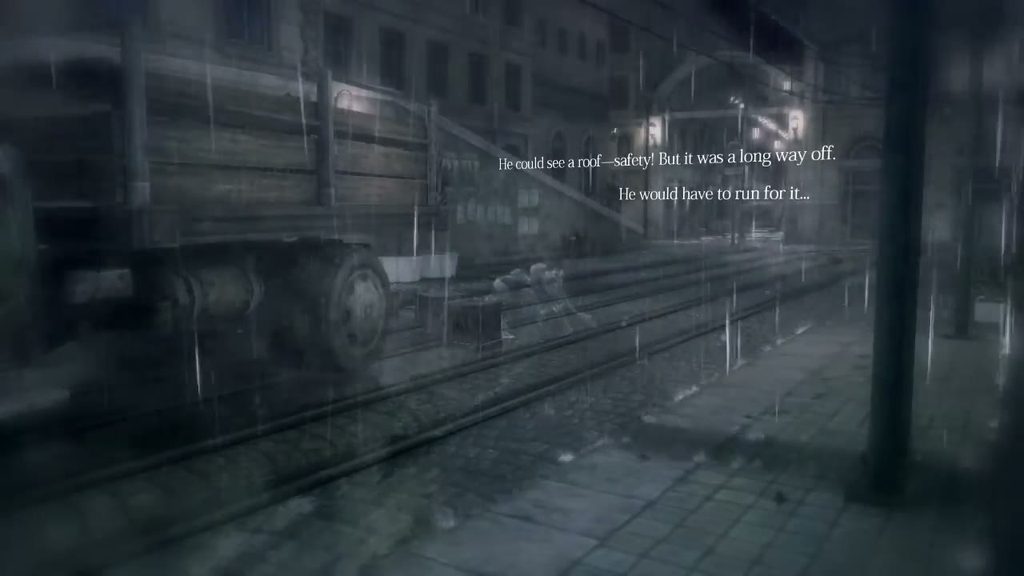
A boy wakes invisible in a rain-drowned city, visible only where the rain strikes him — and so is the creature hunting him, and so is the girl he follows through the flooded streets. Rain (Lost in the Rain in some territories) is a stealth fable built on a single perfect mechanic: shelter makes you vanish, exposure makes you seen, and every puddle is a decision. Japan Studio’s most melancholy miniature plays like a picture book illustrated in water, its Debussy score falling with the weather. It is brief, gentle and quietly devastating, and it was released in the same autumn storm of launches as Puppeteer — the PS3’s late period was an embarrassment of exactly this kind of riches, and almost nobody was still watching. Be watching now.
Honourable mentions, for the deeper dig
Ten slots cannot hold the whole story, and a list that pretended otherwise would not be doing its job. If these ten whet the appetite, the next shelf down is just as rewarding: Echochrome, the Escher puzzle game that treats impossible architecture as a control scheme; The Eye of Judgment, the trading-card game played with real cards under a camera, a decade before augmented reality had a name; Buzz! Quiz World, still the best buzzer-based quiz night the console can host; SingStar’s enormous PS3 catalogue, for households that measure a console in parties; Fat Princess, the capture-the-flag battler with a cake economy; PixelJunk’s whole PSN catalogue, Eden and Monsters first; Shatter, the brick-breaker rebuilt as an electronic symphony; Wipeout HD, the anti-gravity racer whose Fury expansion made it the PSN’s first essential download; Super Stardust HD, the twin-stick shooter that taught the console’s owners what the right stick was for; and Dead Nation, the zombie twin-stick from the same studio, best played in co-op at 2 a.m. None of these needed the charts either. All of them are waiting in the same bargain bins, at the same forgiving prices, for the same reason the ten above are: the PS3’s catalogue is simply deeper than its reputation, and depth is what shelves are for.
How to hunt them
A practical closing note, since a gems list that sends you out empty-handed has failed at its only job. Several of these ten were download-first or download-only in the West — Tokyo Jungle, Flower, Rain and Siren’s episodic release among them — so the PS3’s own store, while it lasts, is part of the hunt, and wallet funds added via a modern console or the web are the key that still turns. The disc releases reward regional thinking: Siren and Afrika both had fuller physical lives in Japan and Asia, and PS3 games are region-free, so an import copy with an English option is a legitimate grail rather than a compromise. For the rest, the rule of the current market applies — condition first, patience second, and buy the strange ones when you see them rather than when you get around to them. Gems do not stay buried once people start digging, and this console’s digging season has clearly begun.
The hunt, summarised
Ten games, ten different arguments for the same console: a Pomeranian survival epic, a petal on the wind, a cursed swordswoman, an Irish ghost story, a voxel Zelda, a safari camera, episodic horror, mud racing, a 32-player war and a boy made of rain. The PS3’s famous games made it a blockbuster machine. These made it a strange and wonderful one. The charts forgot them. The shelf should not.