
At a glance: Puppeteer · PlayStation 3 · Japan Studio / Sony Computer Entertainment, 2013 · Platformer · Score: 8.5/10
In September 2013, with the PlayStation 4 two months from launch and the industry already packed and moved, Sony’s Japan Studio released a platformer staged entirely as a puppet theatre production — complete with a narrator arguing with the cast, an audience that gasps and applauds, spotlights, painted flats, and a hero whose head keeps getting stolen. Puppeteer was ignored by the calendar and adored by everyone who found it. It remains the PS3’s most theatrically inventive game: a platformer that treats its own artifice as the show, and a farewell gift from the console’s most imaginative studio.
The boy who lost his head
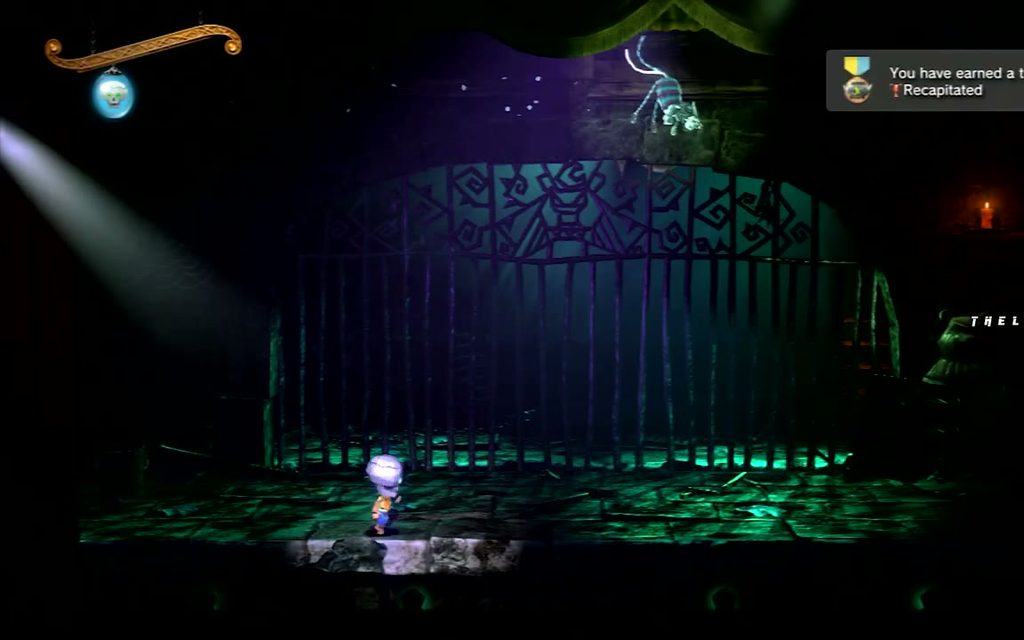
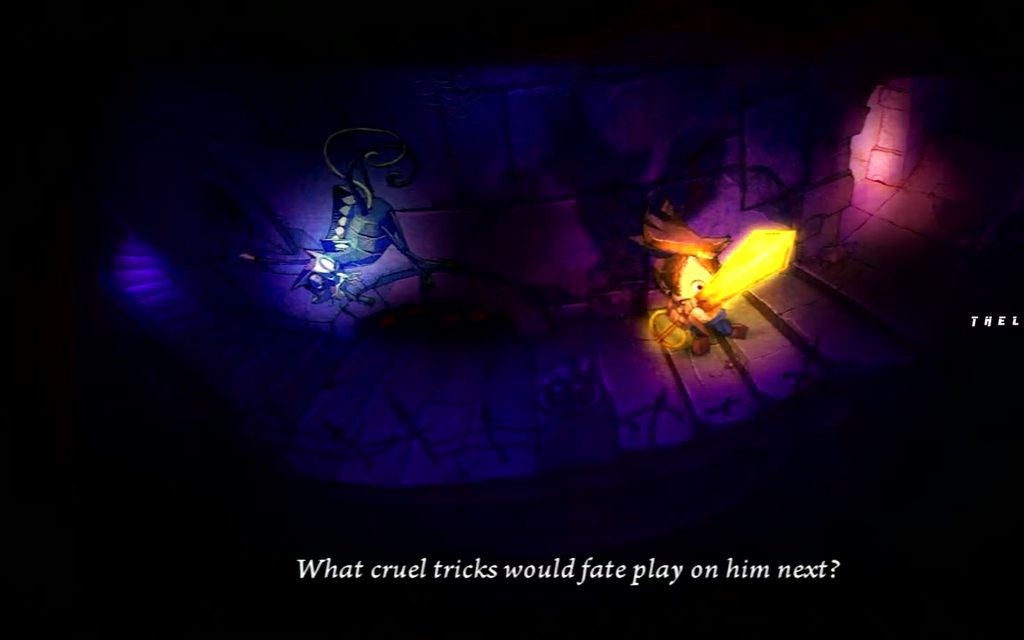
Kutaro is a boy whose soul is snatched to the Moon, stuffed into a wooden puppet, and promptly decapitated by the Moon Bear King, who eats children’s souls and keeps a whole court of animal generals. Armed with Caliburus — a giant pair of magical scissors stolen from the tyrant’s own castle — and guided by a flying cat and a sardonic sun princess with her own agenda, Kutaro crosses the Moon’s kingdoms to steal back the Moon Goddess’s shards and his own head. Heads, plural, are the game’s loveliest system: Kutaro collects dozens of substitute heads — a skull, a hamburger, a knight’s helm, a spider — each wearable, each losable (three hits and it rolls away; catch it or it’s gone), and each secretly the key to a bonus stage or secret when used, or merely brandished, in the right place. It is a collectible system with a dramatist’s soul: the hero’s identity is literally interchangeable, and the game keeps finding jokes and puzzles in the fact.
Scissors as a way of life
Caliburus is the mechanic everything hangs on, and it is a beauty. Cutting is movement: snip through cloth banners to climb them mid-tear, ride the scissors along seams in the scenery, shred enemies’ fabric bodies, and in the game’s signature trick, cut continuously through a falling curtain or a stream of sparks to fly — a slashing arc you steer with the stick, chaining cuts to cross impossible gaps. The platforming around it is precise and generous, the level design theatrical in construction as well as dressing: curtains part on new sets, scenery rotates and folds, a wild-west town, a Halloween forest, a deep-sea carnival and a Mexican wrestling ring of the dead each arrive as complete stage productions with their own mechanics. Boss fights are multi-act spectacles against the animal generals — a weaver spider, a rat pirate, a bull matador — choreographed like set pieces in a play that knows it is a play.
Puppeteer does not break the fourth wall. It never built one — the audience coughs, the narrator spoils the plot, the scenery is visibly cardboard, and the honesty makes the magic stronger.
A production in every sense
The presentation is a total commitment. Everything is lit by stage lighting that follows the action like a spotlight operator; the narrator, a professorial voice in the flies, bickers with the witch Ezma and occasionally with the audience; applause swells at triumphs and gasps at reversals. The voice cast is superb, the script is genuinely funny in the pantomime tradition — broad for children, sly for adults — and Patrick Doyle’s orchestral score gives the little theatre a film’s emotional range. Two players can share the stage, the second controlling Kutaro’s companions with the Move or a controller, in the era’s best implementation of helper play. The PS3’s power is spent not on realism but on density: layers of scenery, cloth physics, particle sparks from every cut, an image that looks like a storybook photographed at the theatre.

The timing tragedy
It would be dishonest to review Puppeteer without its circumstance: Sony released a new platforming IP, digital-first in price yet boxed, into the teeth of a console launch it was itself conducting, and the game sold accordingly. Critics decorated it; the market was looking at the PS4. Japan Studio is gone now, absorbed in a restructure, and its catalogue — this, the Ape Escapes, Gravity Rush’s console cousins — reads like a museum of the road not taken. Puppeteer has never been ported. The PS3 disc, or its PSN download, is the only legal stage it performs on, which gives playing it the feeling of visiting a theatre that should have had a longer run.
Small caveats from the stalls
The campaign is a comfortable seven or eight hours, and its difficulty is tuned for the family audience the production invites — veterans of precision platformers will finish most stages on applause rather than sweat, with the challenge living in head-hunting and the genuinely tricky later scissors flights. Co-op is charming but asymmetrical by design. And the frame rate occasionally dips when the stage machinery goes all-out. These are programme notes, not objections.
Japan Studio’s signature
To understand Puppeteer you have to understand the studio that made it, because Japan Studio was the PS3 era’s conscience. While Sony’s western teams chased the blockbuster, the Tokyo studio and its collaborators kept producing the strange, authored, slightly uncommercial objects that give a catalogue its character: the gravity experiments, the ape comedies, the miniature masterpieces like this one and its contemporary Rain. Puppeteer’s theatricality is not a gimmick pasted onto a platformer; it is the studio’s whole philosophy staged — games as performances, made by visible hands, in which the audience is a participant and the machinery is part of the charm. The narrator is, in a real sense, the developer, walking you through their puppet theatre and arguing with their own characters when the plot misbehaves. That a game this self-aware was also this warm, this playable by a seven-year-old and this quotable by adults, is the Japan Studio trick in its purest form. The studio’s absorption into a larger structure in 2021 ended that particular tradition inside Sony, which makes its late PS3 works read now like a farewell tour nobody announced. Puppeteer is the tour’s finest night: full house in spirit, whatever the box office said, and a standing ovation still in progress.
Encore notes
For players who finish the show and want more curtain calls: the head-collection is the game’s true second act, since whole bonus rooms hide behind wearing the right head in the right scene, and the picture-book chapters between acts reward a listener’s attention with backstory the stage play only hints at. A second run, head-hunting with a guide closed and memory open, is the intended encore — the production was built to be performed twice.
And if the theatre metaphor still sounds like a barrier, let it be lowered here: underneath the greasepaint this is a confident, conventional, beautifully made platform game, the kind any era would be proud to shelve. The greasepaint is simply what makes it unforgettable.
The verdict
Puppeteer is the PS3’s hidden masterpiece in plain sight: a platformer of wit, warmth and mechanical invention, staged with a theatricality no other game has attempted at this scale. That it arrived as its console was leaving the stage is the industry’s loss and the collector’s opportunity. Take your seat. The audience is already gasping.
Score: 8.5/10 — A puppet show with the soul of a classic. Japan Studio’s PS3 farewell deserves its encore.