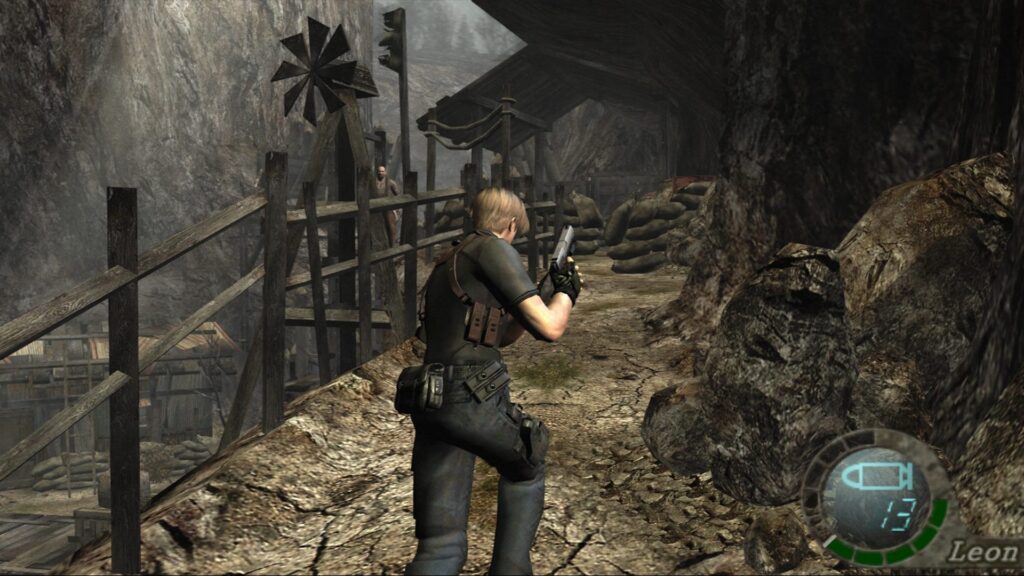
At a glance: Resident Evil 4 · GameCube · Capcom Production Studio 4, 2005 · Survival action · Score: 9.5/10
Some games are excellent. A smaller number rearrange the furniture of an entire medium, and Resident Evil 4 is one of those. When it launched on GameCube in January 2005 — the flagship exclusive of Capcom’s famous five-game pledge to the console, and for its first year the only place you could play it — it quietly replaced survival horror’s fixed cameras and tank controls with an over-the-shoulder viewpoint so obviously right that virtually every third-person action game since has used some version of it. This review covers that GameCube original specifically: two discs, 480p if your setup and console revision allow it, and the version against which every later port, including the well-known PS2 edition with its compromises, was measured.
Leon goes to Spain
Six years after Raccoon City, Leon S. Kennedy — no longer the rookie cop of Resident Evil 2, now a government agent with a quip for every occasion — is sent to a remote European village to rescue the president’s daughter, Ashley Graham. The villagers are not zombies. That single sentence was the game’s revolution in miniature: the Ganados dodge, flank, climb, throw weapons, set traps and work together, and they do it in daylight, in a place that feels lived-in rather than haunted. The famous opening village siege, in which the church bell is your only salvation, remains one of the great set-pieces in gaming — a tutorial in panic that teaches you the entire combat system in about four minutes.
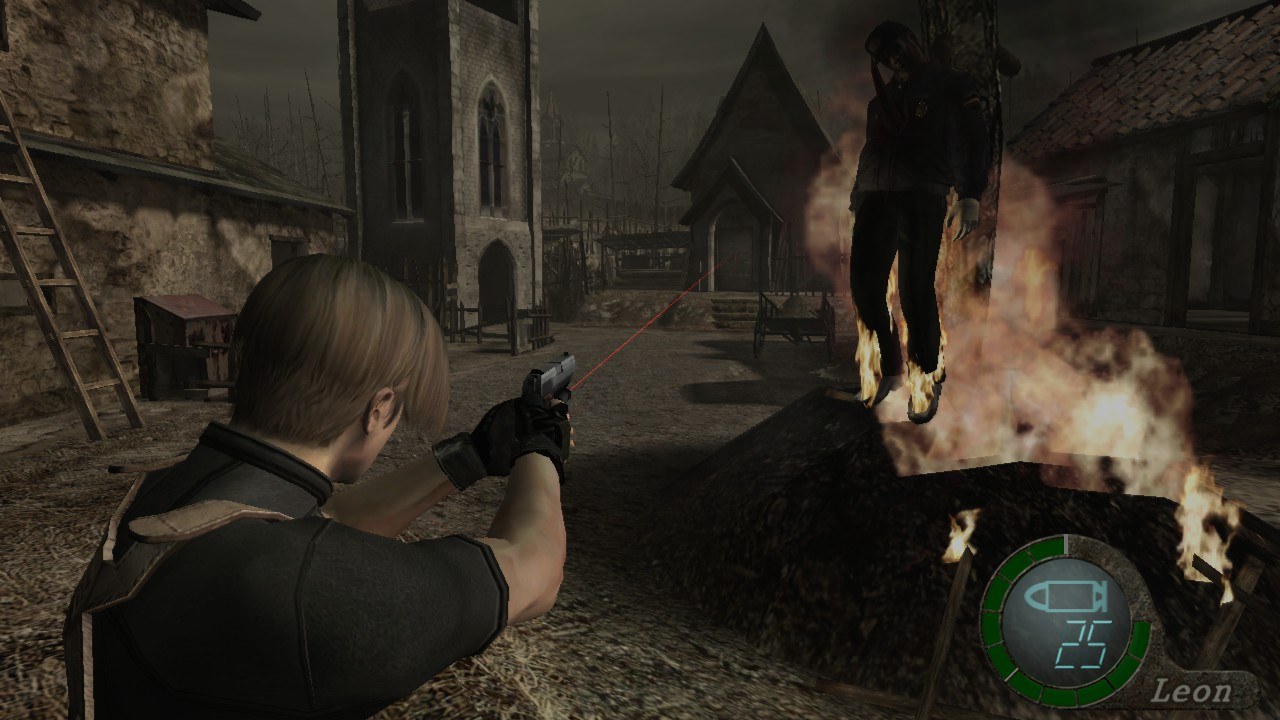
Director Shinji Mikami rebuilt the series around a single decision: aim where you look. The laser sight, the stop-and-shoot stance, the knife as a genuine tool — the system deliberately denies you the ability to move and fire at once, a restriction modern players sometimes question for about an hour before understanding it. That planted-feet tension is the horror. Enemies stagger, clutch specific wounds, drop to knees; a headshot sets up a roundhouse kick, a leg shot sets up a suplex, and crowd control becomes a physical, positional puzzle. Add the attaché-case inventory Tetris, the merchant’s cheerful menace, upgradeable weapons with real character — the Red9, the Broken Butterfly, the riot gun’s crowd-clearing authority — and you have a combat loop that action games still study.
Village, castle, island
The campaign’s three-act geography is its pacing masterclass. The village is grounded, muddy, desperate. The castle turns gothic and theatrical — cultists, catapults, a blind clawed terror in a corridor of bells, and the series’ most entertainingly unhinged aristocrat in Ramon Salazar. The island goes militarised and strange. Through all of it the game keeps introducing mechanics and discarding them before they stale: escort sections that mostly work because Ashley can be told to wait, hide, and duck; quick-time events that were novel in 2005 and are the one element that has genuinely dated; mine-cart and jet-ski escapes; boss fights against a lake monster harpooned from a boat and a certain special forces operative in a knife duel for the ages.
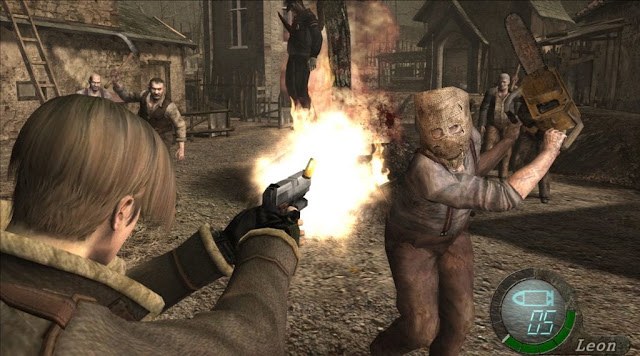
It is also, simply, a staggering technical showcase for the hardware. The GameCube original runs with detailed textures, real-time lighting and character models that embarrassed most of what followed on more powerful paper specs — and crucially, this is the version where the comparison is unflattering to later ports. The near-contemporary PS2 conversion, by common critical consent, cut visual corners, restructured some content and arrived months later; the GameCube disc was the reference release, and on a good display it still looks rich and deliberate today. Load times hide behind the famous door animations, the frame rate holds where it matters, and the two-disc span never interrupts the campaign’s rhythm.
And then you play it again
Resident Evil 4 understood replayability before it was an industry obsession. Completing the campaign unlocks The Mercenaries, the score-attack mode that could have sold separately, plus professional difficulty, alternative costumes and joke weapons with serious firepower. The GameCube original deserves one honest footnote here: the Separate Ways side campaign starring Ada Wong was created for the later PS2 version and is not on the GameCube discs — Ada’s shorter Assignment Ada mission is the original’s bonus instead. If that specific campaign matters to you, later editions have it. Judged on what the 2005 original contains, the package is generous to a fault.
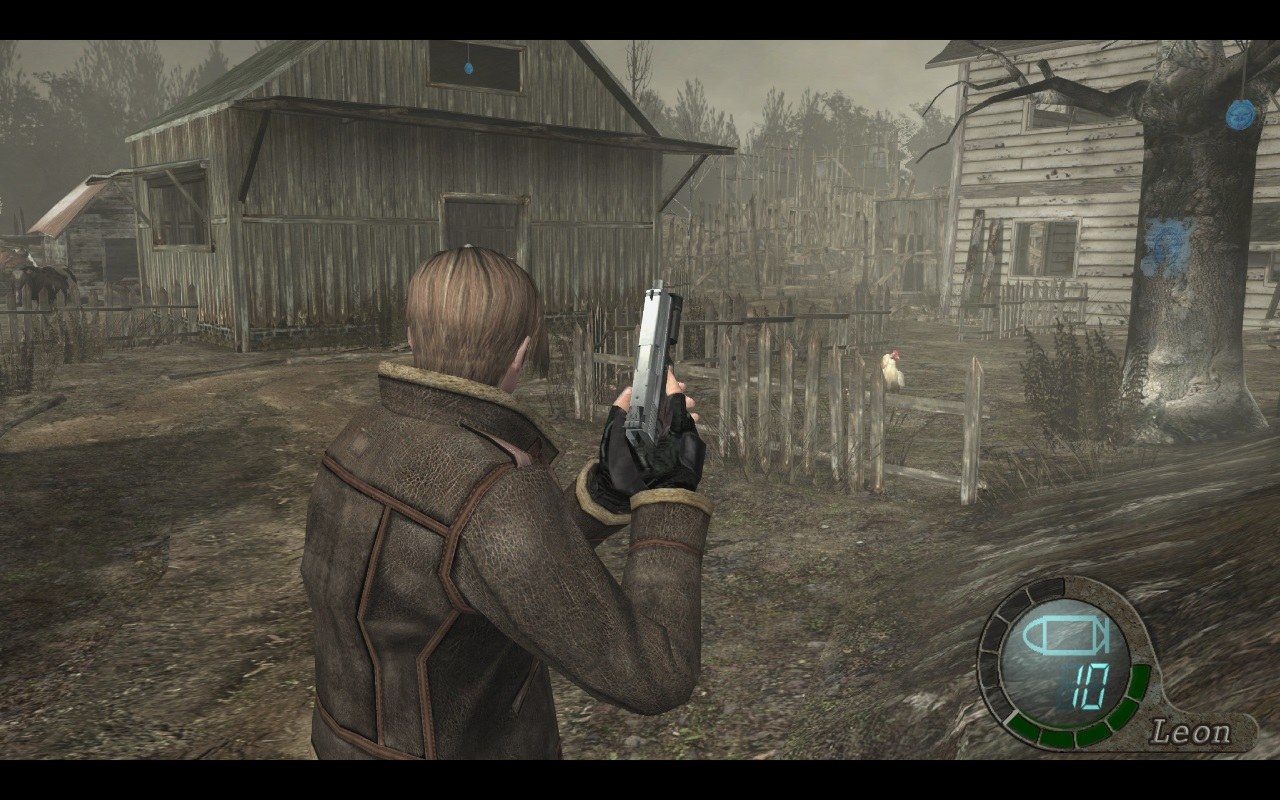
The writing walks a deliberate line between B-movie and blockbuster, and mostly lands it: Leon’s deadpan, Luis Sera’s charm, the merchant’s every line reading. The horror is real but the game is never po-faced, and that confidence — knowing when a chainsaw-wielding maniac should be terrifying and when a villain’s tiny statue mech is simply funny — is a large part of why it remains so replayable twenty years on.
A development saga worth knowing
The game that shipped was famously not the game that was announced. Resident Evil 4 spent years in development hell across several completely different prototypes — one, directed by Hideki Kamiya, was judged too action-oriented and spun off into an entirely new series: Devil May Cry. Another version, the so-called “Hook Man” build shown in early footage, leaned into hallucination horror. Mikami eventually took the director’s chair himself and rebuilt the project around the village, the Ganados and the over-the-shoulder camera, and that turbulence is worth knowing because it explains the finished game’s confidence: nearly every idea in it had been fought for against an alternative. The Capcom Five context matters too — Resident Evil 4 was the pledge’s crown jewel, the exclusive meant to prove the GameCube could host the industry’s cutting edge, and for its first year it did exactly that. That the exclusivity later dissolved does not diminish what the GameCube original represented, or the fact that it remains the version developed first, for this hardware, without compromise.
Small details reward the attentive even now: the way enemies react differently to flash grenades by species, the treasures that combine into more valuable sets, the shooting-range minigame’s bottle-cap figures, a merchant who upgrades your firepower with the enthusiasm of a man who has never met a stranger. It is a game dense with authored moments, right down to its letterboxed presentation — a cinematic choice that on period CRTs concentrated the image and, on modern displays, simply looks like intent.
The verdict
Resident Evil 4 on GameCube is not just the best game in its series and a high-water mark for its console; it is one of the most influential action games ever made, full stop. The over-the-shoulder standard, the contextual melee, the pacing, the merchant — the industry absorbed all of it. Later versions added content and convenience, and the modern remake is its own achievement, but the original two GameCube discs remain a complete, perfectly judged piece of work that loses remarkably little with age. If your GameCube collection has a centre, this is it.
One last consideration for the GameCube purist: the original release’s difficulty and balance are the untouched article. Later editions adjusted ammunition economies, added content and smoothed edges, all welcome — but the 2005 tuning, in which a missed shot genuinely cost you and the village genuinely felt unwinnable the first time, is the one the legend was built on. It has not been improved. It has only been joined.
Score: 9.5/10 — The GameCube original of a genuine landmark: tense, funny, endlessly replayable, and still the reference version of a revolution.