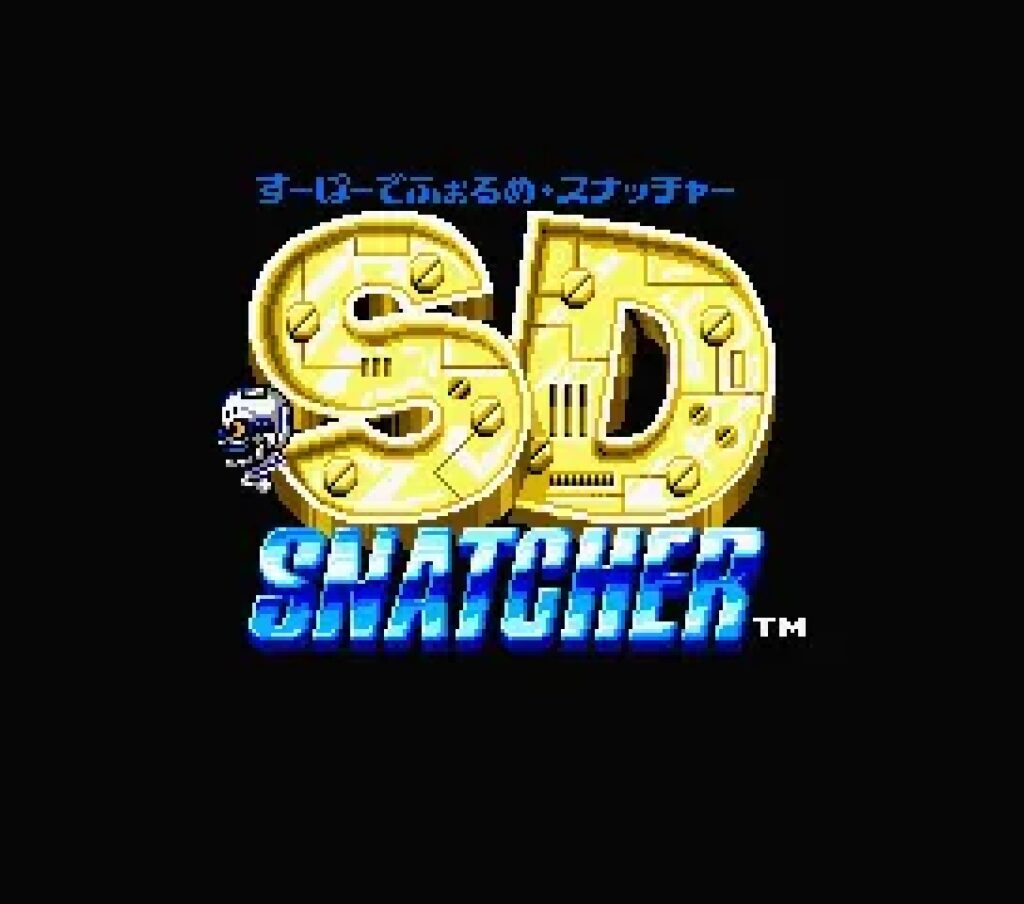
Only Konami, and only the MSX2, could have produced SD Snatcher. In 1990, Hideo Kojima’s cyberpunk adventure Snatcher was a cult object — a grim Blade Runner homage about android body-snatchers in Neo Kobe City. So Konami remade it as a role-playing game starring super-deformed chibi characters with enormous heads, shipped it on an MSX2 cartridge with a dedicated sound cartridge in the box, and — here is the miracle — it worked. SD Snatcher is one of the most delightful oddities in the platform’s library.
At a glance: Konami, 1990 · MSX2 · RPG · Snatcher, reimagined
Neo Kobe, Adorable and Doomed
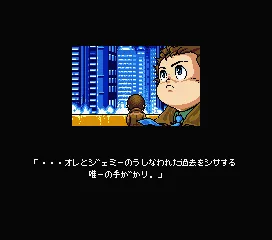
The story survives the makeover intact: amnesiac Junker agent Gillian Seed hunts the Snatchers — bioroid infiltrators who kill their victims and wear their lives — through a Neo Kobe of nightclubs, hospitals and abandoned factories. What changes is the telling. Adventure-game investigation becomes RPG exploration with turn-based battles; the cast is redrawn as big-headed caricatures; and yet, remarkably, the tension holds. The chibi art disarms you, and then the game deploys its horror beats — the skull beneath the skin, the hospital’s secret — exactly where they will hurt most.
An RPG, Not a Parody
It would have been easy to make this a joke product. Instead, Konami built a real role-player: experience, equipment, a party that grows, dungeons with genuine menace, and boss fights that ask for preparation. The battle system is brisk, the writing (in the available fan translation) preserves Kojima’s blend of hard-boiled banter and genuine melancholy, and the whole runs at a clip that puts many “serious” 16-bit RPGs to shame. The super-deformed style even solves a technical problem — the MSX2 draws these sprites with a clarity the original’s ambition sometimes strained for.

The Sound Cartridge Flex
Then there is the box. SD Snatcher shipped with Konami’s SCC sound cartridge — the same wavetable technology that powered the company’s late MSX masterpieces — dedicated to giving the game a soundtrack of genuine richness. It is an extravagant, slightly mad piece of packaging that only the MSX market could support, and the music earns it: moody, melodic, and inseparable from the game’s identity. Few cartridges in any library arrive with their own audio hardware. This one’s score deserves the honor.
From Adventure to RPG, Scene by Scene
Veterans of the original will spend the game in a state of delighted recognition. Neo Kobe’s geography survives the translation of genre: Junker headquarters with its shooting range and its staff; the bar called Outer Heaven, a wink at Kojima’s other series hiding in plain sight; the black-market dealings, the hospital with its terrible secret, the informants and impostors. Moments that the adventure original played as investigation set-pieces return as dungeons and boss encounters, re-choreographed rather than repeated. It never feels like a lesser copy of a serious game. It feels like a remix album cut by the original artist — same songs, new arrangements, a few jokes the first version was too grim to tell.
The Translation That Opened It
For Western players, SD Snatcher’s second life began with its fan translation — another entry in the MSX scene’s heroic ledger of volunteer localization. The patch matters because this is a text-heavy RPG wearing an adventure game’s script: hundreds of lines of banter, menace and melancholy that carry the whole experience. With them readable, the game’s odd balancing act finally becomes exportable: you can laugh at Gillian’s chibi swagger in one scene and feel the floor drop at a Snatcher reveal in the next, exactly as a 1990 player in Osaka did. It is the version this review is based on, and it holds up beautifully.
The SD Question
Why super-deformed at all? Context helps: Japan in 1990 was in the grip of an SD craze — Gundam’s chibi spin-offs were an industry, and every serious property seemed destined for a big-headed counterpart. Konami’s twist was to refuse the usual consequence. SD Snatcher is not the children’s edition of Snatcher; its plot keeps the body horror, the paranoia and the body count, trusting that the contrast between adorable sprites and dreadful events would sharpen both. It did. The game is cuter than Snatcher and, scene for scene, sometimes colder — horror wearing a smile it cannot take off. That tonal gamble, plus the SCC soundtrack and a battle system with real teeth, is why this “novelty” remake is filed by those who know as one of the MSX2’s essential role-players.
The Battles Deserve Respect
Because the premise invites condescension, let the record show that SD Snatcher’s combat is no garnish. Encounters are turn-based with a targeting system that rewards marksmanship — aiming at specific body parts of enemies, with the Snatchers’ concealed forms encouraging the game’s signature paranoia: is that silhouette a citizen, or a machine wearing one? Experience and equipment curves are tuned to keep dungeons tense without tipping into grind, and the boss encounters draw on the story’s reveals for their sting. It plays, in short, like what it is: a Konami A-team RPG of 1990, from the period when the company’s MSX division could do very little wrong. The chibi sprites are the wrapping. The game inside is dead serious about being a game.
Where It Sits in the Snatcher Story
Snatcher’s afterlife is one of gaming’s longest: PC-88 and MSX2 originals, a beloved Sega CD localization, and decades of reverent citation by everyone who followed Kojima. SD Snatcher is the branch of that family most Western fans have never played — the one that asks what the material looks like through a funhouse mirror, and discovers it looks the same, only sadder and funnier at once. For MSX2 owners it is doubly essential: a top-tier RPG for the shelf and a piece of the Kojima story available nowhere else in this form. Track down the translation, set aside a weekend for Neo Kobe, and mind the cute ones. They are exactly the ones to watch.
A Note on the Box
Collectors should know what they are hunting: SD Snatcher’s full package — cartridge, the bundled SCC sound cartridge, and that glorious box — is among the MSX2 library’s statement pieces, and prices conduct themselves accordingly. The game alone, however obtained, is the substance; the hardware bundle is the ceremony. Either way, what you are acquiring is the strangest certified classic on the platform: an RPG remake of an adventure game, drawn as a gag and played as a thriller, scored like a symphony and written like a noir. The MSX2 library is deep, but it contains nothing else remotely like this — and in a library this good, uniqueness is the rarest currency of all. Neo Kobe is waiting, and it is much cuter than it has any right to be, right up until it isn’t.
Newcomers sometimes ask whether they need the original Snatcher first. You don’t — SD Snatcher teaches its own world patiently — but returning players will mine an extra seam of pleasure from every transposed scene. Take the recommendation either way.
Verdict
A masterpiece wearing a clown nose: a full, faithful, funny and frightening RPG hiding inside the cutest box Konami ever shipped.
SD Snatcher is the MSX2’s most charming argument that constraints breed genius. If you play one import RPG on the platform, the serious choice is Xak or Ys — but the joyful choice is this.