
There is a photograph every Sega collector knows: a Genesis, a Sega CD underneath, a 32X on top, a cartridge in the slot and a controller in hand — the full stack, nicknamed the Tower of Power (or, by the crueller wits of the era, the Tower of Doom). The stack existed for many reasons, but only a handful of games ever required all of it at once. They are the 32X CD titles: games pressed on CD that demanded the 32X’s processors and palette to run, the only software ever written for the complete Sega lasagne. There were, depending on how you count regional releases, just five or six of them. They are the smallest recognised library in Sega history, and disproportionately famous — because two of them helped provoke the creation of the ESRB, and all of them represent the absolute peak of Sega’s add-on era logic.
Why stack three machines to play a CD?

The technical proposition was real. The Sega CD gave a Genesis storage and CD audio but left graphics in the base machine’s hands — which is why so much Sega CD full-motion video is a small, dithered window of smeared colour. Bolt the 32X into the chain and the video problem changes: the add-on’s framebuffer and vastly expanded palette (32,768 colours against the Genesis’s 64) could display the same footage bigger, cleaner and smoother. The 32X CD games are, to a title, FMV games — because FMV was the one genre where the stack’s arithmetic genuinely added up. Digital Pictures, the era’s FMV specialists, became the format’s house developer almost by default.
The library, complete, fits in a paragraph. Fahrenheit, Digital Pictures’ firefighting drama, is the technical flagship: filmed with real firefighters, structured as a first-person rescue through burning buildings, and shipped on two discs — one for plain Sega CD, one demanding the 32X, so a single box could sell to both installed bases. Night Trap’s 32X CD edition is the famous one: the surveillance-and-vampires game that had already been hauled before the US Senate in its Sega CD form, reissued with cleaner, larger video for the stack. Corpse Killer brought Digital Pictures’ zombie light-gun melodrama to the format, and Slam City with Scottie Pippen — basketball FMV, as unlikely as it sounds — and Supreme Warrior, a filmed martial-arts fighter, complete the recognised set. That is all. The entire catalogue of a three-machine platform fits in a paragraph because it nearly fits in one hand.
The entire catalogue of a three-machine platform nearly fits in one hand — and two of its games had already been hauled before the US Senate.

The Senate, the ratings board, and the joke that stuck
Night Trap’s notoriety is the stack’s strangest legacy. The 1993 congressional hearings on video game violence — which targeted Night Trap alongside Mortal Kombat — led directly to the creation of the ESRB ratings system. That the 32X CD reissue arrived in 1994-95, wearing a ratings label its own controversy had created, is one of gaming history’s neater ironies. The game itself, a camp B-movie you play as a security system, is far tamer than its reputation; but its fame guaranteed that the most demanding hardware configuration Sega ever sold is remembered chiefly for a game about watching television.
For players, the honest assessment of 32X CD is that the video improvement was genuine and the games remained FMV games — filmed sequences with interaction layered at their decision points, a genre the industry was already abandoning as the 32X CD launched. Fahrenheit is the one that still rewards a modern playthrough, its rescue structure giving the footage real stakes. Corpse Killer with a light gun is a period piece of considerable charm. The rest are documents. But documents matter: no other format in the medium’s history asked so much hardware of its players, and the collectors who maintain a working stack today — three power supplies, two video paths, one cartridge slot — are keeping a small, sincere monument to the moment before the industry learned that add-ons have a ceiling.
The stack in 2026
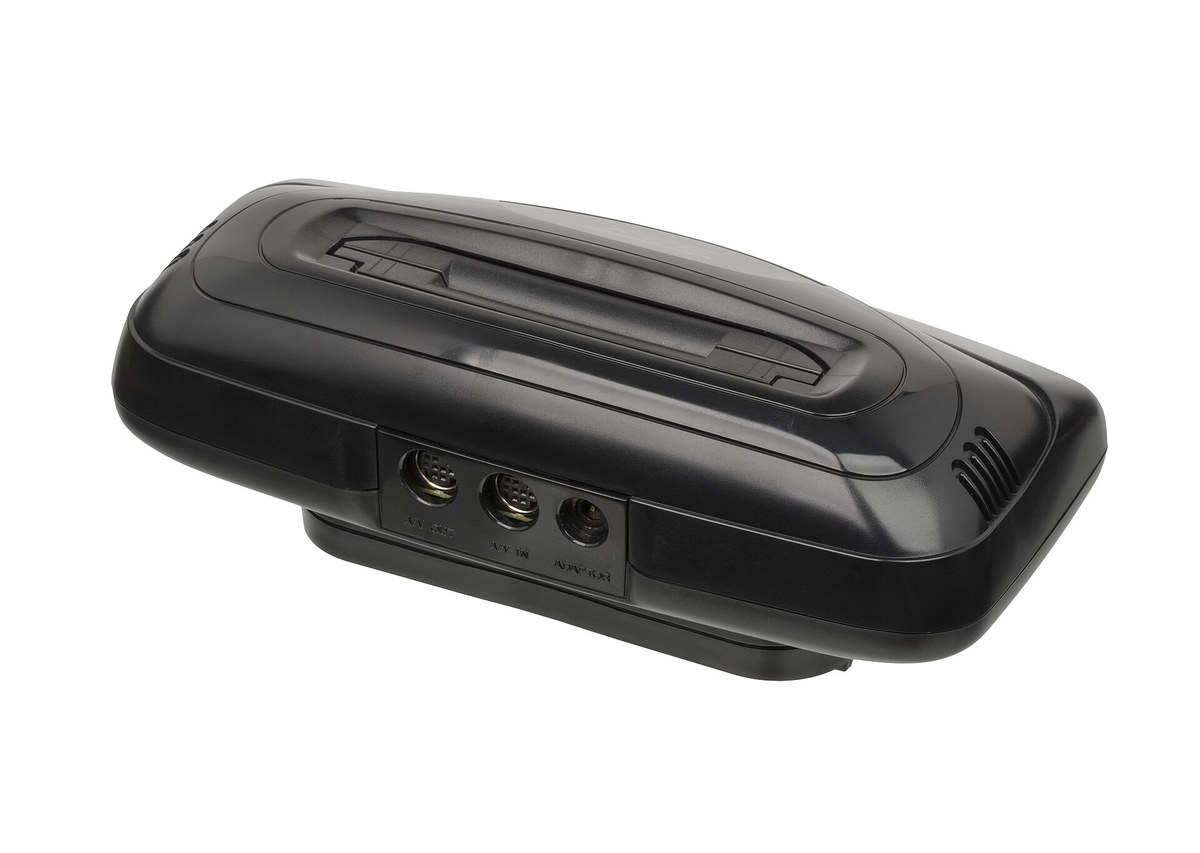
Playing 32X CD now is a commitment ceremony: a serviced Genesis, a working Sega CD (the tray and laser gods willing), a 32X passing video through cleanly, and the discs themselves, which — Fahrenheit especially — have become genuinely collectible. Emulation has only recently made the stack’s library conveniently playable, which spared these games the obscurity their print runs intended. The Tower of Power endures as the era’s defining image because it is honest: this is what the add-on philosophy looked like when followed all the way to its conclusion. Sega never did it again. Nobody did.
Time has sorted the 32X library into the famous, the infamous and the forgotten, and the 32X CD experiment rewards being met on its own terms rather than through any of those reputations. Played today — on a serviced stack, through a clean video path, with the six-button pad the era intended — it is a reminder that the mushroom’s forty games were never its problem. The problem was the calendar they were born into, and calendars cannot be replayed. Games can.
There is also the matter of what the 32X CD experiment says about its machine. The 32X was sold as a bridge to the 32-bit future and remembered as a dead end, but its best cartridges argue a subtler case: that for eighteen months it was simply a good games platform with a small, strange, high-quality library, judged at the speed of a market panic rather than at the pace games deserve. Revisiting it now, without the panic, is the closest thing the platform will ever get to a fair trial — and on the evidence of this cartridge, the defence rests well.
For collectors, the 32X CD experiment sits in the honest middle of the 32X market: neither the loose-change common nor the four-figure grail, but a cartridge that rewards the hunt and justifies its shelf space every time the stack is powered up. In a library this small, every game is a significant fraction of the whole. This one earns its fraction.
What lingers after the credits is how completely the 32X CD experiment belongs to its moment — and how well that moment has kept. The early polygon years are often treated as an embarrassing adolescence for the medium, all jagged edges and experimentation. The best 32X games suggest otherwise: the experiments were the point, the edges were the aesthetic, and a generation of designers was learning 3D in public, at full speed, on hardware like this. the 32X CD experiment is one of their better lessons.
Time has sorted the 32X library into the famous, the infamous and the forgotten, and the 32X CD experiment rewards being met on its own terms rather than through any of those reputations. Played today — on a serviced stack, through a clean video path, with the six-button pad the era intended — it is a reminder that the mushroom’s forty games were never its problem. The problem was the calendar they were born into, and calendars cannot be replayed. Games can.
There is also the matter of what the 32X CD experiment says about its machine. The 32X was sold as a bridge to the 32-bit future and remembered as a dead end, but its best cartridges argue a subtler case: that for eighteen months it was simply a good games platform with a small, strange, high-quality library, judged at the speed of a market panic rather than at the pace games deserve. Revisiting it now, without the panic, is the closest thing the platform will ever get to a fair trial — and on the evidence of this cartridge, the defence rests well.