
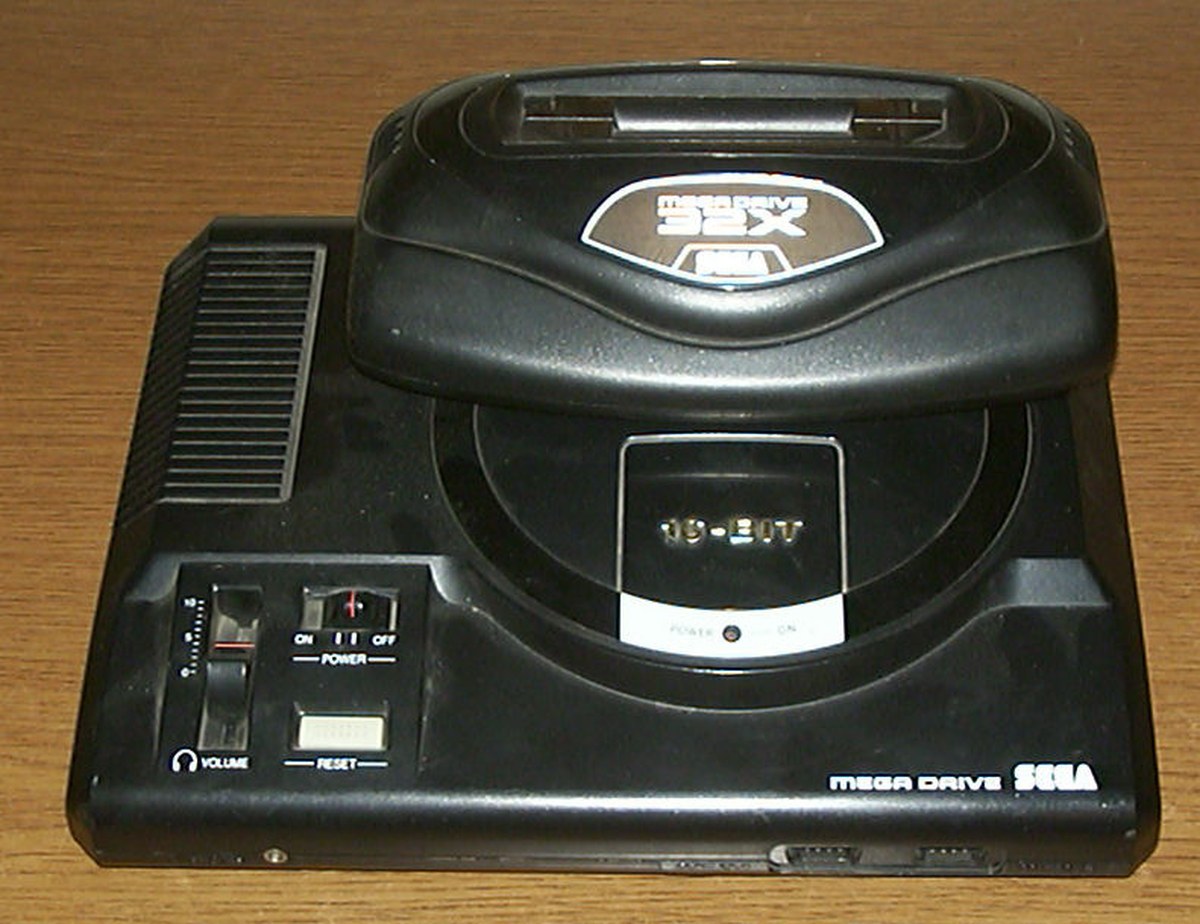
In the spring of 1995, Sega of America showed the press a machine that was meant to end an argument. The argument was the company’s own product line: a Mega Drive (Genesis, in America) was one purchase, the 32X mushroom was a second, and the pair of them together cost nearly what a Saturn would — while playing a library the Saturn could not. The Neptune was the peace treaty: a single console with a Genesis and a 32X built into one shell, one power supply, one cartridge slot that took both libraries. It was announced, priced, photographed, modelled by magazine editors — and then, months before its autumn 1995 launch, it was cancelled so completely that for years its existence read like a rumour. This is the story of the most sensible console Sega never sold.
Why the Neptune had to exist
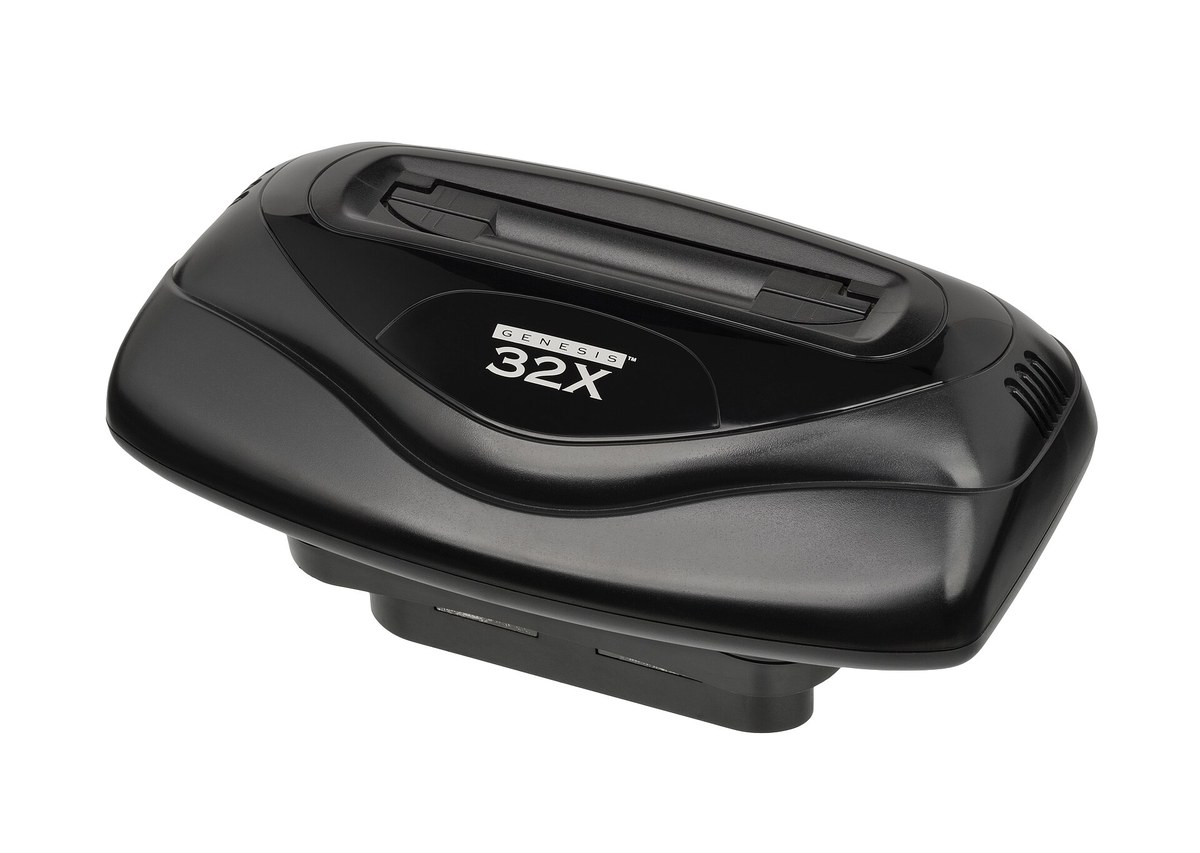
To understand the Neptune you have to feel the 32X’s retail problem in your wallet. A Genesis owner in late 1994 faced a genuinely confusing shelf: the base console, the Sega CD beneath it, the 32X on top of it, a Saturn coming in the spring, and a Game Gear in their pocket — five Sega machines, three of them stackable, competing for the same Christmas. The Neptune simplified the stack’s top two-thirds into a single $200 box (announced pricing hovered around $200 in America). For new buyers it was the obvious entry point; for Sega’s warehouses it was a way to keep selling Genesis and 32X software without manufacturing two machines. Internally it was no exotic engineering: the Neptune is, in essence, a Genesis and 32X sharing one case and one power rail, which is precisely what made it achievable — and what made its cancellation a decision about strategy, not feasibility.
The strategy turned on the Saturn. Through 1995 Sega’s Japanese leadership pressed all resources toward the 32-bit future, while Sega of America — which had championed the 32X as a bridge — watched the bridge’s far end being dismantled. The Neptune was a bridge-builder’s machine: it assumed years of 16-bit and 32X software sales worth consolidating. Tokyo’s calendar assumed the opposite. When the Saturn’s American launch was famously rushed forward to May 1995, the Neptune’s autumn slot became indefensible: Sega could not ask retailers to stock a new 16-bit console beside the 32-bit one it had just surprise-launched. The cancellation was announced with the anaemic language of corporate delay — the Neptune was ‘delayed’ into 1996, then never mentioned again.
The Neptune was announced, priced, photographed and modelled — then cancelled so completely that for years it read like a rumour.
The machines that escaped
Here is where the Neptune passes from business history into collecting legend: hardware existed. Working and non-working prototype units were built for trade shows, photography and developer familiarisation, and when the project died, not all of them came back. A small number of shells and units surfaced over the following decades — most famously a prototype case that changed hands among collectors and was eventually documented in detail, its empty interior proving the show units were sometimes dummies, while at least one genuinely functional Neptune has been examined by hardware historians. The machine in photographs — a sleek, curved, single-slot console wearing Genesis-era striping — has become one of the most recognisable unreleased products in games, reproduced in renders, tribute builds and at least one famous fan-made working recreation assembled from real Genesis and 32X boards.
The what-if is irresistible because the Neptune was, uniquely among cancelled consoles, boringly viable. The 32X library it would have served was small but real — some forty games, several of them excellent — and the Genesis library behind it was enormous. A $200 all-in-one in late 1995, marketed as the value console under the Saturn and PlayStation’s $299, maps onto a market slot that demonstrably existed: the budget tier that kept the NES alive for a decade. Instead, Sega’s 16-bit line died confused and stacked, and the Neptune became the emblem of the confusion — a good idea executed by a company that had stopped agreeing with itself.
What survives
No Neptune software exists — none was needed; it would have played the two existing libraries unchanged, which is also why no ROM archaeology attaches to it and why its prototypes command their prices purely as industrial design. Sega has never revived the name. The machine survives as photographs, one or two shells, a fan-built working homage, and a permanent fixture in every account of Sega’s 1995 — the year of too many consoles. Stand it next to the 32X mushroom and the contrast is the whole story: the add-on was the problem made plastic, and the Neptune was the answer that arrived one corporate argument too late.
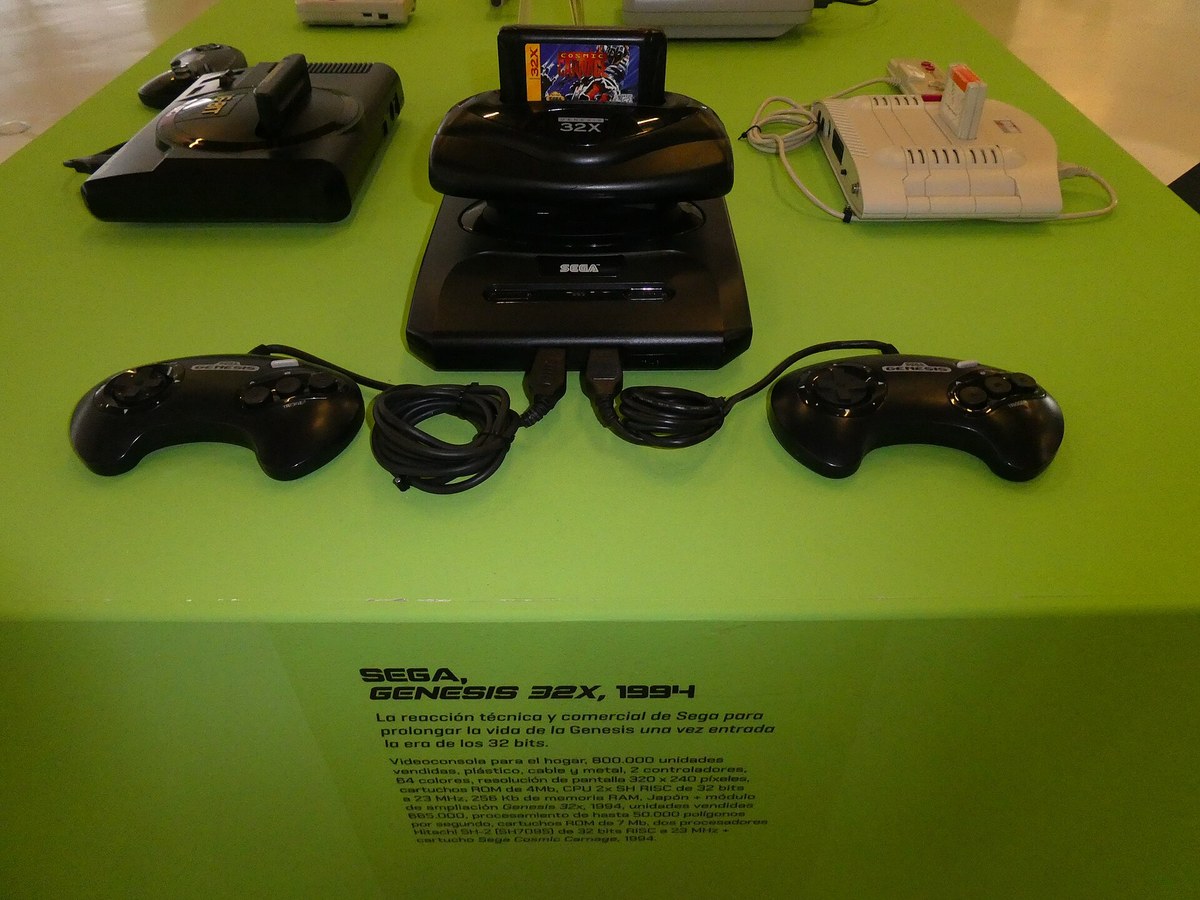
For 32X collectors the Neptune is the library’s patron ghost: the console that would have made their cartridges ordinary, current and sensibly housed, reduced instead to the rarest Sega hardware of all — the kind that exists mostly in pictures. Every mushroom plugged into a Genesis today is doing, clumsily and externally, exactly what the Neptune was designed to do gracefully. That the graceful version is the one in the museum case tells you everything about 1995.
Time has sorted the 32X library into the famous, the infamous and the forgotten, and the Neptune story rewards being met on its own terms rather than through any of those reputations. Played today — on a serviced stack, through a clean video path, with the six-button pad the era intended — it is a reminder that the mushroom’s forty games were never its problem. The problem was the calendar they were born into, and calendars cannot be replayed. Games can.
There is also the matter of what the Neptune story says about its machine. The 32X was sold as a bridge to the 32-bit future and remembered as a dead end, but its best cartridges argue a subtler case: that for eighteen months it was simply a good games platform with a small, strange, high-quality library, judged at the speed of a market panic rather than at the pace games deserve. Revisiting it now, without the panic, is the closest thing the platform will ever get to a fair trial — and on the evidence of this cartridge, the defence rests well.
For collectors, the Neptune story sits in the honest middle of the 32X market: neither the loose-change common nor the four-figure grail, but a cartridge that rewards the hunt and justifies its shelf space every time the stack is powered up. In a library this small, every game is a significant fraction of the whole. This one earns its fraction.
What lingers after the credits is how completely the Neptune story belongs to its moment — and how well that moment has kept. The early polygon years are often treated as an embarrassing adolescence for the medium, all jagged edges and experimentation. The best 32X games suggest otherwise: the experiments were the point, the edges were the aesthetic, and a generation of designers was learning 3D in public, at full speed, on hardware like this. the Neptune story is one of their better lessons.
Time has sorted the 32X library into the famous, the infamous and the forgotten, and the Neptune story rewards being met on its own terms rather than through any of those reputations. Played today — on a serviced stack, through a clean video path, with the six-button pad the era intended — it is a reminder that the mushroom’s forty games were never its problem. The problem was the calendar they were born into, and calendars cannot be replayed. Games can.
There is also the matter of what the Neptune story says about its machine. The 32X was sold as a bridge to the 32-bit future and remembered as a dead end, but its best cartridges argue a subtler case: that for eighteen months it was simply a good games platform with a small, strange, high-quality library, judged at the speed of a market panic rather than at the pace games deserve. Revisiting it now, without the panic, is the closest thing the platform will ever get to a fair trial — and on the evidence of this cartridge, the defence rests well.