At a glance — Game: Sentimental Graffiti · Developer: NEC Interchannel · Publisher: NEC Interchannel · Original release: January 22, 1998 (Japan) · Original platforms: Sega Saturn · Genre: Dating simulation
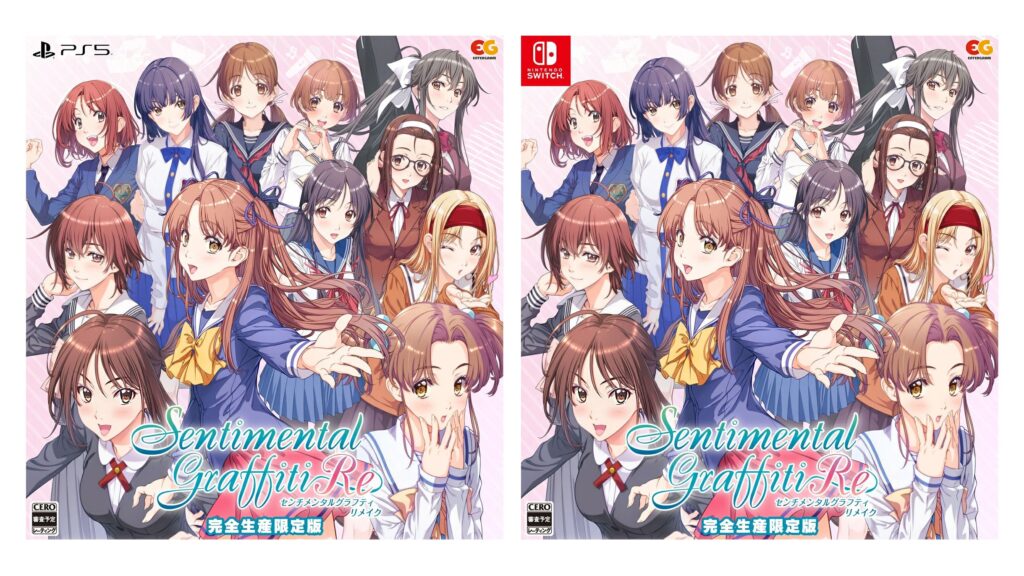
Some games arrive behind a marketing campaign. This one arrived behind a letter. In the spring of 1997, in the fiction of Sentimental Graffiti, a boy about to start his last year of high school opens an envelope with no sender’s name on it. Inside is a single line: “I want to see you.” He has lived all over Japan, dragged from city to city by his father’s job. In twelve of those cities he left a girl behind — a meeting and a farewell in each. So he does the only thing the story allows. He packs a bag and goes looking for all twelve of them, and for whoever wrote the letter. It is one of the great premises of the Saturn era, and this week it stopped being a Japan-only memory. Entergram has dated the remake, Sentimental Graffiti Re, for March 25, 2027 on PlayStation 5 and Switch in Japan — which makes this the right week to remember the original properly.
A Letter With No Name On It
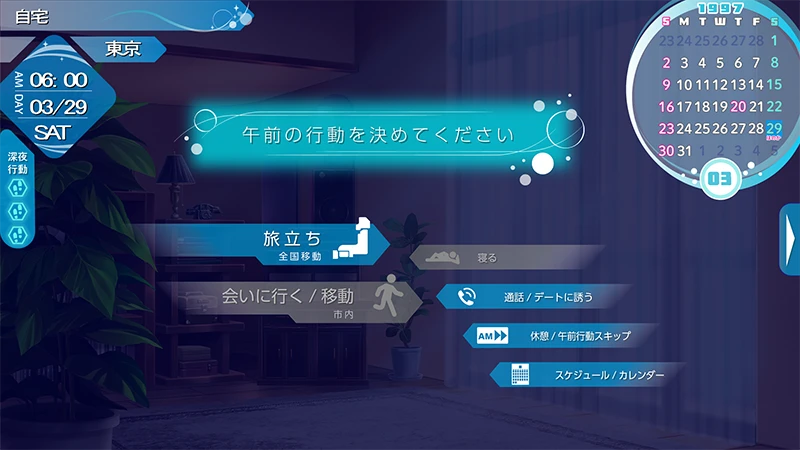
The boy’s name is Tanaka Ichirou, though the game is happy for you to be him. The structure NEC Interchannel built around him was unusual for 1998 and still feels modern now: not a school corridor with a cast in it, but a map of Japan with a life scattered across it. On your days off you travel — by train, bus, boat or plane — to whichever of the twelve cities you choose, spending the game’s calendar of holidays chasing reunions. Each heroine is rooted in her place. Each meeting reopens a childhood parting that the game has already shown you in sepia: the promise made, the train caught, the thing left unsaid.
That is the whole engine. It is enough. Where its great rival Tokimeki Memorial asked you to build a better boy over three school years, Sentimental Graffiti asks something sadder and simpler: what did all that moving do to you, and is any of it still there when you go back? The twelve endings are the game’s answer, dealt out one girl at a time.
Twelve Heroines, Twelve Farewells
The cast is the game. The cast deserves naming. There is Yuu Nanase, who watched a Perseid meteor shower with the boy one summer night and lost him to a transfer before the term began. Emiru Nagakura, the strange, lonely girl nobody else would befriend, who buried a time capsule with him and a promise inside it. Honoka Sawatari, who fell from a horse and landed on him, more or less literally, and kept an exchange diary going until the moves stopped it. Asuka Hoshino, who works in a diner and dreams of being a singer. Manami Sugihara, frail and often absent from school, who found her courage nursing an injured bird alongside him. Rurika Yamamoto, who broke a classroom fossil and watched him take the blame without being asked.
Every one of the twelve gets that shape of story: a small, specific kindness, remembered years later. Raita Ookura wrote the whole scenario, and the writing trusts those small things to carry the weight. Tomohisa Kai’s character designs did the rest of the work before a disc was ever pressed: his illustrations for the heroines were elegant computer-painted work at a time when that was rare, and they raised expectations for the game long before it shipped. The heroines were voiced largely by newcomers from Aoni Production, six of them cast through Seiji Productions and six chosen, unusually for the time, by public audition. Ai Maeda’s Emiru and Mariko Suzuki’s Honoka were early roles in careers that went on to rather larger robots and galaxies.
The Machine Behind the Sentiment
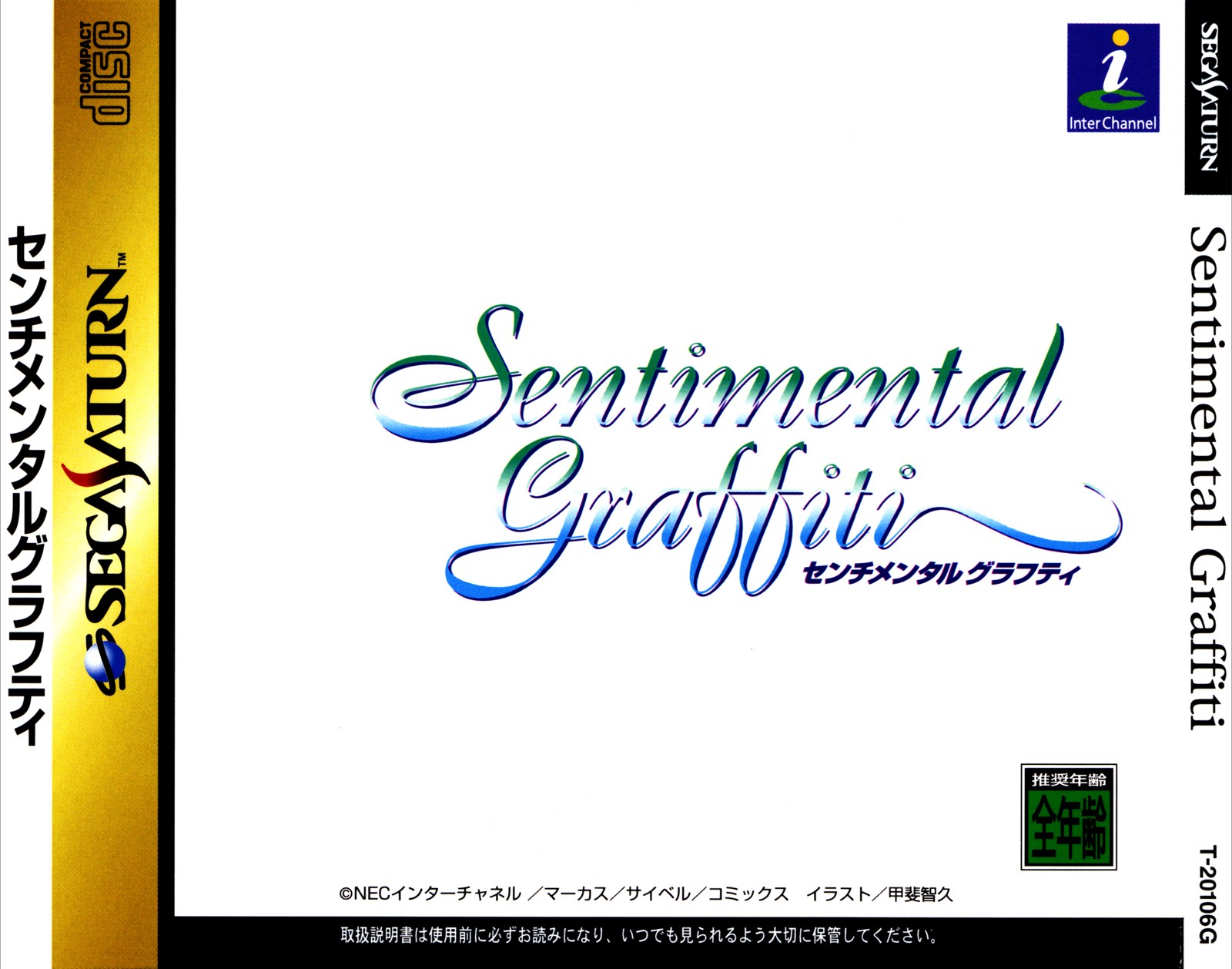
None of it happened by accident. After Tokimeki Memorial proved in 1994 that a romance simulation could be a phenomenon, NEC Interchannel built Sentimental Graffiti as a flagship on purpose — Toshio Tabeta and the main staff of the Graduation series, working with the production house Marcus, under producer Masayoshi Kubota. Then they promoted it like a pop group. The twelve voice actresses were formed into a unit, the SG Girls, with concerts and events; TBS Radio ran Sentimental Night, hosted by the heroines’ actresses, from 1997 — a full year of radio before the game existed in shops. Magazines, novels, drama discs and merchandise all landed first. There was even a pre-disc: Sentimental Graffiti: First Window, a trial-and-fan disc pressed in a run of 30,000 in April 1997, which promptly became the hard-to-find one.
It worked. The Saturn version slipped from its original November 1997 slot to January 22, 1998 — and was the top-selling game in Japan the week of its release. Copies turned scarce soon after. The afterlife was long: a Windows version in October 1998, a PlayStation port in March 2001, a 12-episode anime, Sentimental Journey, made by Sunrise and broadcast in the spring of 1998 as a set of epilogues — one girl per episode, each story about what the boy’s passing through had left behind. A sequel, Sentimental Graffiti 2, arrived on Dreamcast in 2000 with a strikingly darker premise — it opens in a world where the first game’s hero has died in a traffic accident on his journey — and found a much smaller audience. Momentum is a hard thing to schedule twice.
Sentimental Graffiti Re: The Letter Gets a Reply
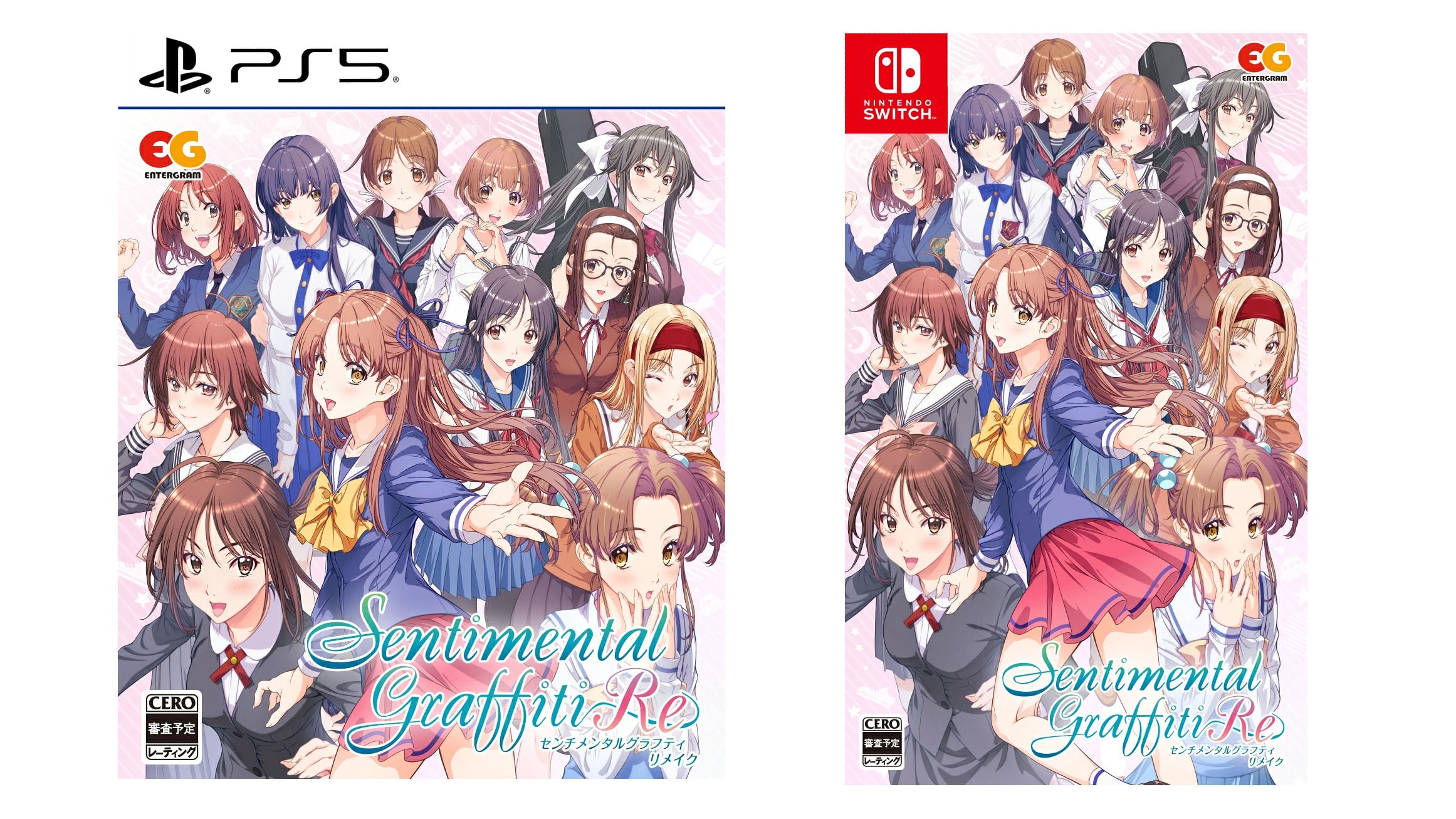
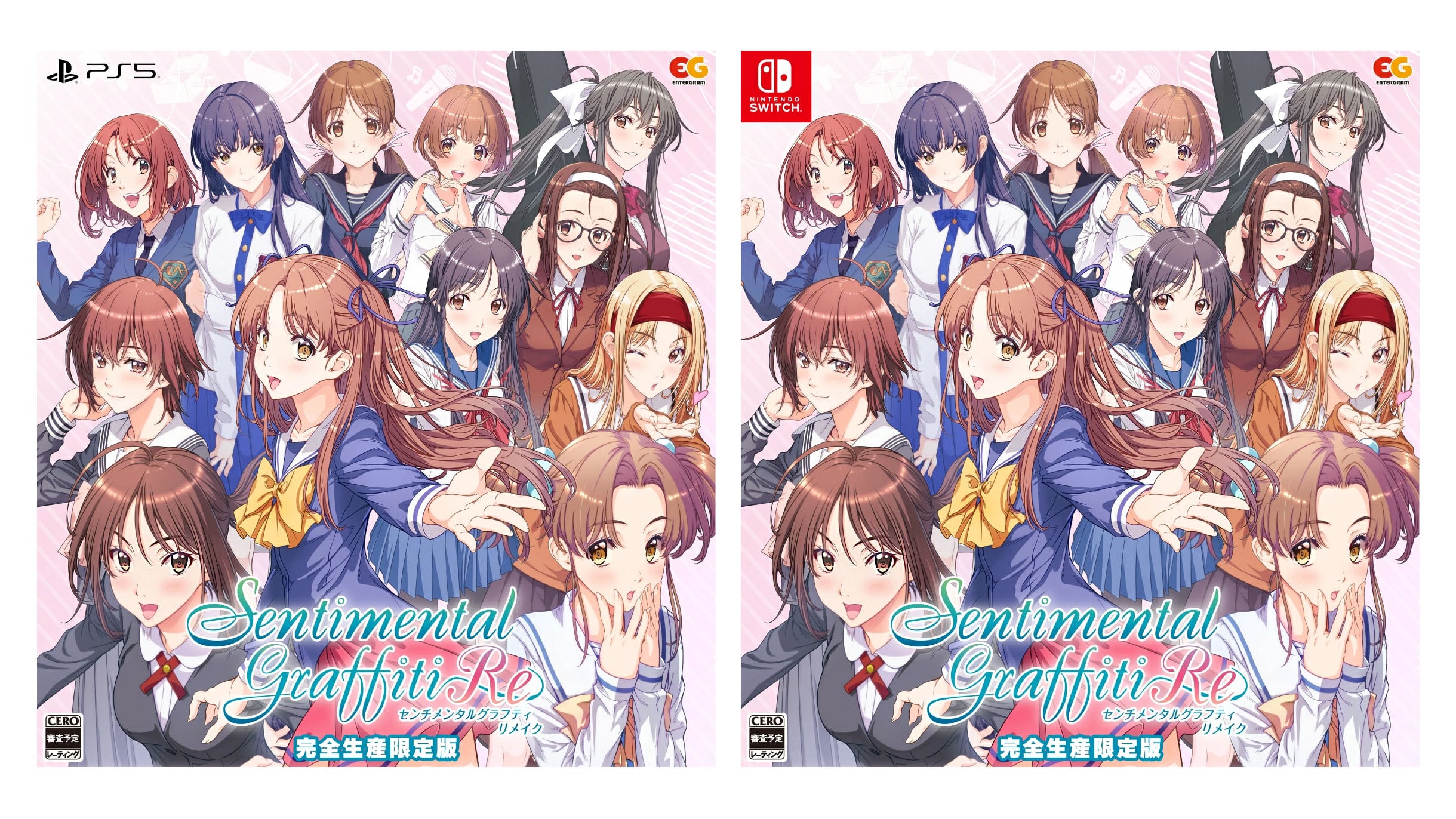
The remake was announced in June 2026 by Entergram, developed with GungHo Online Entertainment, and this week’s news is the date and the shape of it: March 25, 2027, PlayStation 5 and Nintendo Switch, Japan only for now. The standard edition is 9,878 yen, the digital edition 8,980 yen, and there is a Complete Limited Edition at 29,700 yen carrying eighteen bonuses — among them a tapestry of a new key visual by Tomohisa Kai himself, a visual fan book, and four new drama CDs written by Raita Ookura, the original scenario writer, covering all twelve heroines. The scenario has been partly adjusted for the present day, the designs stay faithful to Kai’s originals, the whole screen — art and backgrounds alike — is now 16:9, and the interface and game systems have been rebuilt. The cast is new: Mirai Tachibana voices Honoka, Tsubaki Makino voices Emiru, Koharu Miyazawa voices Wakana, and the official site carries sample clips for all twelve. An opening movie is already out, built around “Melty Love -30th Anniversary ver.-” by SHAZNA. Twenty-nine years between the letter and the reply. This game always did take its time.
How to play it today
Plainly first: there is no current Western release of the original, and no Western announcement for the remake — this was a Japan-only game in 1998 and, so far, it still is. The most practical legal route to the original today is the PlayStation version’s Japanese Game Archives download, released for PlayStation 3 and PSP in February 2010 through the Japanese PlayStation Store; a North American PS1 Classic edition followed in March 2013, though storefronts of that vintage are a wasting asset and availability is not guaranteed. Beyond that, the honest route is original media — Saturn and PlayStation discs are common enough in Japanese second-hand shops and import listings, and the game is fully playable with a translation guide open beside it, which is how a good part of its Western fandom met it in the first place. For the remake, pre-orders are open in Japan now ahead of March 25, 2027, and the full edition details live on Entergram’s official Sentimental Graffiti Re site. If a Western release is ever announced, it will be the easiest news this column ever gets to write.
— Sal