At a glance — Game: Tekken 3 · Developer: Namco · Publisher: Namco · Original release: November 28, 1996 (Arcade) · Original platforms: Arcade · Genre: Fighting
The rest of the world had to wait. Namco gave Tekken 3 a limited Japanese arcade release on November 28, 1996, months before its wide international rollout in March 1997 — and if you were lucky enough to live near the right Japanese arcade thirty years ago, you could play the future of 3D fighting while everyone else was still reading about it. The wait only built the legend. This was the game that took Tekken from a Virtua Fighter imitator with great characters into the series that defined a genre, rebuilt its cast almost from scratch, and then sold more copies on PlayStation than anyone had a right to expect.
A new king, a new cast
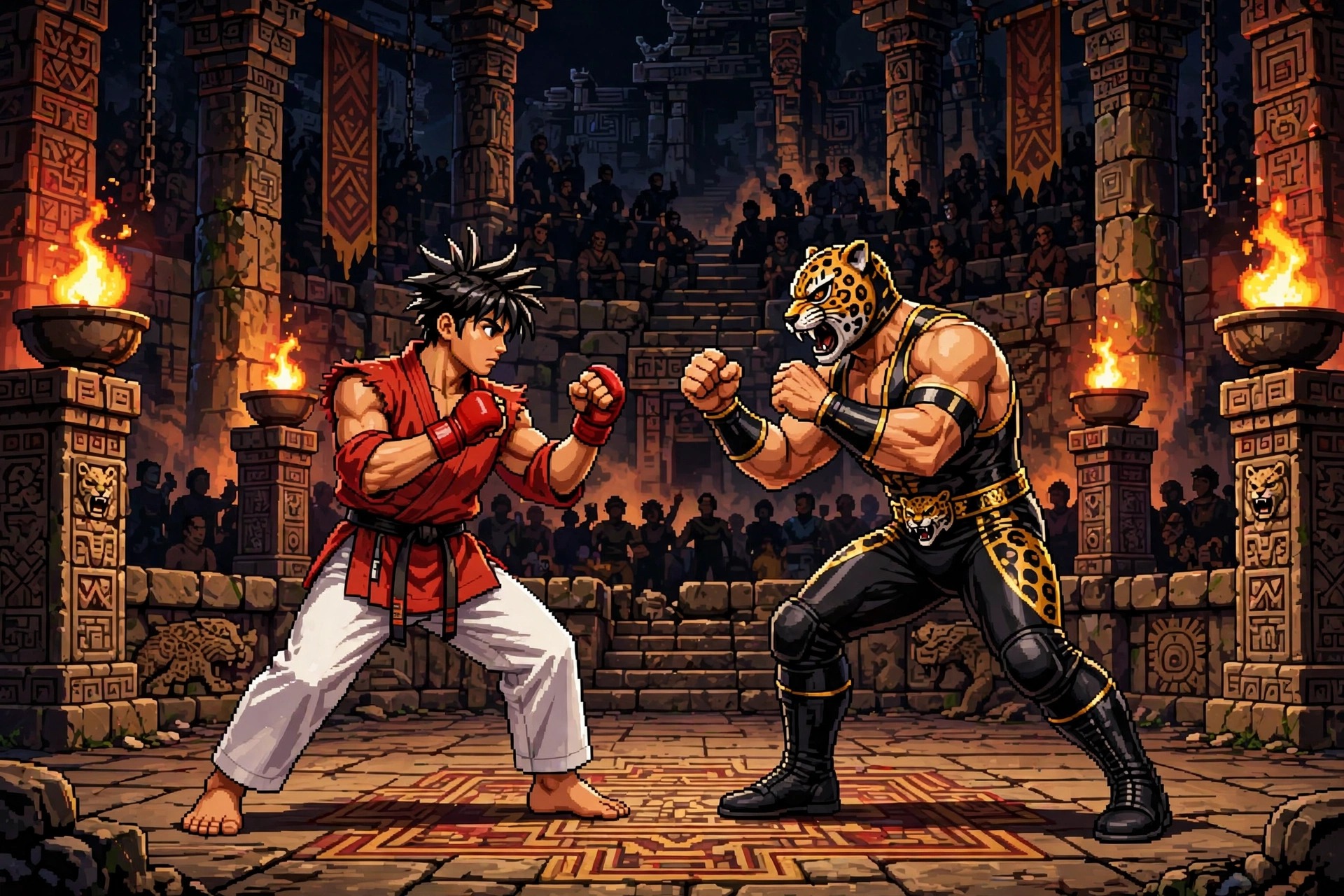
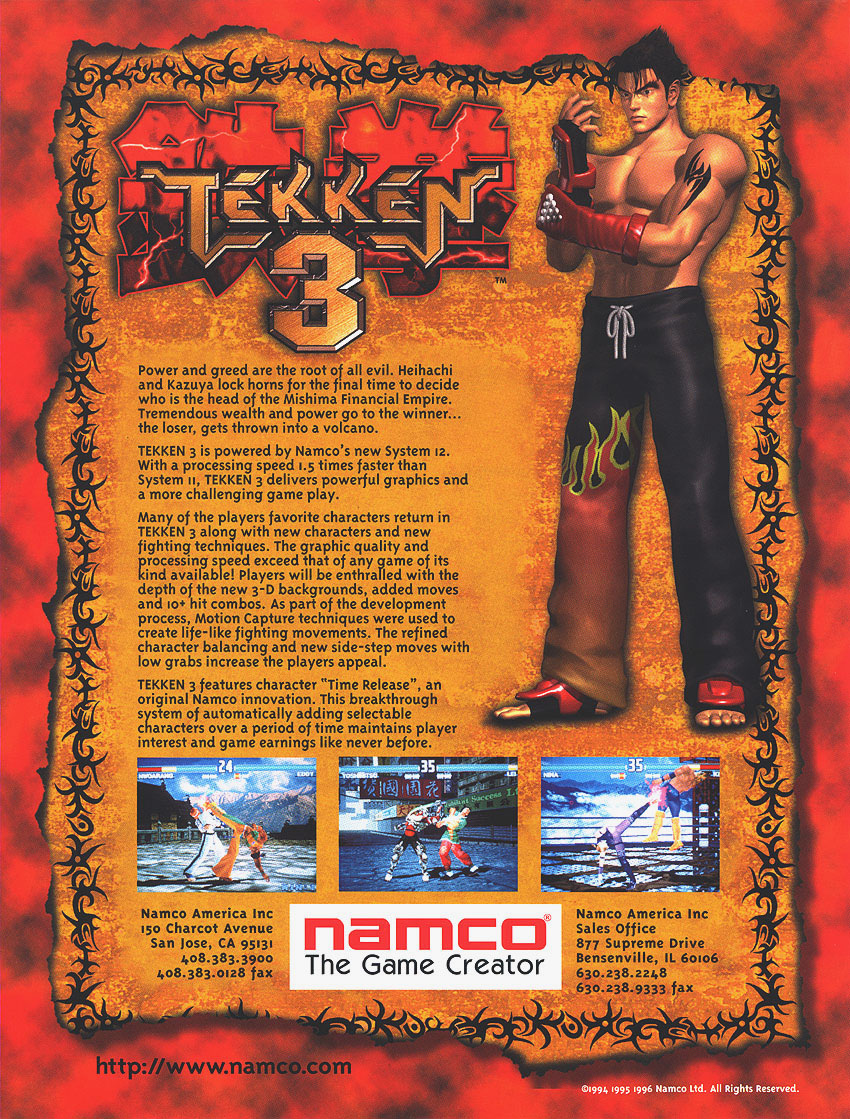
Tekken 3 jumps nineteen years past Tekken 2, and Namco used the gap to clear the deck. Only seven fighters return from the previous game — Heihachi Mishima, Nina and Anna Williams, Lei Wulong, Paul Phoenix, Yoshimitsu and a second-generation Kuma. Everybody else is new, and the newcomers are the ones who stuck: Jin Kazama, the grandson of Heihachi and son of Kazuya and Jun, headlining his first tournament in search of the creature that took his mother. Around him arrive Ling Xiaoyu, Hwoarang, Eddy Gordo, Bryan Fury, Julia Chang, Forest Law, Gun Jack, Mokujin the wooden training dummy, and a second King wearing the original’s mask.
The villain is Ogre, the God of Fighting, a mysterious being blamed for the disappearance of martial artists all over the world. Heihachi, being Heihachi, doesn’t want him destroyed — he wants him captured and harnessed, and the third King of Iron Fist Tournament is the bait. The arcade version offers 22 playable fighters once the unlockables and alternate-skin characters are counted, and the roster’s balance of generations — fathers, sons, students, successors — gave the series a mythology it has been building on ever since.
The story lands, too. Jin fights through the tournament his grandfather rigged, defeats Ogre’s monstrous True Ogre form and avenges his mother — and Heihachi thanks him with a bullet, firing the final shot himself. It’s the Devil Gene, inherited from Kazuya, that refuses to let Jin die: he wakes, scatters the Tekken Force squad sent to finish him, puts Heihachi through a temple wall and flies off into the night on black wings. In one ending, Tekken 3 set up the next twenty years of the series.
Tekken 3 gameplay: the sidestep changes everything
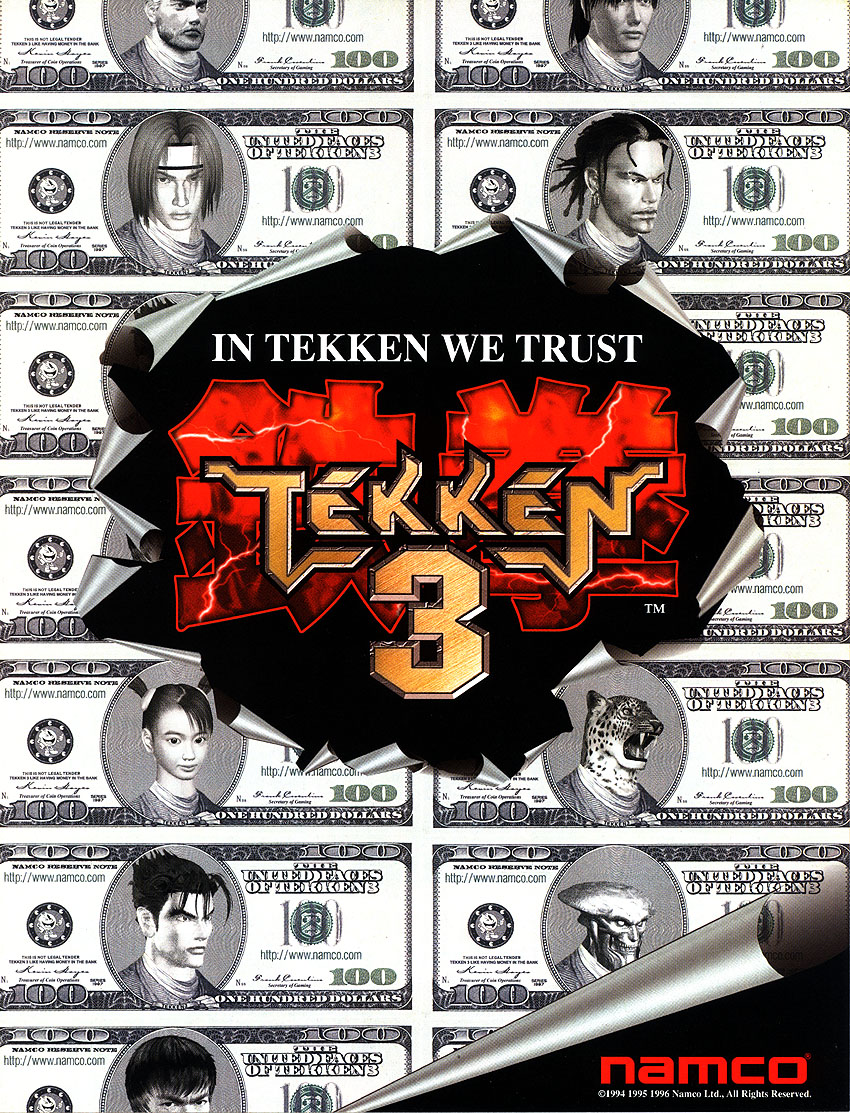
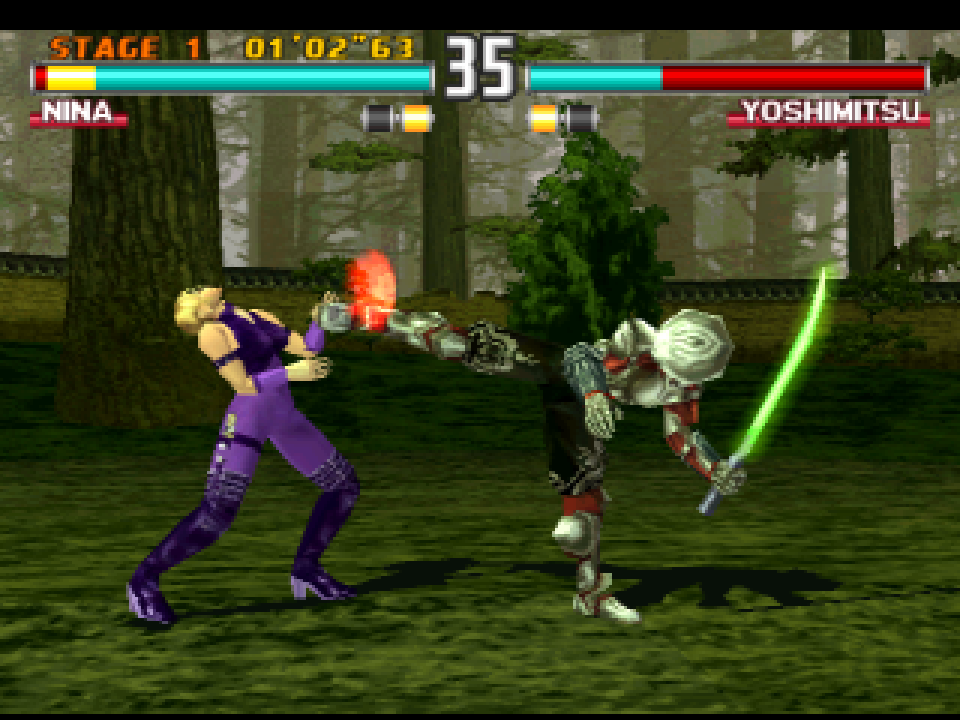
The first two Tekken games were essentially 2D fighters wearing 3D models — movement off the central line was a novelty reserved for a few characters. Tekken 3 makes the third axis the whole point. Every fighter can now sidestep into or out of the screen with a tap of the stick, and that one addition rewires everything: linear attacks can be stepped rather than blocked, positioning becomes a real skill, and fights stop being a queue of exchanges and start being a dance.
Around the sidestep, Namco tightened the rest of the system. Jumps come down to a sensible height, so they can no longer sail over every ground attack. Reversals, previously a perk for a few characters, are available to everyone. Fighters recover from knockdowns faster, escape tackles and stuns more easily, and juggle opponents with strings that simply weren’t possible before. The animation, built with motion capture, sells all of it — Tekken 3 moves like nothing else in the arcade, fluid where its rivals were still stiff.

System 12 muscle
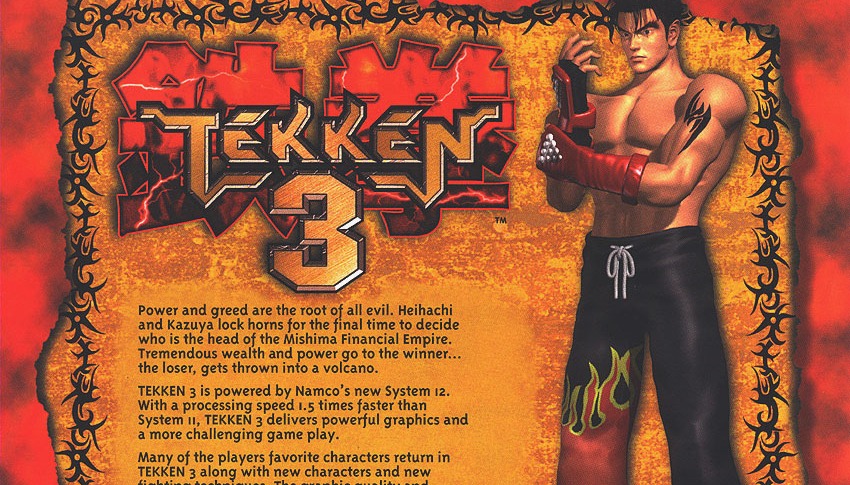
Tekken 3 was the first game built for Namco’s System 12 board, an upgrade of the PlayStation-based System 11 that ran the first two games, with processing speed the flyer proudly puts at 1.5 times its predecessor. That headroom went into fully 3D backgrounds, better character models and the motion-captured movement. The flyer also brags about a very Namco innovation: “Time Release,” which automatically added selectable characters to cabinets over a period of time, keeping a machine fresh — and earning — for months after installation.
Operators got the message. Tekken 3 sold 35,000 arcade units worldwide in 1997 — 15,000 in Japan and 20,000 overseas — and was the highest-grossing arcade PCB game of 1997 in Japan, out-earning Sega’s Virtua Fighter 3 worldwide even if Sega’s game held the home-turf crown that year.
It sounded different, too. Composers Nobuyoshi Sano and Keiichi Okabe scored the game in a big beat style — slower, heavier, built on breakbeats — at a slower tempo than the earlier games’ music, a sound borrowed from the clubs rather than the arcade. Game director Katsuhiro Harada didn’t get it at first, by Sano’s own account, and had to be talked into it. The thump became part of Tekken’s identity.
The PlayStation port nobody thought was possible
Because System 12 was a step beyond the PlayStation rather than a twin of it, the home conversion was genuinely in doubt — Namco representatives initially said they didn’t think Tekken 3 could be converted at all. The port took eight months, far longer than the first two games, and arrived in Japan on March 26, 1998, reaching North America that spring. Backgrounds were rebuilt as 2D panoramas and character polygon counts trimmed, but the speed, the feel and the sidestep all survived.
More than survived — the PlayStation version added to the arcade game. Tekken Force turned the fighters loose in a side-scrolling beat ’em up. Tekken Ball turned combat into a vicious game of beach volleyball, won by smashing the ball into your opponent or their sand. Two hidden characters joined the roster, the manga dinosaur Gon and the elderly Dr. Bosconovitch, and Anna Williams stepped out of her sister’s shadow as a fully distinct fighter. Namco backed the launch with a sponsored tournament series in Japan and the United States, flying the two national champions to a final showdown at E3 1998 — an early sign of how seriously competitive Tekken would be taken. The result sold 8.36 million copies during its initial release, according to series producer Katsuhiro Harada — over a million in Japan on its first day alone — making Tekken 3 the fifth best-selling PlayStation game of all time.
Thirty years on
The critics agreed with the crowds. Tekken 3 holds a 96 on Metacritic, GameSpot scored it 9.9, and it became the first game in three years to earn a 10 from an Electronic Gaming Monthly reviewer — three of the magazine’s four reviewers gave it full marks. It took Best Fighting Game at the Game Critics Awards and fighting-game-of-the-year honors from EGM and Game Informer, and it has been parked on greatest-games lists ever since.
Namco and Sony have kept it within reach: the arcade version rode along inside Tekken 5 on PlayStation 2 in 2005, the PlayStation port was one of the twenty games on Sony’s PlayStation Classic in 2018, and it joined the PlayStation Network classics catalog for PS4 and PS5 in October 2025. Play it today and the surprise isn’t how well it holds up — it’s how modern it feels. The sidestep is still the heartbeat of Tekken, Jin is still the face on the poster, and a limited run of Japanese cabinets in November 1996 is still where it all started.
— Chip
For more launches from this date, see This Day in Gaming History: November 28. More from this system: our Arcade hub.