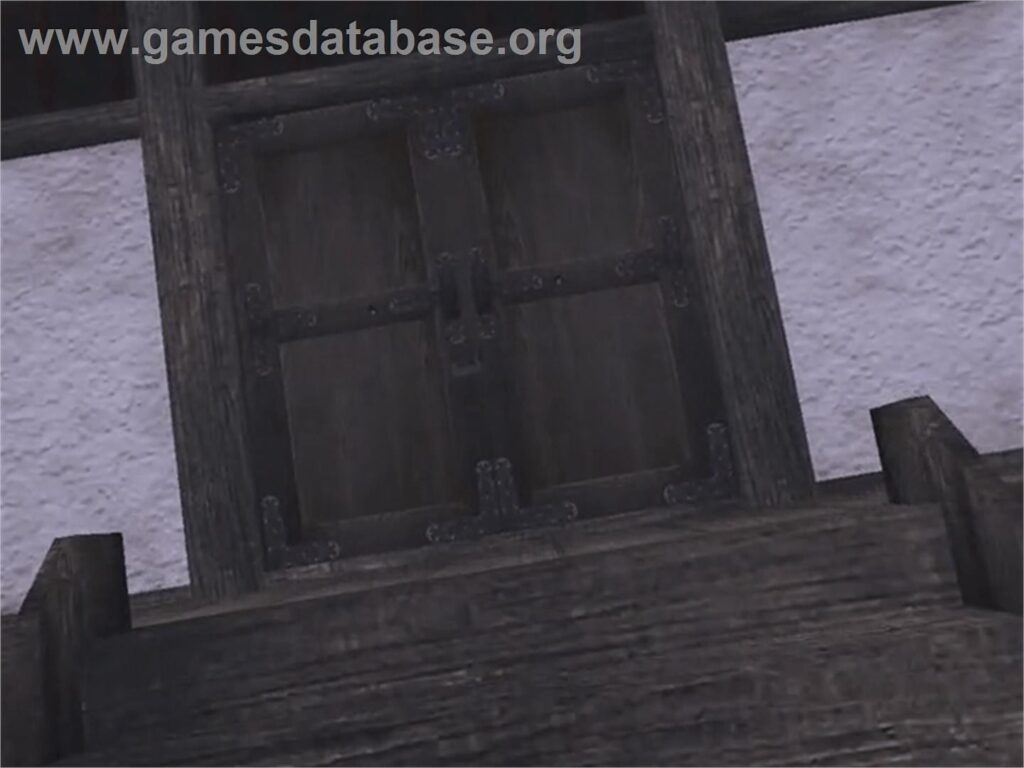
Every console generation has one game that tries to run before the hardware can walk. For the Dreamcast, that game was Shenmue. Yu Suzuki and Sega AM2 spent years and a famously enormous budget building a small corner of 1986 Yokosuka in such obsessive detail that you could open individual drawers in Ryo Hazuki’s house, check the weather forecast before deciding what to do with your day, and spend an entire in-game afternoon playing darts badly in a bar you never needed to visit. It was sold as a revolution. In many ways, it genuinely was one — and playing it today, a quarter-century on, is still a strange and singular experience that no modern open-world game quite reproduces.
The story is a classic revenge setup told with unusual patience. Ryo Hazuki, a teenage martial artist, comes home to find a mysterious man in green silk — Lan Di — demanding a stone mirror from his father, Iwao. When Iwao refuses to reveal its location, Lan Di kills him in front of his son. Ryo’s hunt for answers takes him from the family dojo to the shopping streets of Dobuita, down to the harbour docks, and into the orbit of sailors, bikers, shopkeepers and one very patient fortune teller. It is the first chapter of a much larger saga, and it famously ends before the story does — a fact worth knowing going in, because Shenmue is a beginning, not a complete tale.

A Town That Keeps Its Own Hours
What remains astonishing is the simulation. Dobuita is not a backdrop; it is a schedule. Shopkeepers open and close at set times, catch buses, sweep their doorsteps and go home at night. Every named resident has somewhere to be, and the game runs on a real-time clock with changing weather — snow in the winter months, rain that sends pedestrians hurrying under awnings. Suzuki called the genre FREE (Full Reactive Eyes Entertainment), and the interactivity backs the acronym up: vending machines dispense toy capsules, the arcade lets you play complete versions of Space Harrier and Hang-On, and nearly every object in Ryo’s house can be picked up, rotated and examined.
This density cuts both ways. Shenmue asks you to wait — literally wait — for appointments, for shops to open, for a man who only appears at a certain hour. The in-game clock cannot always be skipped, and modern players raised on fast travel may bounce off the deliberate pacing within an hour. But the waiting is the point. Shenmue is a game about inhabiting a place rather than clearing it, and its slow rhythms make Dobuita feel more like a hometown than almost any of the vastly larger maps that followed it.
QTEs, Brawls and Forklifts
When the story does demand action, it arrives in three flavours. The Quick Time Events — a term Shenmue popularised, if not invented — punctuate chases and confrontations with timed button prompts; fail one and the scene usually branches into a clumsier, funnier outcome rather than a game over. Free Battle drops Ryo into Virtua Fighter-flavoured brawls where he can train moves in the dojo and empty car park, building a moveset that genuinely deepens over the game’s length. And then there is the forklift: in the harbour section Ryo takes a job moving crates, complete with morning races against his co-workers, in a stretch that players have argued about for decades — drudgery to some, the boldest commitment to a character’s ordinary life ever put in a blockbuster to others.

Technically, the Dreamcast version remains the one to play in its original form. AM2 squeezed the hardware hard: dense streets, expressive faces for the era, a full orchestral score and loading screens between districts that were the acceptable price of the era. The voice acting — entirely voiced, in both Japanese and an English dub of… variable conviction — was a genuine feat for a console game shipping on GD-ROMs in 1999 in Japan and 2000 in the West.
The Little Things Are the Big Things
It is worth pausing on the details that passed into legend, because Shenmue’s reputation was built one small astonishment at a time. You can buy a can of coffee from a vending machine and watch Ryo drink it. You can feed a stray kitten at the Yamanose shrine, and players did — daily, for weeks of in-game time. You can work a part-time job, win capsule toys of Virtua Fighter characters, lose your money at slot machines you have to travel to, and knock on doors whose residents will tell you, politely, to go away. The NPC routines that modern games market as breakthroughs are here in embryo, running on a console from 1998. Even the weather was drawn from real 1986 Yokosuka meteorological records — a detail that tells you everything about AM2’s intentions.
None of this is to pretend Shenmue plays like a modern game. Ryo turns on the spot before he walks, the camera in cramped interiors is an adversary, and the English dub’s flatter performances are now as famous as the game itself — though for many players they are inseparable from its charm, deadpan delivery and all. The investigation loops can also stall if you miss the one person you were meant to ask. But judged as what it set out to be — a living town, a slow-burning martial-arts mystery, a life temporarily borrowed — it has no peer on the Dreamcast, and few anywhere else. The later HD re-release brought it to modern machines, and Shenmue III eventually continued Ryo’s story, but the original chapter remains the purest expression of Suzuki’s idea: that a game could be measured not in explosions per minute, but in how completely it convinces you a place exists when you are not looking at it.
There is also the matter of how to play it now. On original hardware, the Dreamcast version benefits from the console’s clean VGA output — Dobuita’s winter light and the harbour at dusk hold up remarkably — and from playing at the pace the machine intended, loading screens and all. However you arrive, give it evenings rather than hours: Shenmue reveals itself across days, as routines become familiar and faces become neighbours. Players who treat it as a checklist will finish it politely baffled; players who move in will understand why, decades later, its fans still talk about Dobuita the way people talk about a street they grew up on.
The Verdict
Shenmue is not a museum piece you admire from behind glass; it is a place you move into for a few weeks, creaky controls, tank-like turning circle and all. Its investigation structure — ask, follow, wait, ask again — can feel repetitive, and the unfinished story is a real caveat. But its influence runs through everything from Yakuza (whose creator’s team shared AM2 DNA in spirit and method) to every life-sim and open-world game that learned a town is more convincing when it ignores you. As the opening chapter of the Dreamcast’s most ambitious story, it earns its legend honestly.
Score: 9.0 / 10 — A slow, dense, quietly revolutionary adventure. Come for the revenge story; stay because Dobuita starts to feel like somewhere you used to live.