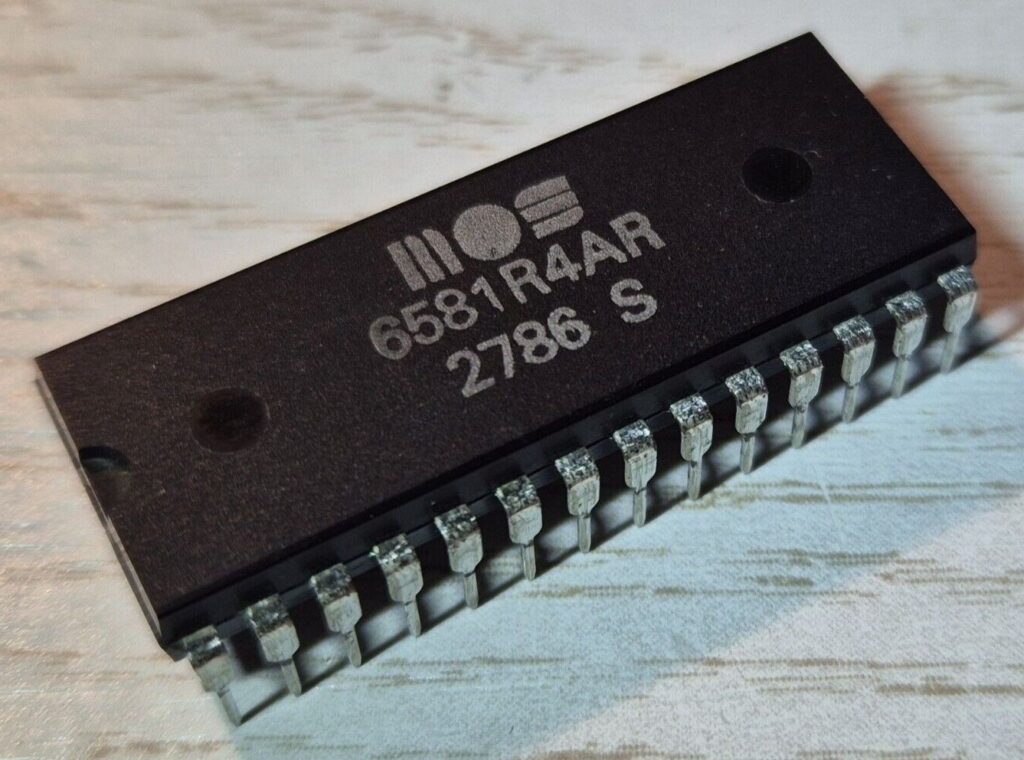
Turn on a Commodore 64 today and the graphics will date it in a second. The sound will not. That gritty, singing, unmistakably alive tone — part synthesiser, part arcade cabinet, part electric guitar through a cheap amp — is the sound of the SID chip, the MOS Technology 6581 Sound Interface Device. Designed at the start of the 1980s, it was built into every Commodore 64 and went on to define how a generation heard games. Then, when the games were done, something remarkable happened: the chip refused to retire. Four decades later, SID music is a living culture — composed, performed, remixed and celebrated by people, some of whom were not born when the C64 was discontinued. This is how a three-voice sound chip outlived the machine it was built for.

Bob Yannes and the chip that thought it was a synthesiser
The SID was designed by Bob Yannes, an engineer at MOS Technology — Commodore’s chip division — who was also a musician with strong opinions about the state of electronic sound. Yannes looked at the sound chips in rival machines and home computers and saw toys: simple beep generators with crude envelopes. He wanted to build something closer to a real synthesiser, and on a remarkably short schedule — the 6581 was designed in a matter of months in 1981 — he largely succeeded.
On paper the spec sounds modest: three voices. But look closer. Each voice offers a choice of waveforms — triangle, sawtooth, pulse with variable width, and noise — and waveforms can be combined. There are proper ADSR envelopes (attack, decay, sustain, release), ring modulation and oscillator synchronisation, features borrowed from serious synthesisers. And there is a multimode resonant filter — low-pass, band-pass, high-pass — shared across the voices, which is the real secret weapon. A filter you can sweep in real time is what turns raw waveforms into basslines that growl, leads that wail and pads that breathe. Almost nothing else in a home computer of 1982 had one.
The 6581 also had quirks, and the quirks became character. The filter varied from chip to chip — no two 6581s sound quite alike — and a famous flaw in the volume register produced a click that clever programmers exploited as a crude fourth channel for sampled drums and even speech. Its successor, the 8580, fitted to later C64s, cleaned up the sound and tamed the filter; purists argue about the two chips to this day, which tells you everything about the devotion the SID inspires.
The composers: a golden age in three voices
Hardware is only potential. What made the SID legendary was the generation of composers who treated its limitations as an art form. Because three voices is not enough for a bassline, a melody and chords, C64 musicians became masters of illusion — above all the arpeggio, cycling single notes so fast that the ear hears a chord, a technique that became the chip’s signature sound.
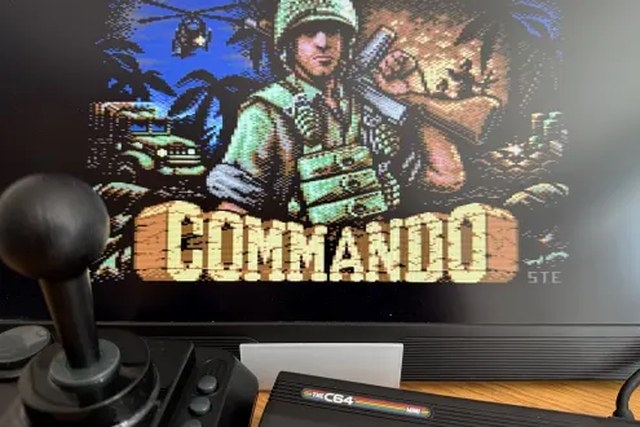
Rob Hubbard set the standard. Arriving from a background as a professional musician and programmer, Hubbard produced music of genuine compositional ambition: the driving urgency of Commando and Monty on the Run, the sprawling twelve-minute Delta theme, the sheer swagger of Sanxion. His routines were so efficient and his results so strong that his name on a loading screen sold games. Martin Galway, at Ocean, brought a different sensibility — the eerie spaciousness of his work and his astonishing Parallax and Wizball scores, plus sampled experiments that squeezed recognisable instruments out of the chip. Ben Daglish gave The Last Ninja its Eastern atmosphere and, with Anthony Lees and others, proved the SID could do cinematic. And in Germany, Chris Hülsbeck — who began as a teenage competition winner — pushed towards the symphonic with music for games like The Great Giana Sisters and Turrican, work that later carried him to orchestral concert stages.
Around them flourished dozens more: Jeroen Tel, the Maniacs of Noise, Matt Gray, Fred Gray, Tim Follin on other formats’ SIDs and many more. Game music was not background noise any more. Owners loaded games just to listen. Tapes were made. The composers became stars to a degree the industry had never seen — and the tunes stuck in heads for life.
The demoscene: the chip as an instrument
While the games industry moved on to the Amiga and consoles, the SID found its second life in the demoscene — the underground culture of programmers, artists and musicians making real-time demos to show off their skills. Freed from game budgets and deadlines, scene musicians spent the 1990s discovering sounds in the 6581 that its designers never documented: new waveform combinations, filter tricks, sample playback techniques of startling quality. The High Voltage SID Collection — HVSC — began archiving this output, and now preserves tens of thousands of SID tunes, each one a few kilobytes of code that the chip performs live. That is the crucial point: a SID file is not a recording. It is sheet music, and the chip is the performer.
The scene never stopped. SID composers still release music weekly, demo parties still run competitions, and hardware projects keep the sound alive: modern FPGA recreations, replacement chips built because originals fail and grow scarce, and synthesisers — most famously the Elektron SidStation of the late 1990s, built around a genuine SID — that put the 6581 on professional stages. Chiptune as a wider genre, from Game Boy techno to modern electronic acts sampling 8-bit textures, traces much of its DNA back to Yannes’ three voices.

Hearing it properly in 2026
Getting the real sound today takes a little thought. A genuine 6581 through a decent amplifier is the reference — raw, slightly unpredictable, with that filter behaviour emulators approximate rather than reproduce. Good emulation has become very good indeed: modern SID engines model the filter’s quirks convincingly, and FPGA-based replacements aim to close the gap for owners whose original chips have failed. If you are buying an original C64 partly for the music, it is worth knowing which chip you are getting — early breadbins carry the 6581, later machines the 8580 — because the two have distinct characters, and entire forums exist to argue their merits. Either way, play it loud and play it through speakers. The SID was designed by a musician who had performed live; laptop speakers are the one tribute it never asked for.
Why it endures
Plenty of old technology is preserved. The SID is practised. The difference matters. Its sound is not merely nostalgic — it is genuinely distinctive, an instrument with a voice no modern plugin quite replicates, because the analogue filter of a real 6581 behaves like a living thing, slightly different in every chip and every take. When a composer today writes for the SID, they are writing for the same constraints Hubbard faced in 1985, and beating those constraints is still the game.
Bob Yannes has said he thought the SID would be a footnote — a sound chip for a cheap computer. Instead it became the most loved component Commodore ever shipped, the reason many C64s are still switched on, and the voice of a machine that stopped being manufactured in 1994 and never really went silent. Listen to the Delta theme one more time, all twelve minutes of it, and try to argue.