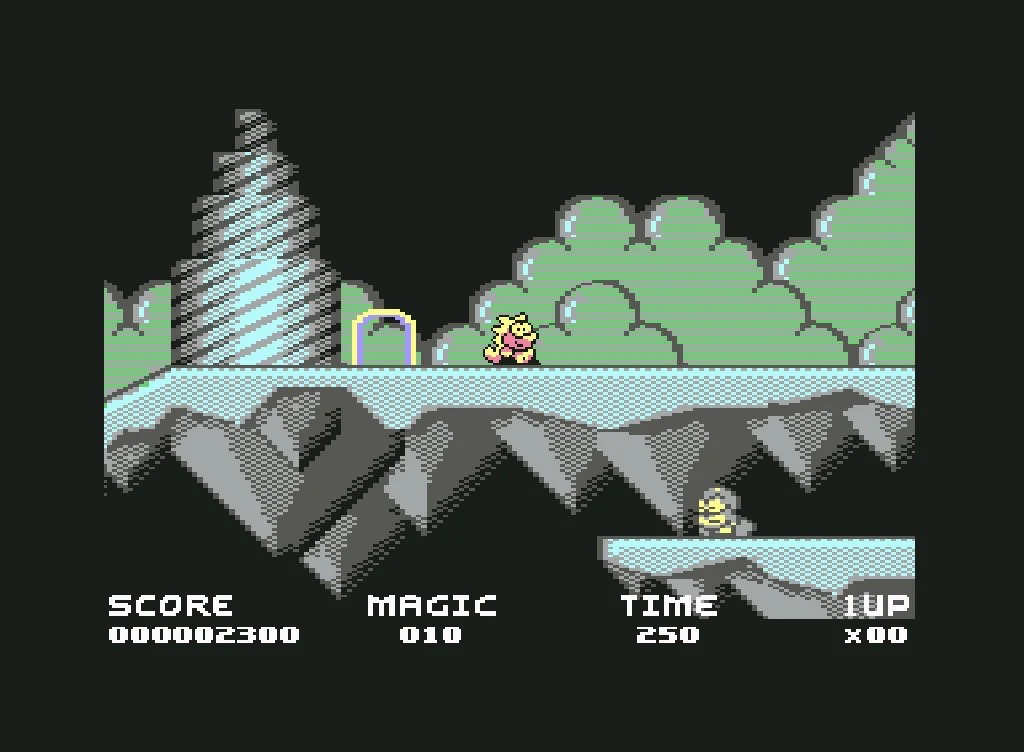
Everybody knows the Commodore 64 canon: Impossible Mission, The Last Ninja, Elite, the Monty games, the Epyx sports series. Quite right too. But the C64 library runs to thousands of titles, and some of its finest hours never troubled the charts — released late, released quietly, published by small labels, or simply too strange to explain on a cassette inlay. This list digs out ten of those games. Every one is a genuine C64 original or a C64 version that stands on its own, every one is worth loading today, and none of them is the game your mate at school had. Well — maybe one of them is. Read on.
A word on how this list was built. Chart positions were the starting point, not the finishing one: some of these games reviewed superbly and still vanished, some were mail-order or late-era releases that never had a chart to climb, and one or two sold respectably in one country while remaining unknown in another. What unites them is simpler — each one does something the famous games do not, or does the familiar thing measurably better, and each one has been verified the slow way: loaded, played and argued about. Dates and publishers are given with each entry, because half the fun of a hidden gem is knowing where it was hiding. If your personal favourite is missing, the comments are open and the C64 library is deep enough to keep this argument running for years — that, in the end, is the real subject of this list.
1. Wizball (1987)

Wizball should not be a hidden gem — ZZAP!64 adored it and Sensible Software’s reputation rests partly on it — yet it is forever being left off best-of lists in favour of louder games. The concept sounds like a fever dream: you are a wizard transformed into a bouncing green ball, rolling and rebounding through drab grey worlds, shooting enemies to release droplets of colour and collecting them with your cat familiar to repaint the landscape red, green and blue. Underneath the surrealism sits one of the most satisfying control schemes on the machine. Momentum is everything, upgrades between levels let you tame the bounce, and the two-player mode — one player steering the cat — is cooperative gaming years ahead of schedule. Add a Martin Galway soundtrack of real delicacy and you have a game that is not quite like anything else, before or since.
2. Armalyte (1988)
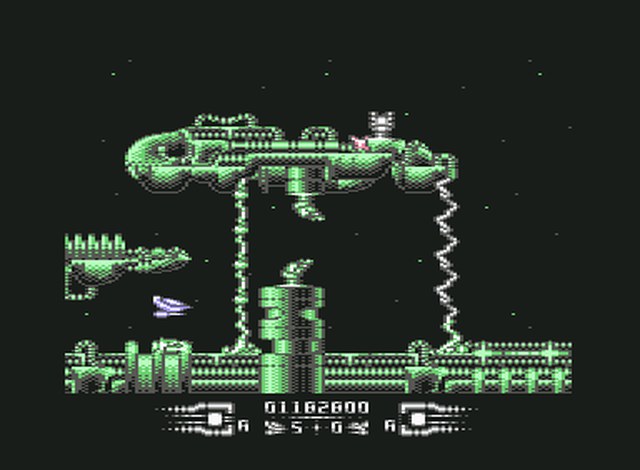
By 1988 the horizontally scrolling shoot-’em-up was a crowded field, and Armalyte, from Cyberdyne Systems and Thalamus, still managed to stand out. It looks astonishing — vast organic backdrops, huge sprites, explosions everywhere — and it plays with a fairness that many prettier shooters lacked. The weapon system rewards thought: a battery meter governs your power-ups, so collecting everything in sight can leave you weaker at the wrong moment, and the two-player simultaneous mode turns it into one of the C64’s great shared experiences. It was designed as a sequel-that-wasn’t to Delta, built by a team including John Kemp and Robin Levy, and it regularly tops polls of C64 shooters among people who have actually played them all. The charts, bafflingly, were less impressed. Trust the polls.
3. Citadel (1989)

Martin Walker made two of the most ambitious games on the C64, and while Hunter’s Moon gets the retrospective love, Citadel is the stranger and arguably greater achievement. Released by Electric Dreams in 1989, it drops you into a vast futuristic city on a mission nobody fully explains, and lets you explore on foot and by vehicle, trading, fighting and unravelling what the city is. The scale is the shock: this is a huge, mapped world that keeps its own routines running while you explore, squeezed into 64K a couple of years before such sandbox ambitions became fashionable. It sold modestly, arrived late in the machine’s life, and has been quietly waiting ever since for the audience it deserved. Give it an evening, take notes, and marvel.
4. Delta (1987)

Finnish programmer Stavros Fasoulas announced himself with Sanxion and then perfected his craft with Delta, a horizontal shooter of rare elegance. The gimmick is inspired: destroyed enemies leave credits, and banks of power-up icons drift by — you can only afford some of them, so every run is a series of spending decisions made at speed. Take the wrong icon and you are penalised, which turns the usual collect-everything instinct into a risk. It is smooth, fast and beautifully judged, and Rob Hubbard’s music — the title theme is a twelve-minute epic by SID standards — gives it a grandeur most arcade cabinets could not match. Delta is the connoisseur’s C64 shooter: less famous than Armalyte, arguably more refined.
5. Sanxion (1985)
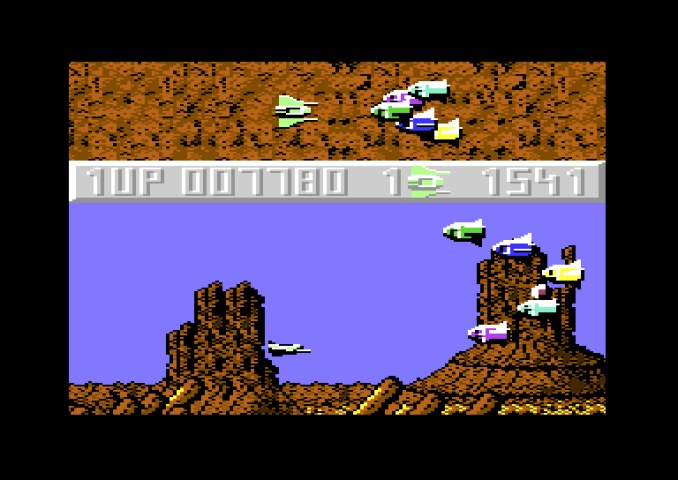
Two years earlier, Fasoulas had already produced a landmark. Sanxion’s split-screen display — a distant view above, a close-up of your fighter skimming the terrain below — was a technical party trick that turned into a genuine gameplay advantage, letting you read the ground-hugging sections at speed. Published by Thalamus in 1985 as the label’s debut, it paired that innovation with Rob Hubbard’s propulsive music and a difficulty curve that respected the player. Sanxion is sometimes filed as a Defender relative, but it feels entirely its own: Scandinavian, precise, unshowy and quietly influential on every smooth C64 scroller that followed. If Delta is the refinement, Sanxion is the breakthrough — play them as a pair.
6. Creatures (1990)

The Rowlands brothers, John and Steve, built Creatures for Thalamus at the turn of the decade, when the C64 was supposed to be finished — and produced one of its most polished platformers. You are a Fuzzy Wuzzy rescuing your kin from demon torture chambers, and the tone is a glorious mismatch: cute, chunky, console-quality graphics wrapped around gleefully nasty torture-screen interludes. The platforming itself is inventive, with magic potions transforming your abilities and levels that mix exploration with set-piece puzzles. Creatures proved the C64 could do the colourful mascot platformer as well as any console, and it did it in 1990, in Britain, on a machine bought in 1983. A gem by any measure — and its sequel, Creatures II, is nearly as good.
7. IO (1988)
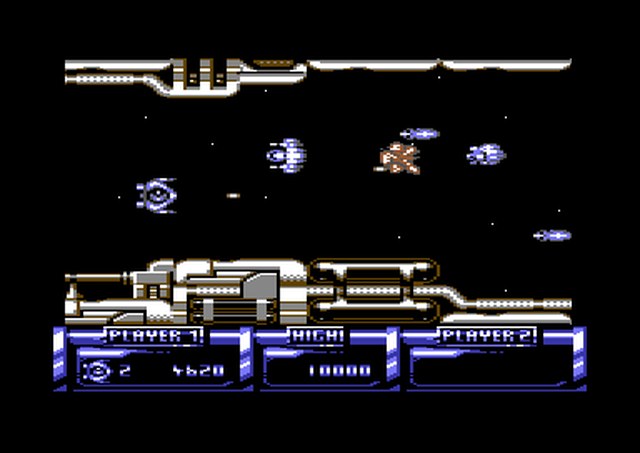
Short for “Into Oblivion” on the box and pure adrenaline in practice, IO was a Firebird release programmed by Doug Hare with graphics in the distinctive Bob Stevenson style — the same biomechanical look that made Armalyte-era shooters so striking. IO is the hardcore option on this list: fast, dense, unforgiving, with weapon pods to collect and position carefully, and scenery that seems determined to crush as well as shoot you. It never had Armalyte’s profile, partly because it is genuinely hard — the first level alone will test whether a modern player has the patience this era assumed — and partly because Firebird’s marketing had other priorities, leaving IO to be discovered by word of mouth in playgrounds and, later, in emulator collections. That slow-burn reputation suits it. IO does not want to be liked quickly; it wants to be mastered slowly, and the players who put the weeks in tend to defend it with a fervour usually reserved for far bigger names. Consider this your warning and your invitation in equal measure: this is the list’s connoisseur cut, and it earns the title. Stick with it past the brutal opening levels and there is a superbly engineered shooter here, one that still turns up in speedrun and high-score circles.
8. Mayhem in Monsterland (1993)
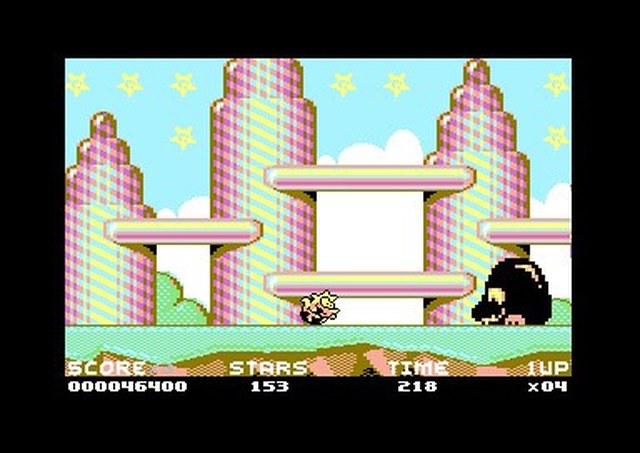
1993. The C64 was eleven years old, officially discontinued in many territories, and Apex Computer Productions — the Rowlands brothers again — released a game that looked like it belonged on a 16-bit console. Mayhem in Monsterland stars a baby dinosaur restoring happiness and colour to drained lands, and its party tricks are legendary: full-speed scrolling, enormous sprites, parallax, colour everywhere, all at a pace the hardware was never supposed to sustain. It was sold largely by mail order through Commodore Format’s patronage, which is exactly why it slipped past the charts — there were barely charts left to slip past. As a technical achievement it may be the single most impressive game on this list. As a game, it is a joy.
9. Nebulus (1987)

Known as Tower Toppler in the United States, John Phillips’ Nebulus for Hewson is built on one perfect idea: you climb towers that rise from the sea, and instead of the character moving around the tower, the tower rotates — a smooth, mesmerising effect that still looks clever today. Your little green climber Pogo dodges dislodgers, rides lifts, shoots snowballs and ducks into doorways that flip him to the tower’s far side, before a bonus stage shooting fish from a submarine. Every element is precise, charming and faintly surreal. Nebulus was a hit in its day yet has somehow drifted out of the standard canon; dust it off and you will find a puzzle-platformer of real originality that has never been properly imitated.
10. Turrican (1990)
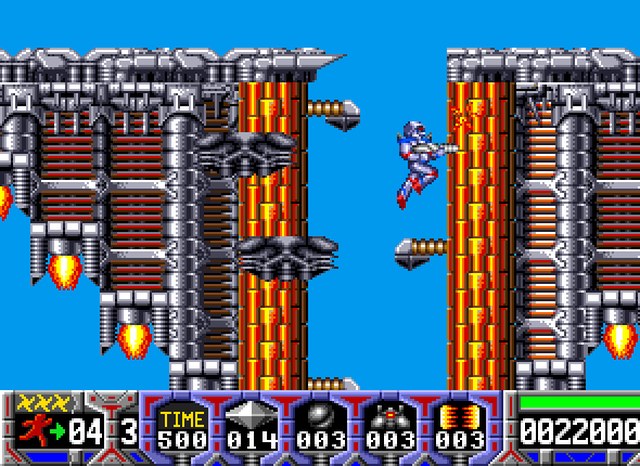
Turrican is famous now — as an Amiga game. Which is precisely why the C64 original belongs here. Manfred Trenz designed and programmed the Commodore 64 version first, for Rainbow Arts in 1990, and it is a staggering piece of work: huge explorable levels, a hero who can roll into a ball, a lightning-whip weapon, jetpack sections and bosses that fill the screen, all running on the machine the industry had written off. The soundtrack — built on Chris Hülsbeck’s themes and adapted for the SID — loses remarkably little. Many players met Turrican on 16-bit machines and never looked back; those who did found a run-and-gun that stands comparison with anything on the system. Not a secret among devotees, then — but a gem hiding in its own sequel’s shadow, and the right place to end this list.
One final observation from putting this list together: notice how many of these games come from small teams — two brothers in the Rowlands’ case, a single Finnish programmer in Fasoulas’, a handful of people at Cyberdyne. The C64’s commercial giants made the canon, but its underground classics were bedroom and small-studio work, made by people programming at the edge of what the hardware allowed because nobody had told them to stop. That is why the gems keep surfacing forty years on: the library was never just the catalogue of a few big publishers. It was thousands of individual acts of obsession, and we are still finding the best of them.
That is ten, and we could have filled ten more slots
— which is rather the point. The C64’s depth is its legend. Load a couple of these up this week, argue about the order, and tell us which ones we criminally omitted.