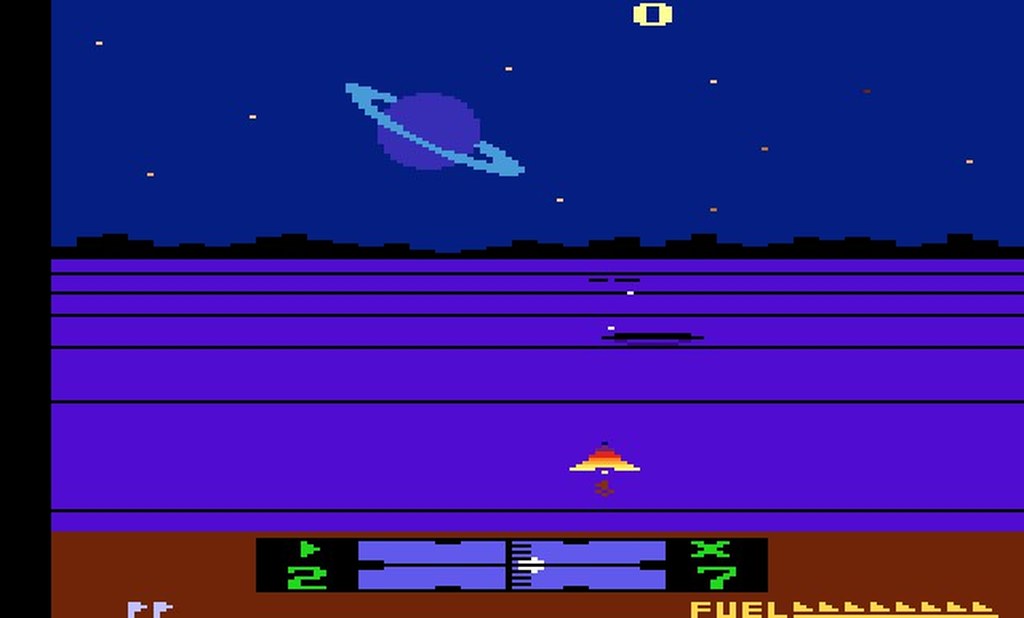
In 1986, the Atari 2600 was supposed to be dead. The crash had buried it, the NES was rising, and the machine’s obituary had been written by everyone. Then Atari Corp quietly released Solaris, designed by Doug Neubauer, and it looked like it had arrived from a different console. Starfields with real depth. Planets rendered with texture and shadow. A galactic map, refuelling runs, ground assaults over scrolling terrain, space combat in a proper first-person cockpit view — on hardware designed in 1977 to play Pong variants and tank games. Solaris is not just a good late 2600 game. It is a technical dare that the hardware somehow survived.
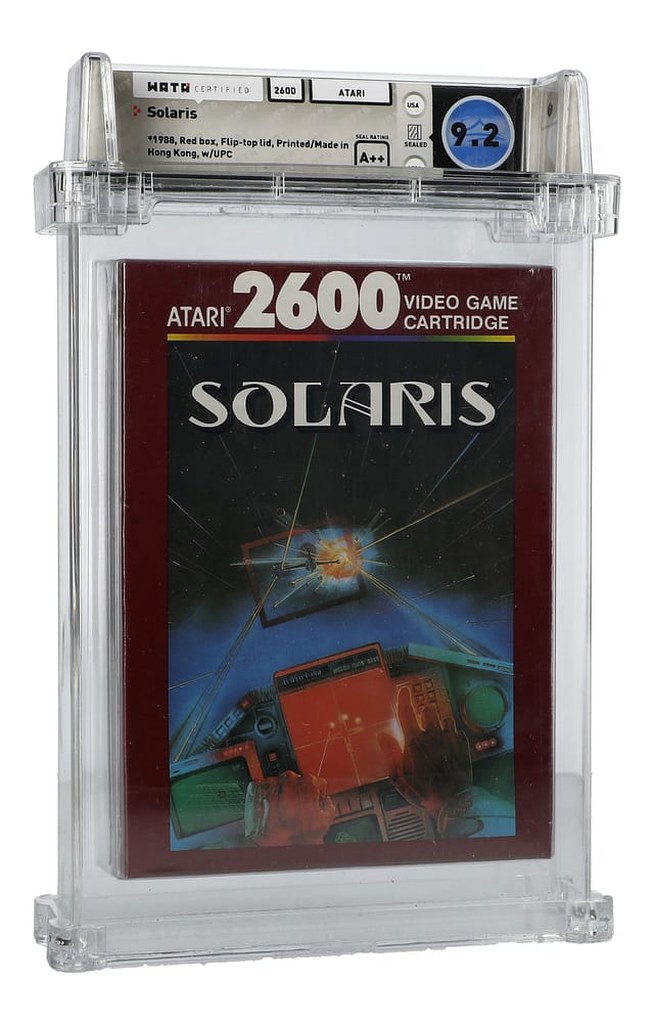
Neubauer had space pedigree: he was the creator of Star Raiders for the Atari 8-bit computers, one of the defining space games of its era, and Solaris is best understood as his attempt to bring that ambition — a galactic war you navigate, manage and fight across sectors — down onto the humble 2600. The game had a long gestation; it was developed earlier in the decade under a working association with The Last Starfighter film before that connection was dropped, and it finally reached shelves through Atari Corp in 1986, when new 2600 releases were rare enough to be news. The players who found it then could hardly believe what their old machine was doing. Neither, frankly, can you now.
A galaxy on a grid
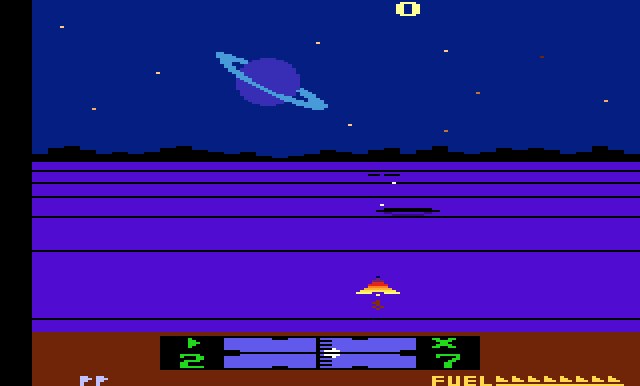
The structure will be familiar to Star Raiders veterans, translated with astonishing completeness. The galaxy is a grid of quadrants shown on a tactical map. The Zylon enemy is spreading; your job is to defend friendly planets and strike the enemy’s, moving your ship quadrant to quadrant, spending fuel with every jump. Select a destination, and you warp — through a visual effect that sells speed on a machine with no business selling speed — and arrive in whatever that quadrant contains: open space with enemy squadrons, a friendly planet where you can dock, descend, and refuel, or a Zylon planet where the fight goes down to the surface.
That strategic layer is what lifts Solaris out of the shooter pack. Fuel is your clock, as in River Raid, but here the map makes the arithmetic spatial: every detour to a friendly planet costs the war elsewhere, every deep strike risks stranding. Enemy fleets move on the map with intent. You are not just reacting to the next wave; you are choosing a war, one quadrant at a time, with limited petrol. In 1986. On a 2600.
Three games wearing one coat
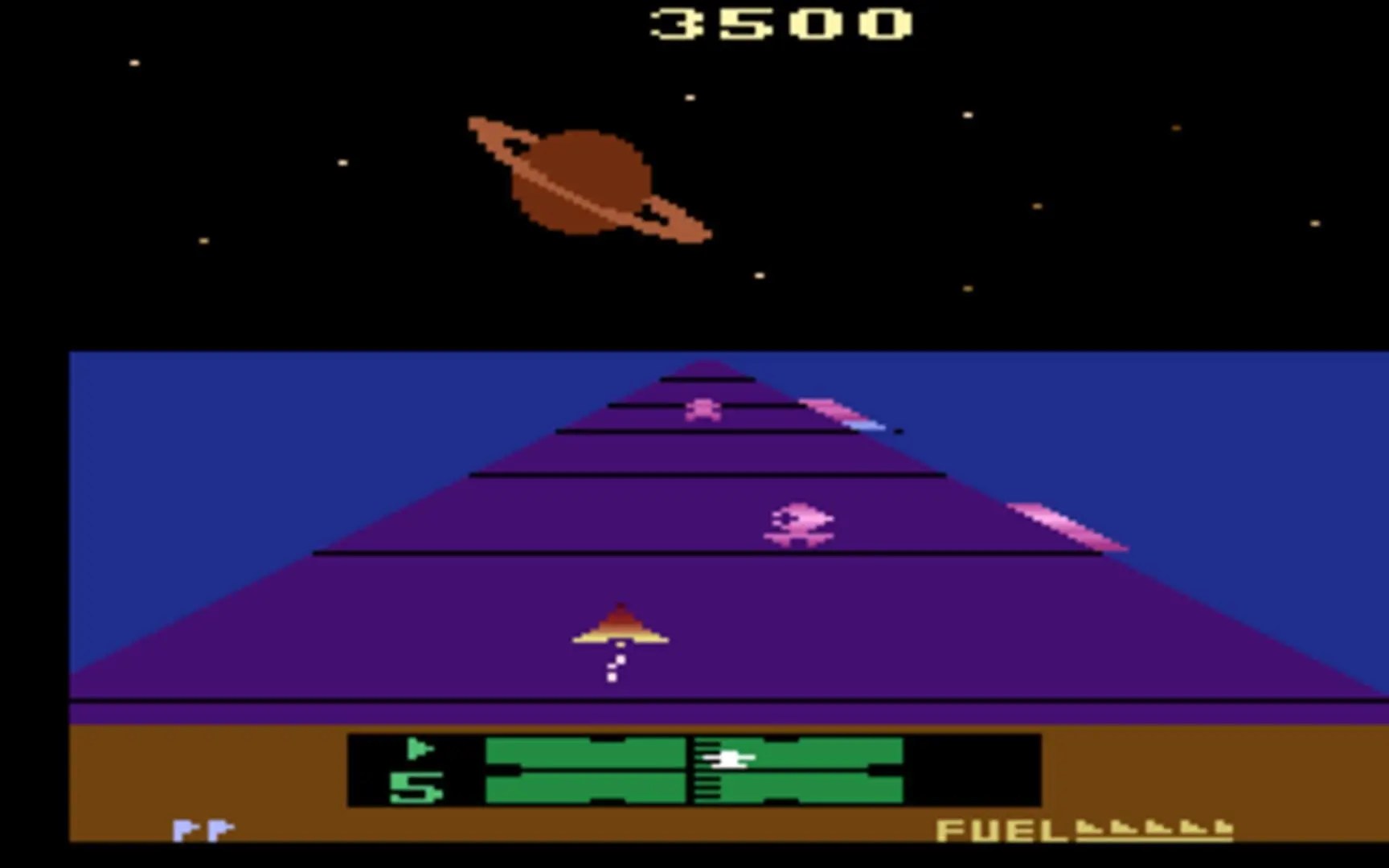
Arrival in a hostile quadrant drops you into the cockpit: a first-person view, stars streaming, enemy fighters sweeping in to be centred in your sights and blasted, their shots to be dodged with the stick. The sense of speed and scale Neubauer extracts is remarkable — the fighters scale as they approach, the starfield sells the void, and combat has a snap that first-person 2600 games almost never achieved; compare the honourable stiffness of earlier attempts and Solaris feels a generation newer.
Friendly planets switch the register again: you descend through a corridor sequence, docking to refuel and repair, a test of precision under the same fuel pressure that governs everything. Zylon planets are the showpiece — a low-altitude assault over scrolling ground installations, weaving between defences to strike targets on the surface, the 2600 producing a landscape run that it has no hardware right to produce. Each mode is simple in isolation; stitched together by the map and the fuel gauge, they become a campaign.
How did he do that?
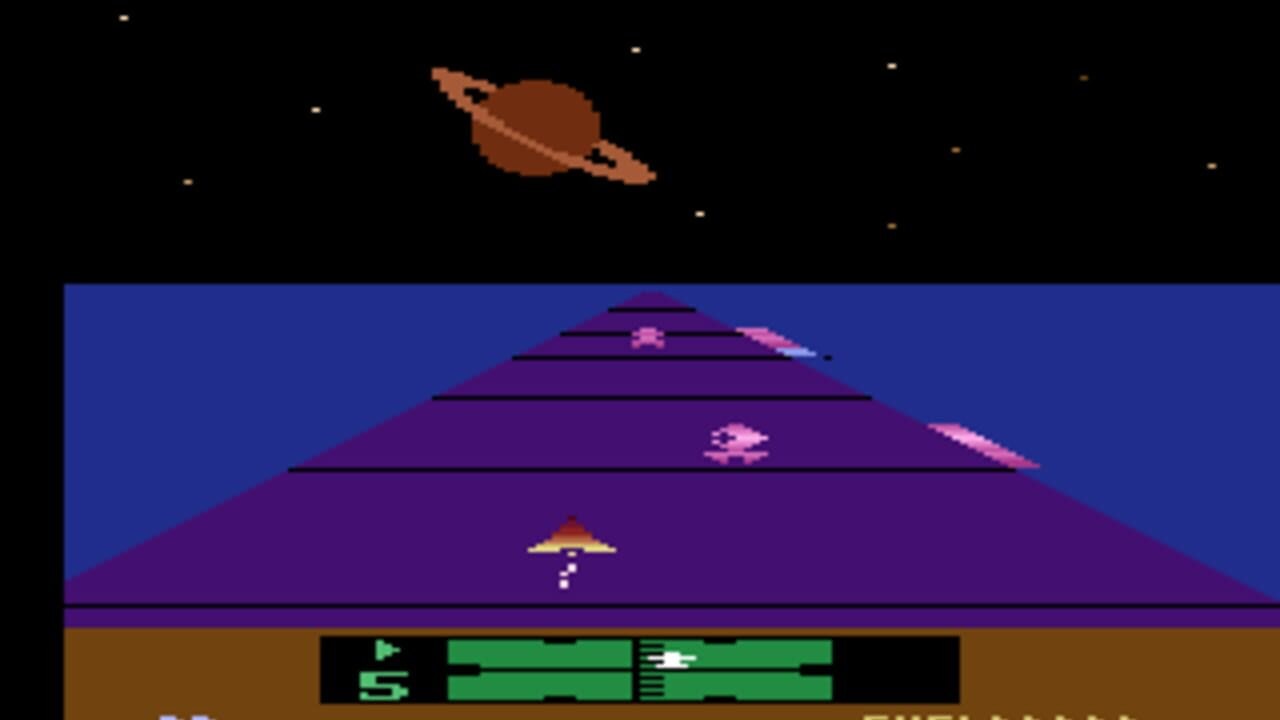
The honest answer is: by knowing exactly where the machine’s limits were soft. The 2600’s graphics hardware is famously a racing-the-beam affair, redrawing the picture as the television’s electron beam sweeps, and the great late programmers — Neubauer among them — had a decade of accumulated tricks for coaxing apparent sprites, playfield detail and motion out of it. Solaris layers those tricks with unusual discipline: the cockpit view uses size-changing objects and a dense starfield to fake a 3D space the machine cannot calculate; the planet surfaces scroll in a way that suggests terrain rather than stripes; even the typeface of its displays feels considered. It is also a large game by the standards of the platform, and it spends its space on variety rather than repetition.
None of that technique would matter if the game beneath were thin. It is not thin. It is hard — properly, sometimes forbiddingly hard — with limited ships, a war that does not pause while you learn, and enemy pilots who improve as you push deeper. The manual is not optional reading; the galaxy map’s symbols and the economy of fuel and repairs need explaining once, after which the game speaks clearly. That upfront investment mirrors its 8-bit ancestors more than its 2600 contemporaries, and it is a large part of why the game commands the respect of the programmers and historians who keep returning to it.
The context: a machine refusing to die
Solaris belongs to the strange, fascinating coda of the 2600’s life, when Atari Corp re-released the console in its slimmed 2600 Jr form and commissioned or rescued a run of late titles that treated the hardware like a challenge rather than a relic. Among those late games it stands at or near the top for sheer ambition. It did not set the charts alight — by 1986 the audience had largely moved on, and the game’s difficulty and complexity were never going to be mass-market — but its second life in the retro community has been long and deserved. It is the cartridge veterans produce when a newcomer says the 2600 could only do simple games. Here, they say. Explain this.
How it plays today
With patience, superbly; without it, briefly. Modern space-game players will recognise its structure instantly — map, fuel, sorties, defence — and may be startled at how completely it is realised. The cockpit combat holds up as a reflex test, the ground assaults remain impressive to watch, and the strategic pressure is genuine. What will test you is the era’s framing: no saves, no tutorial ramp, and a learning curve delivered by defeat. Read the manual first, take notes on the map if you like, and treat your first campaigns as reconnaissance. That is not a flaw. That is the game being from a time when mastery was the product.
Neubauer’s second act
There is a pleasing symmetry in who made this game. Neubauer had essentially defined the first-person space strategy game on home computers with Star Raiders at the start of the decade; by the middle of it, the industry had decided that both he and the 2600 belonged to its past. Solaris is his reply, and it is not a nostalgic one. Rather than shrinking Star Raiders apologetically, he redesigned for the smaller machine’s strengths — instant action, a decisive map, short sharp sorties — and produced what many programmers who have studied the cartridge regard as one of the most technically accomplished programs ever written for it. Late-era 2600 development produced several such statements, from H.E.R.O.‘s polish to the homebrew scene’s later miracles, but Solaris remains the one that makes other developers shake their heads, because the gap between what the hardware promises and what the screen delivers is widest here.
Verdict
Solaris pushed the 2600 off a cliff and the machine flew: a galactic strategy campaign, first-person space combat and planetary assaults in one 1986 cartridge, from the designer of Star Raiders, on hardware a decade old. It is the late era’s masterpiece and the strongest single exhibit for the argument that the 2600’s best programmers had not finished when the market said they had.