
Thinking With Portals at Top Speed: Inside the Sonic Hacking Contest 2015
The original version of this article, published in October 2015, opened with a grumble — that Sega had not made a good Sonic game in decades, so fans had better make their own. A decade on, that framing reads as more than a joke. While the official series lurched between reinventions, the Sonic Hacking Contest quietly operated as the franchise’s research department: an annual, volunteer-run competition where bedroom programmers disassembled twenty-year-old Mega Drive code and returned with new levels, new abilities and, in 2015’s most reported entry, a working portal gun inside Sonic the Hedgehog 2. This is a look back at that year’s contest — how it ran, what it rewarded, and why its strangest headline act was not actually its most important one.
A Contest With Rules, Judges and a Trophy Cabinet
By 2015 the contest was a mature institution in the Sonic community, run jointly through the Sonic Retro and Sonic Stuff Research Group communities, with a judging panel mixing organisers and community figures — Cinossu, D.A. Garden, Shadow Fire, Mercury, Reverie and SuperEgg, joined that year by LazloPsylus and SSF1991, known as Donnie. The structure was closer to a film festival than a forum thread. Entrants had to submit a playable build by Sunday 4 October 2015, then had a further week, until 11 October, to fix and polish. Contest Week itself ran from Monday 19 to Sunday 25 October, when the public could play the entries, watch them streamed, and vote for a parallel set of community trophies.
The rules explain the contest’s reputation for quality. An entry had to be based on an existing Sonic game, it had to be playable, and it had to be shown with screenshots, video and music — the judges pointedly refused to make entrants’ promotional material for them. Palette swaps were explicitly beneath the bar, and private hacks were not allowed: work was either public or represented by media, because the point was a community that could see, play and argue about everything. The trophy list mixed overall honours — the Hidden Palace Trophy for first place, Wood Zone for second, Dust Hill for third — with a cabinet of specialisms: best art, best music, best level layout, most difficult, best new boss, best new ability, most innovative gameplay feature, and a Generations Trophy recognising that the contest had long since expanded from Mega Drive ROM hacks into mods of the 3D games. Two things were being judged at once: craft, and imagination about what a Sonic game could be.
The Portal Gun Heard Round the Community
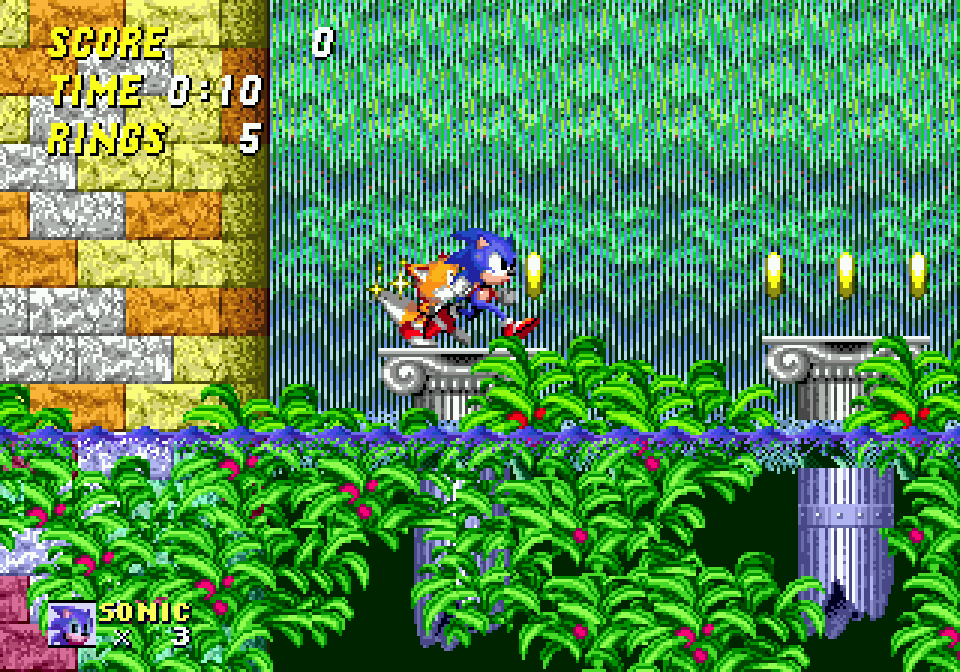
Every contest produces one entry that escapes the community and lands on the general-interest press, and in 2015 it escaped all the way to a PC gaming institution. On 26 October, the day after Contest Week closed, Rock, Paper, Shotgun reported that a ROM hacker had given Sonic an Aperture Science portal gun — Valve’s linked-doorway device from Portal — inside Sonic 2. The appeal is obvious the moment you picture it. Sonic’s design language is momentum: speed built on slopes, preserved through loops, spent on height. Portals are momentum’s favourite toy, a way of converting a fall into a launch and a wall into a doorway. Put the two together and Emerald Hill stops being a level you run through and becomes a physics puzzle you throw yourself through, at speeds its designers never contemplated.
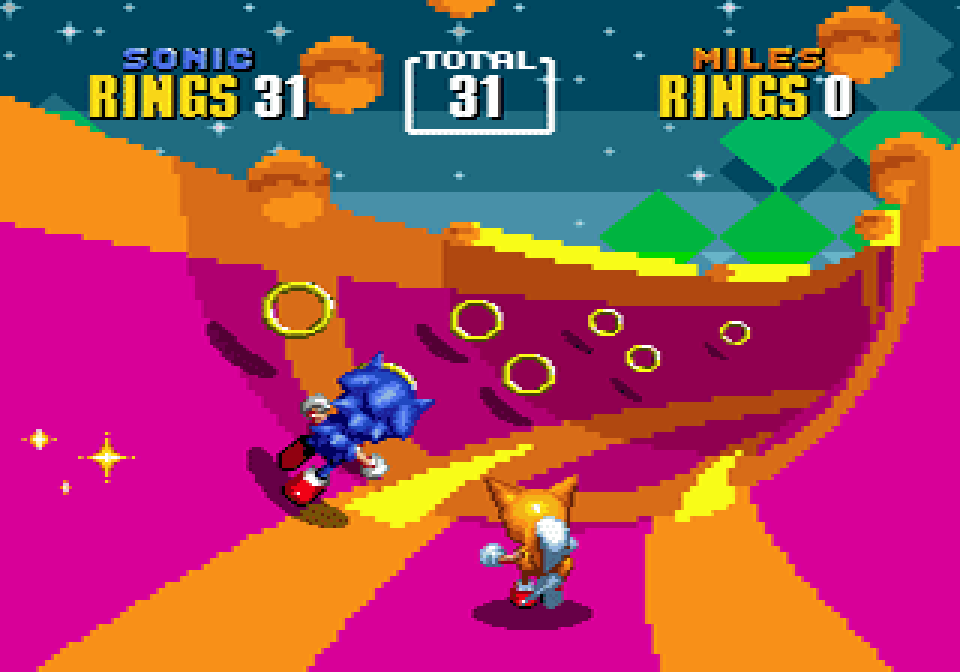
It is worth being precise about what an entry like that demonstrates, because “Sonic with a portal gun” sounds like a gag, and the judging categories existed to separate gags from engineering. Implementing linked portals in a 1992 Mega Drive game means teaching the engine object teleportation, velocity preservation and level geometry awareness it was never built for, on hardware with 64 kilobytes of RAM, in assembly language. That is why the contest maintained a dedicated technical trophy, named 11000101, for proof-of-concept work: the community understood that a hack could matter as a demonstration even before it mattered as a game. The portal entry was 2015’s postcard from that frontier, and the mainstream coverage it earned did the contest a service — thousands of readers who would never open a disassembly learned in one headline that this scene existed and took its craft seriously.
The Slow Burn the Headlines Missed
Look back from a decade later, though, and the most instructive 2015 story is about patience. Among that year’s entries was an early showing of Sonic: Scorched Quest, Team Painto’s fire-scarred reimagining of the first Sonic’s South Island. It left the 2015 contest empty-handed — a fact the 2016 judges remarked on with some feeling when the hack returned in pre-final form the following year and swept the board, taking the Hidden Palace Trophy for best overall entry and a stack of specialisms besides, with the judging commentary openly delighted that it finally got the attention it deserved. That arc is the contest working exactly as designed. Entries were not one-shot lottery tickets; they were drafts in public, and the Tails Trophy — awarded to the most improved returning hack — existed precisely to honour the loop of submission, criticism and return. Scorched Quest’s two-year journey from also-ran to champion is the single best advertisement the contest has ever produced for its own process.

Contest Week: A Festival, Not a Deadline
The week’s social machinery mattered as much as its judging. Entries were classified as public, which anyone could play, or partial, represented publicly by screenshots, video and music while the build itself stayed with the judges — a compromise that let ambitious, unfinished work be seen without being judged as finished. Streamers ran the entries live across the week, community members voted on their own parallel trophies, including a cheerfully inverted award for the worst entry overall, and the organisers’ guidance to would-be jokers has entered community folklore: humour was welcome, but a joke entry still had to be made with grace and effort. Underneath the fun sat a serious piece of infrastructure — a shared deadline, a shared audience and a shared standard, renewed every year, in a hobby where most projects otherwise die alone on a hard drive. Many of the era’s best-known hacks exist in their finished forms because the contest gave their authors a date to finish them by, and a crowd waiting on the other side of it. The 2015 field benefited from exactly that discipline: what the public played in late October was not a pile of abandoned experiments but a curated week of new Mega Drive and PC work, argued over in real time by the people who understood it best.
Why 2015 Still Matters
The contest’s influence has never been confined to its own trophies. The Retro coverage announcing the 2015 edition noted, almost in passing, that an earlier contest favourite, Robotnik’s Revenge, had in a roundabout way inspired the boss-rush Egg Gauntlet mode in the official 2013 mobile remake of Sonic 2 — fan work flowing back into the commercial series it was built from. That two-way traffic is the real story of the Sonic hacking scene, and 2015 sits squarely inside it: a community fluent enough in Sega’s own code to hand ideas back to the professionals. The portal gun made the newspapers. The scorched island made the point. And the contest itself — volunteer judges, strict rules, public drafts, returning champions — made both of them possible. Sega’s hedgehog has had many custodians over the years. In October 2015, as in most years, the most devoted ones were working for free, in assembly, for trophies named after lost levels.