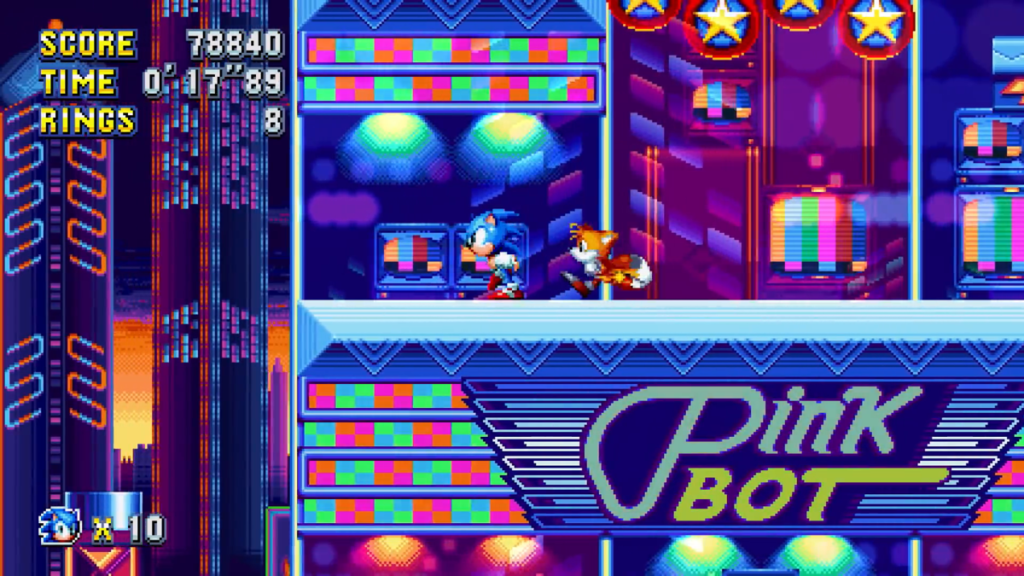
The sold-out crowd at the House of Blues in San Diego on the evening of 22 July 2016 had been promised a party. Sonic’s 25th anniversary, held in the middle of San Diego Comic-Con, with concerts, merchandise and what Sega PR called a very special announcement. Anniversary events make promises like that all the time, and they usually keep them with a logo and a release window. What this crowd got instead was a trailer for a 2D Sonic game built by fans, and a roar that people who were there still talk about. The announcement of Sonic Mania is the moment the modern history of the series turns.
This site’s original report was filed the same night, in a state of mild shock, and amounted to little more than delighted disbelief. Fair enough. Nobody had a vocabulary yet for what Sega had just done, because Sega had never quite done it before: handed its mascot to the community that had kept his classic games alive, and asked them to make the next one.

The Fans in the Room
The names in the announcement were the story. Christian Whitehead, an Australian developer known to the scene as Taxman, had spent years proving that the Mega Drive games could be rebuilt rather than merely emulated. His Retro Engine powered the acclaimed remasters of Sonic CD and the mobile versions of Sonic 1 and 2, ports so faithful and so improved that they embarrassed most official re-releases. Simon Thomley, Stealth to the scene, ran Headcannon and had walked the same road through fangames and ROM hacks. PagodaWest Games brought art and level design, including staff who had previously worked on an unofficial high-definition remake of Sonic 2. These were not contractors hired to imitate a style. They were people who had devoted their amateur lives to these games and were now being paid, at last, to extend them.
Sonic Team’s Takashi Iizuka framed it plainly in the press release: Mania was born out of the fans’ love of the classic games. Understatement of the decade. The project had begun when Whitehead showed Iizuka a playable prototype of what a new classic Sonic could be. The most powerful man in the franchise looked at a fan’s demo and, instead of sending a legal letter, sent a contract.
What Was Promised
The game itself, as announced that night, was a careful piece of rhetoric in playable form. Mania would reimagine zones from Sonic 1, Sonic 2, Sonic CD and Sonic 3 & Knuckles, rebuilding famous levels with new layouts, gimmicks and bosses, and interleave them with entirely new zones in the same pixel style. The first of those new zones was playable on the party floor: Studiopolis, a riot of television studios, satellite dishes and carnival colour that announced, in one level, that this team could originate as confidently as it could homage. Green Hill Zone, reimagined, ran beside it. Sonic, Tails and Knuckles were the playable trio. The platforms were PlayStation 4, Xbox One and PC, with a spring 2017 window and, in a detail that delighted the room, attendees received goody bags whose USB stick carried a track from Tee Lopes’ soundtrack.
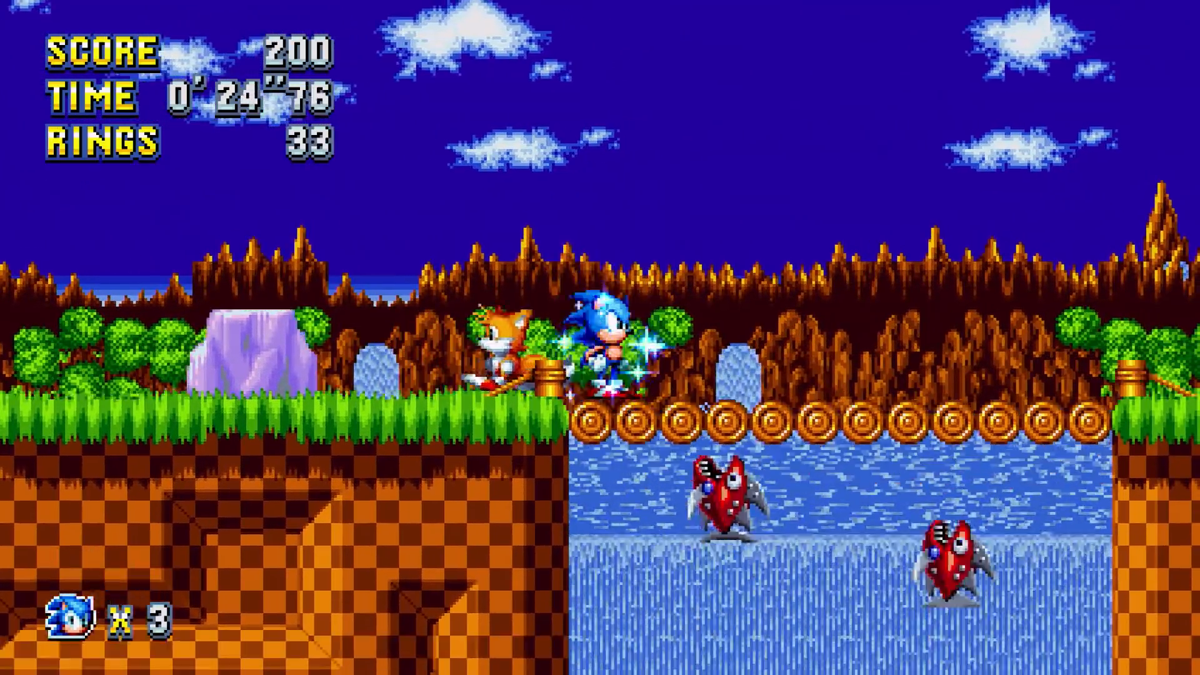
Framing mattered. Sega announced a second game that same night, the project that would become Sonic Forces: big, 3D, made in-house, aimed at the future. Mania was positioned as the past. The audience’s heart was never really in doubt about which one it believed in, and the following year would prove the crowd right in almost embarrassing detail.
The Long Summer of 2017
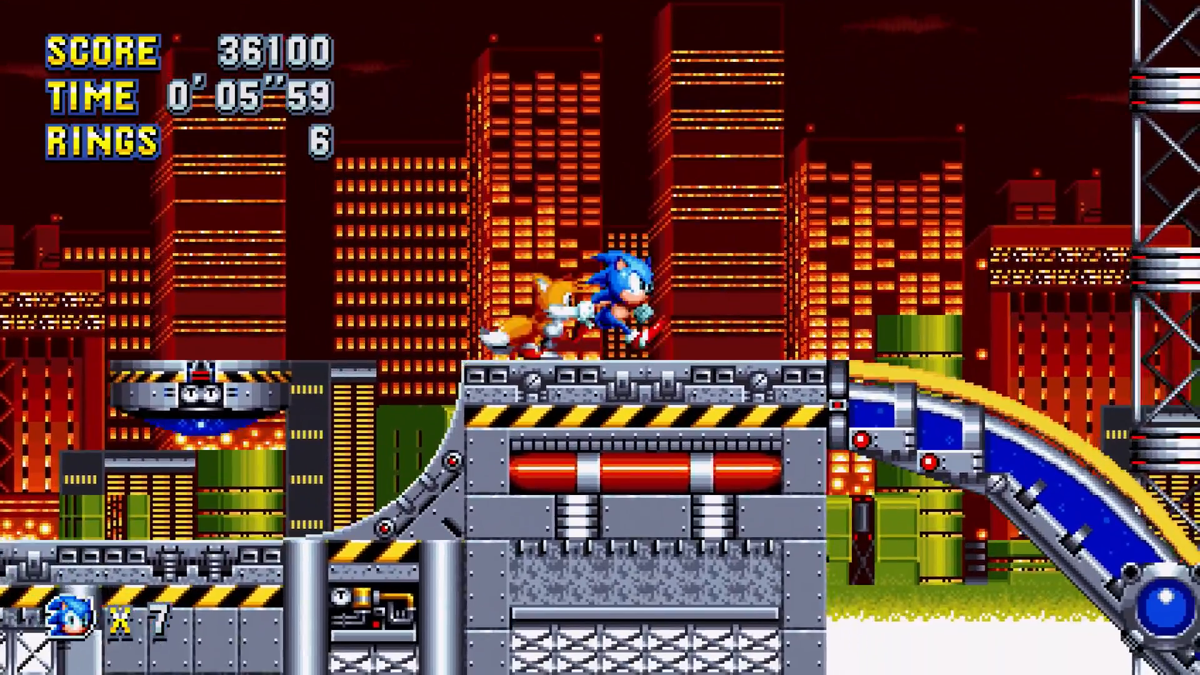
Spring slipped. At South by Southwest in March 2017 Sega pushed Mania to summer, and the delay occasioned the usual anxiety, but what arrived on 15 August 2017 (with the PC version following on 29 August and a Nintendo Switch edition in the line-up) was the rare revival that understood its source material at the level of physics. Mania’s zones move like the Mega Drive games because they are, in a real sense, the Mega Drive games, their engine rebuilt by people who had studied the original code for sport. The new material earned its place: Studiopolis and Press Garden stand with the best of the 16-bit canon, and Lopes’ soundtrack, remixing and originating in the same breath, became an instant series highlight.
The reviews settled it. Mania posted Metacritic scores in the mid-eighties and was widely described as the best Sonic game in fifteen years, which rather undersold it: it was the best-reviewed Sonic game since the Dreamcast era and one of the best platformers of a stacked year. Critics who had spent a decade writing the series’ obituaries queued up to say the fans had been right all along.
A Million Copies and a Plus
Commerce agreed with criticism. By April 2018, Mania had sold over a million copies worldwide, and Sega marked the milestone the way publishers do when a experiment becomes a product line: Sonic Mania Plus arrived on 17 July 2018, at retail this time, adding an Encore mode that remixed the zones, a four-player competition mode, and two rescued characters, Mighty the Armadillo and Ray the Flying Squirrel, last playable in the 1993 arcade oddity SegaSonic the Hedgehog. The lost boys of the franchise, restored by the same philosophy that had restored the gameplay: if the fans remember it, it matters.
The Sound of Getting It Right
One more piece of the announcement deserves its due, because it played out in miniature the whole philosophy of the project. The music coming out of that goody-bag USB stick, and eventually out of the finished game, was composed by Tee Lopes, a Portuguese musician who had built his reputation exactly where the developers built theirs: in the fan community, arranging and remixing Sonic music on YouTube for an audience of the faithful. His score for Mania does not imitate the Mega Drive sound so much as extend it, the same drum samples and FM-adjacent sparkle pushed into richer arrangements, with the Studiopolis theme swinging like a big band that swallowed a sound chip. When the soundtrack became one of the most praised elements of a game nobody criticised for its music, it completed the argument. Given the keys, the community had not merely preserved the classics. It had been rehearsing to continue them.
The Legacy of One Announcement
The strangest part of the story is what did not happen. There was no Sonic Mania 2. The team scattered to new things, several of them regrouping as Evening Star and eventually releasing Penny’s Big Breakaway, while Sega steered the 2D line elsewhere. Mania stands alone, which has only burnished it. It remains the definitive demonstration that the Mega Drive games were not nostalgia objects but a living design language, and that the community which had preserved them, through hacking contests, remakes and remasters, had quietly become the most qualified studio in the world to speak it.
Re-read the little news post this feature replaces and you can feel a fandom holding its breath. Holy anything, indeed. The announcement at the House of Blues was the day Sonic went back: back to 2D, back to his roots, and back to the people who had never left. Everything the series does in that space now happens in Mania’s long, blue shadow.