
The Sonic Mania pre-order trailer lasted about ninety seconds, and it did something Sonic trailers had failed to do for years: it made the whole internet feel the same thing at the same time. Released on 30 May 2017, the trailer paired hand-drawn animation by Tyson Hesse with an original track, “Time Trials,” by Hyper Potions — and closed by answering the only question that mattered. Sonic Mania would launch on 15 August 2017, for $19.99, on Switch, PlayStation 4, Xbox One and PC. The original post on this site carried the news the day it dropped. With the game now a landmark, the trailer deserves a retrospective of its own — because as a piece of persuasion, it is close to perfect.
A revival that needed one great minute
Context is everything. Mania had been announced at Sonic’s 25th anniversary party in July 2016 to an explosion of goodwill — a new 2D Sonic, built not by Sonic Team but by a supergroup of fans-turned-professionals: Christian Whitehead, whose Retro Engine remasters had set the standard, with Headcannon and PagodaWest Games. But goodwill curdles without a date. The game had been promised for spring 2017; at that March’s SXSW panel, Sega conceded it would slip to summer. The pre-order trailer therefore had two jobs — restore the calendar, and restore the feeling — and Hesse’s animation does the second before a single frame of gameplay appears.
Hesse, who had drawn the Sonic Mega Drive comics, opens with Sonic quite literally being drawn: sketch lines first, rough and searching, then colour flooding in, the character assembling himself out of pencil like a memory becoming clear. It is the whole thesis of Mania in five seconds — the classic design, recovered by hand — and it hands over to gameplay cut to Hyper Potions’ “Time Trials,” all bright synths and forward motion. Buried in the montage were two gifts for the faithful: the first look at Stardust Speedway, Sonic CD’s beloved future-punk stage, remade; and a blink-and-miss-it nod to one of Sonic’s rejected early character designs, the kind of buried joke that sends a fanbase happily to its freeze-frames for a week.
The fans who got hired
The trailer’s confidence came from an unusual place: the people making the game had once been the people in the audience. Christian Whitehead’s road to Mania is the fan community’s favourite creation myth because it happens to be true — an Australian programmer who built his own Sonic engine as a hobbyist, produced a proof-of-concept port of Sonic CD on his own initiative, and was hired on the strength of it, eventually directing the acclaimed mobile remasters of the classic games. Headcannon’s Simon Thomley travelled a similar road from the fan-game and ROM-hacking scene. When Sega announced at the 25th anniversary party in July 2016 that this team would make a new 2D Sonic alongside Sonic Team’s own modern project, it was read — correctly — as the company handing the classic series to the people who had kept it alive.
That provenance runs through the trailer’s choices. The music is not the game’s own score — Tee Lopes, another talent recruited from the fan-remix world, composed Mania’s soundtrack — but an original song commissioned from Hyper Potions, a duo whose entire career lived in exactly the bright, melodic electronic style the trailer needed. The animation is by a comics artist who had drawn Sonic for the fan-favourite Mega Drive books. Even the rejected-design gag is an insider’s joke, the kind you can only make if your audience keeps the concept art of a 1991 game in its collective memory. The trailer was not marketed at the general public so much as addressed, fluently, to the faithful — who then carried it to everyone else.
What the Sonic Mania pre-order trailer promised
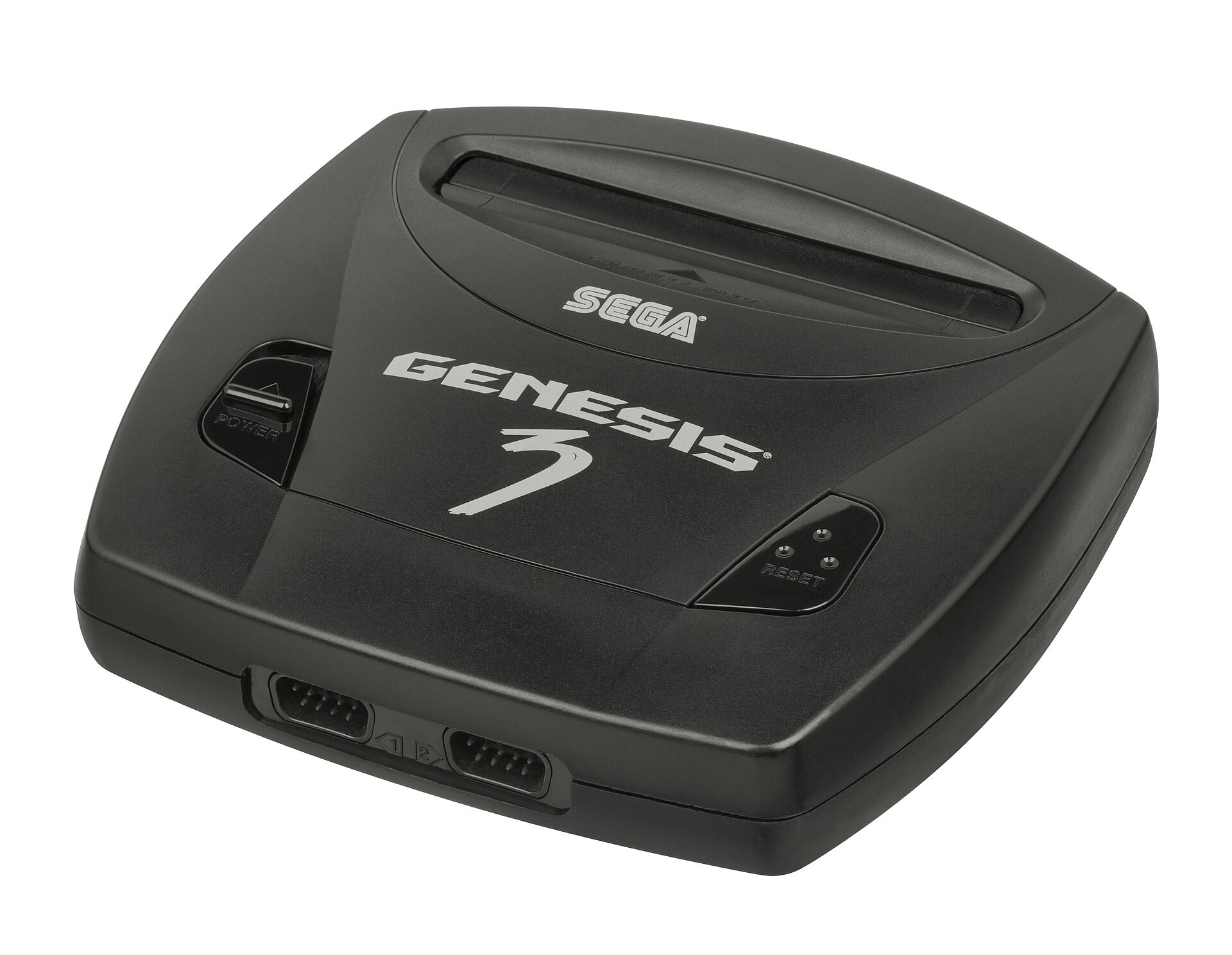
Everything the trailer claimed, it claimed with specifics. Three playable characters — Sonic, Tails, Knuckles — each with their classic abilities. Zones in two kinds: the famous ones remixed, Green Hill’s first act faithful and its second entirely new, and brand-new stages built to sit beside them without embarrassment. A $19.99 download price, stated plainly, alongside a $69.99 North American Collector’s Edition for the devoted — a twelve-inch Sonic statue standing on a replica Genesis, and a cartridge that played the famous “SEGA” chant when flipped. Even the marketing objects were arguments: this game knows what you loved, it says, down to the boot-up sound.
One song, carefully chosen
A word for “Time Trials” itself, because the trailer’s afterlife is partly the song’s. Hyper Potions — the American duo of Ian Tsuchiura and Kevin Villecco — built the track as a deliberate echo of the series’ melodic peak: bright piano chords, a bassline with bounce, the feeling of a Green Hill morning rendered in modern electronic production. It worked as more than accompaniment. Released in full alongside the trailer, the song became a fan artefact in its own right, streamed and remixed as the summer’s anthem of anticipation — Sonic Retro’s coverage of the trailer pointed readers straight to the complete version, a small editorial judgement that proved correct. Game trailers usually rent their excitement from licensed hits or orchestral bombast. Mania’s commissioned an original song from two fans of the series, in the series’ own musical language, and the song is still the sound of that summer for anyone who was waiting.
Notice, too, what the trailer withholds. Beyond the Stardust Speedway glimpse, it plays its new material close — the brand-new zones that would define the game’s originality were left largely for discovery, while the remixed classics carried the persuasion. Trailers for nostalgia projects usually spend their secrets freely, because secrets are all they have. This one behaved like a production confident it had more in reserve. It did.
The rare trailer that told the truth
Trailers lie by profession; this one is remembered because the game kept its promises. Sonic Mania launched on 15 August 2017 to the strongest reviews the series had seen in decades, became a fixture of best-of-the-year lists, and earned the physical Sonic Mania Plus expansion the following year. The sketch-to-colour opening became the game’s visual signature, extended into the full opening animation Hesse directed for launch week. And the “Time Trials” trailer took its place in the small canon of announcement videos that fans rewatch for pleasure — not for information, but for the feeling, which turned out to be accurate advertising.
Ninety seconds, one date, one price, one hedgehog drawn back into existence by hand. The original post said the trailer was lovely. It was, and it mattered: it is the moment a revival stopped being a promise and became an appointment.
There is a postscript the trailer’s makers could not have scripted. When the game arrived and reviewers reached for a shorthand for its quality, the phrase that recurred was that Mania felt like the lost Saturn game — the 2D sequel the 1990s never got. Consider what that means about the ninety seconds of May 30: the trailer had promised precisely that feeling, a direct continuation of 1994, and the finished game was received as precisely that object. Trailers are the games industry’s most unreliable literature, a genre built on vertical slices and borrowed engines. The pre-order trailer for Sonic Mania — a cartoon, a song, a date — turned out to be the most honest document of its year. Fans still rewatch it the way you revisit the first page of a favourite book: not to be surprised, but to be back at the beginning of something that kept its word.