At a glance: Spelunky · PS Vita · Mossmouth / BlitWorks, 2013 · Roguelike platformer · Score: 9.0/10
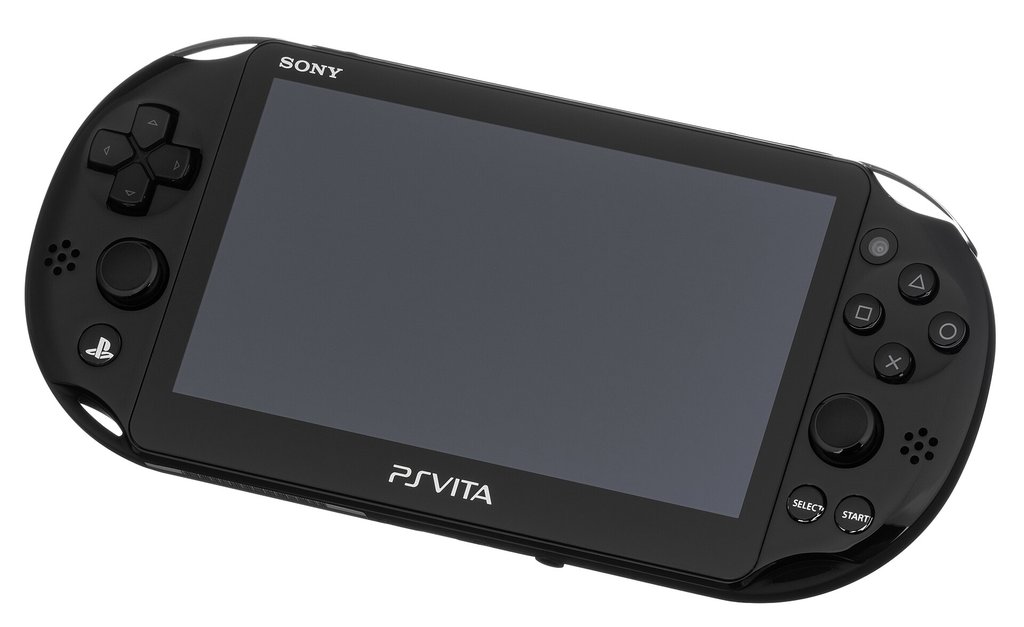
A note on this review’s pictures first, because honesty is this collection’s house rule: Spelunky was a digital-only Vita release, and no genuine Vita capture of the game survives in the free archives we source from — so this article is illustrated with the Vita hardware itself, the machine the game belongs to, rather than with another platform’s screenshots dressed up as this one. The game deserves the same honesty in judgement, and it can take it: Derek Yu’s Spelunky, in its HD form, is one of the most influential games ever made, and the Vita version is — a decade of ports and a superb sequel later — still arguably its most natural home.
The design is legend by now, and it has not dated a day. You are a spelunker descending through procedurally assembled mines, jungles, ice caves and temples, chasing gold and the City of Gold beyond them. Every level is generated; every system interacts — fire spreads, traps trigger traps, shopkeepers remember theft with lethal enthusiasm, monkeys steal, bees swarm, the ghost arrives if you linger and ends all arguments. Death is permanent, instant and almost always your fault in a way you can name: the arrow trap you rushed, the bat you ignored, the boulder you trusted. Runs last minutes. Mastery lasts years. The Vita’s contribution to this formula is invisible and total: the D-pad and buttons are precise, the screen renders the tile-perfect art crisply, the suspend-and-resume turns the console into a bookmark inside a run, and the Daily Challenge — one seeded level, one attempt, the whole world ranked — found on Vita its most devoted congregation, players running their daily descent on trains and in beds across 2013 and beyond.

The port, judged closely
BlitWorks’ conversion is a model of its kind. The HD version’s art and music arrive intact, the frame rate is steady, the controls are configurable, and the whole package — Adventure mode, the unlockable characters and shortcuts, the secret levels (the Worm, the Mothership, Haunted Castle, Hell itself for the truly damned) — is present and correct. Co-operative and Deathmatch modes support local ad-hoc play, a genuine handheld bonus the bigger versions answer with couches. What the Vita cannot do is the online leaderboard theatre of the console editions, and its screen, in the darkest temple corners, asks for a brightness bump. That is the whole of the charge sheet. The port is so faithful that every strategy guide, every piece of community wisdom, every tear shed over a shopkeeper incident on other platforms applies here verbatim — this is Spelunky entire, in a coat pocket.
Spelunky is the game that taught a generation that fairness and cruelty are the same system, honestly run. On Vita, it also taught them on the bus.
Why does the handheld suit it so particularly? Because Spelunky’s unit of play is not the session but the run, and its emotional rhythm — hope, greed, disaster, laughter, immediately again — compresses perfectly into the Vita’s life: a run while the kettle boils, the Daily while the train crosses the county, a Hell attempt on a long flight. The sequel, Spelunky 2, is bigger in every dimension and this collection admires it enormously — but it never came to the Vita, which makes the original’s presence here doubly precious: this is the platform’s only native Spelunky, and it is the foundational text of the modern roguelike, complete. New players should expect to die a hundred times before the jungle feels fair. Veterans know the jungle never feels fair. Both are the game working as designed.

A word about the long term
Spelunky’s Vita release also sits at a hinge in the platform’s history: it arrived in the same season as Hotline Miami, Guacamelee! and a wave of indie conversions that quietly redefined what the Vita was for — not a shrunken console, but the connoisseur’s handheld, where the PC’s best independent games came to be played properly, with buttons, in the wild. Judged in that company, Spelunky was the standard-bearer: the biggest name, the deepest game, the port with nothing missing. Its influence since — on the entire roguelike decade — needs no rehearsal here. What matters for a Vita owner is simpler: the cave is on the card, the ghost is patient, and the gold is still down there.

Learning to die properly
New spelunkers deserve the community’s accumulated wisdom, because the game’s teaching is famously silent. The whip reaches further than it looks and hits behind you at its arc’s start — the single most useful fact in the mines. Shops are sanctuaries until they’re crime scenes, and the difference is one panicked button press. The damsel is a tool, a shield, a sacrifice and a moral test in a dog suit. Every death has a cause, and the cause is usually greed wearing the mask of haste. The Vita’s role in this education is ergonomic grace: the D-pad’s precision means your deaths are yours, unassisted by the hardware, and the console’s instant sleep means a run can be contemplated — mid-jungle, heart pounding, ghost approaching — overnight, like a chess position. Players finished their educations on this version by the thousand. The leaderboards of the Daily Challenge in its prime read like a parish register of the faithful, and the faith was earned one avoidable death at a time.
It is worth saying plainly, too, what Spelunky did for the Vita’s identity in the West. Sony’s handheld was sold on console spectacle, but its Western afterlife was built by games like this: small, deep, endlessly replayable independent works that respected the player’s intelligence and the platform’s controls. Spelunky was their king — the port that proved nothing needed to be cut, the daily habit that kept Vitas charged through the years when the big releases thinned. A collection of the platform’s essentials that omitted it would be a history with the keystone removed. The cave is patient. It is also, on this machine, portable — and that made all the difference.
Bring a friend if you can: ad-hoc co-operative spelunking, with its friendly-fire farces and its rope-and-bomb rescue economies, is the version’s quiet treasure, and deathmatch on the train has ended more journeys in laughter than any game this collection can name. Solo is the canonical descent, and rightly so — but the cave, like all good caves, is better with company and worse with trust. Pack both.
Verdict
Spelunky scores 9.0/10 on Vita: the definitive roguelike platformer in a flawless conversion, its daily ritual perfectly married to the handheld’s rhythms. It loses nothing to its missing online theatre and gains a home it never really left. Descend. Die. Learn. Descend again — the only review score that matters is the one the cave gives you.