At a glance: Splatterhouse · TurboGrafx-16 HuCard · Namco, 1990 (North America) · Horror action · Score: 8.0/10
Of all the arcade conversions the TurboGrafx-16 landed, Splatterhouse was the statement of intent. Namco’s 1988 arcade game was a horror film you played: Rick, a student trapped in the burning West Mansion, resurrected by the Terror Mask — a hockey-masked slab of a hero years before that silhouette was a slasher cliché in games — fighting through seven stages of undead filth to rescue Jennifer. It was violent in a way home consoles of the era simply were not, and the TurboGrafx-16 port, released in Japan in 1989 and North America in 1990, kept the faith to a degree that still startles.
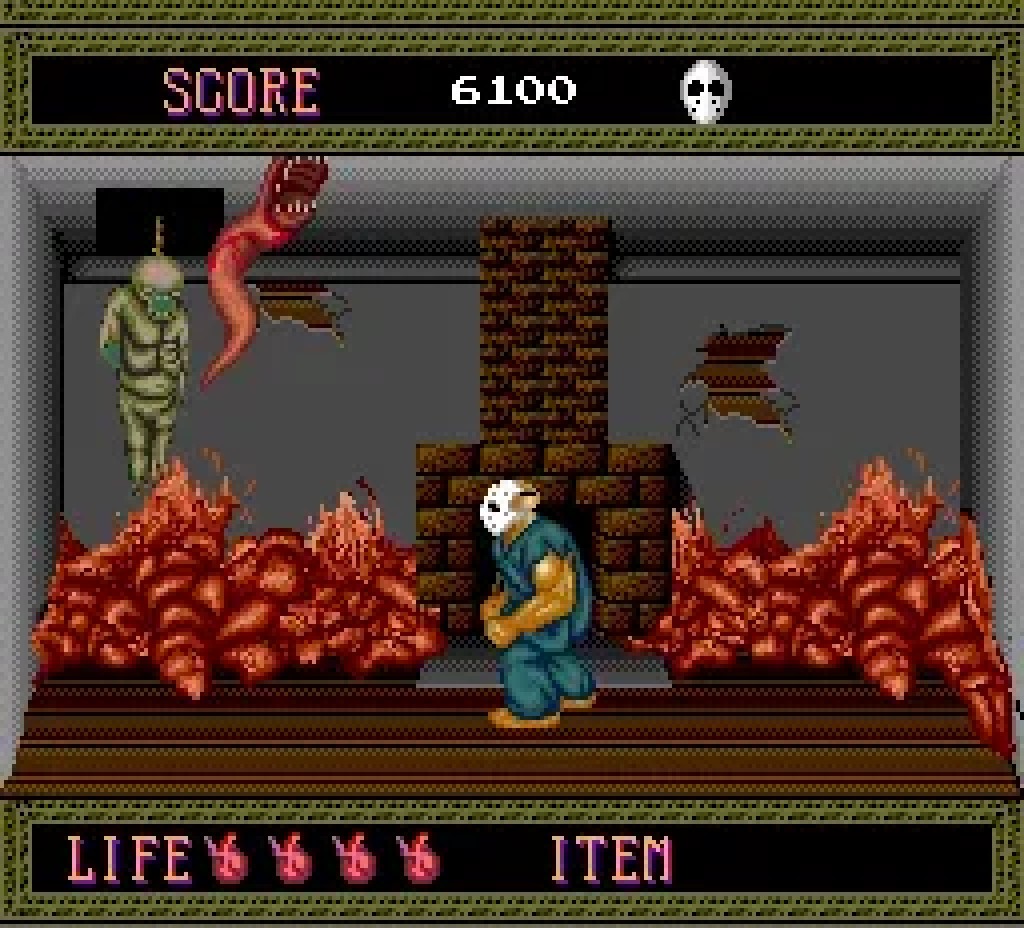
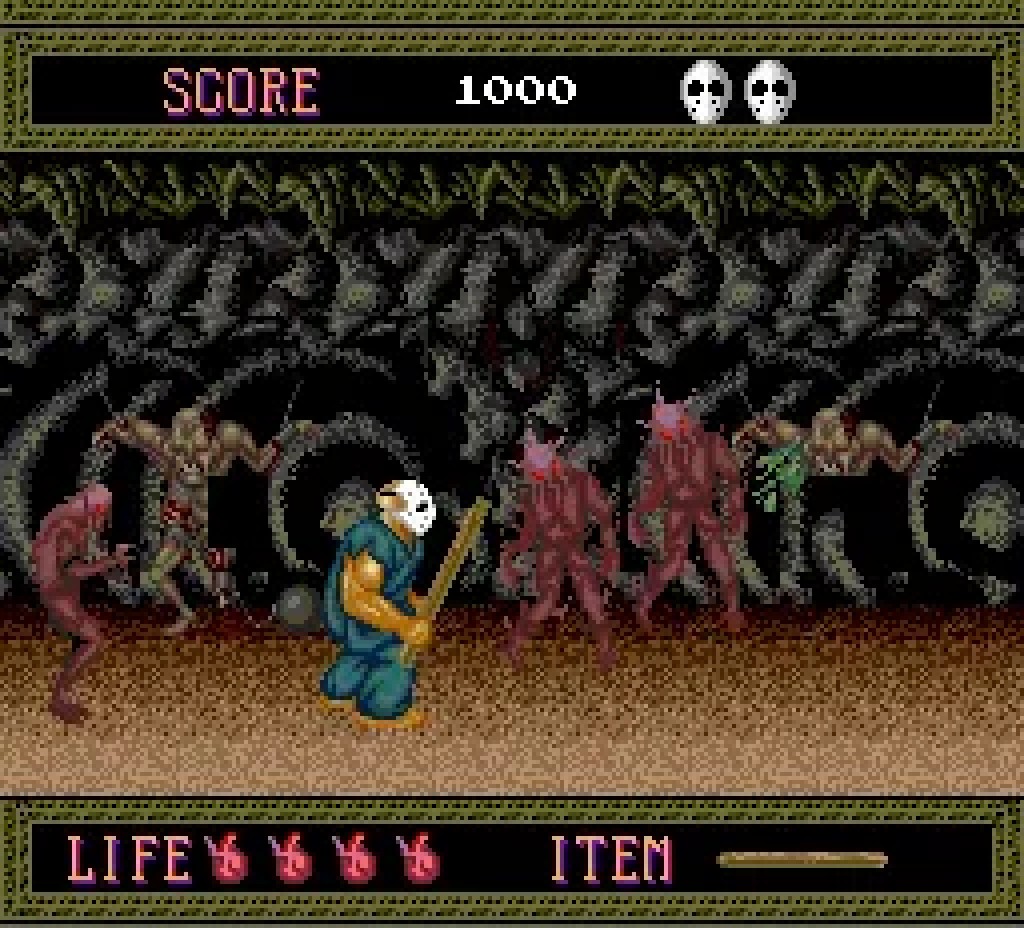
This is a side-scrolling brawler of the deliberate school. Rick walks — he does not run, ever, and the game is built around the dread of that pace — punching, kicking low, and picking up whatever the mansion provides: two-by-fours, meat cleavers, wrenches, spears and a shotgun with strictly limited shells that you will hoard for exactly the right room. Enemies come in genre waves: zombies that must be pulped before they re-form, leeches, bats, mirror-Ricks, chainsaw maniacs, and bosses built from the house’s own corruption, including the infamous room of possessed furniture and a final confrontation in the mansion’s burning heart.
A conversion with its nerve intact
The port’s achievement is fidelity. The sprites are big, the backgrounds ooze, and the set-piece grotesqueries that made the arcade game notorious — the hanging corpses, the vomiting horrors, the boss that is essentially a room full of haunted chairs — are all present and animated with conviction. North American players should know the one documented concession: Rick’s mask in the Western release is red rather than the arcade’s white, a change made for the home version; the gore itself survived the trip in a way contemporary Genesis and Nintendo horror ports rarely managed. On the TurboGrafx-16, Splatterhouse felt like the arcade’s forbidden object, legally in your house.
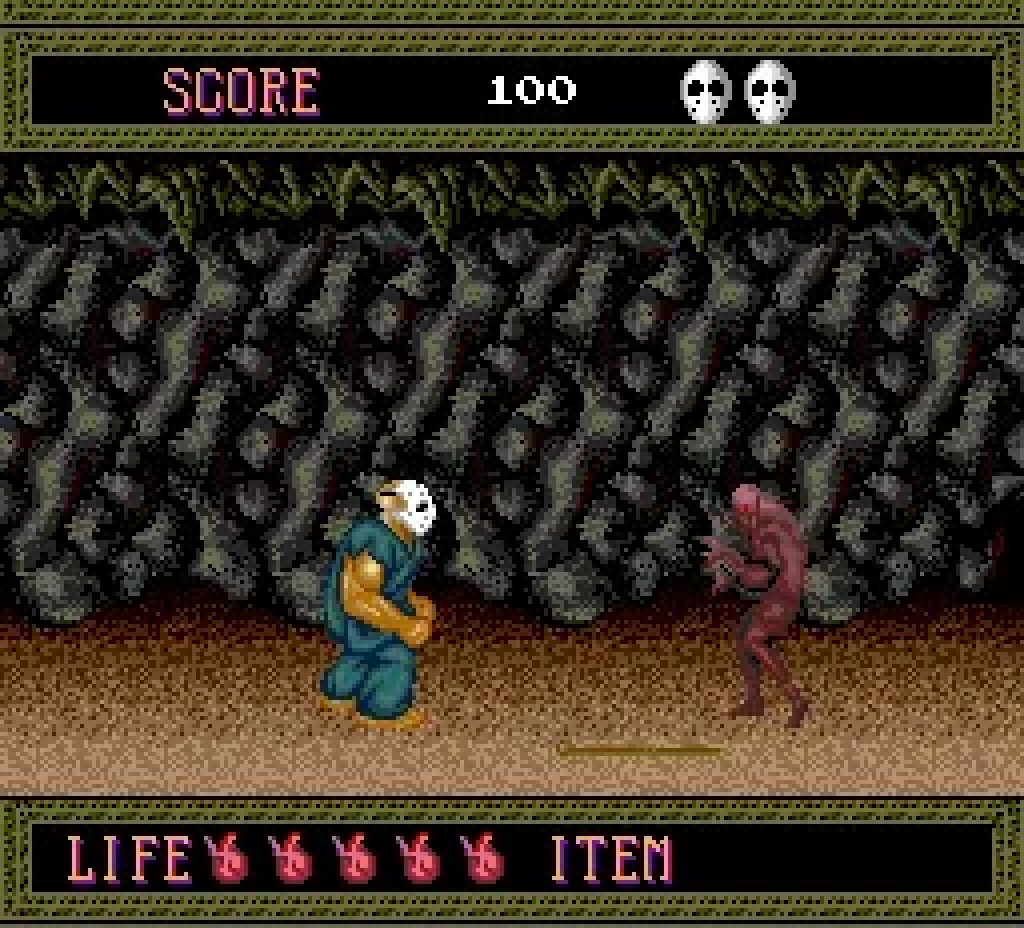
Structurally it is an arcade game and makes no apology: seven stages, pattern-based enemies, lives and continues rationed, cheap hits present and accounted for. The two-by-four’s wet thud and the cleaver’s arc become a rhythm you learn room by room. Difficulty spikes at the chainsaw duel and the final stages are real, and Rick’s tank-like turning will cost you lives while you adapt. Adaptation is the game, though — this is memorisation horror, a haunted house you master by walking it until the scares become choreography.
Atmosphere over mechanics
Judged purely as a brawler, Splatterhouse is simple: a punch, a low kick, a jump, a weapon swing. Judged as an experience — which is how its audience has always judged it — it is one of the most atmospheric games of its generation. The colour palette is all rot and candlelight. The music is funereal synth that knows when to sit down and let the sound effects squelch. Jennifer’s fate, delivered in a mid-game gut-punch that was genuinely shocking in 1990, gives the splatter a melancholy spine that the sequels would chase. Few games of the era commit to an ending this bleak, and the TurboGrafx version keeps it whole.
It also matters what the port proved. Alongside R-Type and Ninja Spirit, Splatterhouse was evidence that the TurboGrafx-16 could receive arcade games with their identity — and their adult edge — substantially intact, at a moment when its rivals’ home versions were being sanded down. It became a system-seller to exactly the audience NEC needed, and a cornerstone of the console’s horror identity.
The honest reservations
Rick’s stiffness is a design fact, not a port flaw, but modern players should expect a learning curve measured in deaths. The game is short once mastered — an arcade length, under an hour — and its challenge leans on memorisation over improvisation. Some enemy placements, particularly projectile-spitters in the later stages, are as unfair as they were in the coin-op, because they are the coin-op’s.
The mansion, room by room
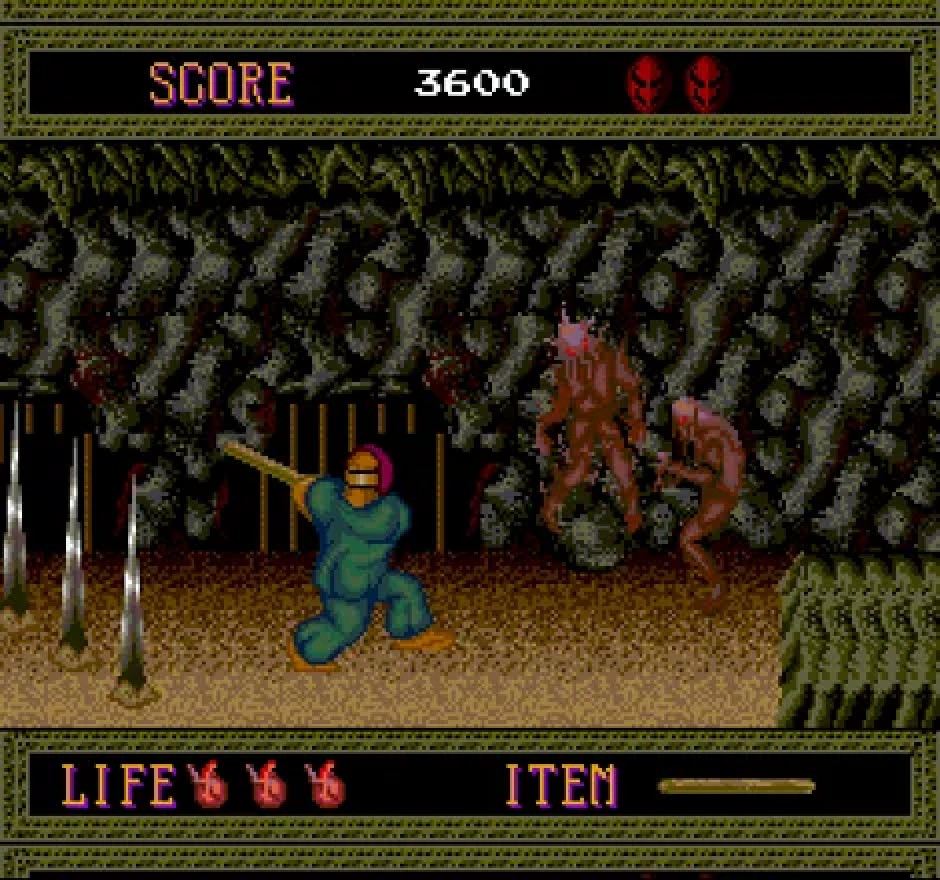
The seven stages are a guided tour of horror subgenres, which is part of the game’s design intelligence. The opening rooms teach the basics in the mansion’s rotting halls — zombies, leeches, the first two-by-four. The dungeon and sewer stretches introduce projectile enemies and the spear, and force the low kick from a move you have into a move you use. The possessed-furniture room remains the game’s most quoted set-piece, a poltergeist attack in which the room itself is the boss and positioning matters more than damage. Later stages move outside to the grounds and the bridge, where flying horrors test your anti-air timing, before the mansion’s heart reveals the chainsaw duel — a mirror of reach and nerve against an enemy who fights like you, only faster — and a finale that is equal parts boss fight and exorcism of the house itself.
Weapon economy is the quiet skill. The shotgun’s shells are few enough that every use is a small ceremony; the cleaver’s arc covers angles the punch cannot; the two-by-four is plentiful and honest. Learning which rooms justify which expenditure is the difference between surviving the late game and admiring it. The game also hides its mercies in the scenery — extra health and weapons sit in specific pieces of furniture, and the player who smashes the mansion methodically, as Rick plainly wants to, is rewarded for the thoroughness.
Horror in 1990, and what the port meant
It is difficult, now, to reconstruct how transgressive this game felt in a home in 1990. Console horror existed, but it was usually gothic suggestion; Splatterhouse was a video nasty you could hold, with a hero modelled on a slasher villain and a body count rendered in loving pixel gore. The TurboGrafx-16’s slightly older, more arcade-hungry audience positioning made the port possible at near-full strength, and the Western mask colour change — red, in the North American release — stands as the era’s most visible small concession in an otherwise defiant package. The game’s Japanese release had come first, in 1989, on the PC Engine; the franchise it started would continue most famously back on Sega hardware, which is why this first, finest home conversion on the TurboGrafx retains a special claim.
Played today, the deliberateness is the adjustment. Rick’s walk, his committed swings, the absence of any block or dodge — all of it builds the dread the theme promises, and all of it will kill a player importing modern brawler habits. Grant it an hour of patience and the rhythm arrives: advance, bait, strike, pulp, breathe. The brevity that arcade economics demanded becomes, in the living room, a tightness modern horror games chase with far bigger budgets. The West Mansion has never really been bettered as a floor plan for fear.
Playing it in spooky season, and out of it
A practical closing note: Splatterhouse rewards being played the way it was designed to be — in sittings, with the lights low and the continues treated as a campaign resource rather than a failure state. Learn one stage per sitting and the game that first looks stiff becomes fluent within the week; rush it with modern expectations and it will feel like a wall. It has become, for TurboGrafx owners, a seasonal ritual game, the one that comes out when the year turns — but the mansion keeps its atmosphere in any month, and the port’s fidelity means you are never playing a compromise. You are playing the thing itself, at home, as 1990’s bravest conversion intended.
Verdict
Splatterhouse on TurboGrafx-16 is the definitive early home version of a horror landmark: faithful, filthy and genuinely atmospheric, with a masked hero and a tragic streak that lift it above its simple mechanics. Enter the mansion.
Score: 8.0/10