The Voices Came From the Sky: How Fans Rebuilt BS Zelda’s Lost Live Audio With MSU-1
Here is the strangest sentence in Nintendo history that happens to be true: in the summer of 1995, the first Zelda game with voice acting was broadcast from a satellite, played live for one hour a week, and then allowed to evaporate. BS Zelda no Densetsu could be preserved — its code survived on rewritable memory packs in Japanese homes. Its voice could not, because the voice had never been stored anywhere. It arrived as radio, performed in sync with the game, and disappeared the moment each broadcast ended. So when this site reported in July 2016 that fans had restored the game’s live audio, the honest headline needs one correction before anything else, and this feature will make it plainly: the restoration did not recover the original Japanese performances. It rebuilt them — newly recorded, in English, by fans — inside a piece of technology Nintendo never made. That distinction does not diminish the achievement. It is the achievement.
A Console That Listened to the Sky
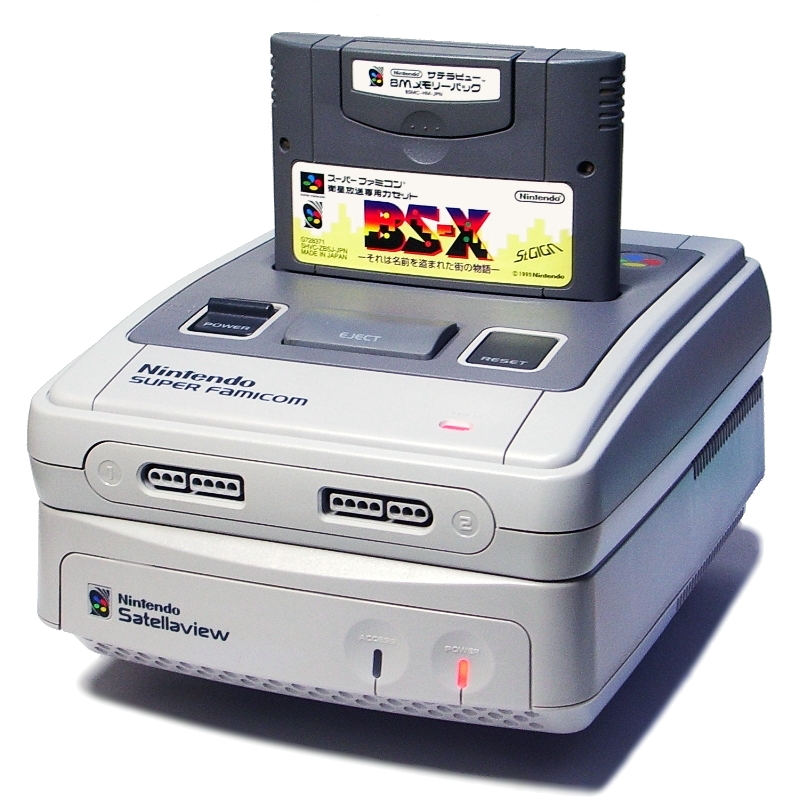
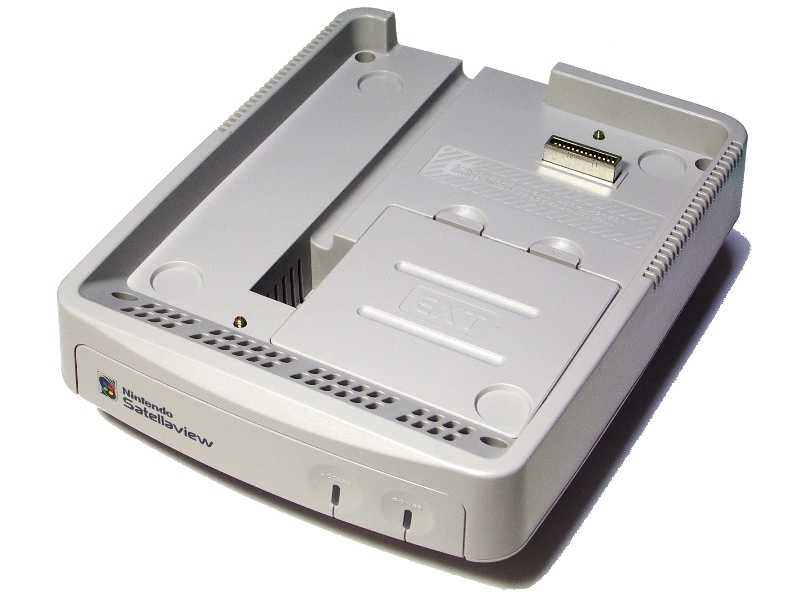
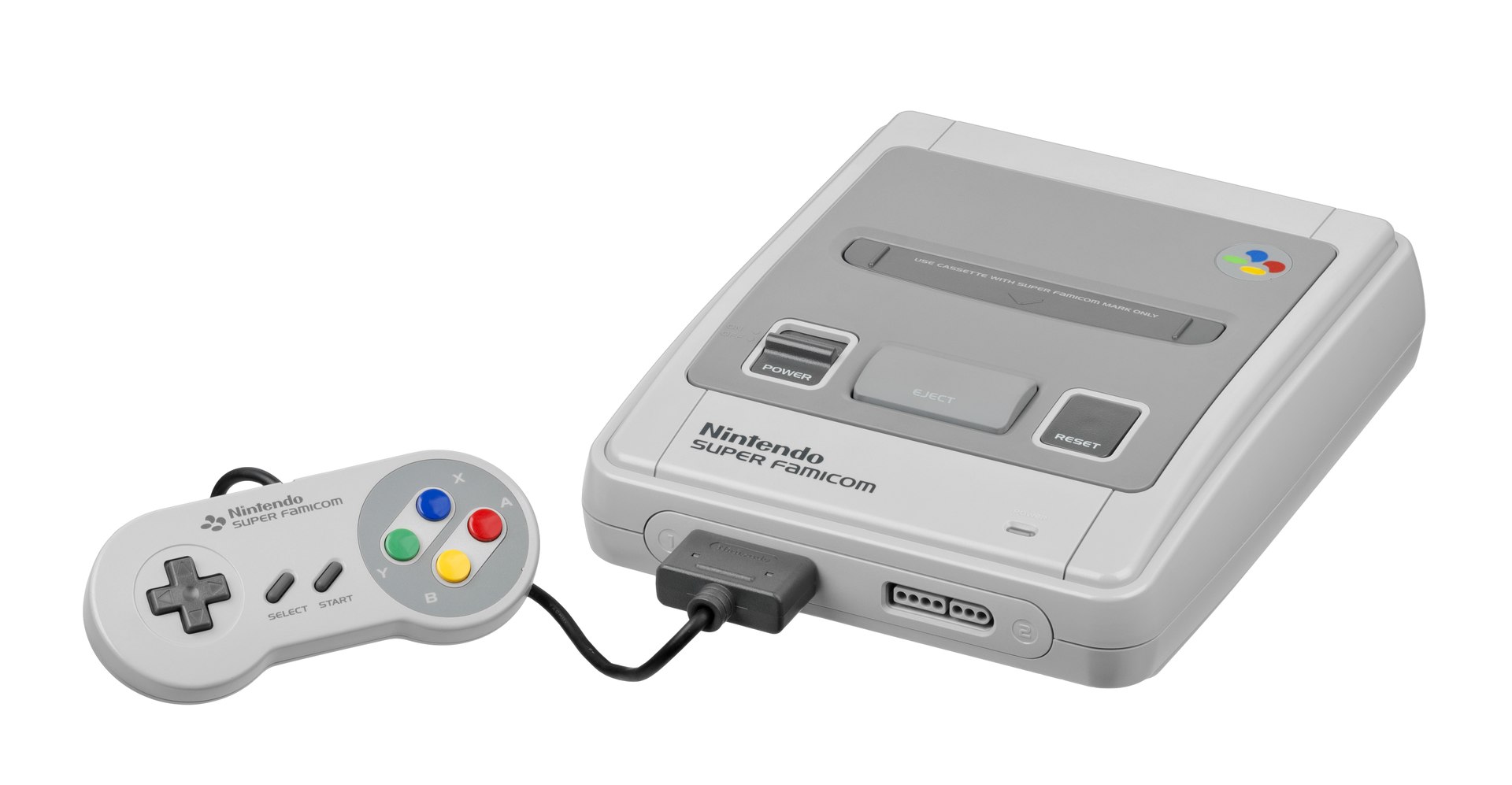
The Satellaview launched in Japan on 23 April 1995, a joint venture between Nintendo and satellite radio company St.GIGA. It clipped onto the expansion port beneath a Super Famicom and turned the console into a receiver: games, magazines and broadcasts arrived on a schedule, like television programmes, and were stored on 8-megabit memory packs slotted into the top of a special cartridge called BS-X. That cartridge presented the service as a little town, explored by an avatar of your choosing, whose buildings stood in for the service’s channels. The library eventually ran to 114 games, the audience peaked above a hundred thousand subscribers, and the whole apparatus was sold by mail order and aimed, unusually for Nintendo, at adults. It was discontinued on 30 June 2000, and because so much of what it carried existed only as scheduled broadcasts, much of it simply stopped existing.
Within that library, the prestige format was the SoundLink game: a title whose streamed audio — music and live voice performance by actors and radio personalities — played in synchronisation with the action, and which could therefore only be experienced live, at the appointed hour. The first SoundLink game, and the one Nintendo promoted as the world’s first integrated radio-game, was BS Zelda no Densetsu, first broadcast on 6 August 1995.
Zelda Time
Calling it a remake of the NES original undersells how strange it was. You did not play as Link. You played as your BS-X avatar — a boy in a backwards cap or a girl with red hair, carried over from the service’s town — dropped through a fortune-teller’s portal into a Hyrule rebuilt at 16-bit fidelity. The overworld was compressed from the original’s wide map into a square eight-by-eight grid, the dungeons were all-new (arranged, in the first quest, so their shapes spelled out the broadcaster’s name, St.GIGA), the rupee ceiling rose past a thousand, and at the end of each session a score was tallied from your Triforce pieces, rupees and performance, feeding nationwide competitions with real prizes.
Above all, the game ran on the clock. Sessions lasted an hour — the fiction called it Zelda Time — and an on-screen timer ticked in real time whether you paused or not. At scripted moments the action would freeze and a message would appear: listen closely. Through the satellite stream came the voice of the Old Man, performed by Kiyoshi Kobayashi, warning of events elsewhere in Hyrule, narrating the fairy’s kidnapping, or briefly granting you strengthened weapons and unlimited items. Fully voiced sequences framed the adventure, with Naomi Fujisawa as Princess Zelda and Seizō Katō as Ganon. It was, in effect, a radio drama that a hundred thousand people played simultaneously, each in their own living room, each hearing the same voice at the same second. A follow-up quest, MAP2 — its dungeons spelling out a different name, NiNtENDO — began on 30 December 1995, and broadcasts and reruns continued into January 1997.
The Sound That Was Never on the Cartridge
When Satellaview broadcasts ended, the game code survived because fans had kept their memory packs, and dumps of those packs eventually reached the internet. The audio had no such luck. SoundLink performances were streamed alongside the game and held only in passing memory as they played; nothing on the cartridge or the memory pack contained them. What survived of the narration was indirect — scripts, timings, recollections, and the occasional home recording. For years, playing BS Zelda meant playing a mime: at the appointed moments the game would pause, a “listen closely” prompt would hang on screen, and nothing would speak. Restoration projects did heroic work on everything else — stitching the four episodes together, removing download pauses, translating the text into several languages, sometimes swapping the avatar back to Link — but the silence at the centre of the experience stayed silent.
Enter MSU-1, the Chip Nintendo Never Made
The tool that finally filled the silence was itself a fan invention. MSU-1 — Media Streaming Unit 1 — is a custom co-processor specification devised by the emulator author byuu, also known as Near, creator of the bsnes and higan emulators. Imagined as the kind of enhancement chip Nintendo might plausibly have shipped, it gives a Super Nintendo game access to gigabytes of storage and lets it stream CD-quality audio — uncompressed 16-bit stereo at 44.1 kHz — alongside the console’s own sound. It exists in emulators, and in real hardware inside FPGA flash cartridges of the SD2SNES/FXPak family, which generate the streamed audio themselves and feed it through the cartridge slot. For preservationists it offered something no amount of cartridge archaeology could: a place to put a radio broadcast. A hacker known as Conn had already used MSU-1 to give A Link to the Past a streamed soundtrack, the first substantial public release of its kind, and the BS Zelda restoration community — whose BS Zelda Homepage had been pursuing the full recovery of these broadcasts since 1999 — saw exactly where the technology led.
June 2016: The Broadcast, Rebuilt
On 21 June 2016 the project announced completion. The MSU-1 version of BS Zelda, covering both MAP1 and MAP2, restored the radio programme around the game: roughly four hours of music and voice performance, timed to the in-game clock, so that the “listen closely” pauses once again had a voice in them. Coverage at the time, including Nintendo Life’s July 2016 report of the game being “translated and dubbed into English”, used the right verb. Dubbed. The performances are new recordings by fan actors, in English, performing the original script — reference summaries of the restoration are explicit that these projects introduce fan-made voice acting in place of the missing audio, because the missing audio is, barring a miracle home recording surfacing, missing for good. In October 2016 the same treatment was completed for the follow-up Satellaview Zelda, Inishie no Sekiban — the Ancient Stone Tablets — with its own four hours of rebuilt broadcast.
Why does the distinction matter enough to lead this article? Because the 2016 headlines, this site’s included, could easily leave readers believing the original 1995 performances had been recovered from somewhere, like a tape found in a St.GIGA vault. Nothing of the sort happened, and pretending otherwise would cheat both audiences: the original actors, whose work is genuinely lost, and the fan performers and engineers, whose work is genuinely remarkable. What the restoration actually proves is more interesting than a recovery. A community spent seventeen years reconstructing a live event from its script, its timings and its surviving code, then rebuilt the event so faithfully that a new audience can sit down on a Sunday, start the clock, and hear a voice from the sky tell them to listen closely. Nintendo, for its part, has never re-released any of the BS Zelda games in any form. The satellite went silent in 2000. Thanks to a chip that never existed, the broadcast plays on.