At a glance: Tales of Symphonia · GameCube · Namco Tales Studio, 2003 (Japan) / 2004 (West) · Action JRPG · Score: 9.0/10
For GameCube owners in 2004, Tales of Symphonia was not just a good JRPG — it was close to the only JRPG that mattered, and it arrived like a dispatch from a genre the console had been starved of. Namco’s Tales studio delivered a two-disc, sixty-hour epic across two mirror worlds, Sylvarant and Tethe’alla, with real-time battles you could fight alongside three friends, a story that begins as a pilgrim’s fable and keeps pulling threads until nothing — not its religions, its racism, its chosen ones or its heroes — is what it first appeared. It was the West’s introduction to the Tales series in force, it remains the entry fans cite first, and the GameCube original has a specific technical claim its later versions surrendered, which we will come to. First, the journey.
The Journey of Regeneration, and what it hides
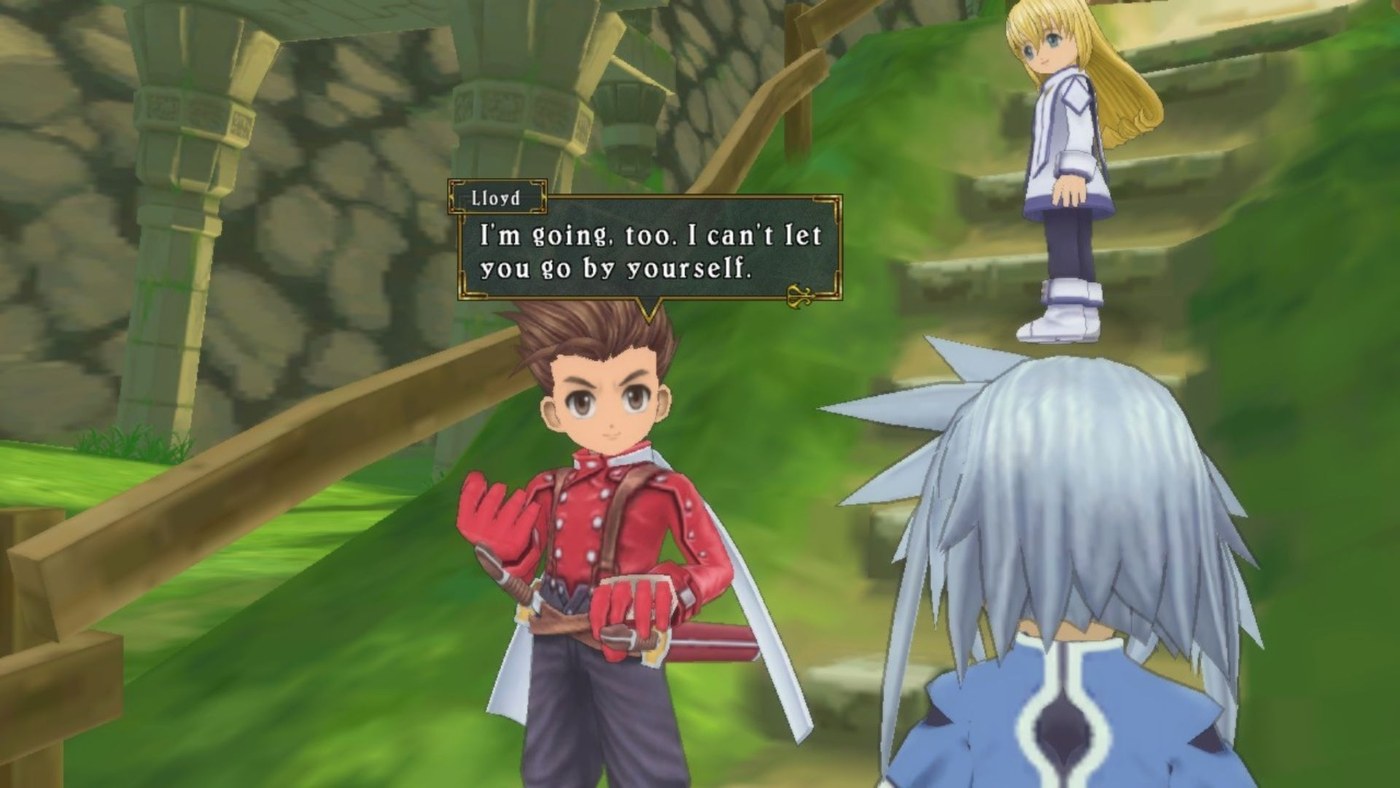
Lloyd Irving, a hot-headed village boy with two swords and no impulse control, accompanies his friend Colette, the Chosen of Mana, on a pilgrimage to regenerate a dying world by releasing the seals on its summon spirits. The early hours are deliberately classical — almost suspiciously so — because Symphonia’s plot is built on reversals: the church is not what it seems, the other world is not a mirror but a rival in a zero-sum system, the villains include both the cartoonishly evil Desians and a genuinely tragic machinery of discrimination between humans, elves and half-elves that the game examines with more patience than most of its contemporaries. The cast carries the length: Genis the child prodigy mage, Raine the ruins-obsessed professor, Kratos the mercenary with the series’ most famous secret, Zelos the comic relief with a knife in it, Presea, Regal, Sheena the summoner. Skits — optional, voiced-in-Japanese, text-in-English character conversations triggered as you travel — do the bonding work, and there are hundreds of them.
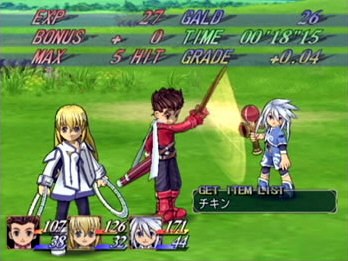
Two discs was a statement on GameCube, and the game fills them: two overworlds, summon-spirit dungeons built around a genuinely good puzzle design language, optional superbosses, a casino, an arena, cooking, costumes, side quests that run the full length of the plot, and a grade system that converts battle performance into a New Game Plus shopping list of carry-overs. It is a generous, old-school package of a kind the genre has largely retired.
Battles at sixty frames
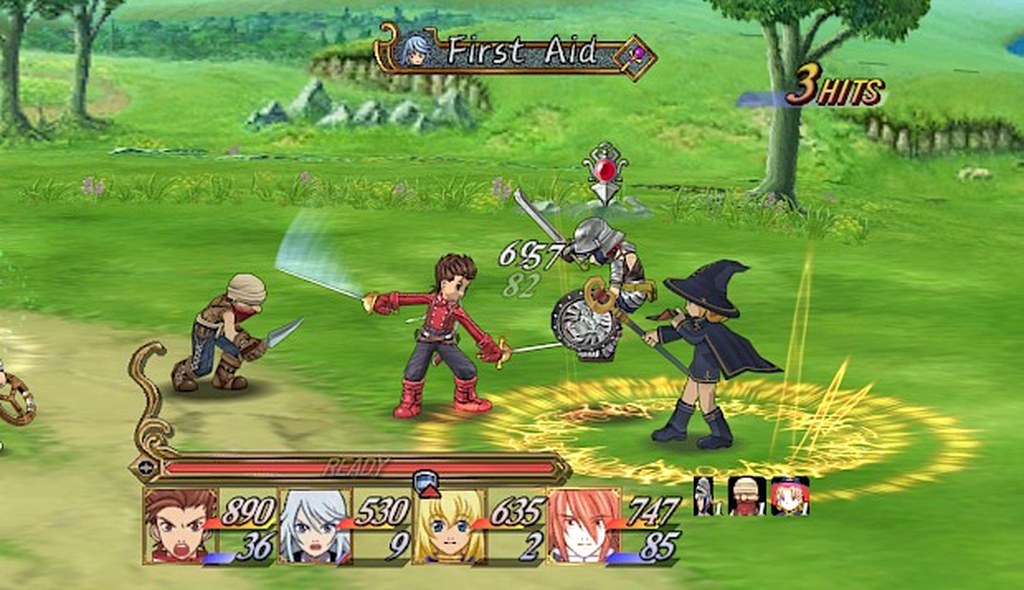
The Linear Motion Battle System is Symphonia’s engine room: real-time combat on a plane anchored to your target, with Lloyd’s dual-sword combos, techs chained into arte trees, spells cast with real incantation risk, and Unison Attacks that combine the party into a single theatrical strike. Crucially — and this is the GameCube version’s trump card — the original runs its battles at sixty frames per second, where the later PS2-based ports and the Remastered edition built on them run at thirty. In an action RPG whose feel is its argument, that difference is not trivia; veterans can feel it in the first skirmish, and it is the strongest single reason to play the 2003/04 original today. Add the series’ signature local multiplayer — plug in up to three extra controllers and your friends take over party members in battle — and Symphonia becomes that rarest thing, a sixty-hour couch co-op JRPG.
The caveats are period-typical and worth listing. The overworld map is functional rather than beautiful even by 2004 standards; the fixed camera angles in towns occasionally obscure exits; the English dub is heartfelt but uneven, with a few performances the fanbase debates to this day; and the plot’s middle act asks for a lot of back-and-forth between worlds that modern pacing would trim. The PS2 version released only in Japan added some content and costumes, later folded into subsequent editions — the GameCube original counters with its frame rate and, for purists, its status as the version the West fell in love with.
Presentation and legacy
Character designer Kōsuke Fujishima’s cast, cel-shaded against painterly towns, gives Symphonia a storybook surface that has aged far better than the realistic RPGs of its year, and Motoi Sakuraba’s score — twin-world themes, propulsive battle tracks — is among his best-loved. The two-disc presentation, the anime opening, the sheer sincerity of its themes about sacrifice and discrimination: Symphonia is earnest in a way modern irony rarely allows, and its earnestness is exactly what its fans protect. It sold the Tales series to the West, it anchored the GameCube’s thin RPG shelf almost single-handedly alongside Skies of Arcadia Legends and the Baten Kaitos games, and its remake-and-remaster afterlife keeps proving the demand is still there.

Two worlds, two discs, one long memory
Symphonia’s dual-world structure does more than double the map. Sylvarant and Tethe’alla are locked in a seesaw of mana — one flourishes only as the other declines — and the game’s central moral problem is that there is no version of the quest in which somebody’s home does not wither. That premise powers the story’s best hours: the discovery that the “other world” of campfire legend is full of people who regard yours exactly as you regard theirs, the summon-spirit pacts that must be made twice over, and a late game that keeps widening the frame from villages to worlds to the comet-born tree at the centre of everything. It is big-hearted, occasionally melodramatic, and completely sincere — the specific flavour of JRPG storytelling that its generation did best and that modern irony has largely retired.
Practical notes for the GameCube original: the two-disc swap comes at a natural story break and is painless; the game supports progressive scan where your setup allows it; and the multiplayer battle feature needs only spare controllers and willing friends, no link cables or extra copies. Save often — some of the optional bosses, particularly in the bonus dungeon and the arena’s advanced ranks, are balanced for players who have fully engaged with the cooking, equipment and EX Skill systems, and they will examine the unprepared without mercy.
The verdict
Tales of Symphonia on GameCube is a landmark JRPG played best in its original form: the silkiest battles in the series’ history, a two-world story with real thematic weight, and four controllers’ worth of co-op in a genre that almost never offers it. If your GameCube shelf has an RPG-shaped gap, this is the two discs that fill it — and if you have only played the later thirty-frame versions, the original is a revelation hiding in plain sight.
It also remains the Tales series’ high-water mark in the West by most fan accountings — the entry against which Vesperia’s polish and Arise’s spectacle are still argued, and the one whose cast players name like old friends. That a GameCube exclusive built that legacy, on a console the JRPG audience had largely written off, is one of the generation’s happiest improbabilities. Two discs, two worlds, one essential shelf.
Start it on a free weekend. The first evening will feel classical, almost quaint. By the second world, you will understand what the fuss has always been about — and by the time the two worlds’ true relationship reveals itself, somewhere around the point most RPGs are ending, Symphonia is just getting started.
Score: 9.0/10 — A sixty-hour, two-world epic whose 60fps GameCube battles still make it the definitive way to experience a JRPG classic.