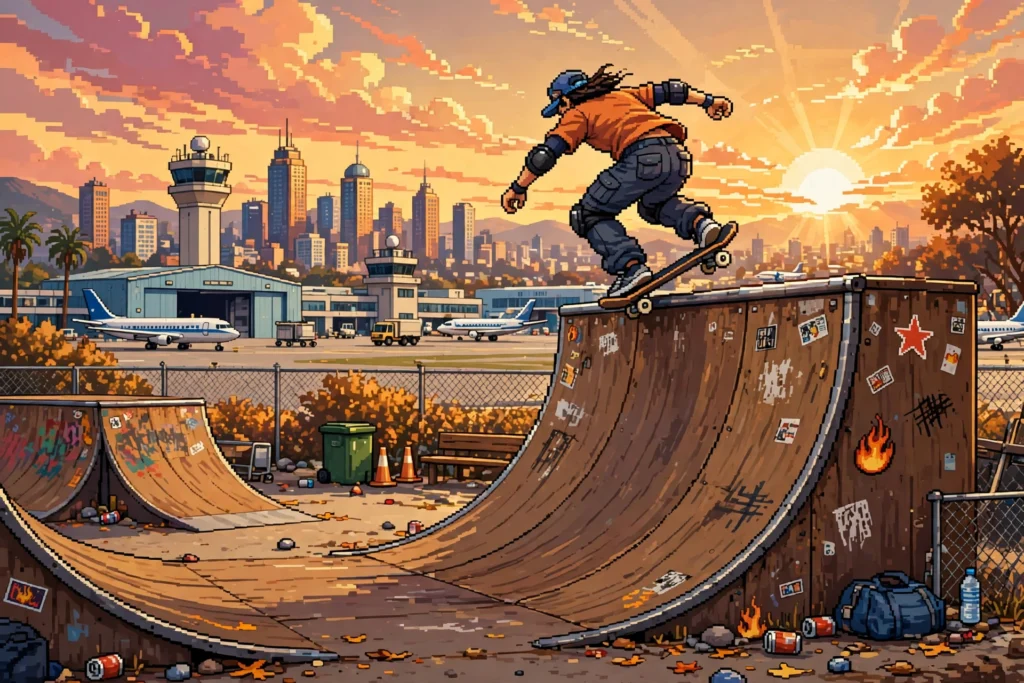
Twenty-five years ago today — October 30, 2001 — a skateboarding game landed on the PlayStation 2 and quietly finished inventing a genre. Tony Hawk’s Pro Skater 3 was not the first Tony Hawk game, and it was not the one that started the craze. Pro Skater 2 had already done that a year earlier, and if you ask a room of people of a certain age to name the series’ peak, plenty will still say 2. But 3 is the one where the machine clicked shut. It took the combo system that 2 had sketched, added a single move — eleven letters, one button press, a fraction of a second — and in doing so changed skate games, and honestly action-sports games generally, permanently. That move was the revert. And a quarter of a century on, the strangest thing about THPS3 is not how well it holds up. It is how completely modern games still live in the house it built.
I say this as somebody who came to it slightly late and slightly wrong — on the PlayStation 1 version first, because that was the console in the house, before finally playing the PS2 original it was always meant to be. Even kneecapped, it was electric. On the right hardware, it was something else entirely: the moment a whole genre stopped being about individual tricks and started being about sentences — long, unbroken, increasingly reckless sentences you wrote with a controller, punctuated only when you finally, inevitably, bailed.
One button, infinite combos
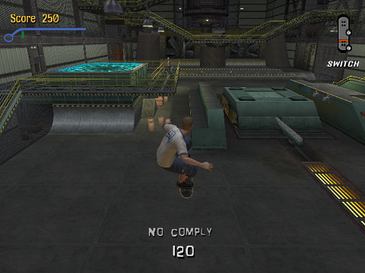
To understand the revert you have to remember what came before it. The first Pro Skater was a game of moments: launch off a ramp, do a trick, land it, score it, move on. Vert skating — the half-pipes and quarter-pipes — and street skating were practically separate disciplines sharing a cartridge. Pro Skater 2 added the manual, the two-wheel balancing act that let you chain street tricks together without the combo dying between them, and suddenly street lines could run and run. But vert still ended at the coping. You could air out of a quarter-pipe, twist through something ridiculous, land clean — and the combo simply stopped, because landing back in the ramp was a full stop the game would not let you argue with.
The revert ended that argument. Tap R2 at the exact moment your board comes back down into a transition, and instead of resetting, your skater pivots on the rear trucks, drops straight into a manual, and the combo — the multiplier, the score, all of it — keeps rolling. Vert into street. Street into grind. Grind into vert, revert, manual, out the other side. Every element of every level was now potentially one continuous line, and the entire design of the game reorganised itself around that possibility. Neversoft did not just add a move in THPS3. It removed the full stops from the language.
What made it genius rather than merely generous was the risk it kept. A revert chain is a wager you renew every few seconds: the balance meter wobbles harder the longer you hold a manual, the multiplier begs you to keep going, and every point you have banked exists only in a future where you eventually land the thing. Twenty-five years of score-attack games have fed on that exact tension, but THPS3 bottled it first and purest. The revert is why a two-minute run in this game can feel like holding your breath for both of them.
A new machine, and a series showing off
THPS3 was also, not coincidentally, the series’ first step onto a new generation of hardware, and Neversoft treated the PS2 like a band treats a bigger stage. The levels were larger and denser than anything in the first two games, stuffed with moving parts and — a first for the series — actual people. Pedestrians wandered the levels, reacted to you, occasionally needed rescuing or knocking sideways, and made the parks feel inhabited rather than embalmed. This was a game released weeks after September 11, into a world that had changed underneath it during development; its Airport level’s goals were reworked late in the day, pickpockets replacing a more sinister original premise, and the finished game carries that strange, specific autumn-2001 atmosphere in its bones.
The eight main levels remain a masterclass in variety. The Foundry, an industrial plant of molten metal and grinding rails, is the best opening level the series ever had — a tutorial disguised as a playground. Canada and Rio do the competition-park thing with confidence. Suburbia, all lawns and cul-de-sacs and Halloween decorations, is the one everybody remembers fondly and nobody can fully explain. Los Angeles lets you trigger an earthquake that reshapes the level mid-session, a set-piece so good it still gets cited in level-design conversations. Tokyo is a neon vert fantasy. And the Cruise Ship — a floating skatepark with a waterslide running through it — is pure, silly, wonderful excess, the sound of a team that knew it could not miss. Threaded through it all are goals that ask you to actually learn each space, plus hidden tapes, stat points and gaps that reward the obsessives. It is a lot of game, and almost none of it is padding.
It was also, quietly, a technical pioneer: the PS2 version was among the first on the console to take play online, letting skaters across the still-dial-up world compare lines in real time. The create-a-skater mode deepened, and for the first time included female skaters as a proper option — with Elissa Steamer, a genuine pioneer of women’s street skating, joining the pro roster as the series’ first woman. None of that was the headline in 2001. All of it reads, now, like a series growing up in public.
The soundtrack is a time capsule with a volume knob
Every Tony Hawk game has a soundtrack people argue about, but THPS3‘s twenty tracks are the ones that play in my head uninvited. Motörhead’s “Ace of Spades” is effectively the title theme, Lemmy’s snarl setting the tone before you’ve pushed once. The Ramones bring “Blitzkrieg Bop”. The Red Hot Chili Peppers bring “Fight Like a Brave”. Then it gets gloriously scattershot: AFI’s “The Boy Who Destroyed the World”, CKY’s “96 Quite Bitter Beings” — a song a significant chunk of the audience first heard here and then built a personality around — Del tha Funkee Homosapien, Xzibit, Ozomatli, Zebrahead, the Adolescents, Alien Ant Farm’s “Wish” capturing the exact nu-metal moment like a fly in amber.
What the tracklist understood, and what so many licensed soundtracks since have fumbled, is that skate culture in 2001 genuinely was that mix: punk and metal and hip-hop sharing one boombox at one park, nobody asking permission. The game also let you toggle individual songs on and off — a small feature, an enormous kindness — because Neversoft knew these twenty tracks were going to be your entire musical diet for months. For a lot of us they were an education. I cannot hear “Ace of Spades” now without my thumbs twitching for a controller that isn’t there.
The other versions tell their own story
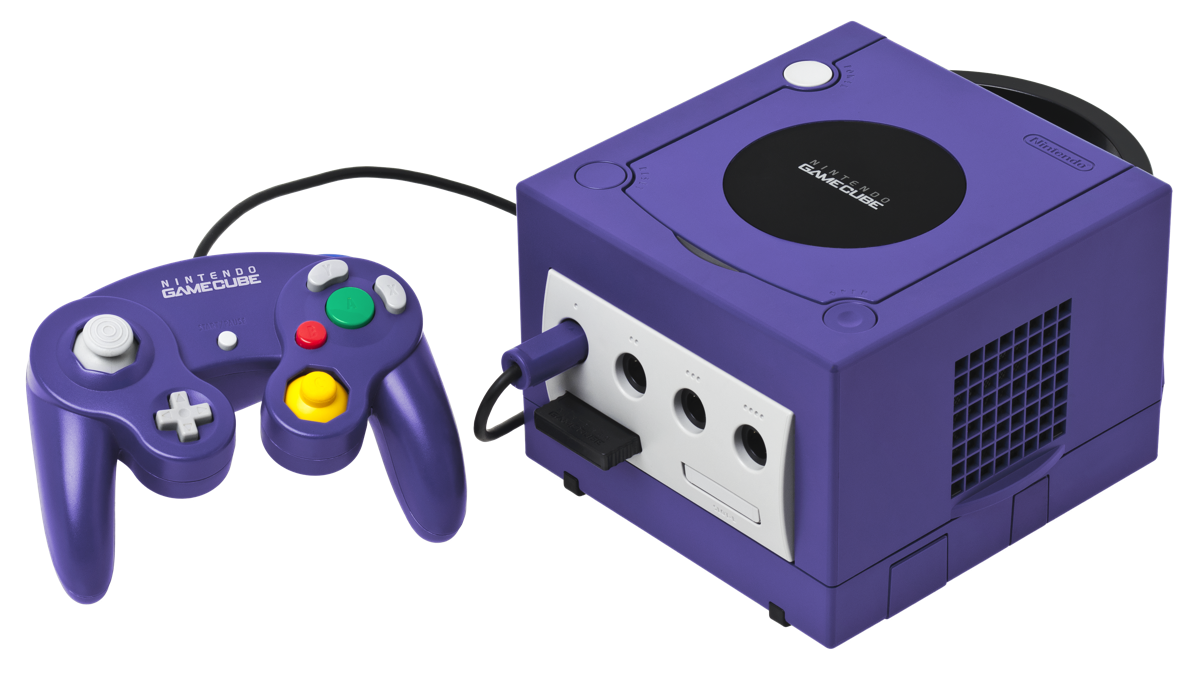
Like every big game of its era, THPS3 went everywhere, and the spread of versions is a fossil record of a vanishing industry. The GameCube version arrived a few weeks after the PS2 one, close to the full experience. The Xbox version followed in March 2002 with an exclusive level, the Oil Rig, tucked inside. And then there were the downgrades: full, sincere attempts to squeeze the game onto the original PlayStation and the Nintendo 64, by Shaba Games and Edge of Reality respectively. Those versions kept the revert — the one thing they absolutely had to keep — and sacrificed almost everything around it: smaller levels, no pedestrians, no level-changing set-pieces, the Los Angeles earthquake pre-triggered and set in stone. The N64 version, landing in August 2002, was one of that machine’s last gasps in North America.
I played that PS1 version first, as I said, and here’s the thing: even hollowed out, the core loop survived, because the core loop was never the graphics. It was the revert, the manual, the wager. That’s the mark of a design that was right at the level of ideas. The PS2 version is the one history has rightly canonised — a 97 on Metacritic, still sitting near the very top of that console’s all-time rankings a quarter-century later — but the fact that the game still sang through a console with a fraction of the power tells you where its strength actually lived.
How to play it today
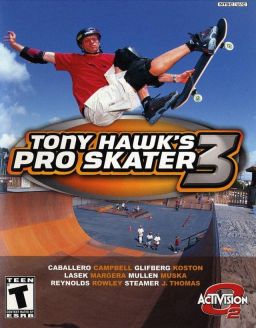
Anniversary pieces usually end with a lament about how hard the game is to play now. THPS3 is the happy exception. The obvious modern door is Tony Hawk’s Pro Skater 3 + 4, the 2025 remake package that rebuilt this game’s levels — Foundry, Canada, Rio, Suburbia, Airport, Los Angeles and the rest — with the revert intact and most of the soundtrack back in place. It is a loving, competent revival, and for most returning players it is exactly enough. But I will argue for the original, too, and not just out of anniversary sentimentality. The PS2 disc is cheap, common, and runs beautifully on original hardware; the two-minute structure, the slightly floaty physics, the specific grain of the thing — none of that is quite reproduced by a remake, however faithful. Play the remake for the shine. Keep the disc for the truth.
Either way, play it standing where it stands in history: the third game in a series that could have coasted, made by a studio, Neversoft, at the absolute height of its powers, published by Activision in the last autumn when this kind of game — licensed, arcadey, joy-first — still ruled the industry. The revert outlived all of it. It became standard grammar: every Tony Hawk sequel kept it, and the combo-chaining it enabled seeped into sports games, character-action games, anything where flow is the point. When a modern game lets you cancel out of a landing and keep a chain alive, somewhere underneath is a skater in 2001, pivoting on his back trucks in a foundry, refusing to let the sentence end.
Pro Skater 2 taught us to chain tricks together. Pro Skater 3 taught us to never stop.
Twenty-five years on, that is still the lesson, and it is still worth learning. Happy anniversary to the one where the series learned to revert — the rest of gaming has been doing it ever since.