At a glance: TurboGrafx-16 in 2026 · Buying and setup guide · HuCard and CD formats · No prices — the market moves; the hardware facts don’t
The TurboGrafx-16 is the most rewarding awkward console ever made. Its library is extraordinary — arguably the finest shooter collection on any system, plus landmark RPGs, pinball, strategy and platformers — but it comes wrapped in two media formats, two regional identities, three generations of CD hardware and a family of system cards that between them confuse every newcomer. This guide untangles all of it. It is deliberately free of prices: the TurboGrafx market moves too quickly for printed numbers to stay honest, and everything that actually determines whether you buy the right machine is qualitative. Buy the facts; check the prices on the day.
First, understand what the library is
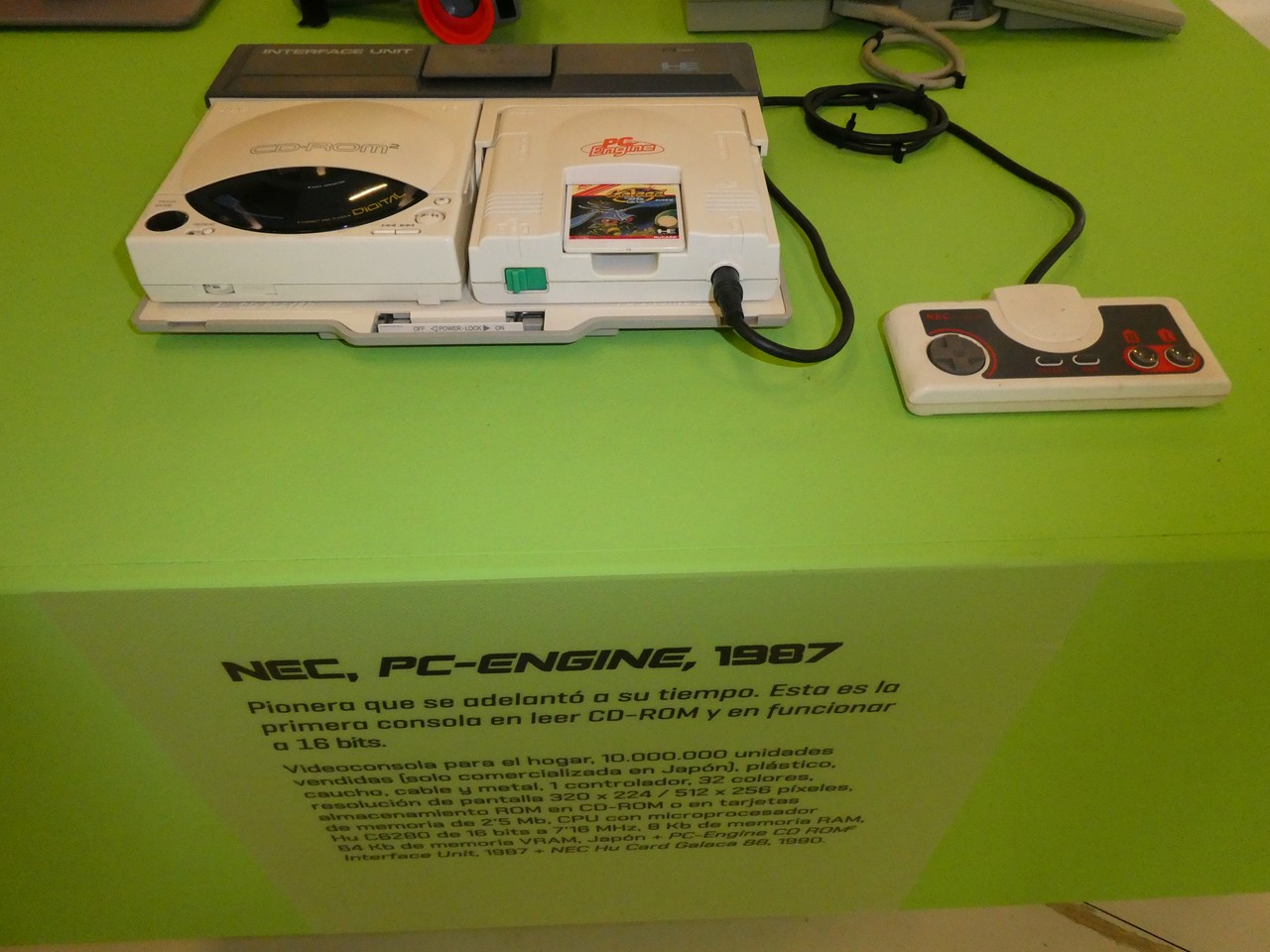
The platform launched in Japan in 1987 as the PC Engine — a compact white machine designed by Hudson Soft and built by NEC — and in North America in 1989 as the larger, black TurboGrafx-16. Same heart, different shell, and one crucial difference discussed below. Games come in two formats. HuCards (TurboChips in North America) are credit-card-sized cartridges containing most of the famous library: the shooters, Bonk, the pinball games, the arcade conversions. CD games — first CD-ROM², then Super CD, then Arcade Card titles — carry the RPG epics, the CD-audio shooters and the system’s most ambitious productions. A complete TurboGrafx setup plays both. A HuCard-only setup plays the majority of the classics. Decide which library you are buying before you buy anything else, because it determines the machine.

The hardware routes, from simplest to deepest
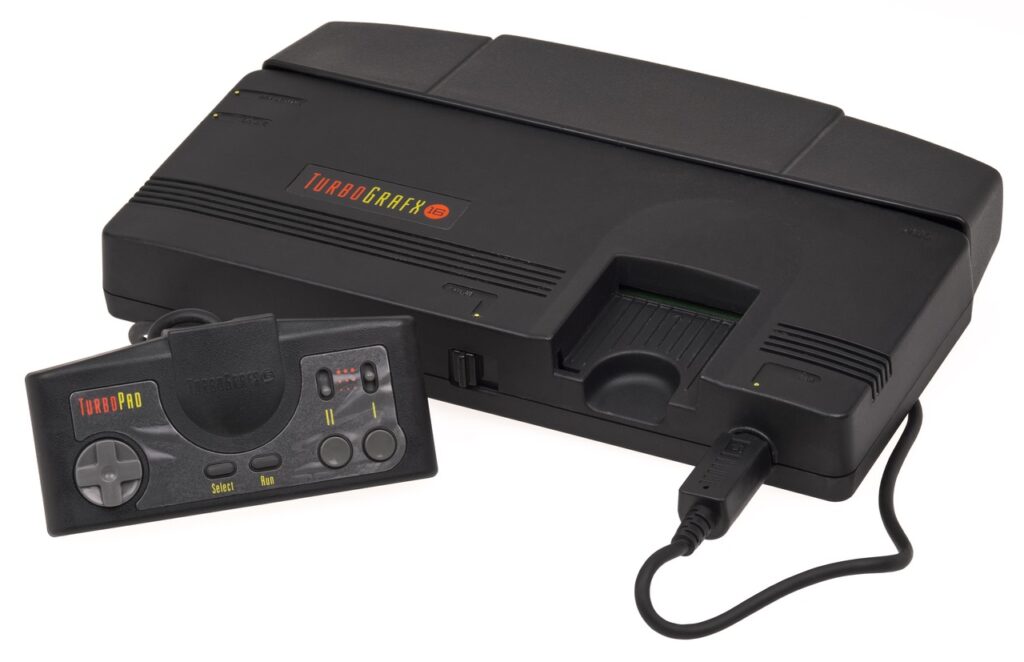
The TurboGrafx-16 console is the straightforward HuCard route: one machine, one controller port (a real limitation — multiplayer needs the TurboTap accessory), and RF or composite video from the stock unit unless it has been modified. It plays North American TurboChips only, for reasons below. The TurboGrafx-CD add-on docks the console into a CD player with its own system card; the combination is iconic, bulky and, in 2026, the fussiest way to play discs.
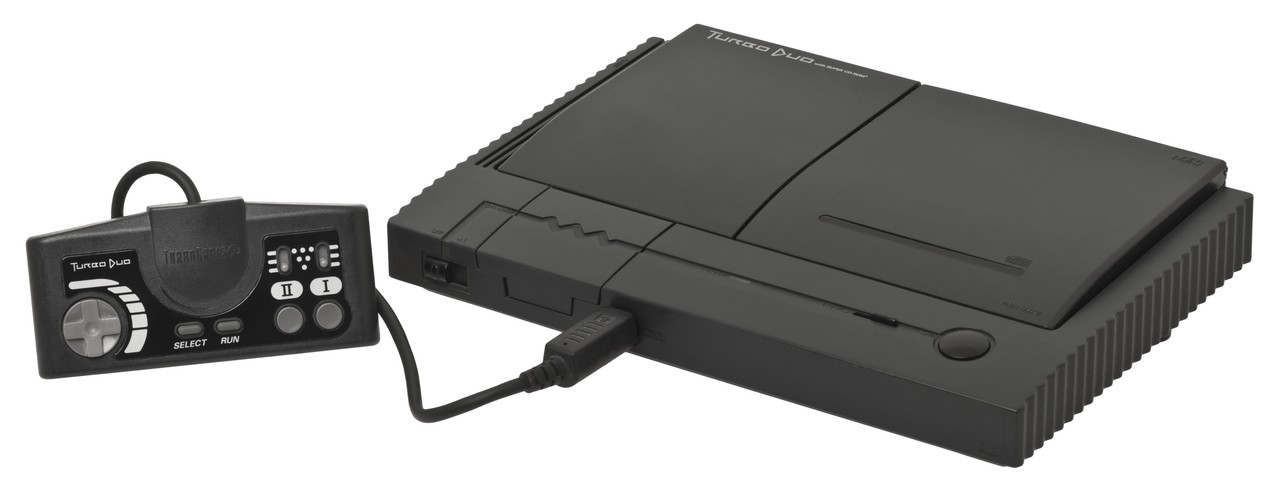
The TurboDuo is the elegant answer: NEC’s combined machine plays HuCards and CDs — including Super CD games, thanks to its built-in Super System Card — in one unit with composite output as standard. Its Japanese siblings, the PC Engine Duo, Duo-R and Duo-RX, cover the same ground, with the R and RX generally regarded as the more robust revisions. For most buyers in 2026, a Duo-family machine is the destination hardware: one box, both formats, the whole library in reach. The PC Engine route also opens the far larger Japanese HuCard library — which brings us to the lock.
Region locks: the one-way door
HuCards are region-locked by hardware, and asymmetrically. Japanese PC Engine cards and North American TurboChips carry the same data with two pins swapped in their connector layout, and the consoles check accordingly: a North American TurboGrafx-16 will not boot a Japanese HuCard unmodified, and vice versa. The established workarounds are a pin-converter adapter (period accessories exist and are collectible in themselves), a region modification to the console, or simply buying the console whose library you mainly want — which, given the PC Engine’s larger and often more affordable Japanese catalogue, is why many collectors start Japanese. CD games, by contrast, are not region-locked: a Japanese Super CD plays in an American Duo and the reverse, provided the system card requirements below are met. That single fact makes the Duo plus Japanese CD library the connoisseur’s shortcut.
System cards: the CD format’s three keys
CD games need RAM and BIOS provided by a system card in the HuCard slot (or built into a Duo). The ladder runs: the original CD-ROM² card for the earliest discs; the Super System Card (version 3.0 in North America), which the great majority of CD games — including Ys Book I & II‘s later company, Gate of Thunder and Lords of Thunder — require, and which every Duo has built in; and the Japan-only Arcade Card, in Duo and Pro variants depending on your hardware, needed for a small, spectacular tail of releases including the system’s most famous technical showpieces. Rule of thumb: a Duo covers everything except Arcade Card games; for those, budget for the card as well as the disc, and match the card variant to your machine.
Getting a picture worth playing
Stock outputs climb from RF (TurboGrafx-16’s rear connector, adequate on a CRT and grim on anything else) through composite (the Duo’s AV port, and available from the TG16’s expansion port with the right accessory or cable). The machines’ native RGB capability is why the modding scene loves them: an internal RGB modification, paired with a quality upscaler, produces an outstanding modern-display picture, and expansion-port solutions exist that avoid opening the console. On a modern TV, plan on a proper upscaler with a game-mode, low-latency path rather than the display’s own composite handling — the TurboGrafx’s fast shooters punish input lag more than most libraries. On a CRT, even composite looks honest. What to avoid: cheap unbranded HDMI adapters that stretch the image and add lag; the library’s 4:3 presentation is part of its look.
What to check before any purchase
This is where 2026 money is saved. Capacitors: the original TurboDuo and the CD add-on hardware are famous for leaking capacitors that quietly damage audio and boards; a professionally recapped unit is worth a premium over an untested one, and muffled or fading CD audio is the classic symptom. The Duo-R and RX are less afflicted but not immortal — ask what has been serviced, and prefer sellers who can answer. CD lasers: confirm the drive reads both game discs and audio CDs, and that HuCard and CD both boot — test both formats or buy with returns. The HuCard slot: intermittent booting that improves when the card is reseated suggests dirty contacts (cleanable) rather than a dying board. Controllers: the standard TurboPad’s turbo switches are a feature, not a fault — check they work; the six-button pads matter mainly for a handful of fighting games. Reproductions: the market’s summit titles, above all Magical Chase, attract convincing fakes; for high-value cards, buy from sellers who show the board and stand behind provenance.
Building the library sensibly
Start with the format your machine loves. HuCard essentials cluster where this site’s reviews point: Blazing Lazers and Soldier Blade for shooters, Bonk’s Adventure for platforming, Devil’s Crush for pinball, Military Madness for strategy, Bomberman ’93 and a TurboTap for people. On CD, Ys Book I & II is the foundational epic and Lords of Thunder the foundational spectacle. Japanese HuCards of games that never crossed the Pacific — and Japanese versions of games that did — are the library’s deep water, and the reason the PC Engine side of the family keeps winning converts. Flash cartridges exist and are covered elsewhere on this site; suffice to say they coexist with, rather than replace, a real collection for most owners.
A word on flash carts, minis and other doors in
Newcomers in 2026 have legitimate side doors worth knowing about. Flash cartridges for the HuCard slot exist at several levels of sophistication — the site’s review of the Turbo EverDrive covers the best-known — and they change the collecting equation: one card can hold the library for play purposes, which makes them the pragmatic way to explore before committing to original media, and the only sane way some players will ever run the summit rarities. The TurboGrafx-16 Mini console, released in 2020 with a library of nearly sixty games across its regional variants, is the other great doorway: an official, handsome, HDMI-native way to sample the canon, Magical Chase included, though it is a closed box rather than a collecting start. Neither replaces the original hardware for the purposes of this guide — the Duo’s slot, the system cards, the capacitor saga are the hobby’s substance — but a buyer who samples first, via either door, buys original hardware with far better aim.
Accessories that actually matter
Beyond the TurboTap already covered, three accessories earn their shelf space. The six-button Avenue Pad matters for a short, specific list of fighting games and little else — buy it for those games or not at all. Memory and save solutions matter more than newcomers expect: CD hardware of the Duo generation stores saves internally with finite capacity, and the era’s backup accessories — or modern equivalents — are cheap insurance for a forty-hour RPG. Finally, quality cables and, for the unmodified TurboGrafx-16, the expansion-port AV options are the highest-value picture upgrade per penny in the whole ecosystem; the jump from RF to a clean composite or RGB feed, through a decent upscaler, is the single largest improvement most new owners will ever make to their setup, larger than any difference between console revisions.
The region question, settled as a shopping strategy
Pull the threads together into advice. If your heart is set on the North American library in its original black HuCards, buy the North American hardware and accept the smaller catalogue and the collector pricing that comes with it — that is a legitimate, satisfying way to collect this system. If your heart is set on the library — the shooters, the RPGs, the Japan-only deep water — buy Japanese hardware, a Duo-family machine first, and let the region-free CD catalogue and the vast PC Engine HuCard pool come to you. Mixed collections are common and happy; the one configuration to avoid is the accidental one, where the first console and the first five games turn out to be locked away from each other. Everything in this guide exists to prevent that single, very avoidable disappointment.
One more trap, and one more joy
The trap, briefly: software condition. HuCards are robust — clean the contacts before condemning one — but CD games live and die by their surfaces, and the system’s most desirable discs attract the same reproduction market as its rarest cards, so buy discs you can inspect, from sellers who photograph the playing surface and the disc’s inner ring. The joy, to end on: this is a library that rewards the generalist. The same Duo that runs the CD epics runs the HuCard shooters, the pinball, the strategy and Bonk, and a shelf built slowly, game by reviewed game, becomes one of the most distinctive collections in the hobby. There is no wrong door into the TurboGrafx-16. There is only the door that fits the games you actually want to play — and now you know where they all are.
The short version
Buy a serviced Duo-family machine if you want everything; buy the plain console whose region matches the HuCards you crave if you want the simplest life; never pay a premium for an untested CD drive; plan your video chain before your second game; and treat every printed price — including any you have seen elsewhere — as a rumour to verify on the day. The TurboGrafx-16 rewards homework like no other console. Do it once, and the library is yours for decades.