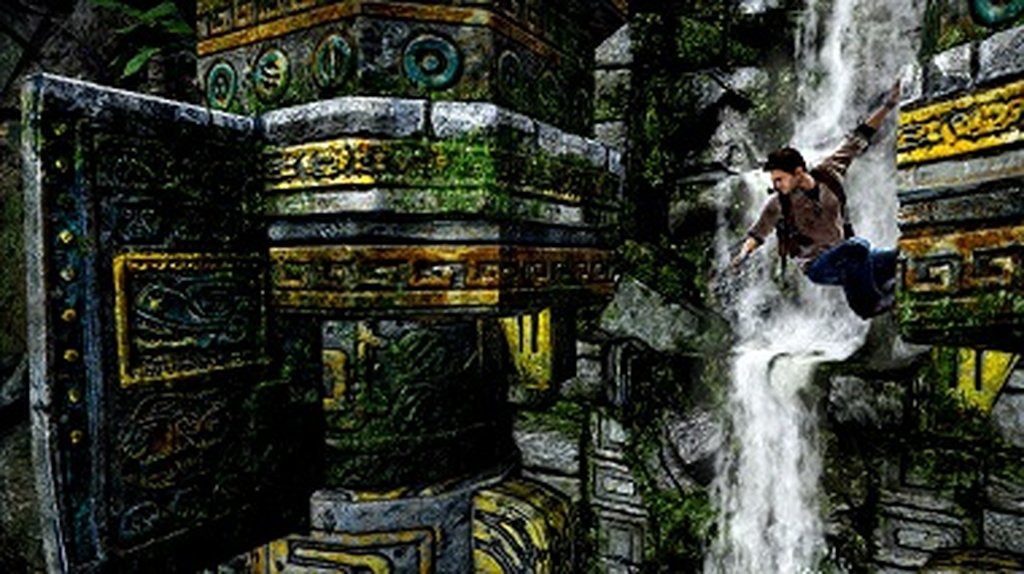
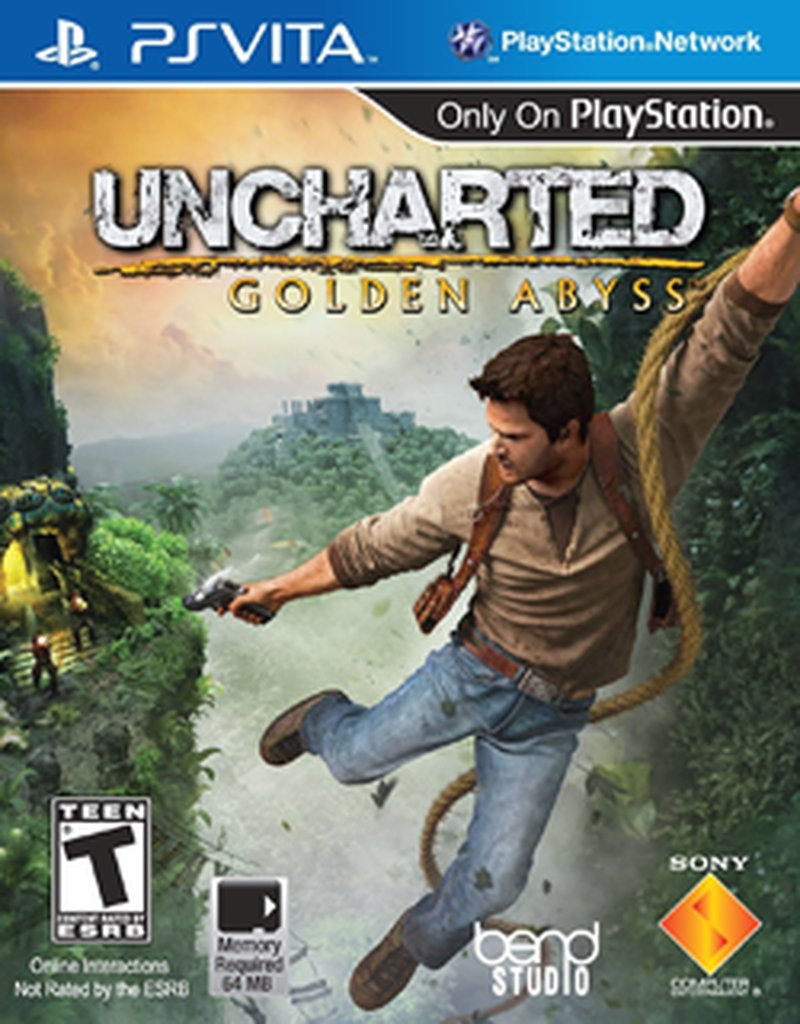
At a glance: Uncharted: Golden Abyss · PS Vita · Bend Studio, 2011/2012 · Action-adventure · Score: 8.0/10
Golden Abyss had the hardest job of any launch title in memory: prove that a pocket machine could deliver a full, cinematic, console-grade adventure — specifically, the most cinematic adventure series Sony owned. Bend Studio, the team behind Syphon Filter and the PSP’s finest hours, were handed Nathan Drake and told to make Uncharted, all of it, on the Vita. The wonder is how completely they succeeded. Set before Drake’s Fortune, Golden Abyss sends Nate into the Central American jungle with an old friend, Jason Dante, and archaeologist Marisa Chase, chasing a lost Spanish expedition and a poisoned trail of clues. It looks like Uncharted, sounds like Uncharted, quips like Uncharted — and it does it from a cartridge.
Strip away the novelty and a solid, generous adventure remains. The campaign runs past ten hours, longer than the first PS3 game, across dense jungle ruins, rivers, caves and a genuinely spectacular lost city. Gunplay uses the Vita’s twin sticks capably, with gyroscopic fine-aiming that turns out to be the secret weapon of the whole production: nudge the console to settle your crosshair and headshots become a small, repeatable pleasure. Climbing, cover and melee all translate intact, the AI is honest, and the set-pieces — a collapsing temple, a river escape, a sniper duel across a canyon — are staged with a restraint that arguably serves the story better than the PS3 sequels’ ever-escalating spectacle. Nolan North and the series’ voice team are all present, and the score hits the same brassy notes.
The touch tax
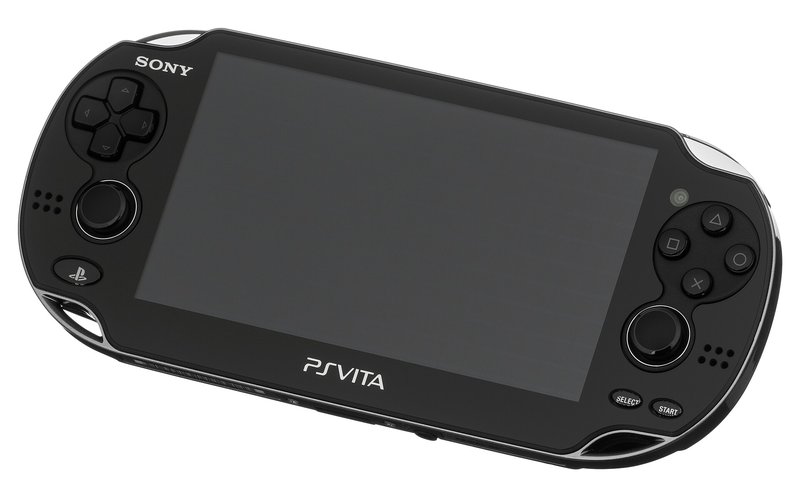
Now the caveats, because Golden Abyss is also the Vita’s most instructive example of launch-era featureitis. Sony’s new hardware had a touchscreen, a rear touch pad, cameras and a gyroscope, and this game was plainly instructed to use all of them, whether Uncharted needed them or not. You will rub charcoal over carvings (charming, the first three times), hold the Vita up to bright light to reveal clues (genuinely delightful, once), swipe through quick-time fistfights, trace climbing routes with your finger as an optional alternative to the stick, and clean artefacts by stroking the rear pad like you’re polishing a window. Individually, most of these are harmless novelties. Collectively they interrupt the flow of a series whose whole art is flow, and the final boss fight — reduced to a sequence of touchscreen swipes — remains the single most deflating climax in the series. The good news: almost all of it can be ignored or tolerated, and none of it touches the core shooting and traversal, which are pure Drake.
Golden Abyss is a full Uncharted in your pocket — with a launch title’s worth of touchscreen homework stapled to it. Do the homework. The adventure is worth it.
As a technical showcase it has aged remarkably. Bend’s artists extracted jungles of real depth from the Vita, with dynamic lighting, convincing water and character models that hold up on the OLED screen today. The frame rate targets thirty and mostly holds it, dipping in the busiest firefights. Collectibles are everywhere — treasures, charcoal rubbings, photographs, bounties — feeding a completionist loop and a trading system (Black Market) that used the Vita’s Near service in its day. Load times between chapters are the era’s usual, and checkpoints are kind. It is, in short, exactly the proof-of-concept the launch needed, and a better game than several of the console entries’ imitators managed on bigger hardware.
Where it sits in the series
Judged against its brothers, Golden Abyss is the quiet one: smaller in scale than Among Thieves or A Thief’s End, lighter on spectacle, heavier on old-fashioned tomb-raiding. For many players that is a recommendation. The jungle setting never leaves for globe-trotting, the supporting cast is small and well-drawn — Chase is one of the series’ best partners, and Dante’s roguish turn gives the story its sting — and the central mystery earns its finale, swipe-based boss aside. It is also, poignantly, the last Uncharted most people never played, stranded on the Vita while the series became a film and a PS5 showcase. That stranding is a shame this review exists to correct.
Bend’s quiet craft
There is a lineage point worth making: Bend Studio were Sony’s handheld specialists, and Golden Abyss is the summit of a craft tradition that ran through the PSP’s Resistance: Retribution and two Syphon Filter games — the art of shrinking a console genre without shrinking its soul. You can feel that experience in a hundred small decisions the flashier studios got wrong on Vita: the generous aim assist under the gyro, the cover system tuned for smaller sticks, the collectible density that makes every detour feel rewarded, the way chapters end on mini-cliffhangers sized for a commute. Even the much-mocked charcoal rubbings serve a Bend purpose — they pace the action, giving the campaign its breathing rhythm of exploration between firefights. And when the game wants spectacle, it delivers within its means: the burning of a guerrilla camp, the descent into the abyss of the title, and a final ruin that rivals the PS3 games for sheer vertical drama.
For collectors, Golden Abyss is also one of the platform’s friendliest buys: it was the pack-in and launch-window flagship across the West, so cartridges are everywhere and cheap, while a complete boxed copy still makes a handsome shelf anchor for a Vita collection. Play it with headphones — the jungle ambience and Nolan North’s asides deserve them — and on an OLED if you can: the torchlit interiors are a showcase for true blacks. It is not the best Uncharted. It is, on the evidence, the best possible Uncharted its hardware could have hosted in 2012, and time has been kind to it.
The collectible design, often dismissed as bloat, deserves a defence as well. Golden Abyss hides its treasures with unusual wit — artefacts sit in the scenery’s logic, rubbings and photo opportunities turn every ruin into a small museum visit, and the bounty system, which asked players to collect drops from defeated enemies, gave the campaign’s firefights a scavenger’s second purpose. On a second run, with the chapter select open and the mysteries known, the game relaxes into a treasure-hunting ramble that suits the handheld beautifully: ten minutes, one ruin, one relic, sleep mode. Not every Uncharted needs to end the world. This one’s modesty has become its charm, and its reputation has risen every year since launch as players discover that the ‘small’ Drake adventure is the one they replay.
A footnote for series completists: Golden Abyss also quietly contains some of the franchise’s best writing about archaeology itself — the slow, dirty work of it, the false leads and forged evidence, the way a poisoned trail of murdered expeditions accuses the present as much as the past. Chase, an archaeologist first and a sidekick second, anchors that tone. If the series ever returns to handheld-scale storytelling, this is the template it should dust off.
Verdict
Golden Abyss is an 8/10 game wrapped around a 10/10 technical achievement. The touchscreen intrusions are real, the final fight is a misfire, and the frame rate occasionally confesses the hardware’s limits. But the adventure underneath — long, handsome, well-acted, full of ruins worth raiding — is authentically Uncharted, and playing it on the machine it was built for, gyro-aiming through torchlit temples, remains one of the Vita’s defining experiences. The best-selling Vita game in the West earned its sales honestly.