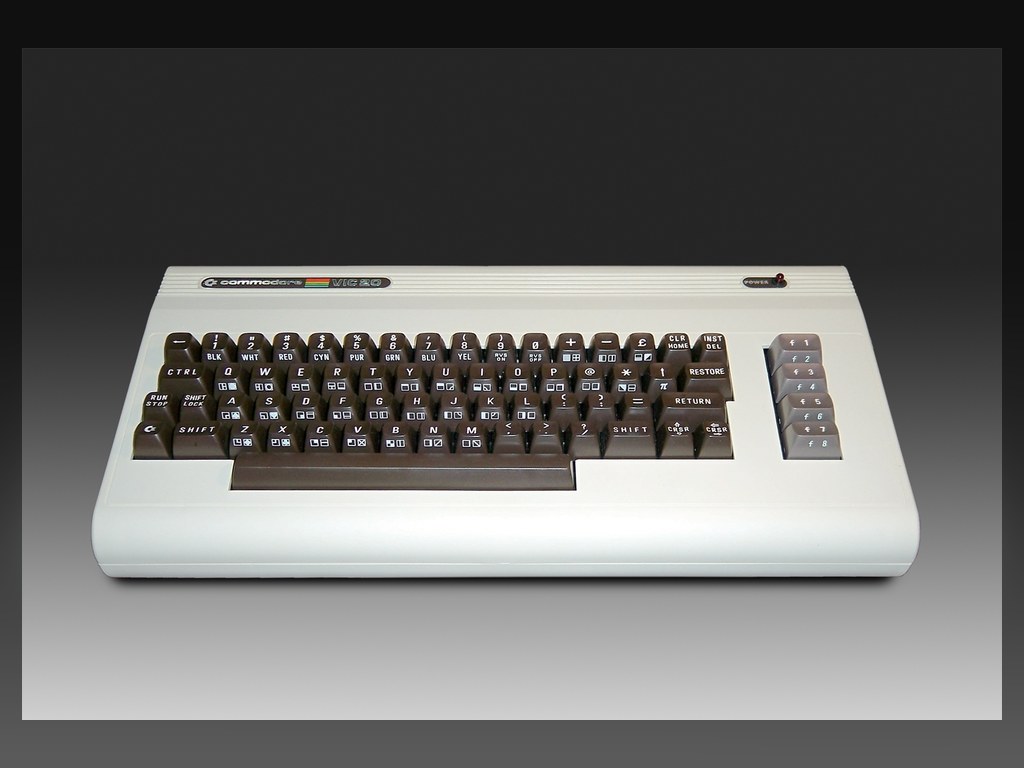
Why buy a VIC-20 in 2026?
Of all the great 8-bit machines, the VIC-20 may be the easiest to live with. It is small, robust, instant-on with cartridges, cheap to buy, and home to a library whose best games — the Minter shooters, the Scott Adams adventures, Commodore’s own arcade cartridges — play in short, joyful bursts that suit modern retro habits. Its BASIC is the friendliest of its generation, its 22-column screen is charming rather than limiting on a real television or a modest monitor, and its community remains active, with modern storage, memory and multi-cartridges still being made. This guide covers what to buy, what to check, what to avoid, and what to budget — with prices given as hedged typical ranges, not live listings, because the market moves and your mileage will vary by country, condition and luck.
Set expectations first. The VIC-20 is a 1980 design: 5K of RAM in the base machine, character graphics, three-voice square-wave sound. You are not buying it instead of a Commodore 64; you are buying the machine the C64 learned from — rawer, simpler, and in its best games, faster-feeling. If your heart wants sprawling adventures and SID music, buy the 64 as well. If it wants the purest arcade-era Commodore experience and the friendliest keyboard ever fitted to a computer, read on.

Which VIC-20, and what it costs
Two main variants matter. The original VIC-20 uses a two-prong power supply and the full-size keyboard with the famous chunky keys; the later cost-reduced model — often called the VIC-20CR — uses a round DIN power connector shared with early C64 practice and a slightly revised board. Both play the same library. As hedged guidance for 2026: an untested machine might change hands around the $50–90 mark in the US (roughly £40–75 in the UK), a tested, working machine typically sits around $90–160 (£70–130), and a clean boxed example with extras can run $180–300 (£150–250) or more. PAL machines are plentiful in Europe; NTSC machines dominate in North America. Match the machine to your display and your software ambitions — most cartridges run happily on their native region’s hardware, and modern displays are forgiving, but period-correct pairing is the path of least resistance.
Condition checks are simple and mostly visual. The keyboards are famously tough, but check every key — a dead key usually means a clean of the contacts rather than a tragedy. Check the cartridge slot’s edge connector for corrosion, the case for the yellowing that sunlight brings (cosmetic only), and the video output: the VIC-20 outputs composite video through a 5-pin DIN, and cables are inexpensive and still made. The VIC chip itself runs warm by design; a machine that displays a stable picture with the correct blue border and ‘**** VIC-20 BASIC ****’ banner after ten minutes is a machine whose heart is sound.
Displays and controllers
The VIC-20 was designed for the family television and still looks most itself on a CRT, where its chunky pixels and bright colours blend as intended. On a modern flat panel, use the composite input if one survives, expect a soft image, and consider the inexpensive video modifications documented by the community if you become serious — the VIC’s output rewards small effort. Scanline purists can add a scaler, but honesty compels a note: the machine’s charm survives any competent display, and the money is usually better spent on software.
Controllers are easy. The VIC-20 takes standard Atari-pattern 9-pin joysticks, and the era’s best sticks — plus modern reproductions — all work. Paddles matter for a handful of titles, Clowns foremost among them, and original Commodore paddles remain affordable. Keyboards need no extras; the VIC-20’s own is the one you want, which is more than many 8-bit owners can say.

The power supply warning — read this section twice
The one genuine danger in VIC-20 ownership is power. The later DIN-connector machines can physically accept a Commodore 64 power supply — and ageing C64 supplies are notorious for failing in a way that raises their 5-volt output and destroys the computers plugged into them. The rule for 2026 buyers is absolute: never trust an untested forty-year-old power brick, of either pattern, at face value. Budget for a modern replacement supply from a reputable retro supplier — typically a modest sum in the $35–60 range — or have an original tested under load before use. The two-prong early machines have their own elderly supplies and deserve the same caution. A modern supply is the single best insurance purchase in the whole VIC-20 ecosystem, and it costs less than the cartridges you will plug in next.
Beyond power, the VIC-20 asks little. It has no disk drive alignment to fret over unless you buy one, no fragile custom chips beyond the VIC itself, and a board that competent repairers know well. Buy the machine, buy the modern supply, and you have dealt with the platform’s only real trap.
Storage, memory and the essential extras
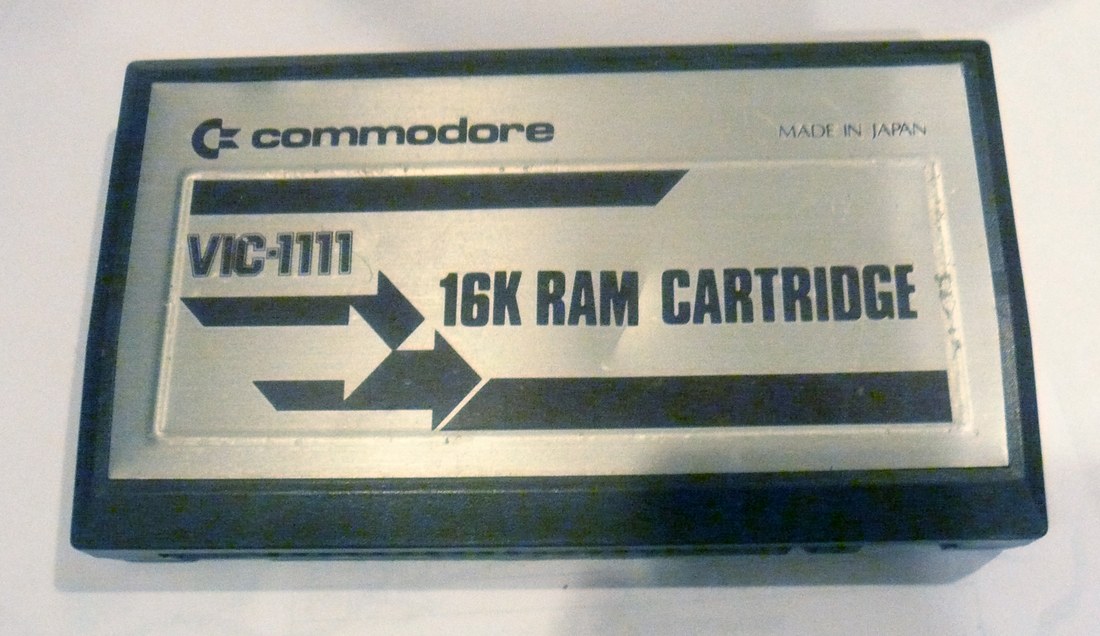
Software reaches a VIC-20 three classic ways and one modern one. Cartridges are the soul of the machine — instant, robust, and mostly inexpensive, with common Commodore titles typically in the $10–30 range loose and the desirable third-party and withdrawn titles (hello, Jelly Monsters) commanding more. The Datasette tape drive is cheap, authentic and slow in the approved historical manner; tapes survive surprisingly well. The 1541 disk drive works with the VIC-20 over the serial bus and opens the disk library, at period speeds. The modern answer, and the one most new owners end up choosing, is an SD-card device such as an SD2IEC — typically in the $40–70 range — which loads disk and program images from a card at better-than-period convenience, alongside modern all-in-one cartridges that combine 32K-plus of switchable RAM with banks of cartridge ROMs in a single slot-filler.
Memory deserves its own sentence because VIC software cares about it: a switchable RAM expansion is the highest-value accessory after the power supply. Original 8K and 16K cartridges are common and inexpensive; modern expansions do every configuration at once. With one fitted, the machine’s tape, disk and adventure libraries open fully. Add a good joystick — the VIC uses the standard Atari-style 9-pin pattern, so the entire era’s controllers are candidates — and a composite cable, and the shopping list is complete.
Where to buy and how to haggle
The usual hunting grounds apply — auction sites, retro fairs, marketplace listings and the community’s own trading posts — with the usual VIC-20 advantage: this is not a speculator’s machine. Bundles are the value play: a machine with a Datasette, a RAM expansion and a fistful of cartridges routinely costs less than the sum of its parts bought separately, because sellers undervalue the accessories. Ask for a photograph of the machine running — the blue BASIC screen is the VIC’s handshake — and treat ‘untested’ as a discount negotiation, never as a promise.
Finally, join the community. The VIC-20’s forums and user groups are famously welcoming — the machine attracts the kind of owner who answers questions — and their classified advice will save you more than any single bargain. The friendly computer earned its name twice: once in the advertising, and once in its people.
A last word on regions and revisions, since it decides real purchases: buy the machine of your own region unless you collect deliberately across them. PAL and NTSC VIC-20s differ in the VIC chip itself — 6561 against 6560 — and while most software is forgiving, a small number of titles are timed for one standard and sulk on the other. The cost-reduced later machines are not lesser machines; buy on condition and power-supply sanity rather than revision snobbery, and let the keyboard’s famous keys, identical in spirit across the run, make the final argument.
A sample starter setup, honestly costed
To make the ranges above concrete, here is a sensible starter build at hedged 2026 prices. Start with a tested, working machine in your region’s format: budget roughly $90–160 in the US or £70–130 in the UK. Add a modern power supply at roughly $35–60 — non-negotiable, per the warning above. Add storage and memory in one stroke: either an SD-card device at roughly $40–70 plus an original 16K expansion if one turns up cheaply, or a modern all-in-one cartridge combining RAM and ROMs, which typically lands in a similar combined range. Add a composite video cable if the bundle lacks one, at pocket-money prices, and a joystick you already like the feel of.
Software, at last, is where the VIC-20 spoils you. A starter shelf of common Commodore cartridges — Avenger, Radar Rat Race, Jupiter Lander, Mole Attack and their kin — can still be assembled for the price of a modern game’s downloadable content, with the mid-tier gems and third-party titles layered in as hunting allows. Total the whole build, bought patiently over a month or two of listings and fairs, and a complete, safe, fully expanded VIC-20 setup commonly lands somewhere in the $250–400 range in the US, or roughly £200–320 in the UK — hedged figures, offered as planning aids rather than promises, in a market that rewards patience above all.
Bought that way, the machine is not a project; it is an appliance, ready the day it arrives. Which is, in the end, the most 1981 thing about it.
One closing test before any purchase, applicable to every listing in this guide: ask yourself whether the bundle in front of you would let you play Gridrunner the day it arrives — machine, safe power, a way to load software, a controller. If yes, and the price sits inside the hedged ranges above, you are looking at a fair deal in a fair market. If not, price the missing pieces honestly and negotiate, or walk away kindly. The VIC-20 made a million friends by being the computer that said yes. Buy yours the same way: without hurry, without fear, and with the games already chosen.
Never trust an untested forty-year-old power brick at face value — a modern supply is the best insurance in the whole VIC-20 ecosystem.
The starter shelf, if we were building it today, is short and sweet: a tested PAL or NTSC machine to match your region, a modern power supply, a switchable RAM expansion or modern multicart, an SD storage device, and five cartridges — Gridrunner, Jelly Monsters, Omega Race, Radar Rat Race and The Count — which between them cover the machine’s genius in an evening. Total outlay, hunted patiently, can stay in the low hundreds; the machine that results will outlast most of the modern electronics in your house.
That was always the VIC-20’s promise: the friendly computer, priced for everyone, built to be used. In 2026 it keeps that promise better than any of its rivals. Buy sensibly, power it safely, expand it once — and welcome home.