
The VIC-20’s famous games get the statues: Gridrunner, Jelly Monsters, the Scott Adams adventures. This list is for the second shelf — the cartridges and tapes that owners whispered about, the ones a new collector can still find without a bidding war, each chosen because it does something only the VIC-20 does, or does something familiar with unusual charm. None of the ten is reviewed as a standalone feature in our current VIC-20 package; all of them deserve your slot time. Entries are presented in no particular order of merit — the VIC’s hidden gems do not queue politely.
A note on formats before we start: the VIC-20’s library is split by memory configuration, and several entries below expect an 8K or 16K expansion, exactly as their original boxes warned. A modern switchable expansion makes the whole list a single shopping trip. Prices, where mentioned in owners’ circles, remain kind by retro standards — these are gems partly because the market has not yet turned them into trophies.
How were these ten chosen? Three tests were applied to every candidate. First, quality on the VIC-20’s own terms — a gem must play well on the friendly computer, not merely exist on it. Second, a reason to exist — each entry does something distinctive, whether that is Hellgate’s ferocity, Voodoo Castle’s inverted premise or Garden Wars’ sheer horticultural nerve. Third, findability — a hidden gem you cannot actually obtain is a rumour, not a recommendation, and every title here still surfaces in the wild at prices a new collector can entertain. The famous names were excluded by design; the almost-famous were argued over at length; what survived is the shelf below.
One more practical note: the VIC-20’s software splits sharply by memory, and this list honours the split rather than hiding it. Cartridge games ask nothing of you but a slot. The expanded titles — Hellgate and Andes Attack at 8K, Secret Mission at 16K — ask for the single most useful accessory a VIC owner can buy. Fit a switchable expansion once, and the whole of this list, plus several hundred other reasons, unlocks at a stroke.
1. Hellgate

1984 · Llamasoft · Shooter (8K expansion)
Jeff Minter’s last great VIC-20 statement arrived in 1984, when the machine was supposed to be finished, and played like a rebuttal. Hellgate guards the gates of its title — your ship defends portals at the screen’s edges against waves of attackers pouring through — and it pushes the expanded VIC to a speed and intensity that feel illegal on 1980 hardware. It is the connoisseur’s Minter: less famous than Gridrunner, harder to find, and absolutely relentless. If you own one 8K VIC game, make it this one’s argument that the machine died with its boots on.
Finding it takes patience — it sold to the already-committed in the machine’s twilight — but emulated or original, it completes the Minter shelf. Play it after Gridrunner and feel the same mind, two years on, refusing to let the little machine rest.
2. Andes Attack

1982 · Llamasoft · Shooter (8K expansion)
Minter’s Defender homage transposes Williams’ rescue drama to a mountain range patrolled by your lone ship, with humanoids to protect and abductors to intercept. The VIC-20 cannot scroll like the arcade, so Andes Attack compresses the drama without losing its panic — the grab, the dive, the desperate interception all survive. It is the missing link between the arcade’s masterpiece and Minter’s own mature style, and it plays with a fury that belies its year. Defender fans who have never tried it are in for a genuine surprise.
Its 8K requirement kept it from some launch owners, which is why it hides in lists like this one. With a modern expansion fitted it is a five-minute setup and a very long evening: the Andes are still patrolled, and the little men still need you.
3. Voodoo Castle

1981 · Commodore / Adventure International · Text adventure
Scott Adams’ fourth adventure sends you to rescue Count Dracula himself — the twist being that the Count lies cursed and helpless, and your job is to find the ritual that wakes him. It is the most puzzle-dense of the VIC’s Adams cartridges, full of ceremonies, charms and a medium’s paraphernalia, and its inverted premise gives it a flavour none of its siblings share. Adventurers who cut their teeth on The Count should graduate here: same parser, deeper cauldron.
Practical tip for modern players: the VIC cartridge’s design means mapping matters — graph paper is period-correct and genuinely useful. The ritual at the adventure’s heart rewards note-takers, and the awakening, when it comes, is one of Adams’ best finales.
4. Sea Wolf
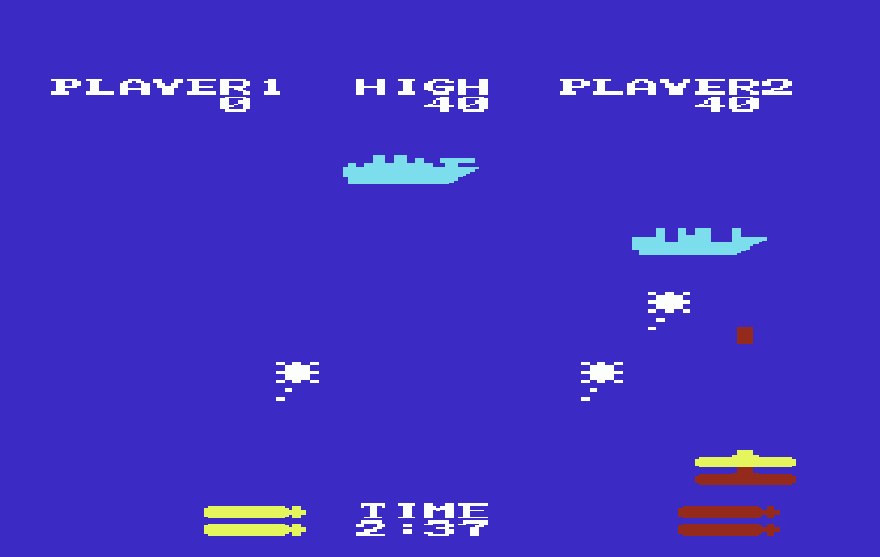
1982 · Commodore · Submarine shooter
Commodore’s conversion of Midway’s periscope arcade game puts you under the waves, sighting ships through a crosshair and spending torpedoes like a miser — because you are one: shots are limited, targets are timed, and the PT boat is worth a fortune and moves like gossip. Sea Wolf’s paddle-friendly, one-more-salvo purity made it a quiet fixture of early VIC collections, and its tension — all in the trigger finger — has not dated at all.
It also carries Midway history in its sights — the arcade original dates to the mid-1970s, making Sea Wolf one of the oldest designs in the VIC library and a living fossil that still plays. Few early cartridges connect so directly to the arcade’s bronze age.
5. Clowns

1982 · Commodore · Paddle action
Two clowns, one seesaw, and a wall of balloons: Commodore’s take on the Circus-style arcade game is the VIC-20’s great paddle title. Launch a clown, bounce him through the balloon rows, catch him on the seesaw, repeat until gravity files a complaint. The physics are kind, the colours are a circus in primary, and multiplayer households in 1982 measured their evenings in popped balloons. With paddles fitted, it remains the machine’s purest party game.
Seek the paddle controllers if you can: Clowns was built for their analogue bounce, and while joystick play works, paddles turn it into the game its designers pictured — and the one most likely to produce actual shouting in a modern living room.
6. Star Battle
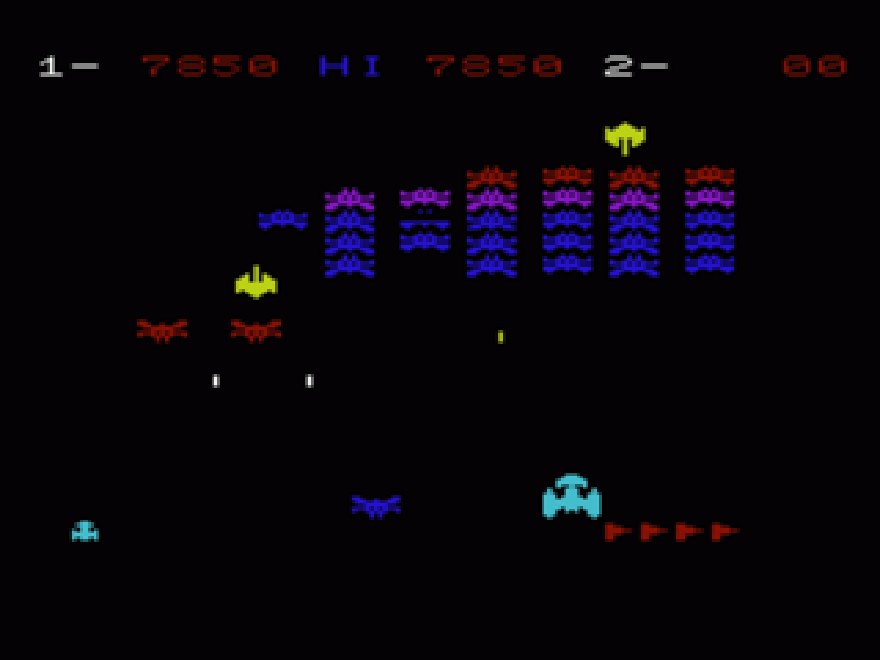
1981 · Commodore · Fixed shooter
One of the VIC-20’s launch-window shooters, Star Battle brought the Galaxian formula — formations that break ranks and dive — to the friendly computer with HAL Laboratory’s customary polish. It is routinely overshadowed by Commodore’s own Avenger, which is unfair: the diving attacks give Star Battle a dynamism the Invaders formula lacks, and its presentation is first-wave Commodore at its most confident. A cartridge that deserves to come out of the ‘also-ran’ drawer.
Copies are common and kind to wallets, because history filed it as just another space shooter. Load it beside Avenger and decide for yourself which of Commodore’s first-wave shooters deserved the flagship slot in family bundles — the dive-bombers make a strong case.
7. Garden Wars
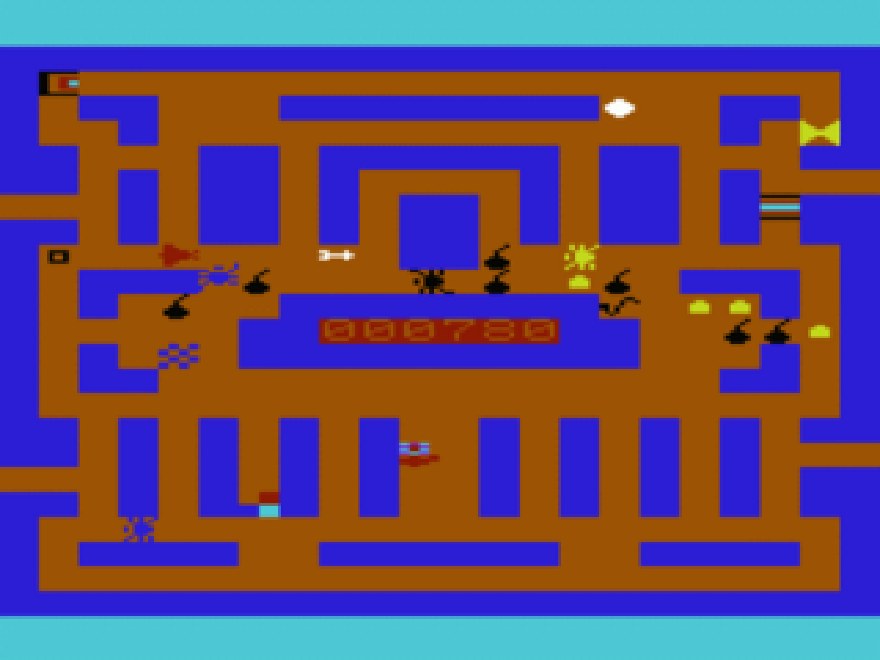
1982 · Commodore · Shooter
Only on the VIC-20: a shooter in which your garden is invaded by waves of pests — snakes, spiders, rats and other horticultural horrors — and you, armed and positioned along the garden’s edge, defend the flowerbeds. Garden Wars is cheerful, odd and precisely tuned, a reminder that Commodore’s in-house teams had wit as well as licences. It plays in short, escalating bursts and charms everyone who loads it. The strangest premise in the early catalogue, executed straight-faced and well.
It is also a small landmark of in-house originality: while rivals cloned the arcades, Commodore’s team invented a garden defence that could only have come from a home computer’s imagination. Family audiences in 1982 got the joke instantly. They still do.
8. Money Wars

1982 · Commodore · Arcade action
Cash falls, danger falls faster. Money Wars is a frantic little grab-and-dodge arcade game in which fortune literally drops from above and the penalty for greed is written in falling hazards. It never troubled the history books, which is exactly why it belongs here: a complete, polished, one-idea VIC game that fills three minutes perfectly and asks for three more. The cartridge-era equivalent of a perfect pop single.
Its obscurity is partly a format story — a small game in a catalogue of giants — but obscurity is this list’s home turf. Money Wars is the cartridge you lend a sceptic who thinks VIC games are all homework. Three minutes later, they understand.
9. Cosmic Jailbreak

1982 · Commodore · Breakout variant
Breakout in a space prison: your shots chip at the wall behind which your comrades are held, aliens patrol, and every breach brings a breakout closer. Cosmic Jailbreak takes one of the era’s most familiar mechanics and gives it a goal beyond survival — rescue — which transforms the emotional arithmetic of every rally. It is the best of the VIC’s block-breakers and the one with a story to tell.
The rescue framing also gives it unusual replay pull: you are not clearing a wall, you are freeing a crew, and leaving one prisoner behind stings in a way a lost ball never does. The VIC’s block-breaker crown is not close.
10. Secret Mission
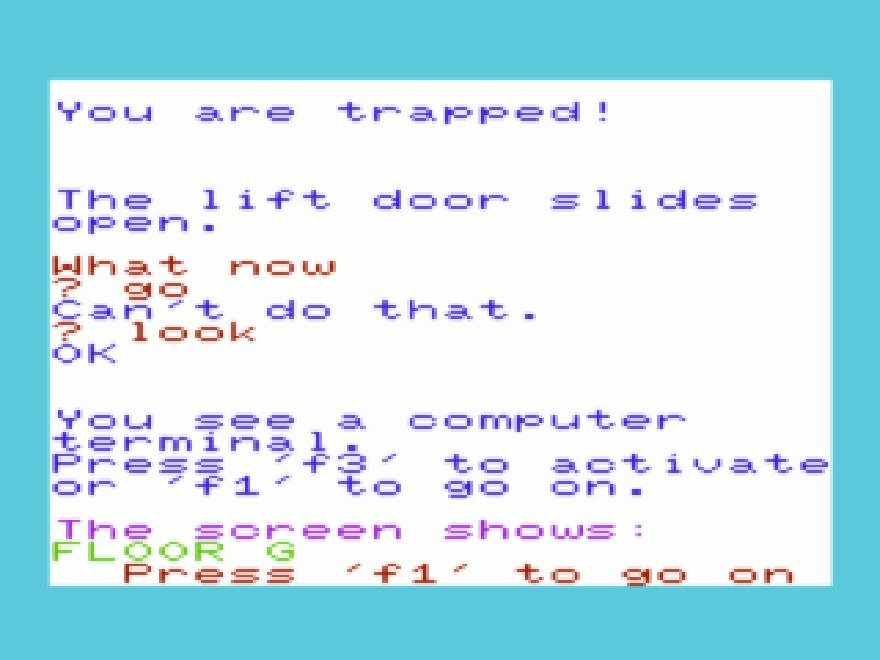
1983 · Kew Enterprises · Adventure (16K expansion)
A spy adventure for the expanded VIC, Secret Mission asks 16K of its machine and spends it on a bigger world than the cartridge adventures could offer: an espionage plot of codes, contacts and infiltration, played at the parser’s pace. It represents the VIC’s second software economy — the ambitious tape titles for expanded machines that collectors overlooked while chasing cartridges. Sleuths with a RAM expansion fitted owe it an evening.
British VIC software is the library’s underexplored continent, and Secret Mission is a fine landing craft: atmospheric, demanding of memory in both senses, and proof the machine’s adventure life extended well beyond the famous American cartridges.
Finally, a word of encouragement to the hunter: this list was written to be used, not admired. Print it, argue with it, pencil your own eleventh entry in the margin — the VIC-20 has been generating exactly that argument since 1982, and the machine’s owners have never needed permission to have it. The gems are out there, priced kindly and waiting patiently, in the second drawer of the retro fair stall. Look in the second drawer.
Ten gems, one moral: the VIC-20 rewards curiosity more reliably than almost any retro machine, because its library was built by programmers squeezing brilliance out of 5K and by a community that never stopped. Fit a RAM expansion, keep a list like this one in your pocket at the retro fairs, and the friendly computer will keep surprising you.
Disagree with our ten? The machine’s depth makes argument inevitable — and that argument, forty years on, is the surest sign the gems are still out there.