At a glance: Xbox Live Arcade · Xbox 360 · Microsoft, 2005–2024 · The download storefront that changed console games
It is easy to forget that in 2005, the idea of buying a game without a box was exotic on consoles — something PC players did, an experiment. Xbox Live Arcade was the experiment that worked. Launched with the Xbox 360 as a modest shelf of small downloadable games inside the dashboard, XBLA grew over nine years into the most important distribution revolution consoles had ever seen: the place where indie games became a mainstream industry, where arcade classics came home perfectly, and where a generation learned to buy games with a button press. Its storefront closed in July 2024. Its influence never will.
It started in a garage
The most famous XBLA origin story is also the most literal: Geometry Wars began as an unlockable minigame inside Project Gotham Racing 2 on the original Xbox, then grew into Geometry Wars: Retro Evolved, a five-dollar launch title for the 360’s Arcade in November 2005 — whereupon it proceeded to outsell, outscore and outlast nearly every full-price game on the system. Microsoft had intended XBLA as a home for casual fare and retro reissues: Hexic (bundled free, a Tetris-class puzzler from Tetris’s own co-creator lineage), a polished port of Smash TV, card games. Retro Evolved proved something bigger was possible — that a small, cheap, downloadable original could be the best game on a new console. The industry noticed immediately.

The rules that made it work
XBLA’s early genius was structural. Every game had a free trial — not a separate demo build, the opening slice of the full game, unlockable in place with a purchase. File sizes were capped (a mere 50MB at first, relaxed over the years), which forced clarity of design. Gamerscore standardised achievement points across every title, giving small games the same meta-game dignity as Halo. And Microsoft curated: slots on the virtual shelf were limited, pitched for, and fought over, which kept quality high and made an XBLA release feel like an event. The Wednesday release cadence — new Arcade games landing midweek — became a fixture of gaming culture: for years, “what’s on XBLA this week” was the hobby’s standing appointment with itself.
The golden summers
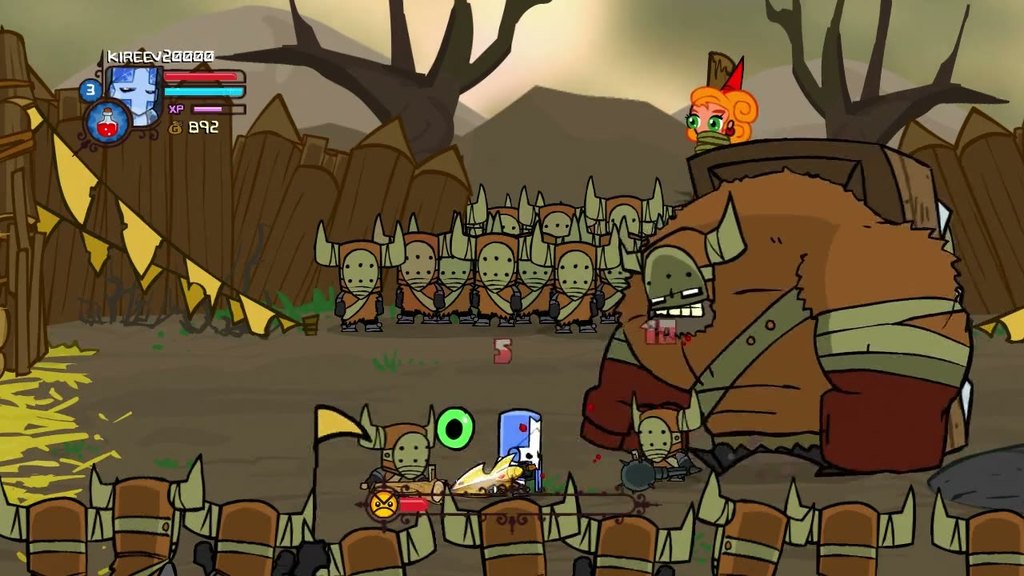
From 2008 the yearly Summer of Arcade promotions turned that appointment into a festival, and the line-ups read like a hall of fame. 2008 alone delivered Braid — Jonathan Blow’s time-bending platformer that made “indie game as art” a mainstream conversation — alongside Castle Crashers, Galaga Legions, Bionic Commando Rearmed and Geometry Wars 2. Later summers brought Limbo, Shadow Complex (a downloadable game with full triple-A production values, from the makers of Gears’ engine), Trials HD, Bastion, Fez, and the downloadable debut of games like Minecraft’s console edition — XBLA’s biggest seller of all, proof that the shelf could hold a phenomenon as happily as a puzzler.

The deeper revolution was economic. XBLA gave small teams — The Behemoth, Twisted Pixel, Number None, Supergiant, Polytron — direct access to a console audience of tens of millions without a publisher’s disc budget, and a generation of developers who would go on to define the 2010s learned their trade on its shelf. The twin-stick shooter, the precision platformer, the narrative experiment: whole genres of the modern indie scene were effectively prototyped inside Microsoft’s little arcade.
The long fade, and the closure
The model’s own success dissolved it. As download stores became the default on every platform — including Microsoft’s own, where full retail games went day-and-date digital — the Arcade’s separate shelf, size caps and curation stopped making sense, and XBLA releases thinned out in the Xbox One era. The end, when it came, was dignified and sad in equal measure: the 360 Marketplace closed on 29 July 2024, and with it the ability to buy hundreds of download-only games that exist nowhere else. Titles owners already bought remain re-downloadable, and a healthy portion of the catalogue survived via backward compatibility on newer Xbox consoles — but a real piece of gaming’s library now persists only on the hard drives of the machines that bought it in time.

The trial that taught an industry
Of all XBLA’s rules, the mandatory free trial may have been the most consequential. It killed the era’s great uncertainty — buying a game you had never touched, on the strength of a box and a review — and replaced it with a standing offer: play the beginning, and if the game is good, the purchase is one button and ten seconds away. Developers learned to open strong or die. Players learned to sample promiscuously, which meant good small games were discovered by trial in a way no marketing could buy. Every “download the demo” culture since, every timed trial in every modern subscription library, descends from this rule.
The developers it raised repay a roll-call, because XBLA’s alumni list is the 2010s in miniature. Supergiant’s Bastion began a run of acclaimed games. The Behemoth turned Castle Crashers’ profits into a two-decade indie career. Twisted Pixel, Klei, Capybara and dozens more used the Arcade as a first rung; even established names treated it as a laboratory — Chair built Shadow Complex there between Gears contracts, and Tim Schafer’s Double Fine used XBLA and its peers to reinvent itself as a small-games studio. When Microsoft later loosened the arcade’s gatekeeping into broader self-publishing, it was formalising a world XBLA had already created: one where a team of five could ship a classic from a garage to forty million consoles. The little shelf did that.
What a collector does with a closed arcade
For the 360 owner today, XBLA has become a preservation question with practical answers. The games you own remain yours to re-download from your account’s history, so a well-kept account is itself a collection — guard its credentials like a shelf of discs. Backward compatibility rescued the catalogue’s biggest names for modern hardware, and it is the route new players should take for Castle Crashers, Braid and their peers. But hundreds of smaller titles exist now only where they were bought: on ageing hard drives, in download histories, in the libraries of players who were there on the Wednesdays. If you are buying a second-hand 360, its installed Arcade shelf is a small museum — check it before you wipe anything, because some of what is on it cannot be bought back at any price. The Arcade taught the industry that games could live without boxes. Its own afterlife is the industry’s lesson in what that costs.
Why it mattered
Xbox Live Arcade didn’t just sell small games. It proved the console audience would buy downloads, fund indies and show up on a Wednesday — the three assumptions the entire modern industry is built on.
Every digital storefront since — the indie sections of every console shop, the demo festivals, the curated subscription shelves — is XBLA’s descendant. The 360’s hard drive, glowing with trials that turned into purchases at one button press, was where console gaming’s future was beta-tested by millions of players who just wanted one more go at Geometry Wars. The arcade is closed now. The arcade is also everywhere.