
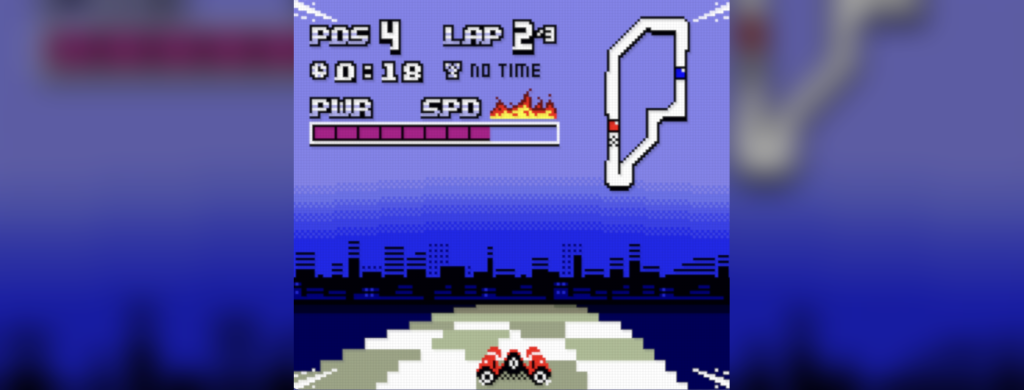
The Game Boy Color launched in 1998 with a colour screen, a modest speed bump and absolutely no hardware for rotating a racetrack underneath you. Nobody told Shane McCafferty. ZERO, his new futuristic racer for the GBC — developed at Rocketship Park and published by Thalamus Digital — arrives on itch.io today, November 5, and its whole reason to exist is a trick the hardware was never supposed to do: a convincing fake of the SNES’s Mode 7 rotation, running on a 160×144 handheld screen. It costs $1.99. It looks, from every screenshot and the launch trailer, faintly impossible. And it is very much a real, finished game: three cups, nine tracks, and a boost system with teeth.
At a glance: ZERO — Rocketship Park (design, code and art by Shane McCafferty; music and SFX by Sloopygoop), published by Thalamus Digital. Game Boy Color, out today, November 5, 2026, on itch.io for $1.99 (pay what you want above that). Playable in emulators such as mGBA, on original hardware via a flash cart, and on Analogue Pocket. Anti-gravity racing; three cups, nine tracks.
How ZERO fakes Mode 7 on the Game Boy Color
Mode 7 was the SNES’s party trick: one background layer that could rotate and scale, which is how F-Zero and Pilotwings sold the feeling of speed in 1990 on a console with no 3D hardware at all. The Game Boy Color has no equivalent mode — no rotation hardware, nothing close. So McCafferty borrowed a technique from the demoscene instead: pre-rendered tile tricks and scanline-level sleight of hand that persuade the little screen to skew and swing the circuit as you steer. “I’ve wanted to push the beloved Game Boy Color to an approximation of Mode 7 for a while now,” he says. “The technique was, like all cool things, stolen from the demo scene — the real fun was turning that into something that feels thrilling and fun to play.”
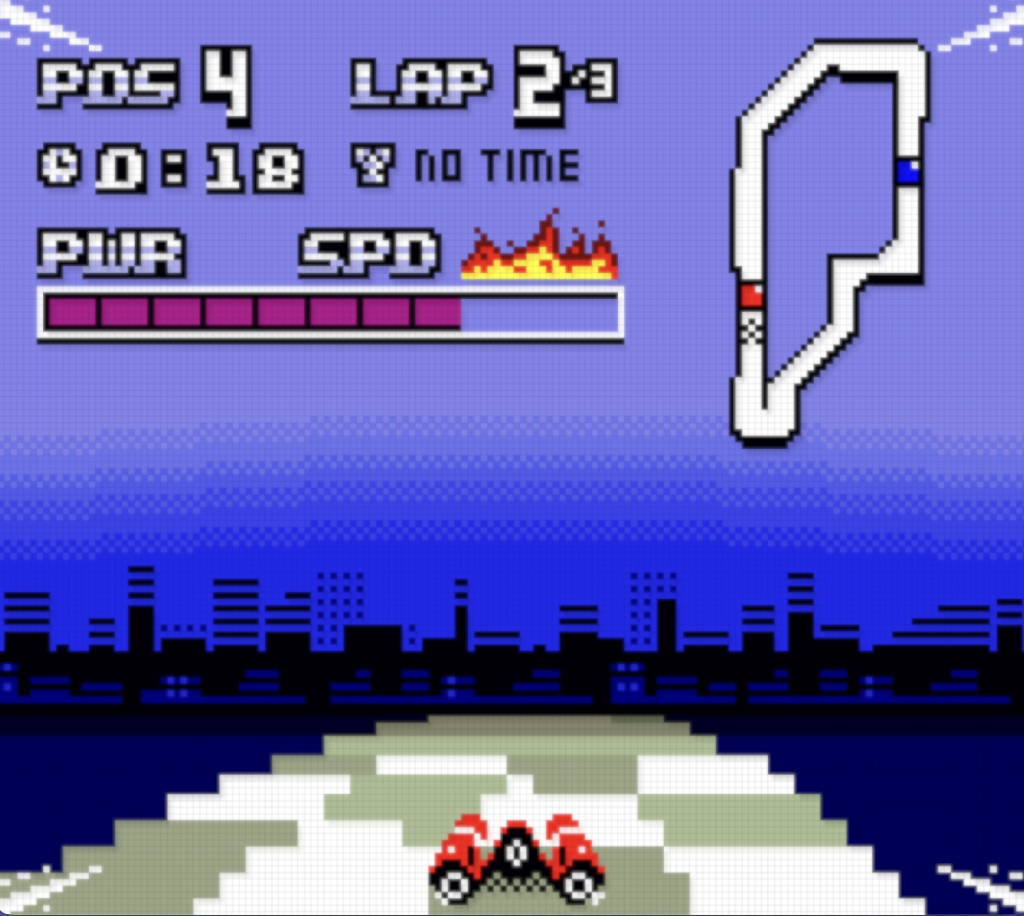
The important part is that the trick survives contact with an actual game. The screenshots show the full racing-game furniture in place — position, lap counter, race timer, a live circuit map, a speed readout and that big magenta power bar — all wrapped around a track that tilts and yaws beneath your craft with a city skyline sliding past. Plenty of homebrew tech demos can spin a floor for thirty seconds. ZERO has to do it at racing speed, with rivals on the road, for nine tracks. That is the difference between a demo and a release, and it’s why this one is news.
Boost or bust: the power meter is the game
ZERO’s best idea is economic. You start every race with 11 power units. A boost — D-pad up, per the itch.io page’s control listing — costs 3. Passing a rival refunds 1. And if the tank hits empty, you don’t just slow down: in the store page’s own words, you’ll crash and burn. So boost is never free and never purely defensive. Spend it early to break away and you’re one bad corner from an empty meter; hoard it and the pack leaves you behind. Every overtake is also a refuel, which quietly turns mid-pack traffic from an obstacle into a resource. It’s a small ruleset — 11, minus 3, plus 1 — but it forces a decision every few seconds, which is exactly where a 160×144 racer lives or dies.
The structure around it is proper cartridge-era stuff. Three cups — Bronze (easy), Silver (medium), Gold (hard) — each with three tracks and three lives. Bronze is open from the start and asks for a podium finish, third or better, to progress. Silver tightens that to second or better, and Gold demands you win. Each cup also carries a Quick Race mode for practising any track you’ve unlocked, which is the correct way to learn where the meter-hungry straights are before Gold starts charging you for them. Controls are as physical-button simple as they should be: A accelerates, B brakes, left and right steer, and releasing A while steering and re-applying it gives you a drift — a handbrake turn, in the itch page’s phrasing.
The F-Zero-shaped hole in the Game Boy library
Context is why this release lands. Nintendo’s own F-Zero hit the SNES in 1990 and defined the anti-gravity racer on the spot — but the Game Boy line had to wait a full decade for a turn, until the Game Boy Advance launched with F-Zero: Maximum Velocity in 2001, on hardware that could genuinely do the Mode 7 impression. The Game Boy Color, sitting in the middle of that decade, got skipped entirely: too weak for the trick, said everyone, reasonably. ZERO is the belated answer to the what-if — the GBC F-Zero that 1999 never shipped, arriving twenty-seven years late at a price that rounds to nothing.
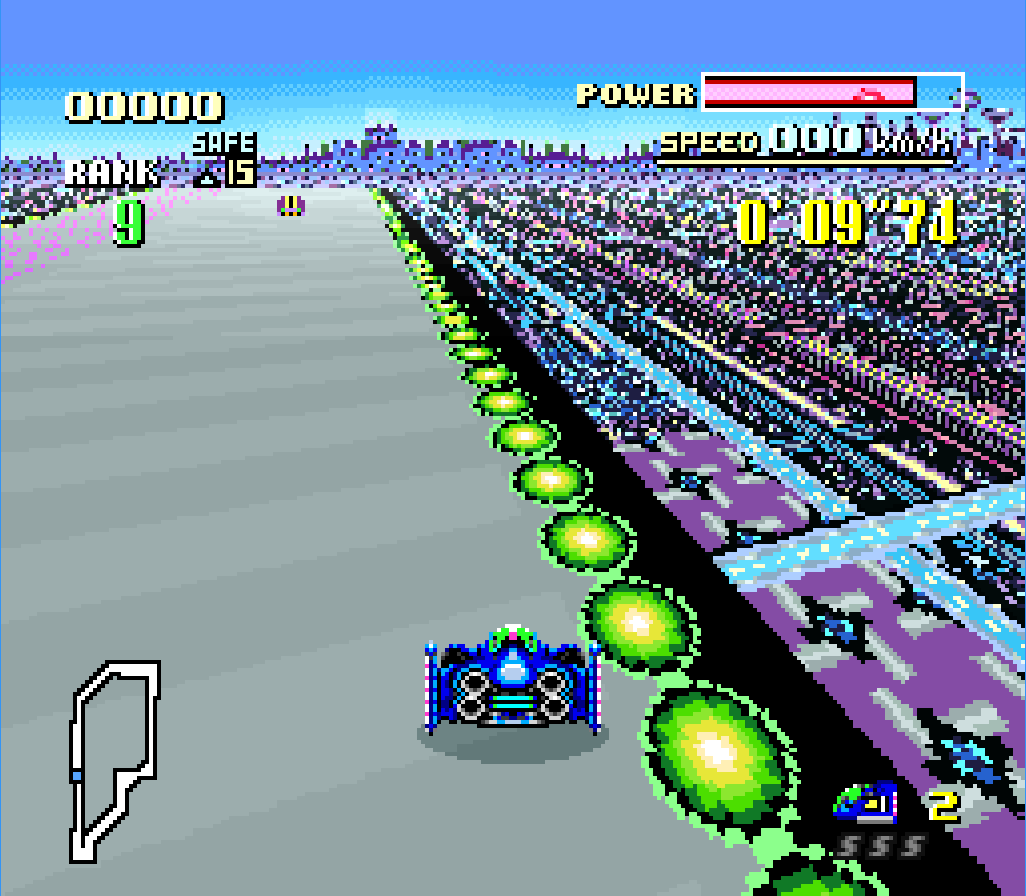
It’s not even the first time someone has pulled this thread on smaller hardware — we covered a homebrew F-Zero port doing the impossible on the Mega Drive in G-Zero Gravity: F-Zero on the Mega Drive, and the Mode 7 Trick Sega Never Had. The GBC version is the more audacious of the two. The Mega Drive at least had horsepower to argue with. The Game Boy Color has a 1998 handheld CPU, a screen the size of a postage stamp, and — as of today — a futuristic racer that rotates anyway.
A developer who keeps doing this to the Game Boy Color
If the name is familiar, it should be. Thalamus founder Andy Roberts, announcing the launch, points to McCafferty’s “impressive legacy of Game Boy racing games” — titles like Nitro and Hero GP — and says ZERO “takes everything he learned” there and “elevates the genre to new heights — and speeds!” The racing games are only half the résumé: this is the same developer who recently put a Wolfenstein-style FPS on the GBC and an unofficial OutRun port alongside it, the kind of output that makes the platform’s modern scene feel less like nostalgia and more like an ongoing dare. ZERO is a Rocketship Park production through and through — McCafferty is credited with design, code and art, with Sloopygoop on music and SFX and Roberts producing.
That matters for expectations. A first-time developer faking Mode 7 on a GBC would be a curiosity to watch. This developer, with this publisher, shipping at $1.99 on a platform he has been bending for years, is a much safer bet — the experiment has already been run, several times, and the results keep ending up on itch.io with price tags on them.
ZERO Game Boy Color release: how to play it today
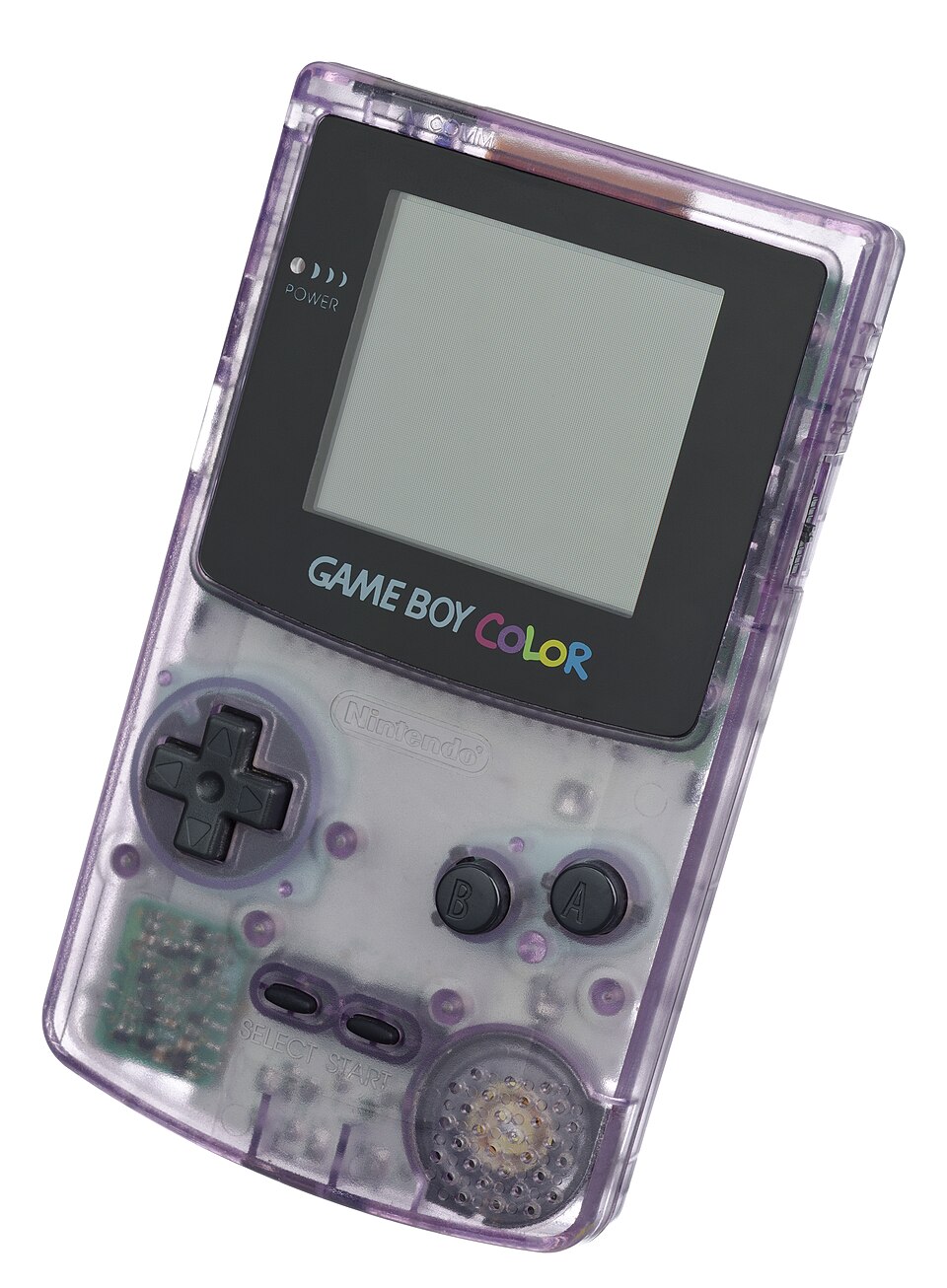
Getting it is refreshingly uncomplicated. ZERO is live now on Thalamus Digital’s itch.io page at $1.99, pay-what-you-want above that. The ROM runs three ways: in an emulator such as mGBA on PC, Mac or Linux; on a real Game Boy Color through a compatible flash cartridge, which is plainly the way its maker intends it to be felt; and on Analogue Pocket and compatible modern handhelds. One honesty note: this is a launch-day news piece, not a review — we haven’t scored ZERO, and we won’t dress first impressions up as a verdict. What can be said today is what’s confirmed: the game exists, it’s out, it’s complete — three cups, nine tracks, progression, practice mode — and it costs less than the batteries you’d put in the Game Boy Color to play it on.
Twenty-seven years after the hardware launched, the Game Boy Color just got the one genre everyone agreed it couldn’t do. Two dollars. Go and see the trick for yourself.