
Some revivals arrive apologising for the past. Ninja Gaiden: Ragebound arrived swinging through it. Announced as a surprise at The Game Awards in December 2024, the new side-scrolling entry put a famous name in unfamiliar hands: The Game Kitchen, the Spanish studio behind the Blasphemous games, developing under licence from Koei Tecmo and publishing through Dotemu. By the time preview coverage landed in April 2025, the pitch was already sharpening into something more interesting than a nostalgia exercise. Coverage from that month kept returning to speed, bounce and momentum — and to a deliberate decision to answer the series’ 2D beginnings rather than chase its better-known 3D incarnation. With hindsight, after a launch on 31 July 2025 and a warm critical reception, that decision looks like the whole point.
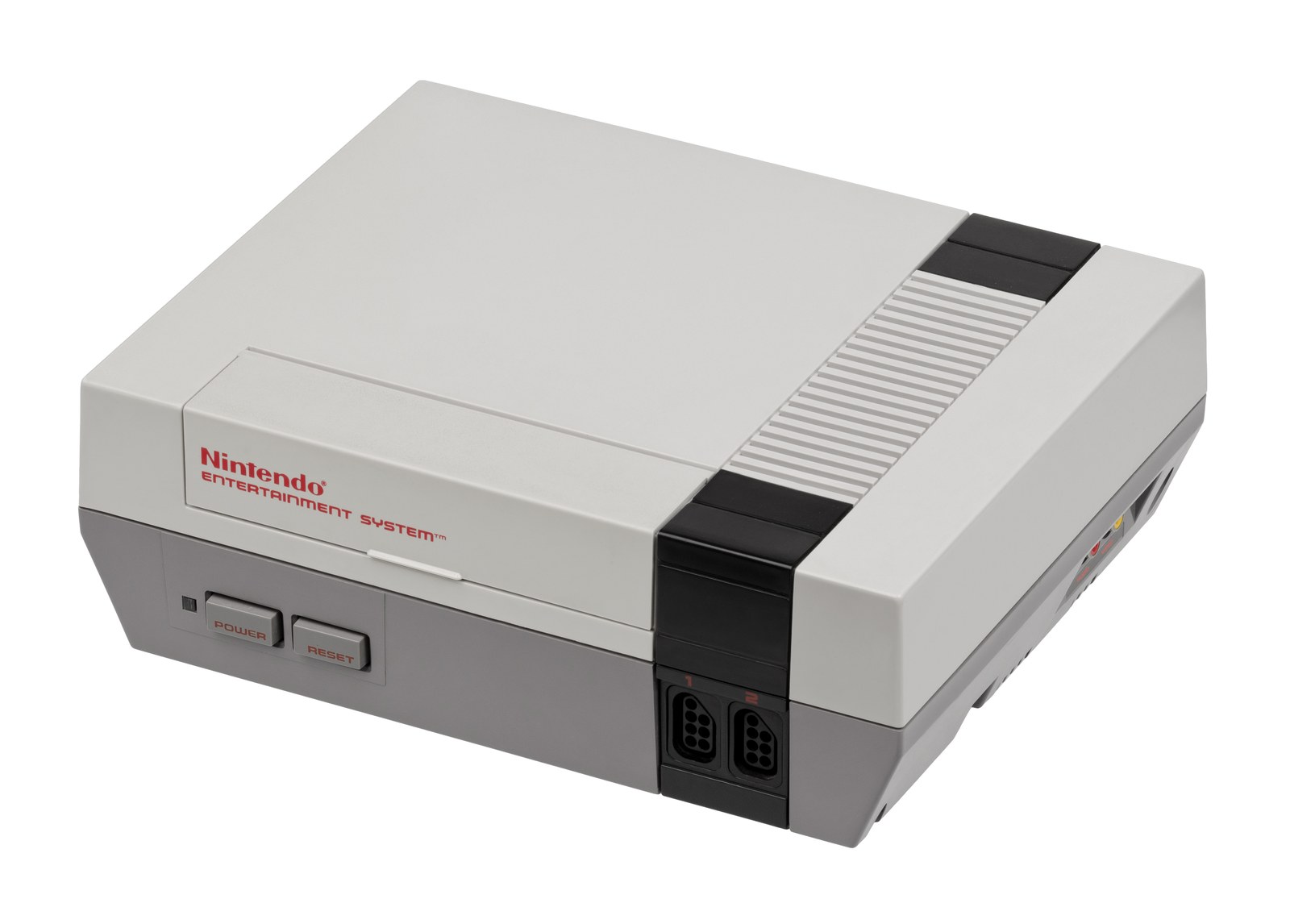
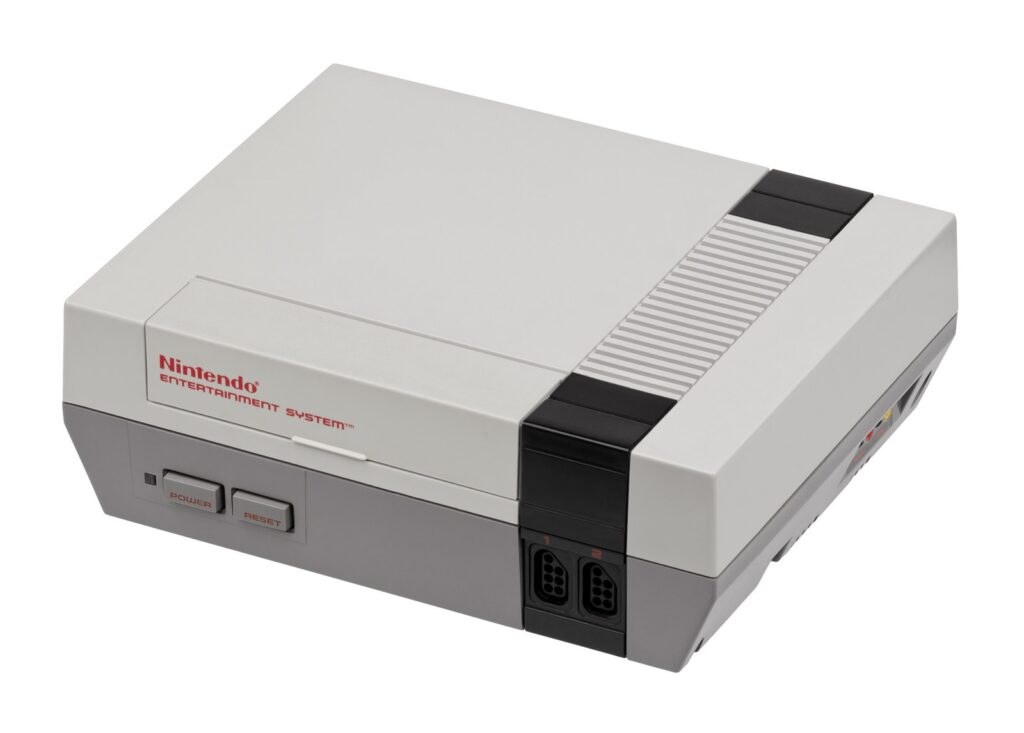
The Nintendo Entertainment System, home of the original Ninja Gaiden in December 1988 in Japan and March 1989 in North America. Photo: Evan-Amos, Wikimedia Commons, public domain.
Thirty-seven years back to a cartridge
The arithmetic in that April 2025 headline was not decorative. Tecmo released the first NES Ninja Gaiden — Ninja Ryukenden in Japan — in December 1988, with the North American version following in March 1989. Counting from 1988 to the 2025 revival gives the 37 years that framed so much of the preview discussion. Directed by Hideo Yoshizawa, the NES game sent Ryu Hayabusa to America after his father’s disappearance, armed him with the Dragon Sword and a set of secondary weapons and ninpo arts, and pushed him through six acts made up of 20 stages.
Two things made that cartridge linger in memory long after its hardware had been packed away. The first was presentation. Its anime-style cinematic sequences, cutting between stages to tell a continuous melodrama about statues, demons and the villain called the Jaquio, were unusually elaborate for an NES platform game and helped set a template other games would copy. The second was resistance. Enemies respawned, birds arrived at the worst possible jump, and the late stages — stage 6-2 is still invoked by veterans as shorthand for cruelty — punished hesitation and sloppy positioning alike. Sequels followed quickly, Ninja Gaiden II: The Dark Sword of Chaos in 1990 and Ninja Gaiden III: The Ancient Ship of Doom in 1991, completing a trilogy that defined what a hard action-platformer could demand.
Ragebound does not pretend that trilogy never ended. Its story deliberately runs alongside the first NES adventure instead of rebooting it. Ryu leaves for America to honour his father’s will, exactly as he did in 1988, and while he is gone the barrier separating the human and demon worlds tears open above Hayabusa Village. That choice matters. Instead of dragging Ryu back into a remake of his own earliest mission, the game clears the stage for somebody else to fail, learn and improvise in his absence.
The 3D era it chose not to imitate
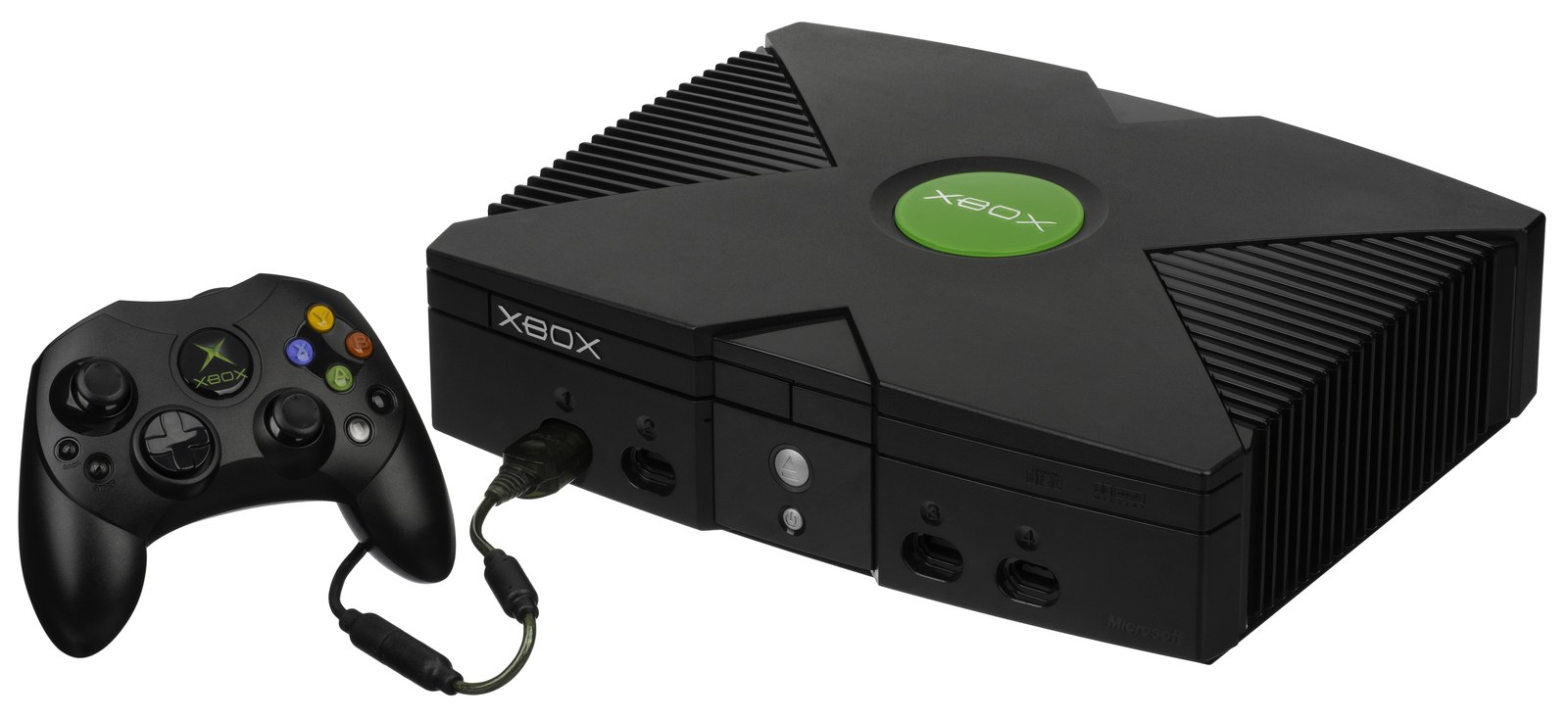
The original Xbox, host of Team Ninja’s 2004 3D reinvention of Ninja Gaiden — the era Ragebound acknowledges but does not copy. Photo: Evan-Amos, Wikimedia Commons, public domain.
For many players who discovered the name this century, Ninja Gaiden means something else entirely: the 2004 Xbox revival directed by Tomonobu Itagaki at Team Ninja. That game rebuilt Ryu as the star of a demanding third-person action series, all wall runs, Flying Swallow attacks and, in the expanded Ninja Gaiden Black a year later, one of the most admired action games on its console. A sequel followed in 2008, the year Itagaki left Tecmo, and the 3D line then lost momentum, leaving the wider series largely dormant for more than a decade after spin-off Yaiba: Ninja Gaiden Z in 2014.
The Game Kitchen reportedly started in that direction. Accounts of the development, summarised in reference coverage of the finished game, say the team was initially inspired by the 3D entries and experimented with combo-heavy combat, before finding that approach did not translate convincingly into two dimensions and pivoting towards the 8-bit and 16-bit format instead — keeping momentum, reading a room quickly and disposing of threats efficiently. Team Ninja itself served in a consulting role, playing early builds and offering feedback, which makes the pivot more telling: the custodians of the 3D games were involved in a project that concluded the older blueprint was the stronger foundation. The music made a similar argument, with composer Sergio de Prado joined by contributors from the original trilogy, Keiji Yamagishi, Ryuichi Niita and Kaori Nakabai.
April 2025: what the hands-on coverage actually said
The original post preserved in this slot was pegged to 16 April 2025, a crowded day for Ragebound previews. GamesRadar+ published Scott McCrae’s hands-on under a headline about appreciating the 2D era after 37 years — the headline this feature’s predecessor carried — while IGN, Polygon, Engadget, Rock Paper Shotgun, Nintendo Life, TheGamer and others published their own sessions the same day, and the PlayStation Blog used the moment to unveil a second playable protagonist. None of that coverage should be mistaken for a verdict on a finished product, and none of it is reproduced here as first-hand experience. Read together, though, the previews agreed on where the interest lay, and later reviews suggest they were pointing at the right things.
First, movement. Preview writers repeatedly singled out the Guillotine Boost, an airborne spin that lets the lead character bounce off enemies, projectiles and objects to stay aloft and change direction. Nintendo Life described learning it in the tutorial as a way of hitting items and foes to remain airborne, The A.V. Club called a related spinning move, the Guillotine Slash, a gratifying source of extra air time through platforming gauntlets, and Game Rant compared the boost to a forward-moving pogo jump. The comparison that kept surfacing was not to a museum piece but to flow: chaining bounces across a screen turns defence into travel, because the projectile aimed at the player also becomes a stepping stone.
Second, risk built into the attack buttons. Previews explained the Hypercharge system, in which defeating certain glowing enemies builds a powerful strike capable of breaking through tougher opponents, while a player short of charge could generate it by sacrificing some health. Writers framed that as a live decision during crowded fights rather than a meter to admire — spend safety now for power now, or survive on ordinary slashes and hope positioning holds.
Third, praise for the look and the teaching. The Game Kitchen’s pixel art, honed on Blasphemous and its sequel, drew consistent compliments for detail and animation, and several previews noted that the opening stages functioned as a measured tutorial — training with Ryu himself, ending in a sparring encounter with him that the director reportedly confirmed could, with difficulty, be won — before a burning-village stage removed the handrails.
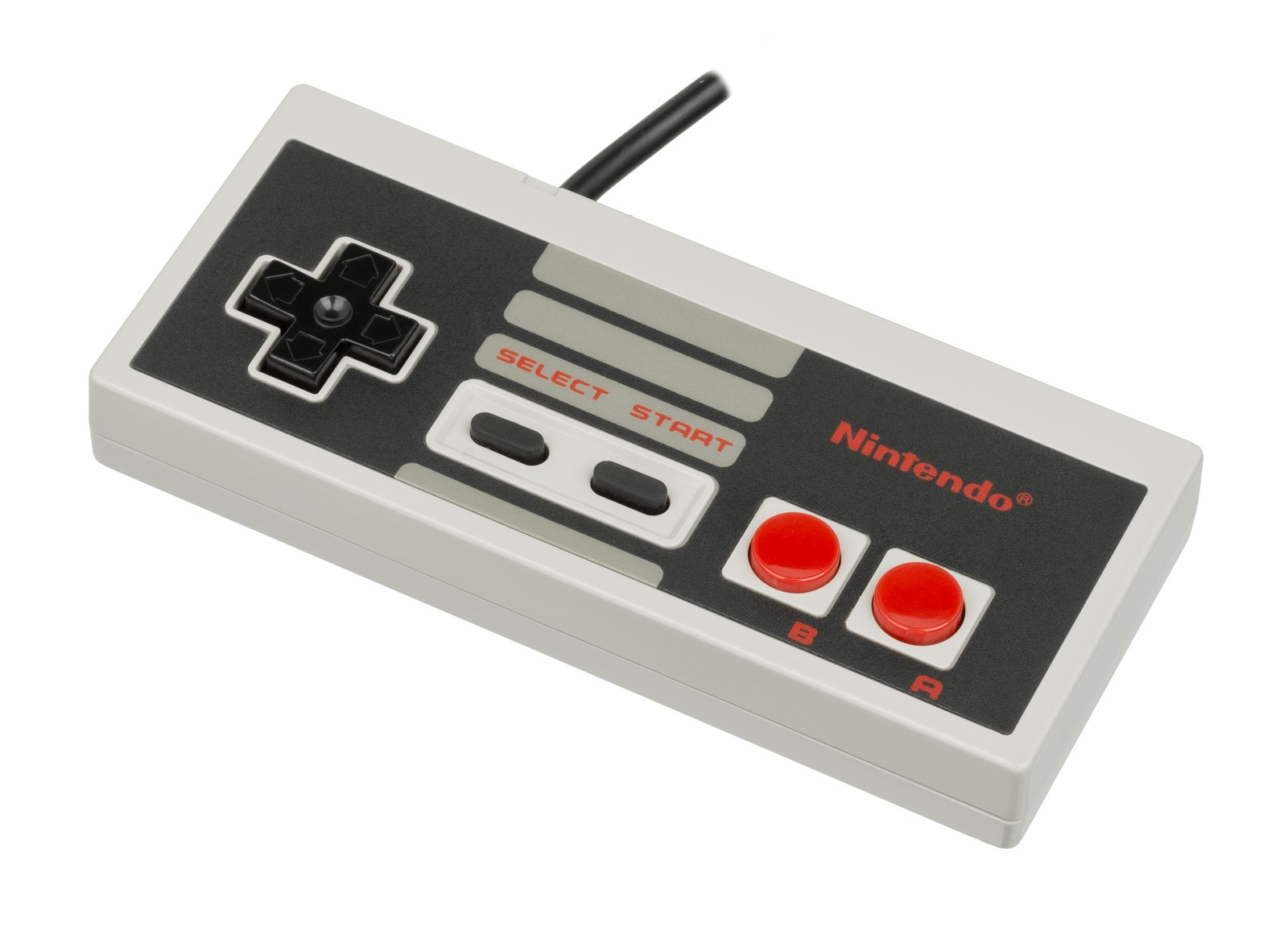
An NES controller — two action buttons were enough in 1988; Ragebound layers boost, roll, kunai and charged attacks onto that simple foundation. Photo: Evan-Amos, Wikimedia Commons, public domain.
Kenji and Kumori, not Ryu and Kumori
One detail is worth correcting plainly, because shorthand summaries of the game often get it wrong. The playable pairing is not Ryu and Kumori. The lead is Kenji Mozu, a young Hayabusa clan ninja trained by Ryu, who volunteers to defend the village once Ryu departs. Kumori is an assassin from the Black Spider Clan — traditionally antagonists in this series, a point the developers said made playing as one of them appealing — whose soul becomes bound to Kenji’s after the demonic attack leaves her body trapped elsewhere. From that fusion the two share abilities as well as arguments: Kenji provides the katana work, climbing and close combat, while Kumori contributes kunai throws and other ranged options paid for from a Ki supply that close-range fighting replenishes, discouraging a stand-back-and-spam approach.
Preview and later coverage also described Kumori-only passages triggered at demon altars, where she temporarily regains physical form under a time limit to find hidden routes and clear obstacles Kenji cannot reach. Structurally, that gives the game two rhythms to alternate. Kenji’s sections are about momentum across open combat spaces. Kumori’s are puzzles run against a clock, inside a realm ordinary eyes cannot see. The centuries of clan animosity are not set dressing either; the alliance is presented as a forbidden, reluctant expedient, two enemies agreeing that a Demon Lord is the worse option. A new protagonist was a gamble for a revival trading on recognition, and the April coverage treated Kenji as a genuine unknown rather than a foregone success — Polygon’s preview argued the franchise still needed 2D games, while other writers wondered aloud whether a side story running parallel to a classic plot could carry a full campaign.
Hindsight: the July release and the reception
That question has since been answered, which changes how the April moment should be read. Ninja Gaiden: Ragebound launched on 31 July 2025 for Nintendo Switch, PlayStation 4, PlayStation 5, Windows, Xbox One and Xbox Series X/S, priced in the mid-budget range, with a physical edition for PlayStation 5 and Switch following on 12 September 2025. It arrived in the middle of a year Team Ninja had branded the Year of the Ninja, bookended by the surprise January release of Ninja Gaiden 2 Black and the autumn arrival of Ninja Gaiden 4. The smallest of the three projects was not treated as the least of them by reviewers.
Aggregators put the finished game firmly in favourable territory: Metacritic scores reported at 87 on Switch and 84 on both PC and PlayStation 5, with 83 on Xbox Series X/S, and OpenCritic recording a 92 percent recommendation rate. Individual notices were stronger still in places. IGN scored the game 9 out of 10 and praised its art style and satisfying combat. Game Informer went to 9.5 out of 10, praising gameplay and platforming challenges and calling the result hard to put down. Nintendo Life awarded 8 out of 10, crediting stage design and boss battles while criticising frame-rate problems linked to a lack of dedicated Switch 2 support. GameSpot’s 8 out of 10 carried the reservation that the campaign ends prematurely, GamesRadar+ gave 4 out of 5, lauding difficulty and combat but criticising the upgrade system, and PC Gamer settled at 78, treating brevity more kindly as an absence of repetition. In Japan, Famitsu‘s four reviewers each gave 8 out of 10.
Taken together, that reception describes a consensus with an argument inside it. Almost nobody disputed the quality of the moment-to-moment play — the same boost-driven movement and charged attacks the April previews had spotlighted. The disagreement was about size: whether a tight, replayable campaign is a finished meal or a promising first course, and whether systems around the action, such as upgrades, earn their place. That is a healthier argument for a revival to provoke than the one about whether the licence should have been revived at all.
Why the 2D detour was the main road
The lasting significance of Ragebound is that it treats the NES trilogy not as a cute origin story for the real, 3D Ninja Gaiden, but as a complete design language worth speaking fluently again. Read the room. Commit to the jump. Use the enemy in front as a way past the enemy behind. Its modern additions — a second soul in the same body, a health-for-power gamble, a bounce that converts incoming fire into altitude — all serve that older language rather than replacing it with combo lists borrowed from a different camera angle.
That is also why the April 2025 hands-on coverage, breathless as preview coverage tends to be, holds up unusually well in retrospect. The writers that month were not simply applauding pixel art and remembering a cartridge. They were reporting, accurately as later scores would show, that a studio from outside the series’ home had found the frequency the series started on. Thirty-seven years after December 1988, Ninja Gaiden: Ragebound did not make the 2D era respectable again. It demonstrated, on release and in the reviews that followed, that the era had never needed rescuing — only a development team willing to take its rules as seriously as its reputation.