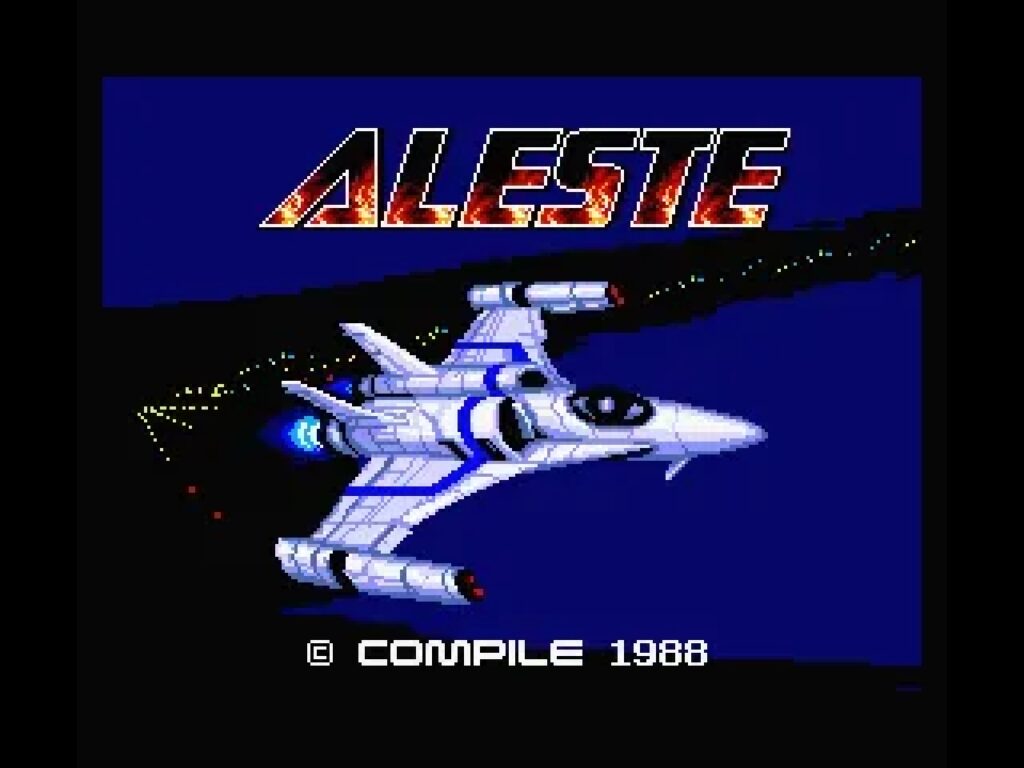
Every great shooter tradition has an address, and the MSX’s is Compile. The Hiroshima studio had already bent the genre’s rules with Zanac; in 1988, Aleste took that inheritance to the MSX2 and produced the machine’s definitive vertical scroller — a game so complete in its systems that its descendants (M.U.S.H.A., Robo Aleste, and a small army of sequels and ports) would spend a decade exploring its consequences. If you own one MSX shooter, the argument starts here.
At a glance: Compile, 1988 · MSX2 · Vertical shooter · The Zanac succession
Weapons Upon Weapons
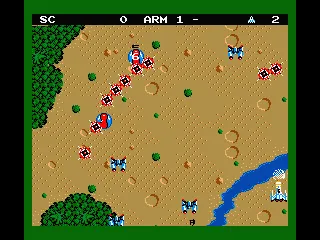
Aleste’s soul is its armory. Eight weapon systems — from piercing lasers to orbiting defenses to the beloved wide shot — each power up through levels of escalating absurdity, collected from numbered chips dropped by destroyed carriers. The genius is the layering: your main shot evolves as you feed it, support options multiply your coverage, and the screen fills with a density of your own firepower that makes each round feel like conducting an orchestra of destruction. Compile understood that a shooter’s deepest pleasure is not dodging but growing — the arc from popgun to flying fortress — and Aleste tunes that arc to perfection across its rounds.
Speed, Density, Fairness
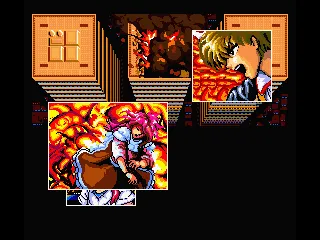
The MSX2 was not a natural shooter machine — its video hardware had opinions about sprites and scrolling that Compile’s programmers simply refused to accept. The result scrolls with a smoothness that still surprises, at a pace that escalates round by round, throwing formations that test positioning rather than memorized choreography. Enemy fire is dense but readable; your ship’s hitbox is honest; the difficulty curve respects the weapons it gives you. And between rounds, the game does something few shooters bothered with in 1988: it tells a story, with character art and a plot about a planet’s last defense, giving the carnage a face.
The Series It Started
Aleste’s success echoes: sequels on the MSX2 itself, the celebrated Mega Drive reinvention as M.U.S.H.A., the Mega CD’s Robo Aleste, and revivals into the modern era. Returning to the original clarifies why — the formula’s foundations here are complete, not embryonic. The weapon choreography, the chip economy, the pacing, the presentation: everything later games refined is present at strength in 1988.
The Compile Craft, Up Close
Slow the game down in your mind and Compile’s craft comes into focus. Enemy waves are composed like phrases — a feint of popcorn craft, a formation that herds you toward the heavy ship, a carrier placed exactly where your chosen weapon is weakest — so that positioning, not reflex alone, carries the run. The chip economy is tuned with a miser’s care: power arrives generously enough to build your fortress, but every death’s downgrade is calibrated to hurt precisely in proportion to your carelessness, and rebuilding under fire is the game’s true boss fight. Even the screen’s edges work — Aleste teaches you to live dangerously near the bottom third, where the chips fall and the cowards starve. This is shmup design as an exact science, practiced by the studio that would define the genre’s 16-bit golden age, and it is all here in 1988, on a home computer, wearing a modest name that the initiated pronounce like a password.
A Dynasty in One Cartridge
It is worth tracing the bloodline, because Aleste’s descendants map the shooter genre’s next decade. Aleste 2 pushed the MSX2 further in 1989; M.U.S.H.A. carried the formula to the Mega Drive and immortality; Robo Aleste did the same for the Mega CD; and the name itself — a contraction of “Another Legend of Shooting” in Compile’s cheerful English — became a guarantee. Modern revivals under the Aleste Collection banner have returned the original to legal reach, where it reliably surprises players raised on its grandchildren: the speed is real, the weapons are generous, and the MSX2 original loses almost nothing in the comparison. That is the mark of a foundation stone. Genres are built on games that did not need the future’s permission, and the MSX shelf holds few stones more foundational than this one.
The Rounds, Remembered
Ask Aleste veterans for their testimony and it comes back as geography: the opening round’s gentle fusillade that teaches the chip economy without a word of text; the mid-game escalation where the formations start arguing with each other for control of the screen; the late rounds where your fully-grown arsenal meets a sky that has grown with it, and the game becomes a negotiation between two artillery systems at full stretch. Through all of it runs that peculiar Compile momentum — the sense that the game is less a sequence of levels than a single rising sentence, punctuated by bosses. Aleste also stands as the definitive rebuttal to the lazy claim that the MSX2 was a business machine that played games by accident. In Compile’s hands it was a shooter platform of the first rank, and this cartridge is the proof the prosecution rests on.
Getting Your Hands on It
Practically speaking, Aleste is one of the friendlier classics to acquire in spirit if not in cartridge: its modern collection appearances have kept it legally and easily playable, and emulation treats it kindly. The original MSX2 cartridge, boxed, is a collector’s piece with a collector’s price — the cost of admission to a very beautiful club. Our advice to the merely curious is simple: play it any way you can, on any screen you have. Our advice to the converted is simpler: you already know. The dynasty started here, and the founder has lost none of its authority.
Verdict
The MSX2’s shooter benchmark — a weapon system so good it launched a dynasty, wrapped in speed the hardware had no business delivering.
Eight and a half, and essential. Whether you come for Compile’s craft or the platform’s pride, Aleste is the cartridge that proves the MSX2 could out-shoot the consoles of its day — and look effortless doing it.
For Shooter Players, a Calibration
Place Aleste in the wider shooter timeline and its stature sharpens. It lands between the genre’s arcade adolescence and its 16-bit golden age, and it speaks both languages fluently: the formation choreography of the arcade school, and the growth-and-systems depth that console shooters would make their signature. Players raised on the Mega Drive’s Compile canon will find the DNA unmutated — the same chip economy, the same crescendo architecture — while arcade purists get a game that never confuses density with difficulty. That bilingual fluency is why the cartridge keeps converting visitors: whatever your shooter dialect, Aleste is fluent, and it makes the MSX2 sound fluent too, the PSG score skirling away like the platform had a sound chip worth bragging about. It did. Compile was holding it.
One more practical grace note: Aleste forgives beginners more gracefully than its reputation suggests. The weapon system’s generosity means a struggling player is always one good chip-run from a comeback, and the early rounds teach under low pressure. The mastery ceiling is high; the floor is welcoming. That combination — the same one Zanac’s director pursued by machinery — is the Compile signature at its kindest.
File it, then, between Zanac and M.U.S.H.A. in the family Bible: the moment Compile’s formula achieved its final form. Everything the studio did afterward — and it did wonders — is commentary on the text this cartridge wrote in 1988.