
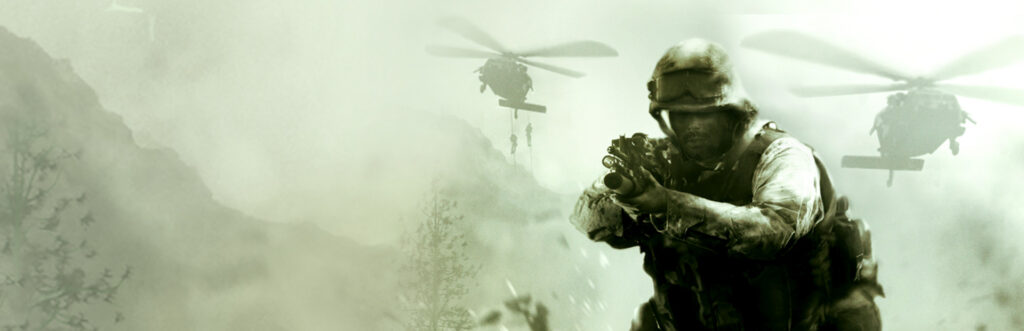
At a glance: Call of Duty 4: Modern Warfare (2007) · Developer: Infinity Ward · Publisher: Activision · Platforms: PC, PlayStation 3, Xbox 360 · Release: 5 November 2007 (NA) · Players: 1 (2–18 online) · Genre: First-person shooter · Score: 9.5/10
Nineteen years ago today — 5 November 2007 — Infinity Ward committed the bravest act of commercial self-sabotage in the genre’s history: it walked away from the Second World War. Call of Duty had been built on that war, three games deep, and the Second World War was simply what military shooters were. In its place, Modern Warfare offered the present tense — special forces and Marines, satellite briefings and laser designators, a coup in the Middle East watched through the victim’s own eyes and an old wound smouldering in the ruins of Chernobyl. It became the top-selling game in the world that year, took the Academy of Interactive Arts & Sciences’ Overall Game of the Year, and reset the defaults for every shooter that followed.
The timing makes the gamble clearer. The autumn of 2007 is still argued about as the greatest release season games have ever had: BioShock in August, Halo 3 in September, The Orange Box in October, Crysis a week behind this one. Call of Duty 4 launched into the middle of that pile-up as the fourth entry in a respected but second-tier series — and outsold the lot of them, moving seven million copies by January and nearly sixteen million by 2013. Something in it connected at a depth the competition couldn’t match. This is a review of the game that did it, and of how completely it still holds up.
Why Call of Duty 4: Modern Warfare Left the War Behind
The modern setting was not a skin. Infinity Ward spent two years building the game on a new engine, the IW 3.0, tuned to run at sixty frames per second on consoles when thirty was the standard — a decision you still feel in your hands today, in the snap of the aim and the tick of the hit-marker. The script, by lead writer Jesse Stern, is structured like a season of television: two theatres, two playable soldiers, one villain pulling the strings. And it gave the series its first real character. Captain Price — boonie hat, moustache, Billy Murray’s gravel-dry delivery — walks out of the SAS thread as a man rather than a mission briefing, and the finale’s bridge sequence lands as hard as it does because you have spent the whole game at his shoulder.
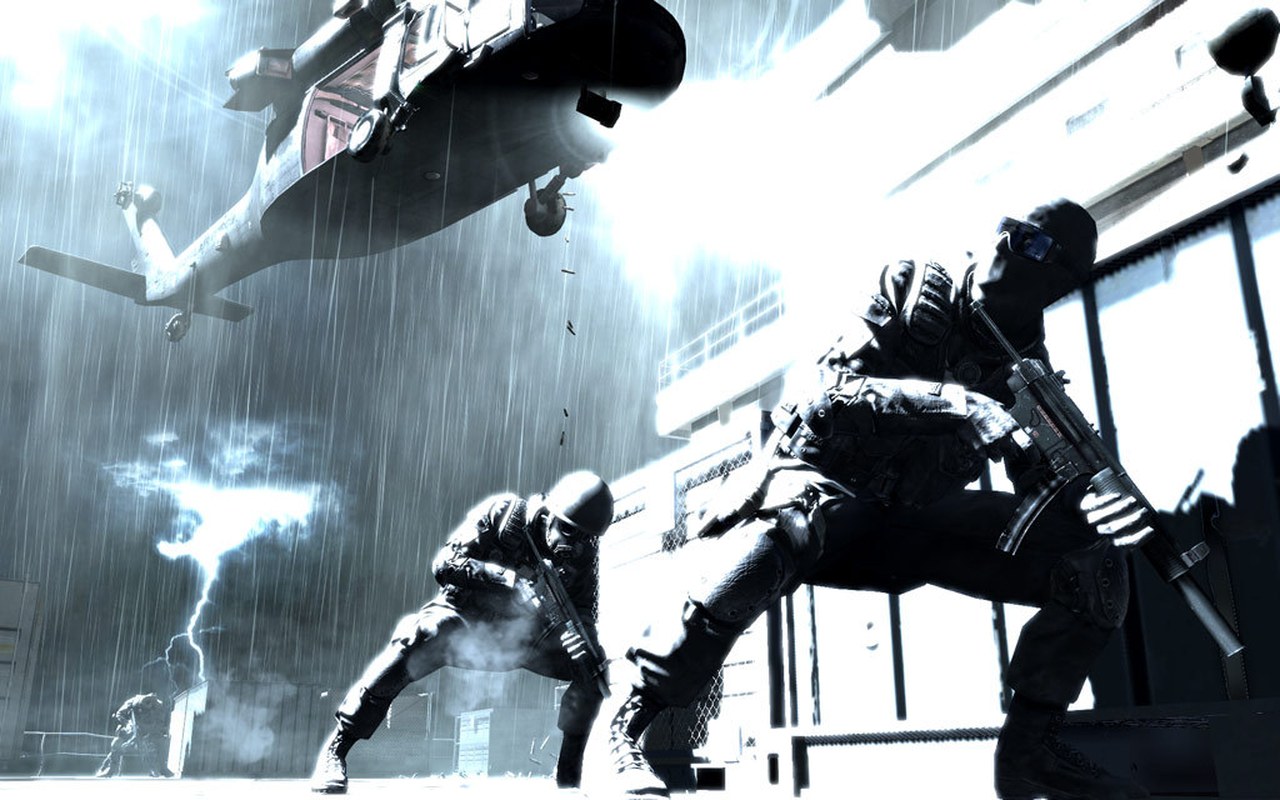
What the modern dress really bought was tone. A Second World War game trades in history’s settled verdicts; Modern Warfare trades in the news — intervention, proxies, televised executions, a nuclear weapon in the hands of a separatist army. It is pulp, certainly, but pulp with a chill of recognition that no Normandy landing could still produce in 2007. The opening makes the point by itself: a brisk training run as the new boy, “Soap” MacTavish, and then a night assault on a rainswept freighter that ends with the ship going down under you. Twenty minutes in, the game has announced everything it intends to be.
A Campaign Built Like a Film
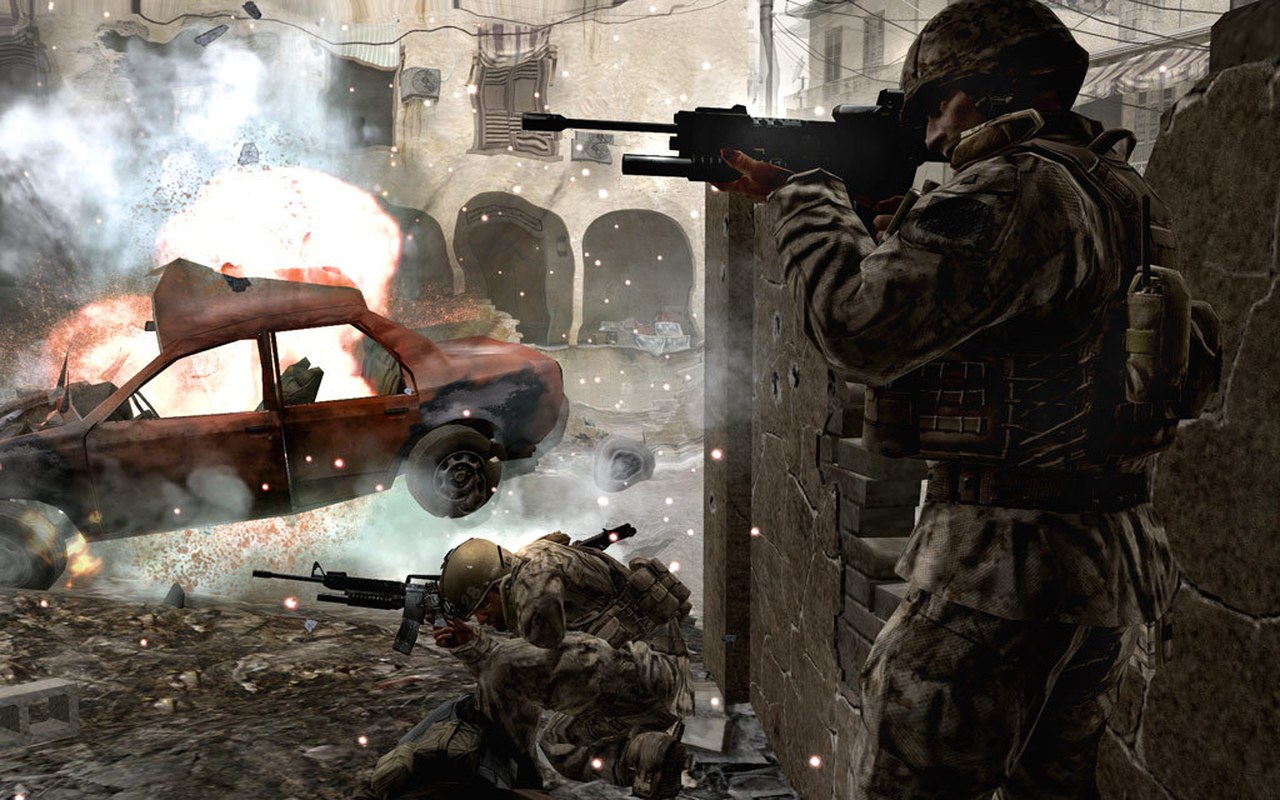
The campaign is famously short — six or seven hours — and famously dense. The structure alternates Soap’s SAS operations (stealth, precision, Price’s dry commentary) with Sergeant Paul Jackson’s Marine deployment (armour, volume, city fighting), and the cutting between them is pure cinema. Nearly every mission contains one staged moment another game would build an entire level around: the sinking ship, the AC-130 gunship mission flown through a thermal camera’s cold green eye, the desperate last stand around a Ferris wheel, the post-credits Mile High Club hostage rescue that became a time-trial rite of passage.
It is a linear game and makes no apology for it; the corridor is the point. Infinity Ward wanted the pacing of an action film, and the trade — freedom for momentum — is why this campaign, of all its contemporaries, is the one people still replay end to end. There is no mission you dread on the way through. And then, at the halfway mark, the film does something no blockbuster would dare.
Shock and Awe
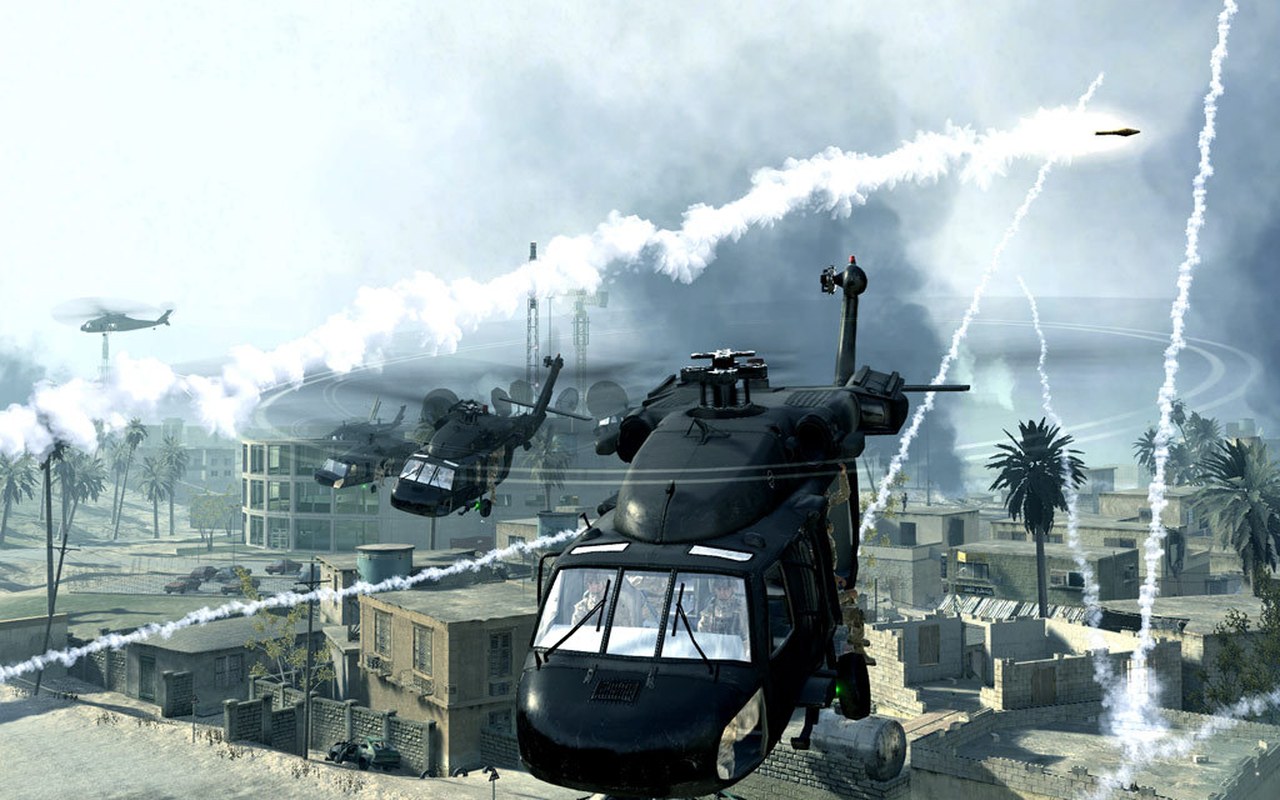
The Marine thread builds to a full-scale assault on Khaled Al-Asad’s capital, and “Shock and Awe” gives you the war at its most triumphant — a helicopter armada, a city taken in a morning. Then intelligence confirms the nuclear device. The advance becomes an evacuation; Jackson’s helicopter turns back for a downed pilot; and as it lifts away, the bomb goes off. What follows is the mission simply titled “Aftermath”: you crawl from the wreck as Jackson and die — slowly, quietly, in the dust — with the mushroom cloud standing over the city and thirty thousand Marines dead in the fiction around you.
Player-character death is a cliche now, not least because this game’s own descendants ran it into the ground. In 2007 it was a genuine shock, and it still works, because the game earned it: it gave Jackson five missions of competence and camaraderie first, then took him away in the least heroic minute of the whole campaign. It remains the boldest narrative move the series has ever made, and the one its imitators have never matched for nerve.
All Ghillied Up
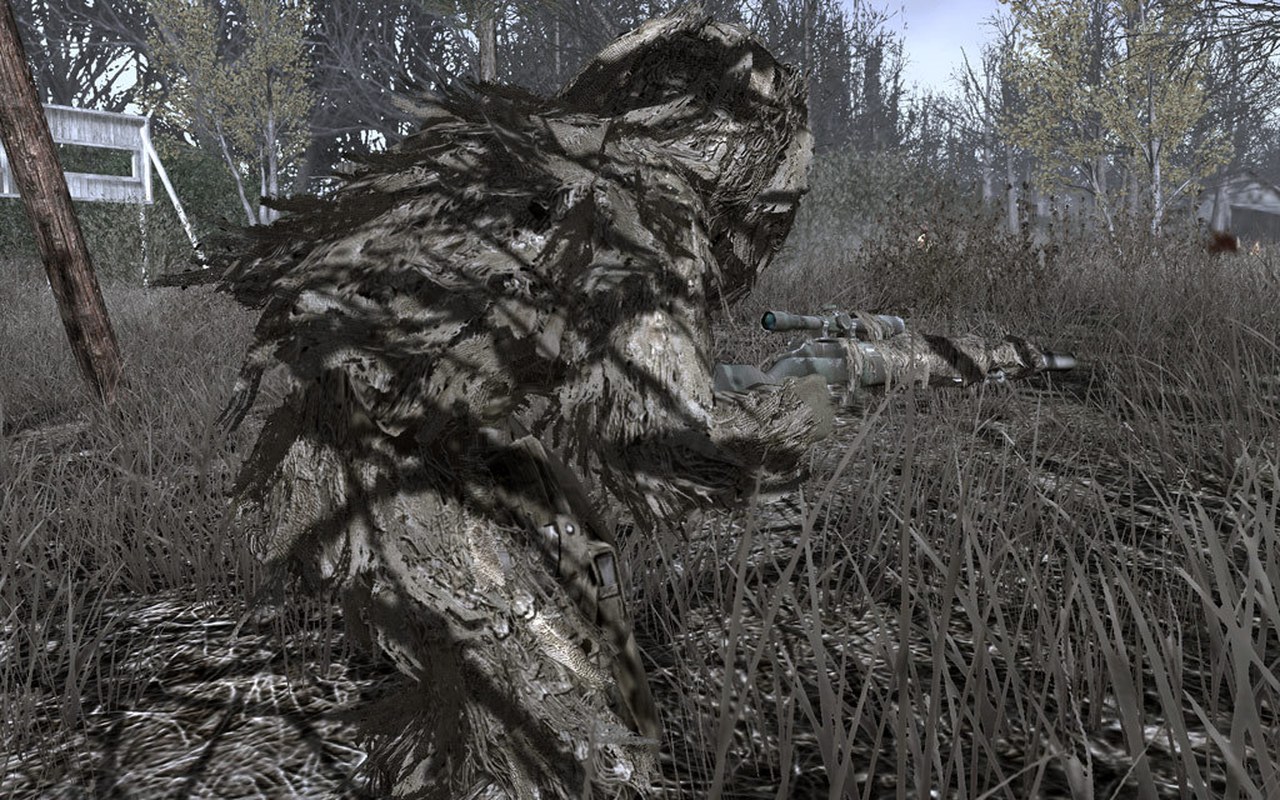
And then there is the flashback. Fifteen years before the main story, a young Lieutenant Price — serving under Captain MacMillan, owner of the driest voice in games — is sent into Pripyat, the city emptied by Chernobyl, to assassinate Imran Zakhaev. “All Ghillied Up” and its companion “One Shot, One Kill” slow the loudest game of its generation to a crawl: two men in ghillie suits crossing an open field as an enemy column passes within arm’s reach, holding still in the grass as boots crunch past, then the long wait on a ruined hotel roof for one clean shot, and the longer run to the extraction at the Ferris wheel.
“Plenty of levels test your aim. All Ghillied Up tests your nerve — two men, a dead city, and an army walking past close enough to touch.”
It is the mission the whole medium keeps citing, regularly named among the greatest levels ever designed, because it inverts everything the series is famous for. MacMillan’s murmur as the armour rolls in — fifty thousand people used to live here; now it’s a ghost town — is the entire game in one line: spectacle with a shadow on it. If you play one hour of Call of Duty 4 in 2026, play this one.
The Multiplayer Template
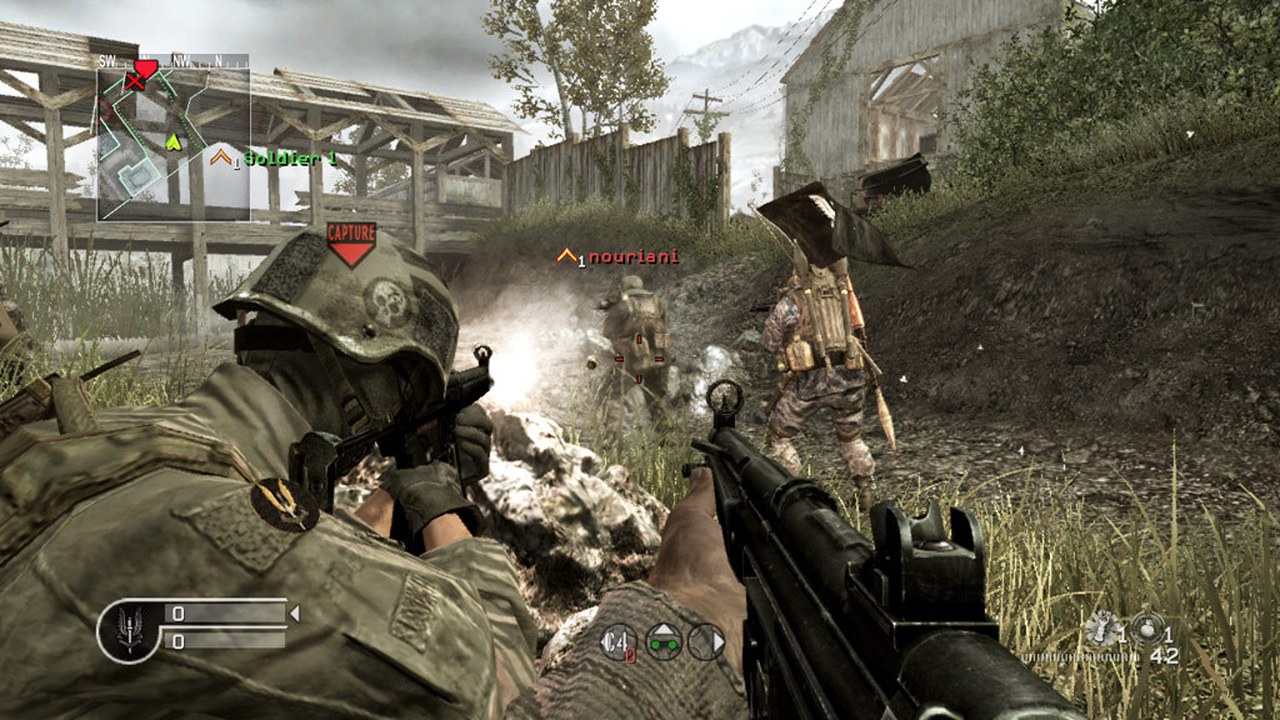
If the campaign made Call of Duty famous, the multiplayer made it permanent. The revolution was not the shooting — though at sixty frames a second the shooting felt wonderful — it was the structure wrapped around it. Experience points. Levels. Unlockable weapons, attachments and camouflage. Create-a-Class. Perks: Stopping Power, Juggernaut, Last Stand, the still-loathed Martyrdom. Killstreaks at three, five and seven kills — a UAV sweep, an airstrike, an attack helicopter circling the map. And at level 55, Prestige mode: burn the whole armoury down and start again, ten times over, for a badge. Every one of those ideas is load-bearing in the genre today; in November 2007 they arrived in a single game, all at once.
The maps carried it — Crash’s downed helicopter, Backlot’s half-built streets, Crossfire’s long killing street, Shipment’s deranged crate-yard the size of a tennis court. The Variety Map Pack that followed was downloaded a million times in its first nine days, a record for paid downloadable content at the time, and taught the entire industry what a map pack was worth. On PC, dedicated servers and mod tools kept a purist’s version alive for years. Console shooters existed before Modern Warfare. The idea that a console shooter was where you spent your whole year starts here.
Nineteen Years On
The honours list reads like a coronation: a Metacritic score of 94 on both consoles, four Academy of Interactive Arts & Sciences awards including Overall Game of the Year, three BAFTAs including Story and Character for Stern’s script. Everything in the series’ later history flows from this game — the record-shattering sequel, the annual institution Call of Duty became, and a generation later the 2019 reboot that reimagined Price and his world for a new audience. Raven Software’s Modern Warfare Remastered (2016) is the easiest way in today: first sold bundled with Infinite Warfare’s special editions, released standalone the following summer, and still the definitive polish of the original. The 2007 game itself runs beautifully on PC, where its community never actually left.
What surprises on a replay is how little has dated. The set-piece grammar — the breach, the slow-motion doorway, the last-stand extraction — was copied so thoroughly it can feel familiar, until you notice how much better paced the original remains than nearly all of its imitators: six hours, no bloat, every mission built around a different verb. The Second World War games Infinity Ward walked away from are historical documents now. This one still feels like the present tense.
Verdict: 9.5/10. Call of Duty 4: Modern Warfare is the most consequential shooter ever made — a campaign built like a film and paced like a song, containing both the genre’s boldest death and its most celebrated level, attached to a multiplayer framework the entire industry adopted wholesale. Nineteen years on, it is not merely a monument. Mission for mission, it remains the standard that the series — and everybody else — is still measured against.