The Channel F is the easiest historically important console in the world to collect badly and one of the most satisfying to collect well. The library is closed and small — two console variants, 26 numbered Videocarts, a pair of built-in games, a handful of late and European variations and a young homebrew scene — which means a complete, working setup is a finishable project rather than a life’s work. This guide covers the decisions that decide whether the project delights or frustrates: which console to buy, how to judge the all-important controllers, how the cartridges differ between the Fairchild and Zircon eras, what the multicart does to the whole equation, and how to get a clean picture out of a 1976 RF-only machine in 2026.
System I or System II?
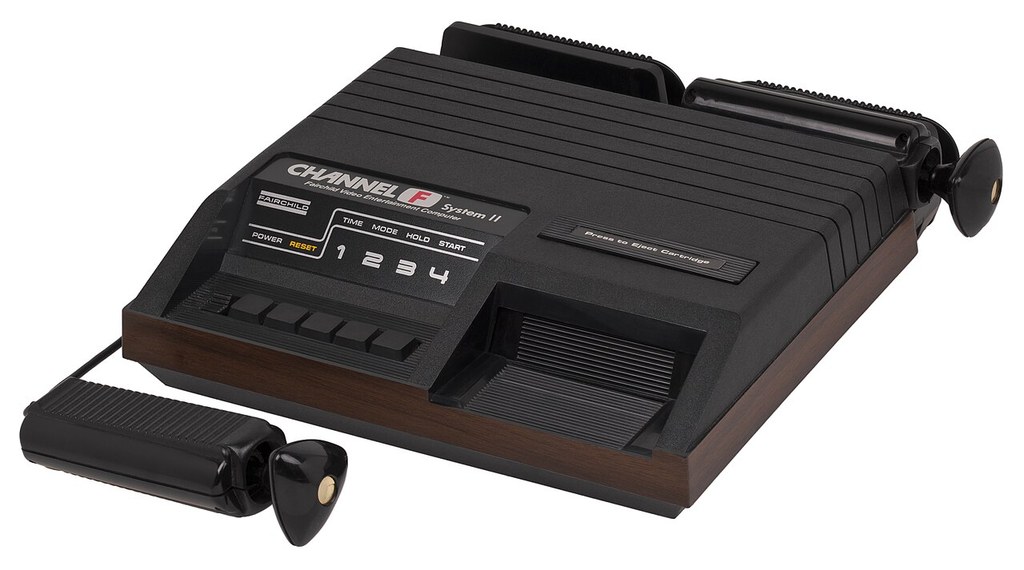
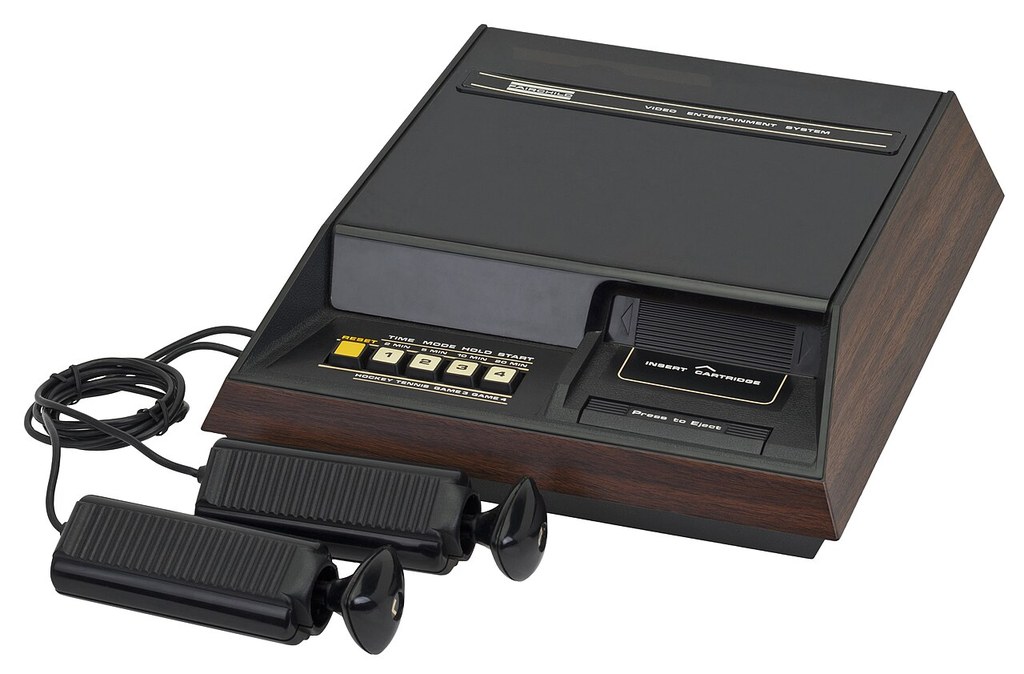
The original 1976 machine — sold first as the Video Entertainment System, then as the Channel F — is the one with the woodgrain-era styling, the smoked lid and the console’s own built-in speaker: sound on a System I comes out of the machine itself, not the television. Its two hand controllers are hard-wired, their cables stowing inside the console under the lid. The System II, designed at Fairchild and sold under Zircon from 1979 (and relaunched in 1982), restyled the case, moved the sound to the TV, and made the controllers detachable. As a playing proposition the System II is the more practical machine — TV audio, replaceable controllers, a less fragile presentation. As a historical object the System I is unbeatable: it is the actual first cartridge console in its actual first form. Most collectors who play their machines end up preferring a System II on the shelf that gets used, and many own both. European variants — SABA’s Videoplay in Germany, Luxor in Sweden, Grandstand in the UK — run the same software family in regional dress and are a legitimate, often cheaper route to working hardware, provided the RF standard matches your television’s expectations.
The controllers are the console
Repeat the collector’s mantra until it bores you: a Channel F is worth what its controllers are worth. The hand controllers — eight-way stick, twist, and push-pull plunger in one knob — are the machine’s interface to every game it plays, and they are now fifty-year-old mechanisms. Test all three axes on both sticks before money changes hands: the stick should register all directions cleanly, the twist should turn smoothly through its range without dead zones or crackling jumps (a worn potentiometer makes Baseball’s pitching and Bowling’s curve unplayable), and the plunger should travel and return crisply. On System I machines, remember the controllers are captive: a bad stick is a repair, not a swap, so price accordingly and factor a specialist’s time. Check cables where they exit the grip, the classic fray point. A console sold with one excellent and one tired controller is a one-player machine with ambitions; negotiate like it.

Buying the cartridges
Videocarts are yellow, 8-track-sized, and numbered on their labels — Fairchild’s collect-them-all instinct is printed on every box. The 21 Fairchild-era carts are the common core of any collection; the Zircon-era releases (Videocarts 19 and 22-26, later pressings and the Casino Poker retitled in some listings as Casino Royale) are scarcer, with the final cartridges — Casino Poker and Alien Invasion among them — typically the priciest of the numbered run. Condition notes that matter: the spring-loaded contact door should still spring (it protects the edge contacts, the cart’s whole electrical life), labels fade toward the spine, and the big box art — Tom Kamifuji’s gloriously seventies sleeves — is where boxed premiums live. Loose common carts remain genuinely affordable; complete-in-box examples of the late Zircon titles are the collection’s summit purchases. Prices move with the retro market’s weather, so treat any figure — ours included — as a snapshot: as a 2026 orientation, expect working consoles to trade in the low hundreds of dollars depending on variant and controller health, common loose Videocarts in the price-of-lunch range, and the boxed late releases at multiples of that. Verify against recent completed sales before any significant purchase; this market is thin enough that a single auction can mislead.
The multicart changes everything
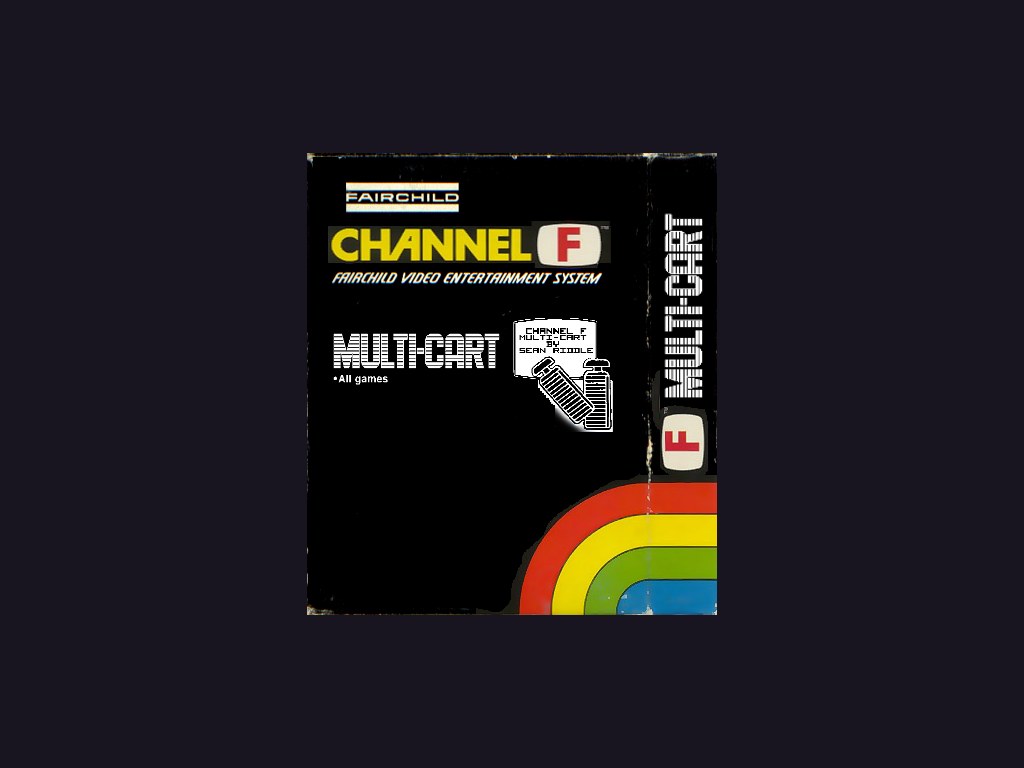
The community-built Channel F Multi-Cart — the Sean Riddle design covered in our homebrew feature — places the library, homebrew releases included, on a single modern cartridge. For players, it collapses the collecting question: one purchase, every game, no fifty-year-old edge connectors between you and Videocart-25. For collectors, it splits the hobby cleanly in two, which is healthy: play on the multicart, collect the originals as objects, and never again pay a scarcity premium just to experience a game. Our recommendation for newcomers is exactly that sequence — console, multicart, then the original cartridges that earn shelf space as you fall for them. The homebrew Pac-Man, released as an unofficial Videocart-27 with box and booklet, is the one modern physical release most collectors agree belongs beside the originals.
RF video in 2026

The Channel F speaks one video language: RF, on VHF channels 3 or 4, through the switchbox arrangement of its era. In 2026 you have three honest routes. The simplest is a period or modern CRT television with an analogue tuner — the picture the machine was designed for, RF haze and all, connected via a coaxial F-type adapter in place of the old twin-lead switchbox. The second is a modern display with a legacy analogue tuner still aboard, or an external tuner/demodulator feeding HDMI — workable, with the flat panel’s usual impatience for 240-line signals. The third is modification: a composite video mod for the Channel F is documented in the community’s VES Wiki resources, and a well-executed mod transforms usability on modern screens — but it is irreversible surgery on a historical artefact, and our standing advice is to mod a second, cosmetically tired machine rather than a pristine one, or not at all. Whichever route you choose, judge a prospective purchase’s picture before paying collector money: weak RF output is the System I’s most common age-related complaint after tired controllers.
Emulation, documentation and homework
Before any purchase, do the free part of the hobby first. The Channel F is thoroughly documented: the community’s VES Wiki holds hardware references, cartridge data and modification guides; the platform is emulated accurately (MAME’s driver and the Libretro FreeChaF core are the usual routes); and the full library can be sampled legally and conveniently through the archive ecosystem before a dollar moves. This matters commercially as much as culturally — an afternoon with the library tells you whether you are a System I romantic or a System II pragmatist, whether the Zircon titles justify their premiums to you, and whether RF softness on your television is charm or dealbreaker. It also arms you against the market’s one real vice, which is nostalgia pricing untethered from condition: in a thin market, the same console can list at three prices in a month, and the buyer who has done the homework is the one who knows which of the three listings has the healthy twist potentiometers. Join the community’s forums and sales channels, read recent completed sales rather than asking prices, and let your first purchase be the modest one — a working console with honest controllers teaches more than a boxed shelf-piece, and the hobby’s whole history, uniquely among the major platforms, can hang on a single shelf beside it when the collecting bug finishes biting.
What to pay, honestly hedged
Because readers reasonably ask for numbers, here is the honest version, with the hedge stated first: the Channel F market is thin, condition-dominated and regionally variable, so the ranges below are orientation for 2026, not quotations — always close a significant purchase against several recent completed sales. Working System I consoles with both controllers healthy commonly change hands in the low-to-mid hundreds of dollars; System II machines sit in a similar band, sometimes a little lower, sometimes higher when boxed. A console with one dead controller axis should be priced as a project, not a player. Loose common Fairchild-era Videocarts remain inexpensive — think lunch money rather than dinner — while boxed examples multiply quickly, and the late Zircon cartridges (Checkers, Slot Machine, Galactic Space Wars, Pro-Football, Casino Poker and Alien Invasion) carry the library’s real premiums, with complete Casino Poker and Alien Invasion at the top of the numbered tree. The homebrew Pac-Man and the Multi-Cart price as modern limited-run hardware rather than antiques, and are worth their money to players precisely because they end the need to pay antique prices for play. Buy the best controllers you can find, the rest in any order you like, and keep the receipts: in a market this small, provenance is a feature.
European and licensed variants
Do not overlook the licensed machines while hunting. Fairchild’s design was sold in Germany as the SABA Videoplay, in Sweden under Luxor, and in Britain under Grandstand, with localised touches — SABA’s edition of the Hangman cartridge even carried a German word list. These variants widen the pool of working hardware considerably, sometimes at gentler prices than the American badges command, and their cartridges are family-compatible with the software story this guide covers. Two cautions apply: television standards and RF arrangements differ by market, so confirm the variant suits your display chain before importing; and cosmetic parts and controllers are not always interchangeable between badges, so buy a licensed machine as a complete, tested unit rather than a parts donor for an American one. Judged as playing machines, the European Channel Fs are the same founding hardware in regional dress — and judged as collection pieces, they are the proof that the first cartridge console had a world life, not merely an American one.
The five-check buying list

One: both controllers, all three axes, tested in the built-in Hockey — it exercises stick, plunger and twist in a single free game, which is why the built-ins are the perfect test cartridge. Two: picture and sound — the G? prompt sharp, the beeper (System I) or TV audio (System II) clear. Three: the cartridge slot and eject mechanism cycling a Videocart smoothly, contacts clean, the cart’s door springing. Four: the keypad buttons — Reset, Hold (the first pause button in home gaming, and it should demonstrably hold the built-ins) and the game-select keys — all registering. Five: completeness priced honestly — box, manual, overlays of paperwork matter to value far more than to play; know which of the two you are buying. The Channel F rewards this diligence because its failure modes are concentrated in exactly the parts this list tests, and because a good example is a complete history of the cartridge era in one woodgrain box: 1976’s machine, 26 cartridges, and the founding idea of them all — that the next game is always one slot away. Happy hunting; mind the twist.