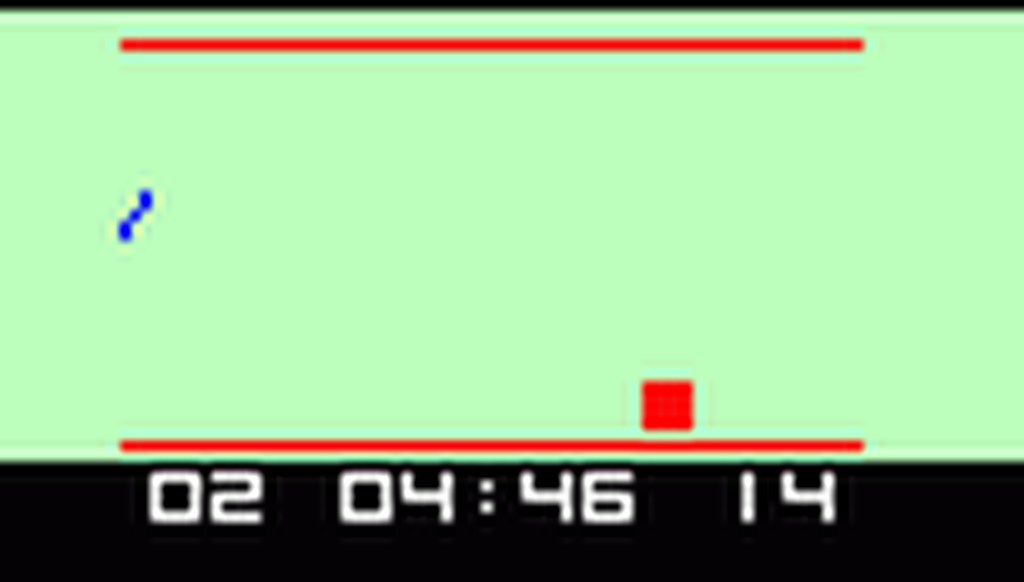
The Channel F’s famous cartridges earn their fame honestly — Baseball, Casino Poker, Video Whizball and the rest have their own reviews on this shelf. But a library of 26 cartridges and two built-ins always hides a second shelf: the oddities, the quiet experiments and the games whose best ideas were filed under numbers nobody quotes. This list is that second shelf — nine deep cuts drawn from the Videocarts we have not reviewed individually, spanning tank duels, parlour classics, a slot machine praised for its looks, the two most abused pieces of educational software in console history, and a six-a-side American football game whose teams are drawn as letters and squares. None of them needs the word “gem” to be inflated: on a machine this small, an interesting idea was the precious mineral, and these nine are full of them.
Desert Fox (Videocart-2, 1976)
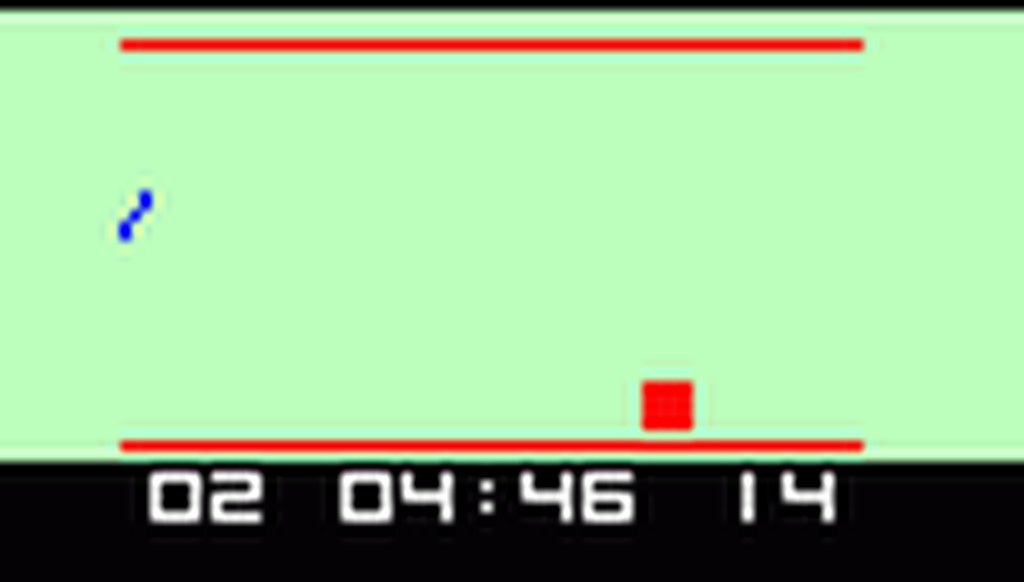
Fairchild’s second cartridge paired the recycled Shooting Gallery with something far better: a competitive tank duel in the spirit of Atari’s Combat, played across open desert with the Channel F’s controllers doing what they were designed to do. Video magazine’s testers in 1978 called Desert Fox “challenging” and scored it 8 out of 10 — one of the highest marks in their survey — and the Videogames Hardware Handbook thought it “made great use of the Fairchild’s unique controllers,” while noting the absence of Combat’s full-screen mazes. The twist-manoeuvred tanks give the duel a flavour its rival lacked: positioning and deflection are physical acts here, performed on the knob, and two players who master the controllers produce a genuinely tactical little war. As the library’s first head-to-head action game, it set the template the duelling cartridges would follow for five years.
Math Quiz I (Videocart-6, 1977)

We include Math Quiz I in the spirit of honest archaeology — and with a warning label its own era wrote. Video magazine’s reviewers scored its addition and subtraction modes 2 out of 10 each, criticising exceptionally poor controls and handling, and Brett Weiss called the cartridge “barebones”: a limited set of problems, presented plainly, on a machine whose text handling should have made it shine brighter. So why is it here? Because it is a founding artefact of educational gaming — a major console staking cartridges on arithmetic drills in May 1977, complete with a manual that suggests pencil-and-paper hangman and mazes as companion activities, as if the console were one station in a homework classroom. The gem is historical, not ludic: this is what “edutainment” looked like at the moment of its invention, flaws printed plainly on the record.
Math Quiz II (Videocart-7, 1977)
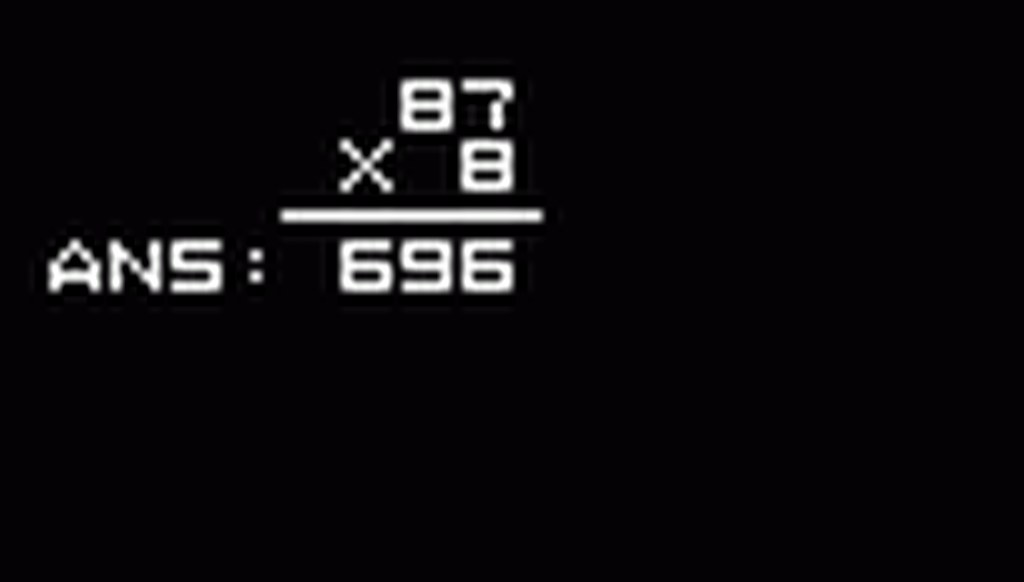
The sequel cartridge swapped the operations — multiplication and division now — and inherited most of the original’s criticisms: too few problems, per Weiss, on both cartridges. But Math Quiz II adds the one feature that redeems the pair and quietly anticipates good educational design: after a wrong answer, the game shows the player how to reach the right one. Worked solutions, in 1977, on a games console — the cartridge stops examining and starts teaching, which makes Videocart-7 the more interesting of the two as an object, whatever their scores said. Play the pair today as a two-part museum exhibit: the first cartridge shows the industry guessing that education was a genre; the second shows it beginning, already, to learn how the genre should behave. Few libraries preserve their own learning curve this clearly.
Backgammon postscript: the doubling question
A collector’s note on Videocart-11 before the list moves on, because its two games illustrate the era’s conversion philosophy better than any other cartridge here. Fairchild’s board-game cartridges did not abridge: where a lesser port might have simplified acey-deucey’s entry rules or trimmed backgammon’s bear-off, Videocart-11 ships both games entire and lets the machine’s patience do the refereeing. That completeness-first instinct — the same instinct that put walks and hit batsmen into Baseball — is the library’s house style, and it is why these parlour cartridges age better than their graphics. Abridged games date; complete rules are permanent. The household that bought Videocart-11 in the winter of 1977 owned, in effect, two board games that could never lose a checker down the sofa. Fifty years on, the sofa has claimed many checkers. The cartridge’s are all still present.
Magic Numbers (Videocart-8, 1977)
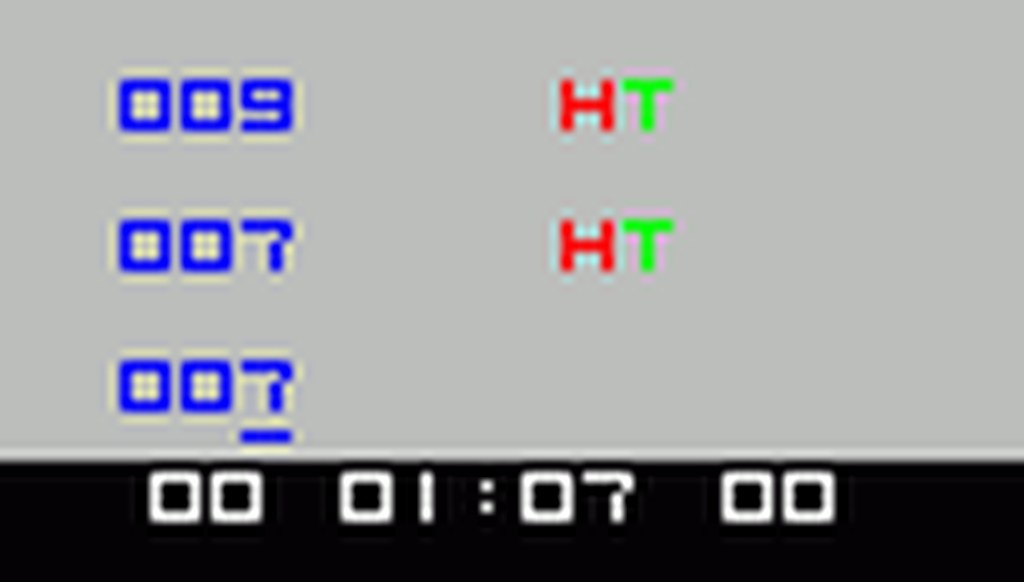
Videocart-8 contains the library’s most extreme split decision. Mind Reader is Mastermind for numbers: guess a hidden number of between two and five digits, with the machine reporting the correctness of each digit per guess and twenty guesses to crack it — a superb deduction engine that Video magazine scored 9 out of 10, calling it tricky but exciting, especially in its timed mode. Its companion, Nim, is the ancient take-away game — remove counters from three stacks, last pick loses — rendered so opaquely that the same reviewers spent over an hour failing to learn it, telephoned Fairchild for help, and formally declined to score it. One cartridge: a 9 and an unscorable. Mind Reader alone earns the listing — it is exactly the thinking game this thinking machine existed for — and Nim earns the story, which every Channel F collector retells and no two tell the same way.
Backgammon / Acey-Deucey (Videocart-11, 1977)
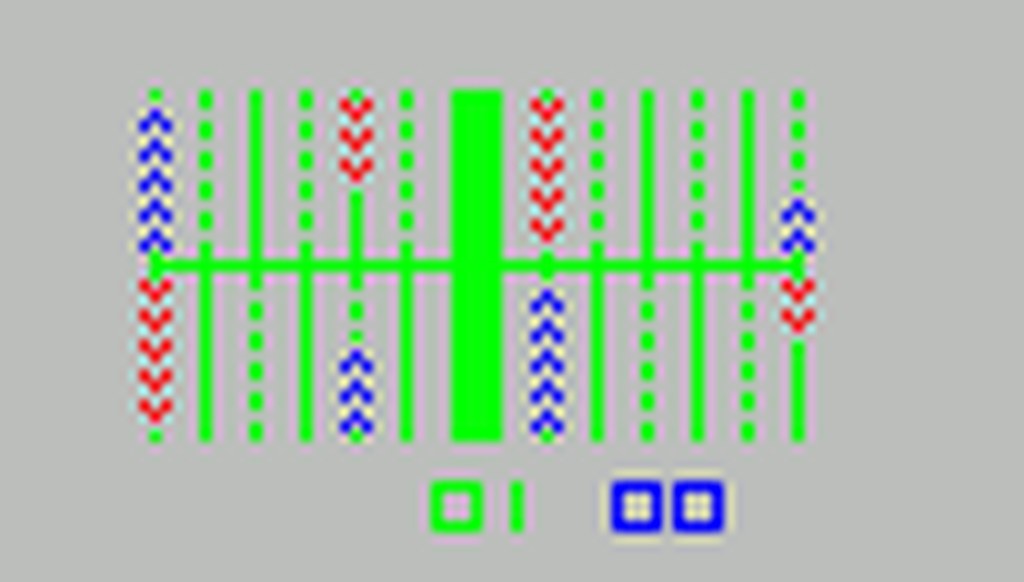
Two venerable board games share Videocart-11: backgammon, the ancient race-and-capture duel, and acey-deucey, its faster, crueller naval-service cousin. Weiss judged the result a “fairly good” simulation — and, notably, a more complete implementation than the version the rival APF-MP1000 received — while conceding the graphics were, in his word, lousy. Forgive the drawing and the substance is the library’s parlour philosophy at its purest: dice, doubling-adjacent decisions and bear-off races, refereed impartially by a machine that never misplaces a checker or disputes a roll. Board-game conversions would become a cartridge-era staple, but in December 1977 this was among the first full implementations of a major board game on any home console, and it plays its games entire rather than in miniature. An essential cartridge for anyone who believes the Channel F’s brain was its best feature.
Memory Match (Videocart-15, 1978)

Concentration — the card game of face-down pairs and remembered positions — seems a modest proposition until you count the cards: Memory Match lays out forty of them, the full grid filling the framebuffer, and lets players take turns flipping pairs, matched cards vanishing and mismatches flipping back into the shared memory of everyone watching. Weiss praised the interface and the convenience of the computer’s scoring, and both praises identify the cartridge’s quiet sophistication: forty cards is a lot of state for a 1978 machine to track, reveal, conceal and score without error, and the game turns that bookkeeping into a genuine parlour contest where the sharpest memory at the table wins. It is the Channel F’s display doing what it does best — a whole game’s information, held perfectly, in plain sight and deliberate concealment at once.
Checkers (Videocart-19, 1980)
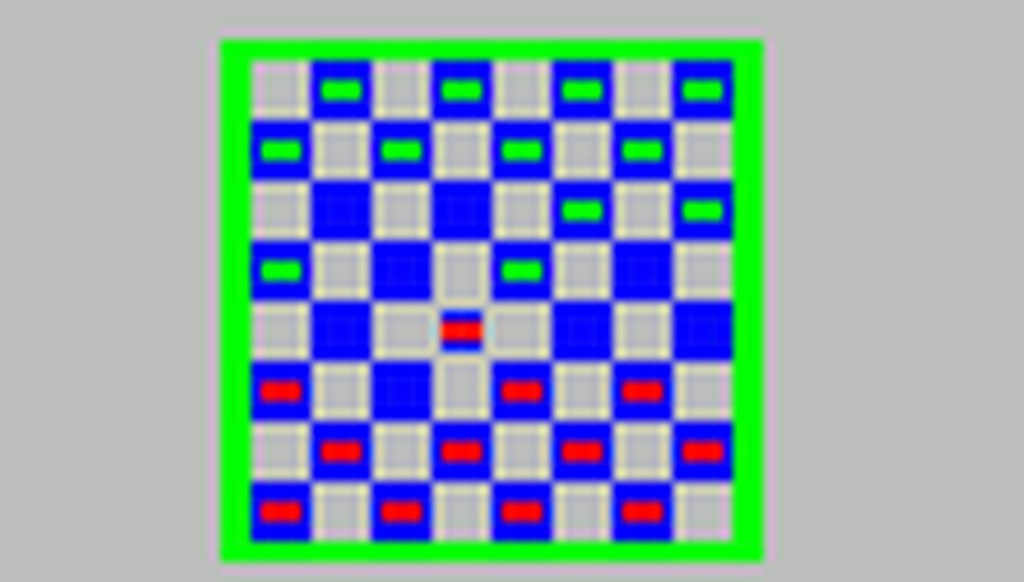
Zircon’s era produced the library’s most solitary board game: Checkers, a full implementation of draughts — twelve pieces a side, diagonal captures by hopping — offered exclusively as a one-player game against the computer. A CPU opponent in a board game was still a novelty worth the cartridge in August 1980, and Weiss found the basics recreated well, docked for “overly simplistic graphics and annoying sound effects.” The interest here is partly the software and partly the context: late Zircon cartridges like this one are among the scarcer Videocarts in today’s market, and Checkers represents the platform’s endgame philosophy — established games, computer-refereed and computer-opposed, for an audience the company was determined to keep serving after the arcade boom had moved elsewhere. As a game it is honest draughts. As an artefact it is the library’s twilight, thinking quietly to the end.
Slot Machine (Videocart-22, 1980)

A slot machine is the one casino device that needs no opponent, no strategy and no apology — and Zircon’s version turns out to be one of the best-looking cartridges on the system. Video magazine’s Arcade Alley column, reviewing it in 1982, described graphics “almost on par with those of the Intellivision,” and Weiss called it “one of the better looking Channel F titles” outright — remarkable praise for a 1976 framebuffer competing in 1982’s marketplace. The design adds one real decision: after setting the bet, you may let the reels stop on their own timer, or stop each reel independently, taking the slender thread of control that slot players have always craved. It is a small game wearing its presentation with unusual pride, and the surviving critics agreed: of all the library’s minor cartridges, this is the one that punches above its machine.
Pro-Football (Videocart-24, 1980)
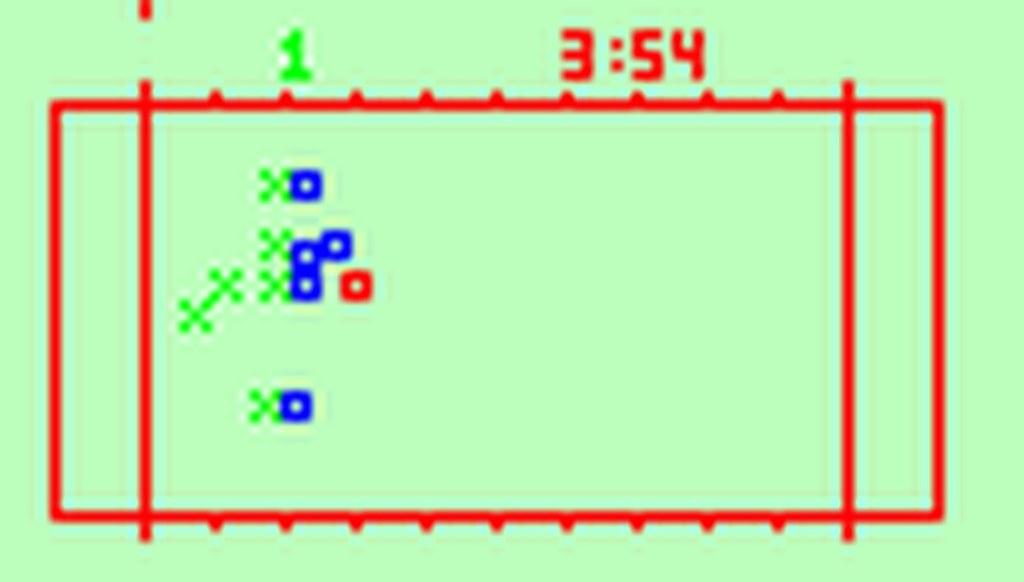
The closing entry is the library’s most ambitious sports diagram: six-a-side American football in which the offence is drawn as X’s, the defence as squares, each team chooses from eight plays, and four downs decide whether the ball reaches the endzone inside a sixteen-minute game. Electronic Games, in 1981, thought the gameplay decent; Video Games magazine was cooler, calling the inclusion of the Notre Dame fight song and “On Wisconsin!” a “feeble attempt” at atmosphere. Both miss the cartridge’s strange charm, which is that of a coach’s chalkboard come alive — football reduced to its tactical notation, the X’s and O’s (well, squares) that the sport’s own strategists draw, made playable on the one console whose display was a chalkboard by nature. It had been planned as early as 1978, when Fairchild’s brochures listed a Pro-Football among the stillborn Keyboard Videocarts; that it finally shipped in 1980, under Zircon, completes one of the library’s longest journeys from promise to cartridge.
Nine cartridges, then, that the highlight reels skip: a tank duel with an 8 out of 10, a deduction game with a 9, a board-game pair, a slot machine praised against the Intellivision, a football game drawn in the sport’s own notation, and two arithmetic cartridges preserved for their honesty about how educational gaming began. The Channel F’s library is small enough to know entire, and that is its final generosity as a collecting proposition: the deep cuts are not filler between masterpieces. They are the rest of the story — and on this machine, the rest of the story is always worth the cartridge slot.
A final word on method, for readers assembling the set: every cartridge on this list was excluded from our individual review shelf by design, not by quality — the gems format exists precisely for the games whose stories are better told in company. Several of them, Desert Fox and Mind Reader above all, carry contemporary scores that would flatter cartridges we scored in the sevens elsewhere in this package; the difference is depth of material, not merit, and a collector prioritising by critical history alone would buy Videocart-2 and Videocart-8 before half the library. That is the last pleasure of a 26-game library: the rankings dissolve, the deep cuts surface, and the whole catalogue — masterpieces, experiments, arithmetic drills and all — fits in one box, in one winter of evenings, with something interesting left to say about every single yellow cartridge in it.