
Sixteen kilobytes. That’s all Powerglove had to live in — and in September 2014 it used them to do something no C64 game had done before: launch on a proper cartridge and, on the very same day, as a free download for Windows, Mac and Linux. This site reported the launch in a forty-eight-word stub. The game deserved, and here gets, the full story.
The year is 2230, and humanity has run out of fossil fuels. Two subterranean thermal reactors, buried beneath the polar ice, now supply the world’s energy — until an explosion in the northern reactor cuts the power and silences the engineers and rescue robots stationed there. Your job, in a radiation-shielded suit and armed with the eponymous Powerglove, is to fight through the facility, recover the five control diamonds and bring the reserve generators online, while the reactor’s maintenance robots — seven distinct types of mechanical monster — try to stop you.

Sixteen kilobytes of run ‘n’ gun
Powerglove is the work of Matthias “Lazycow” Bock — code, graphics and design — with a SID soundtrack by Pierre “Cyborgjeff” Martin. It began life in 2013 as an entry in RGCD’s 16KB C64 Cartridge Game Development Competition, where it placed third of fifteen entries, and the constraint is the point: everything in the game — the five levels, the robots, the collectables, the music — had to fit inside sixteen kilobytes of ROM, a fraction of the size of the photograph at the top of this article.
Even in compo form it was a complete little run ‘n’ gun rather than a tech demo, and it came with full NTSC support, game and music running at identical speed on American machines — a courtesy plenty of full-price C64 games never bothered with in the machine’s commercial lifetime.
Some context for that third place, because the RGCD 16K competition was no village fête. RGCD’s annual cartridge contest had become one of the C64 scene’s proving grounds — a hard size limit, a physical format at the end of it, and a field of the scene’s most capable coders all trying to out-cram each other. Tiger Claw, the game given away with the C64 in Pixels book a year later, came out of the same competition’s 2014 running. To place on that podium, in that company, with a game this complete, marked Powerglove out early as more than a compo curio — and the scene agreed, because what happened next is what happens to very few competition entries: the developer kept going.
Nine months of cramming
Most competition games are finished when the results are announced. Powerglove wasn’t. Over the following nine months, Lazycow — in the words of the contemporary coverage — “further optimised, bug fixed, tweaked and crammed in additional levels and features into the tiny 16KB of available ROM space.”
The final version reworks the game around its new five-level map, adds Powerboots and Energy Doors, speeds up the room-to-room transitions that had slowed the compo build, tightens the player controls, adds a map overview display for when the reactor’s corridors blur together, rebalances the difficulty — and adds, at long last and by popular demand, a sound effect for your shots. It is a small masterclass in what a second pass can do when the developer refuses to accept “good enough for a compo.”
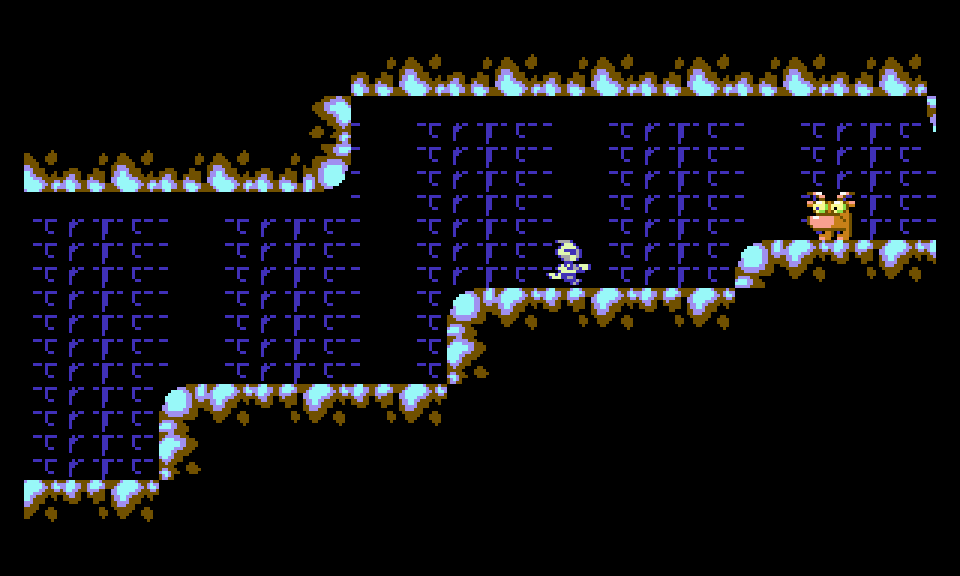
September 2014: the day C64 met day-and-date
The launch RGCD put together in September 2014 is why this game still gets talked about. In physical form, Powerglove appeared as a proper 16KB cartridge, with a twelve-page printed manual and vinyl stickers, in a choice of standard cardboard packaging or a deluxe plastic case with a double-sided A3 poster and map print; the downloadable .CRT image could be had with poster sets for emulator and Ultimate 1541-II users.
And then, the same day, the same game appeared — free — on itch.io for Windows, Linux and Mac OSX. RGCD’s announcement did not undersell it: this made Powerglove, in their words, “the first game to be simultaneously launched on the C64 and modern-day systems since, well, ever!” The ports are faithful rather than remastered — the same tight levels, the same SID soundtrack — with gentle modern touches where they help: parallax scrolling, and an option for “pimped” spritework if you find the authentic chunky originals too crunchy. The title screen says it plainly: “RGCD PC EDITION.” Between the physical cartridge, the .CRT image for real-hardware cartridge solutions, and the free computer ports, there was essentially no way to own a screen in 2014 and not be able to play this game. That was the idea.
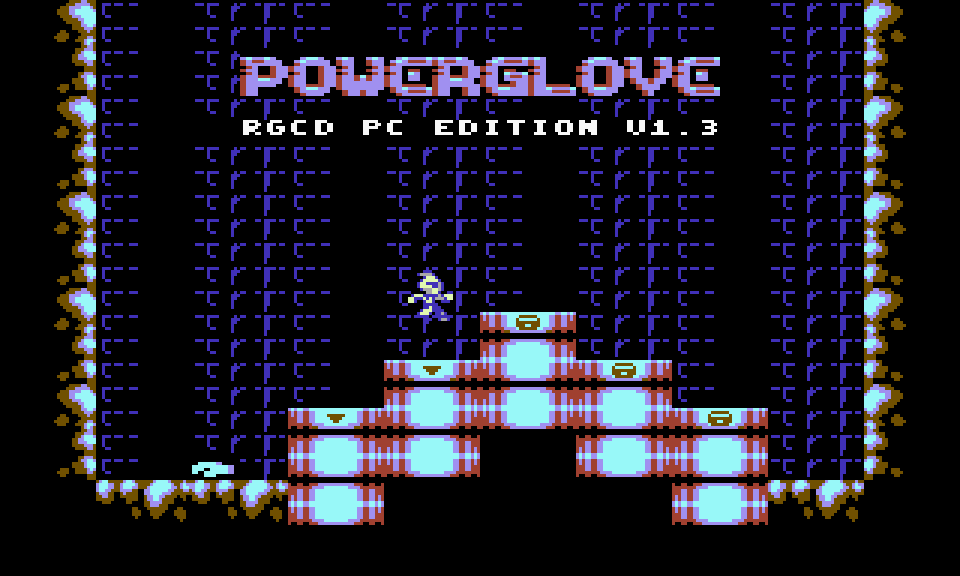
This site’s original stub went out on 14 September 2014, one day after RGCD’s announcement — breathless syndicated boilerplate about “modern era Windows, Macintosh & Linux releases.” For once, the hype undersold it. A hobby-scene cartridge game and its PC port, arriving together, one of them free: in 2014 that was not how retro releases worked. It is very much how they work now, and Powerglove was early.
The glove, reloaded
Lazycow wasn’t done. In February 2016, RGCD announced an Amiga conversion, built from the C64 source on the low-level engine code behind his earlier work on Tubular Worlds — the same code base that also powered his Arya Vaiv and Monsters of Terror — billed at the time as his most ambitious Amiga project yet, with all-new graphics, four-channel music, parallax scrolling and bigger explosions promised. It arrived as Powerglove Reloaded (released in late 2018, with RGCD’s physical edition announced in February 2019) — and “Reloaded” earns its name: six huge maps instead of five, six control diamonds, four bosses, a new Charge Shot, deeper mechanics, and Cyborgjeff back on music duties. Thoughtfully, it also includes a “Classic” mode with the chunky C64 graphics for anyone who prefers the original look.
The physical Amiga edition is the full RGCD treatment: a plastic clam-shell box, an auto-booting CD in a jewel case, a sixteen-page manual, stickers, pin buttons, postcards and an A3 poster/map, with a 3.5″ disk version for purists. The pricing told the scene’s story in miniature: the Amiga download at $2.99, the PC version free or pay-what-you-want — and the C64 original now free to download too, its cartridge still available for collectors. (The same Lazycow, incidentally, built Tiger Claw, the exclusive cartridge that came with the C64 in Pixels book covered elsewhere in this series — the C64 scene is a small world, and he is one of its load-bearing walls.)
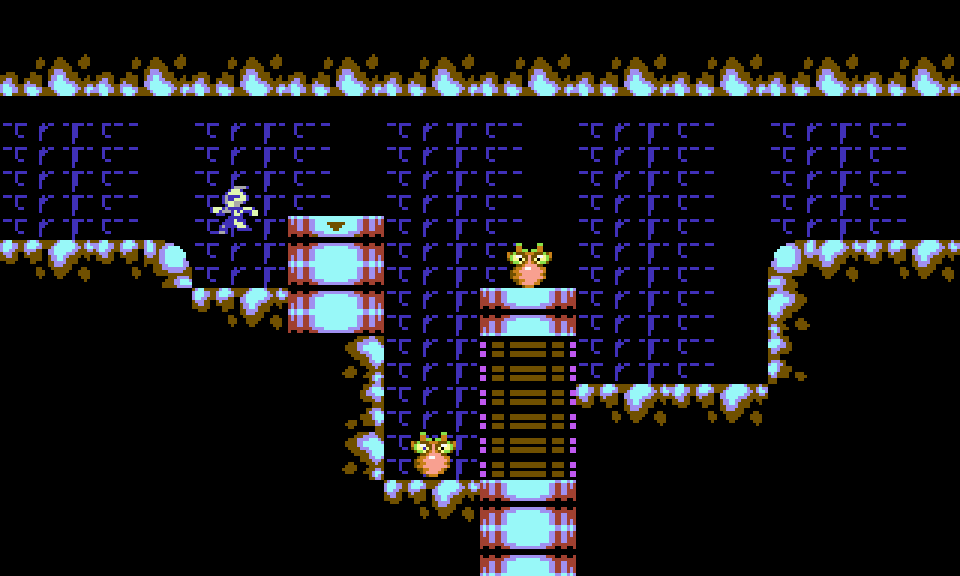
Sixteen kilobytes, still fighting
Powerglove’s afterlife is the quiet triumph of the whole story. The compo version, the final C64 release, the PC/Mac/Linux ports and Reloaded all remain available from RGCD’s itch.io page today, most of them free or pay-what-you-want. A game written to fill sixteen kilobytes in a 2013 hobby competition has now been played, in one form or another, on four generations of machines — and it started, remember, as a bet that the smallest possible canvas could still hold a complete game. It could. It did. The glove fits every machine it’s been offered to.