
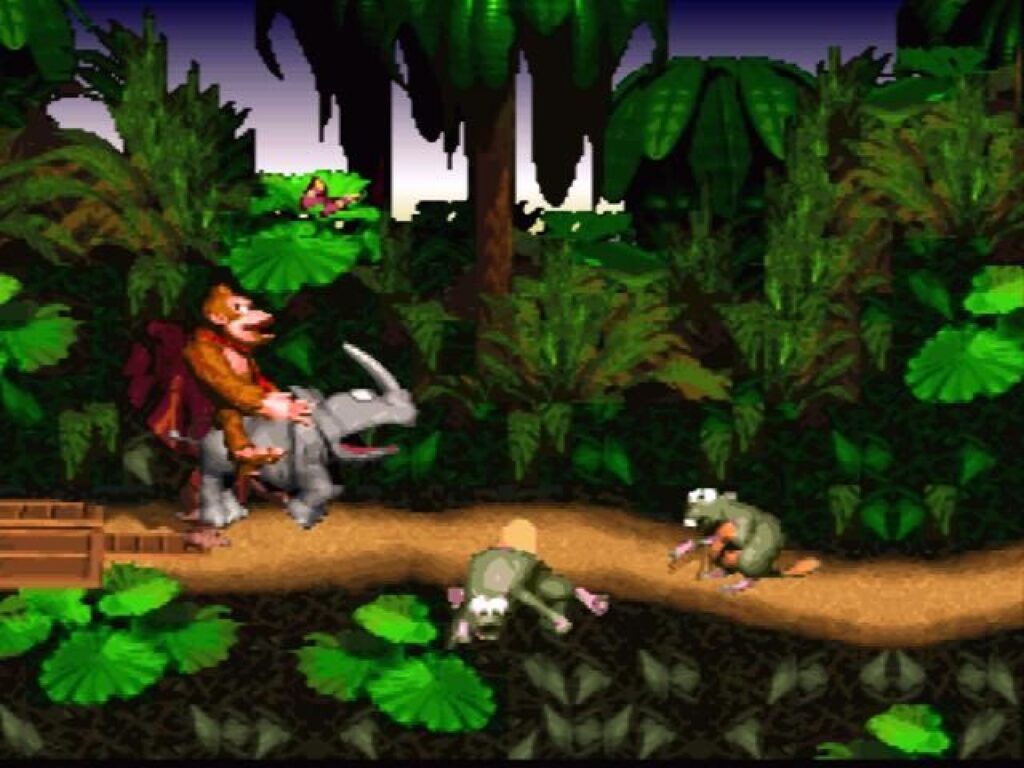
In September 2014, this site published a short, happy note that began with a confession: Doom is one of the author’s favourite games, full stop, every port played, every corridor of Phobos memorised. The occasion for the confession was a piece of news that sounded like a category error. A modder named DooMero had rebuilt Donkey Kong Country, Rare’s side-scrolling SNES masterpiece, inside the Doom engine, not as a first-person shooter wearing a gorilla suit, but as an actual 2D platformer, sprites, music, barrel cannons and all. Twelve years on, the mod, Donkey Kong Country for GZDoom, remains one of the purest demonstrations of what the Doom modding scene is for. This is its story, and the story of the two games it welded together.
A Total Conversion, Not a Reskin
The Doom scene has a term for projects like this: a total conversion, a mod that replaces so much of the host game that only the engine remains. DooMero, a modder already known in the community for a Resident Evil total conversion and later for Mortal Kombat work, built his DKC as a genuine platformer running on GZDoom, the feature-rich Doom source port. The camera sits beside the action, as it does on the SNES. Donkey and Diddy Kong run, roll, jump and get fired from barrel cannons. Kremlings patrol on their original patterns. The sprites, music and environmental art are drawn from across all three SNES Donkey Kong Country games and remixed into new levels rather than copied ones, ten of them in the demo released that September, capped by a boss battle. A practiced long-play of the demo runs about forty-two minutes: this was no one-room tech joke but a small, complete platform game smuggled into a shooter. Its release landed in the middle of a Doom renaissance, with id’s new game teased at QuakeCon that same summer and the classic scene in rude health.
How Do You Platform in Doom?
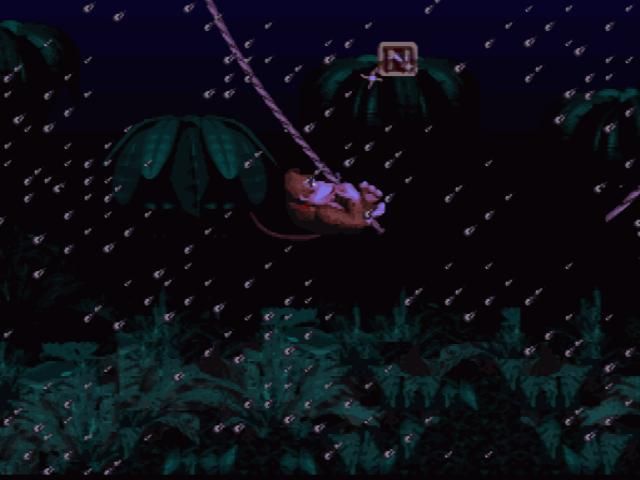
The technical audacity deserves unpacking, because Doom is spectacularly unsuited to the job on paper. Id’s engine renders a 2.5D world of floors and ceilings at fixed heights; the original game cannot even stack one room directly above another. Platforming asks for precisely controlled gravity, coyote-time jumps, moving platforms, a camera that frames a character rather than inhabiting one, and 2D collision behaviour that a first-person engine never needed. GZDoom’s scripting layers, the DECORATE and ACS systems that grew up around the ZDoom family of ports, are what make the trick possible: custom actors with custom physics, a camera divorced from the player and locked to a side view, levels built as shallow 3D stages that read, from that one enforced angle, as pure 2D. The illusion holds because of discipline. Every corridor in the mod is a film set, three-dimensional only where the camera can never see it. Watching the footage, the tells are tiny and delightful: the occasional Doom-ism in a lighting gradient or a texture’s dither, the sense that Hell’s most famous engine is holding its breath and pretending to be a jungle.
Two Miracles of 1994, One Machine
The pairing is more poetic than it first looks, because Donkey Kong Country and Doom were the same miracle performed in opposite directions. Doom, in December 1993, was a PC game faking true 3D on hardware that could not texture-map a floor, selling speed and immersion through sleight of hand. Donkey Kong Country, eleven months later, was a SNES game faking pre-rendered Silicon Graphics workstations on a console that could barely scroll it, selling graphical richness through a different sleight of hand. Both games are compression artefacts of studios, id and Rare, refusing to accept their hardware’s limits. DooMero’s mod collapses the two tricks into one another: Rare’s pre-rendered sprites, digitised from those SGI models, cavorting inside id’s raycast corridors. It should not work. The demo’s forty-two minutes say otherwise, and the games press of September 2014, from Kotaku and Polygon to Destructoid and Nintendo Life, queued up to say so.
Doom as a Platform
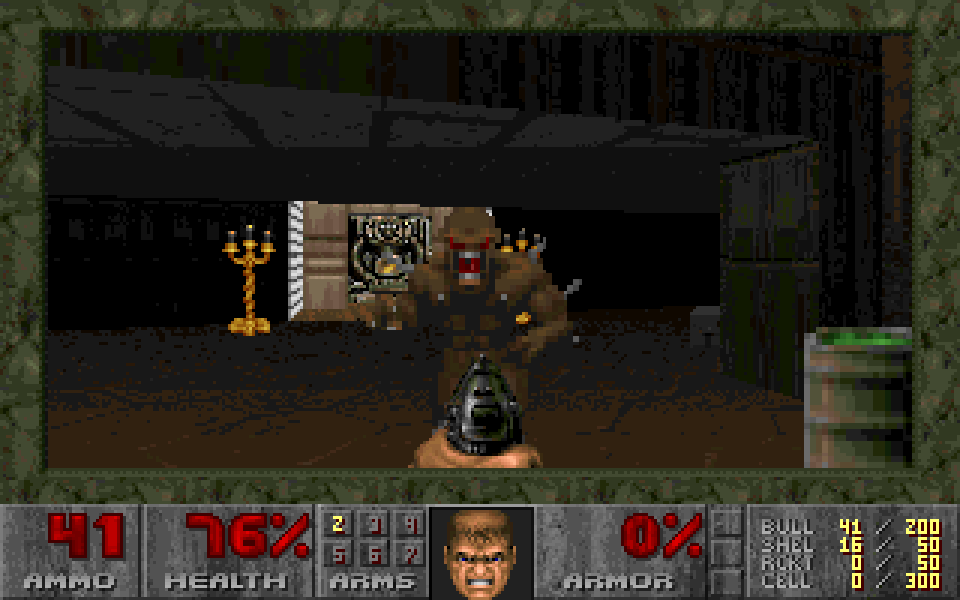
None of this happens without the strangest fact in gaming’s industrial history: id Software gave the engine away. The Doom source code’s release in 1997 turned a hit game into a permanent public workshop, and the source-port ecosystem that followed, ZDoom, GZDoom and their many cousins, spent twenty-five years bolting new capabilities onto a 1993 foundation until the foundation could support nearly anything. The total conversion tradition runs from 1994’s Aliens TC, the mod that proved Doom could become another game entirely, through Batman Doom and Harmony and Adventures of Square, to genre tourists like this one. There is a popular joke that asks whether a device can run Doom. The modding scene’s quieter, better question is what Doom can be made to run: a survival horror game, a fighting game, and, in the case of Sonic Robo Blast 2, a full 3D Sonic platformer that has been in development on a Doom port since 1998 and still updates today. DooMero’s apes joined a distinguished lineage, and added the one thing the lineage lacked: bananas.
The Feel of the Thing
What startles, watching the demo played well, is how much of DKC’s identity survives translation. So much of Rare’s game lives in its physics: the roll that extends into a jump, the weight of a landing, the way a barrel cannon’s arc turns aiming into rhythm. Those are numbers, and numbers port. The mod’s Kong has the right heaviness, its Kremlings die with the right bounce, and its levels understand the original’s grammar of secrets, bonus barrels tucked where curiosity suggests, KONG letters on the risky line, animal buddies waiting in their crates to change the terms of a stage. Even the soundtrack, David Wise’s jungle ambience and aquatics alike, does its eerie work of making a raycast engine feel humid. The wrongness is only ever skin deep, a Doom texture winking through the foliage, and each wink reminds you of the trick being pulled rather than breaking it. Plenty of official ports have understood their source material less faithfully than this free demo understands two games at once.
What Survives
Donkey Kong Country for GZDoom never grew beyond its demo into the full trilogy reimagining its scope implied; DooMero moved on to other projects, as modders do, and the ten levels stand as the finished statement. They are still out there, a download away, needing only GZDoom and a legitimate Doom WAD to run, exactly as they did in 2014, and the ZDoom forum thread that documented the build remains the kind of development diary most commercial studios would never dare publish. And the idea has had an afterlife of its own: the genre-swap total conversion is now a recognised art form in the scene, each new one measured against the elegance of the ape in the engine room. Our original post ended in mid-sentence, ninety words of a Doom fan’s delight, cut off like a level that ran out of map. Consider this the rest of the level. The shooter was a platformer all along. Somebody just had to lock the camera, load the bananas, and prove it.