
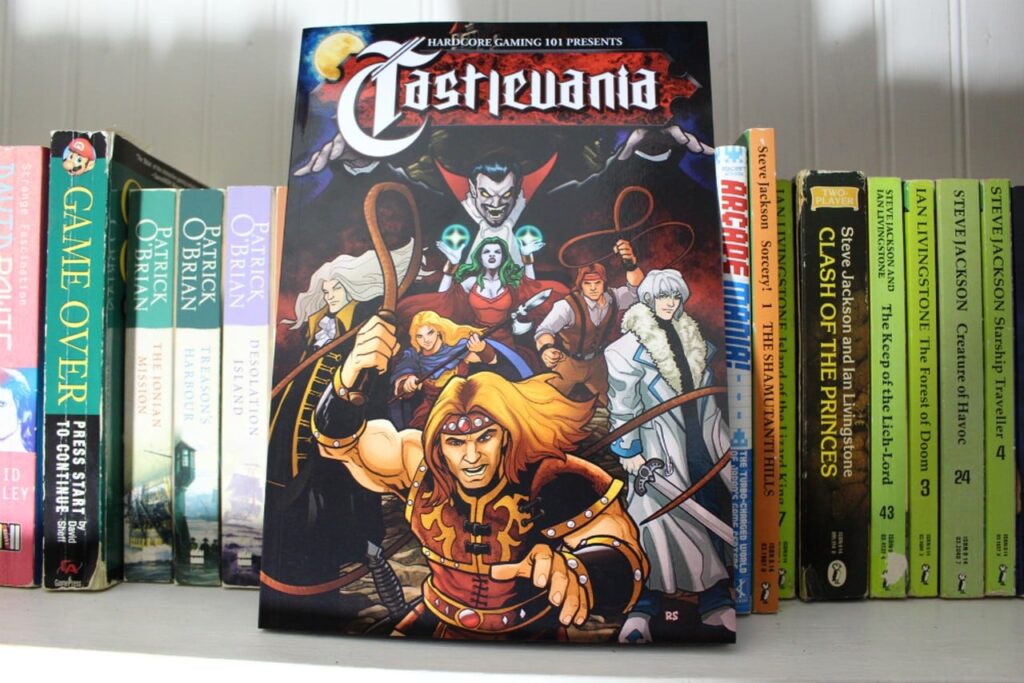
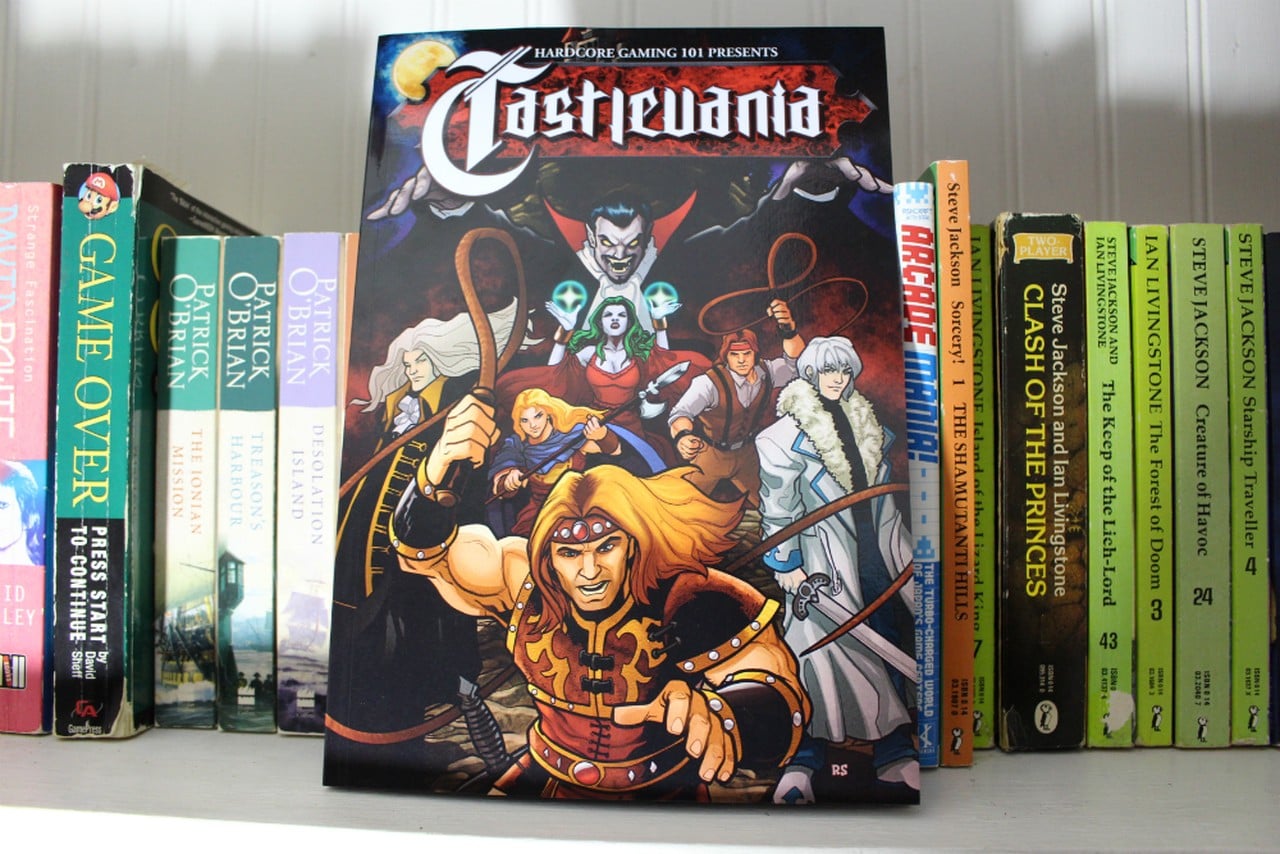
Some series you play. Castlevania you shelve. Konami’s gothic saga — nearly forty years of whip-cracking Belmonts, shape-shifting castles and the greatest soundtrack catalogue in the medium — has inspired a small library of books: guides, art books, comics, manga, even a novelisation with a kid from junior high school written into it. Back in September 2014, this page announced the arrival of the most important of them, Hardcore Gaming 101’s Ultimate Guide to Castlevania. A decade on, that book has a story of its own — including the month Konami tried to make it disappear — and the shelf around it has only grown. Here is the Castlevania collection worth hunting down, in the order to hunt it.
Start Here: The Ultimate Guide
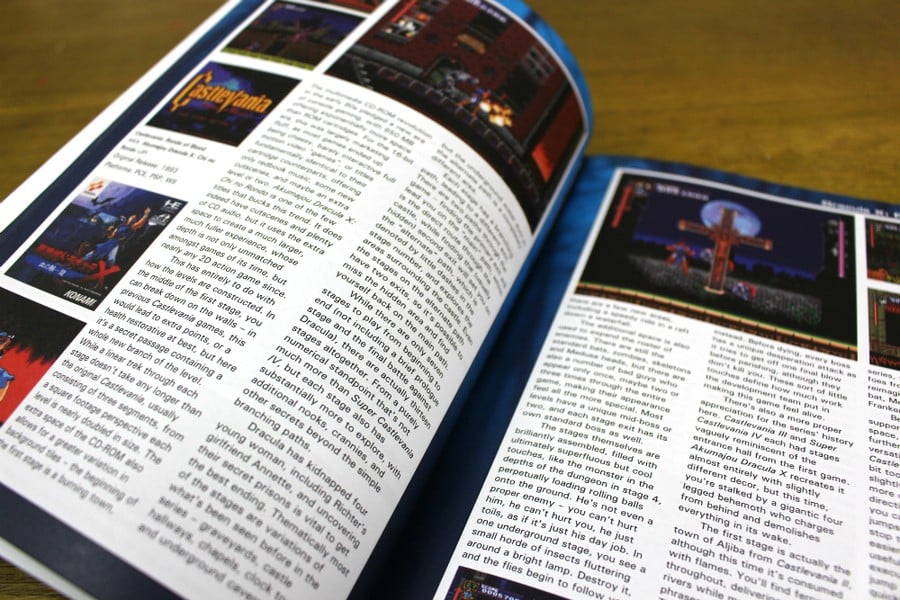
Hardcore Gaming 101 Presents: Castlevania is the rare fan book written by the fan who did the homework first. Kurt Kalata founded The Castlevania Dungeon, the series’ definitive fan site, while still at school, and spent the better part of two decades documenting every corridor of Dracula’s castle before Hardcore Gaming 101 turned that knowledge into print. The book runs 158 full-colour pages and covers more than thirty games — the complete lineage from the 1986 original through Lords of Shadow 2 — with the depth the site was famous for: regional differences between Japanese and Western versions, the spin-offs and obscurities, the soundtrack albums catalogued, and even the notable Castlevania clones that sprang up in the series’ shadow.
It matters that the coverage is critical rather than worshipful. Kalata tells you which entries soar and which merely show up, and the regional-version detective work alone justifies the price — this is a series whose difficulty, graphics and even religious imagery were repeatedly altered between territories, and nobody had ever laid it all out in one place. Released in September 2014 at $25 for the paperback and $6.99 on Kindle, it was received as an instant essential. Two months later, it vanished.
The Book Konami Tried to Bury
In November 2014, at Konami’s request, Hardcore Gaming 101 Presents: Castlevania was pulled from sale. The objection, as Kalata reported it at the time, was that the book was unlicensed — to which his public reply, in essence, was that a work of criticism about a game series doesn’t require the publisher’s permission, any more than a book about a presidency requires the president’s. No lawsuit followed, and the guide eventually found its way back into print and digital sale, but the episode had two lasting effects. Printings from the original run became genuine collector’s items, changing hands at a premium. And the affair crystallised something fans already felt: if you want serious writing about this series, you will mostly have to look beyond its owner. That remains true across the whole shelf below.
Art Worth Framing
For official art, the essential volume is The Art of Castlevania: Lords of Shadow (Titan Books, 2014), a large-format tour of MercurySteam’s reboot trilogy with concept art and commentary on one of the series’ boldest visual reinventions — gothic romanticism rebuilt for the HD era. The Netflix era brought Castlevania: The Art of the Animated Series (Dark Horse, 2021), collecting the production art behind the show that introduced a new generation to Trevor, Sypha and Alucard, and demonstrated how Ayami Kojima’s elegant character designs could be translated into animation. Japan, as ever, went further: a long line of Japanese art books and mooks, and the lavish Castlevania 20th Anniversary portfolio given away with pre-orders of Portrait of Ruin, remain the deep cuts for importers — rarely cheap, never disappointing.
Comics, Manga and One Very Strange Novel
The fiction shelf is smaller and stranger. Castlevania: The Belmont Legacy (IDW, 2005), written by Marc Andreyko with art by E. J. Su, is a five-issue retelling of Christopher Belmont’s Game Boy adventures — the oft-forgotten Belmont finally headlining something, a century after his games. Kou Sasakura’s two-volume manga of Castlevania: Curse of Darkness reached English readers via Tokyopop in 2008, expanding the PS2 game’s story of Hector the devil forgemaster. And then there is the curiosity every collection needs: the Worlds of Power novelisation of Castlevania II: Simon’s Quest (Scholastic, 1990), from the book-packaging series produced by Seth Godin, in which Simon receives assistance from Timothy Bradley, a junior-high gamer sucked into the game world. It departs from the plot, invents characters wholesale, and is utterly of its moment — a paperback time capsule from the era when every NES hit got a novel whether it wanted one or not.
Each format earns its place differently. The comic is the Belmont Legacy’s rehabilitation project: Christopher, saddled with two of the roughest Game Boy entries and endless mockery for his slowness, gets a proper gothic adventure with a wedding, a resurrection and a desecrated family tomb, and comes out of it with more personality than his games ever gave him. The manga plays a longer game, fleshing out the devil forgemasters’ rivalry and the aftermath of Trevor’s era — the connective tissue the PS2 game sketched and the Netflix series would later mine in its own way. Even the Worlds of Power paperback, read today, documents something real about 1990: a moment when Castlevania was so completely part of the Nintendo firmament that Scholastic assumed children would read a novel about it on the bus. The fiction shelf is the smallest of the four, and the one that most rewards completism.
The Working Guides
Before books about Castlevania came books for Castlevania, and the vintage strategy guide has become a collectible genre in its own right. The Nintendo Power generation played the early games with magazine coverage as their lifeline — maps, boss orders, and the occasional merciful password printed in the issues of the day — and the CD era graduated to full Prima and BradyGames volumes, the Symphony of the Night guides among the most thumbed ever printed for the series. These were working documents, written to be destroyed by use at a television’s side, which is precisely why clean copies now command respect: survival was never part of their job description. A serious Castlevania shelf makes room for one or two, less as references — the internet retired them — than as artefacts of how the games were actually played in their time: annotated, dog-eared, and consulted at midnight with the console paused and humming.
The Price of Print
A word on actually acquiring these books, because the Castlevania shelf teaches patience. The HG101 guide’s brush with corporate law made early paperbacks the ones to watch: they surface second-hand at fair prices often enough that no hunter should pay panic money, and the Kindle edition keeps the text itself permanently in reach. Hardcore Gaming 101’s Patreon also bundles digital editions of its books for subscribers at modest tiers, which remains the cheapest legitimate route into the whole catalogue — worth knowing, because the same imprint’s guides to other series have a way of becoming shelf-mates. The IDW comic and the Worlds of Power novelisation obey the usual laws of licensed ephemera: printed for a moment, remaindered, then quietly scarce, with prices that spike whenever the series returns to the news — a remake, a new season of the show — and soften again in the quiet years. Buy in the quiet years. The Japanese art books are the exception that never softens; treat them as you would any import grail, verify the edition, and expect to pay for certainty.
Building the Shelf
Start with the anchor: Kalata’s guide is the one indispensable volume, the reference you will actually reach for. Add the Lords of Shadow art book for the reboot’s visual ambition and the animated series art book for its modern afterlife. Chase The Belmont Legacy and the Simon’s Quest novelisation when prices are kind — both surface regularly in the second-hand market, both reward the hunt — and treat the Japanese art books as the endgame, the grails for a collection that has everything else. It is a fittingly gothic little library for a series about a castle that rearranges itself every hundred years: no two collectors’ shelves are quite alike, and there is always one more room to find. The games, of course, come first — but a series this rich deserves its commentary, and for once, the commentary is worthy of it.
Keep reading: The Only Way Is Up: Why Castlevania’s Staircases Still Terrify · This Day in Gaming History