
At a glance — Game: Conker’s Bad Fur Day · Developer: Rare · Publisher: Rare (North America), THQ (Europe) · Original release: March 5, 2001 (North America) · Original platforms: Nintendo 64 · Genre: Platform, action-adventure · Director: Chris Seavor · Composer: Robin Beanland
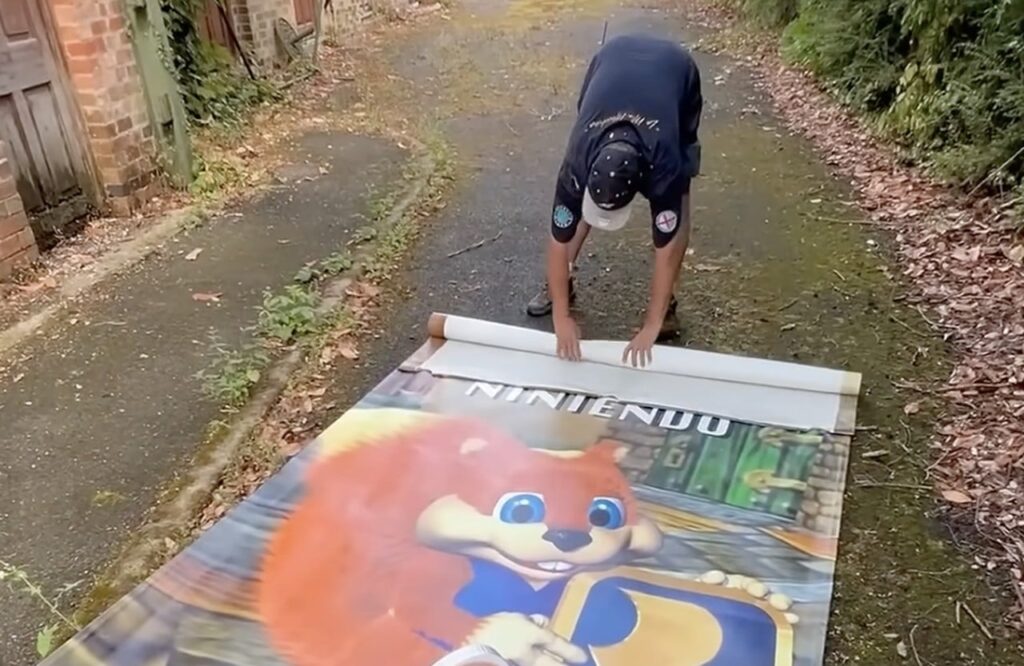
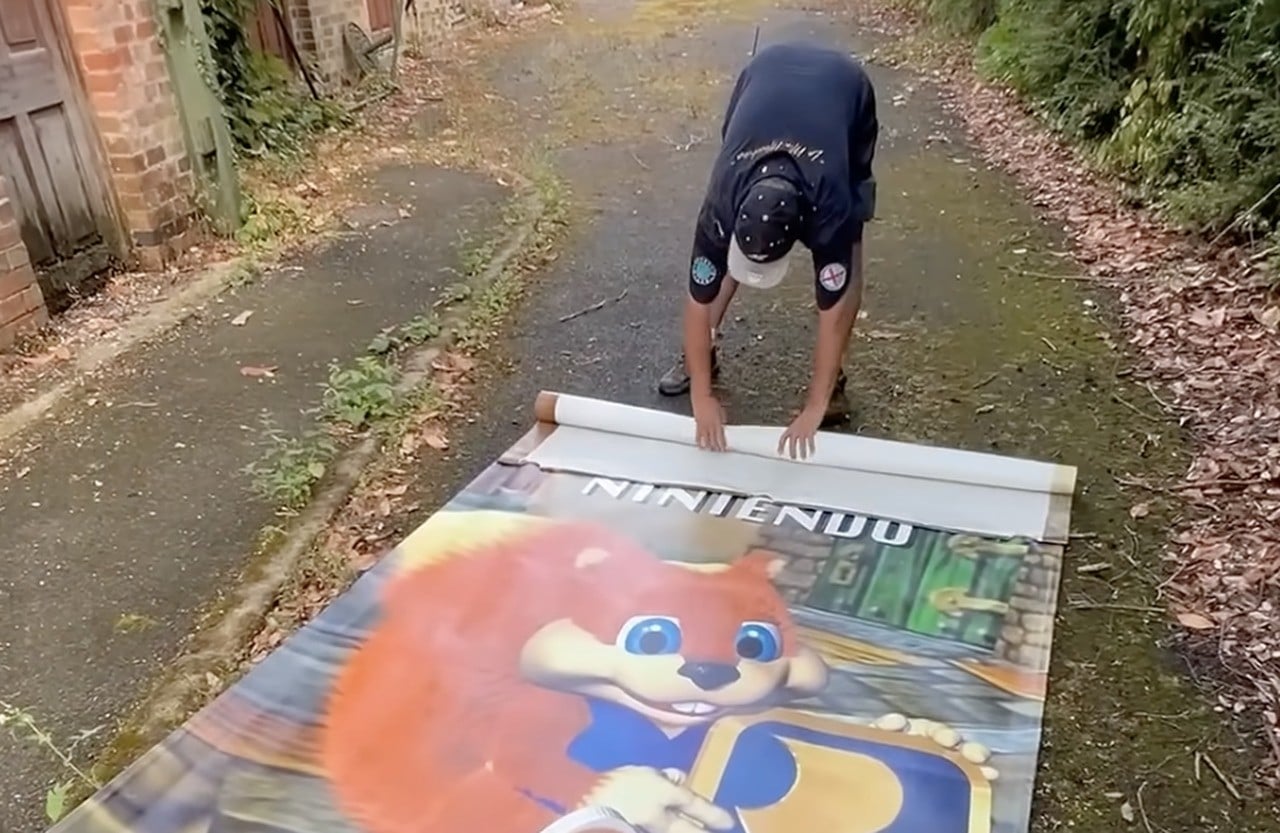
Some preservation stories start in an archive. This one starts in a barn, with cobwebs. This week Tim Stamper — co-founder of Rare, the studio he and his brother Chris built out of Ultimate Play the Game — walked back into the converted barns at Manor Farm in Twycross, the farm complex where Rare made its Nintendo 64 games, and took a promotional Conker banner down off the wall of the building the team knew as the Conker barn. It had been hanging there since Rare left Manor Farm at least 27 years ago. He rolled it up on camera and asked the only question that matters: is this the only Conker banner left?
The Banner in the Conker Barn
Manor Farm is gaming history disguised as agriculture. Rare was famously secretive in those years — outsiders almost never got inside those barns — so footage of Stamper wandering them now, pulling his own studio’s past off the walls, is a strange and lovely thing. The banner he rescued was a promotional piece, the kind made for live events like E3: a big grinning Conker, Nintendo branding, the works. Time Extension, reporting Stamper’s video on November 12, notes the farm is still believed to be in the Stamper family’s hands, and that the current purpose-built Rare headquarters sits a short drive away down the A444. The studio moved. The banner didn’t. It just waited.
There is a nice wrinkle here, and Stamper’s own footage raises it without answering it. If that banner went up before Rare vacated the farm, it may predate the game’s famous reinvention — the sweet family platformer that became Conker’s Bad Fur Day. In other words, the thing he just saved might be a relic of the Conker that never shipped. Which brings us to the game itself, because you cannot tell the banner’s story without telling both of theirs.
Conker’s Bad Fur Day Was Never Meant to Behave
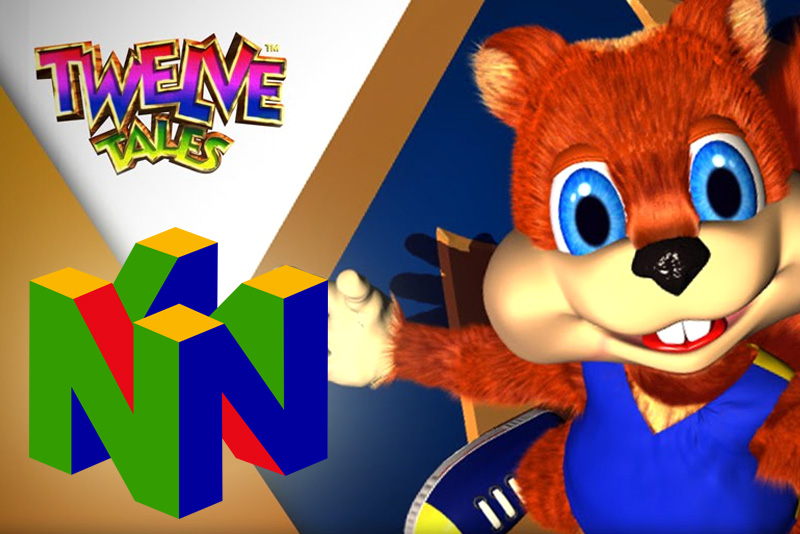
Conker started cute. The character had already headlined Conker’s Pocket Tales on the Game Boy Color in 1999, and his Nintendo 64 debut was announced at E3 in June 1997 as Conker’s Quest — a gentle 3D platform adventure in the Super Mario 64 mould, built by the barn team working alongside Banjo-Kazooie. By E3 1998 it had a new name, Twelve Tales: Conker 64, and a planned late-1998 release. It also had a problem: journalists kept saying it looked like Banjo with a different animal in the lead, and the cuteness itself was drawing fire.
So Rare did the bravest thing a studio at the top of its game could do: it tore the whole tone down and rebuilt it for adults. Director Chris Seavor — who also voiced Conker and half the kingdom besides — steered four years of development toward graphic violence, drinking, profanity, toilet humour and a stack of film parodies, all wrapped around the same gorgeous Rare platforming. Nintendo of Europe declined to publish the result; THQ handled Europe instead, while Rare published it in North America itself, with advertising aimed pointedly at college students in places Nintendo mascots were never supposed to appear. It arrived on March 5, 2001, on a 64-megabyte cartridge — among the biggest on the system — with full lip-synced voice work squeezed inside. On the Nintendo 64. In 2001.
A Platformer With a Hangover
The setup is still perfect. Conker, a greedy red squirrel, gets drunk at the Cock and Plucker pub the night before his friends ship off to war, stumbles out, takes a wrong turn, and wakes up lost in the Fairy Panther King’s kingdom with a splitting head. All he wants is to get home to his girlfriend Berri. The game, meanwhile, wants his money — or rather, it wants him to want money, because every wad of cash he chases drags him one chapter deeper into the kingdom’s nonsense.
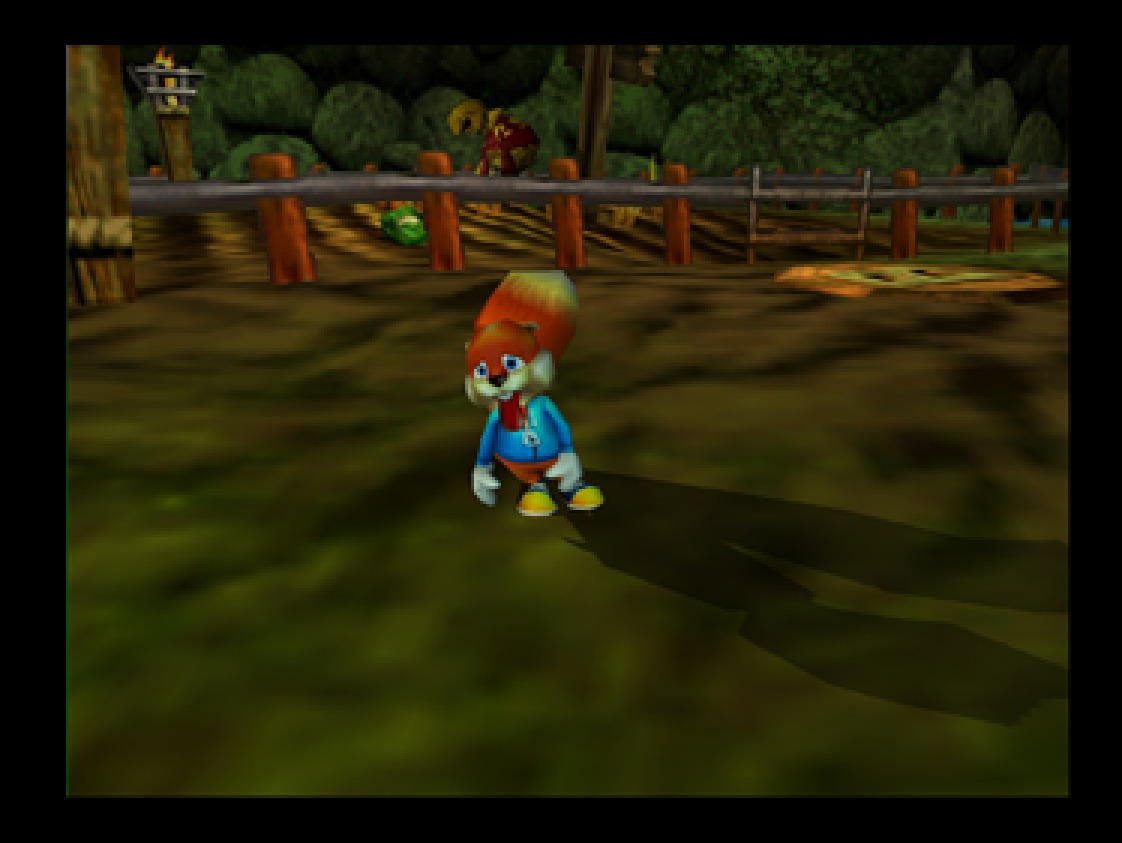
Structurally it’s a hub-and-chapter game: Windy, the central meadow, opens onto the farm chapter Barn Boys, the unspeakable Sloprano, the horror pastiche Spooky, the caveman world of Uga Buga and the rest. Compared with Banjo, Conker’s own moveset is deliberately simple — run, jump, a frying pan for arguments — because the real mechanic is the context-sensitive pad. Stand on one, press B, and the game hands Conker exactly the tool the joke requires: Alka-Seltzer for the hangover, then later a shotgun, throwing knives, a slingshot, an anvil transformation, and at one memorable point a roll of toilet paper. It’s a design that turns a platformer into a sketch show with superb timing, and it still feels modern for it.
The War, the Poo and the Panther King
And then there are the set pieces, which read like a dare list. Conker recovers a beehive from giant wasps. He battles the Great Mighty Poo, an opera-singing mountain of exactly what the name suggests, in a fight scored for a tenor with appalling lyrics. He gets turned into a bat by his ancestor Count Batula, spoofing a century of vampire films. He is drafted into the war between the grey squirrels and the Tediz — teddy bears in jackboots — for a Saving Private Ryan storming of the beaches that remains one of the most shocking tonal swerves on the console. Through all of it runs the Panther King’s daft, sinister plot: his side table wobbles, his scientist Professor Von Kriplespac suggests a red squirrel is exactly the right height for the missing leg, and so the whole kingdom is quietly hunting the hero for furniture purposes.
The ending earns its reputation too. A bank heist for Don Weaso and the Weasel Mafia turns out to be a trap; Berri dies in Conker’s arms; the Panther King is destroyed by something bursting out of his chest, in a parody we will let you place; and the game — literally, in-story — freezes, letting Conker haggle with the programmers for a weapon and forgetting, in the haggling, to ask for the one thing he actually wanted. He ends the game a king, on a throne he never asked for, delivering a closing monologue about not knowing what you have until it’s gone that lands harder than most “serious” games manage. Then the credits roll and he’s back at the pub, alone, walking out into the rain in the opposite direction. Twenty-five years on, that final beat is the one people quote at each other.
The multiplayer deserves its footnote as well: seven modes for up to four players, including Beach, Raptor, Heist, War, Tank, Race and Deathmatch — a full split-screen suite in an era when Rare treated multiplayer as a second game, not a bullet point. Critics at the time praised the graphics, the sound and the sheer nerve of the thing. It sold poorly anyway — limited advertising, a mature rating on a family console, and a release date near the very end of the Nintendo 64’s life were a heavy combination — and promptly became the cult object it has remained ever since.
Live & Reloaded, Rare Replay — and Achievements at Last
Conker’s afterlife has been a story of good versions and strange gaps. Conker: Live & Reloaded rebuilt the game for the original Xbox in 2005 with lavish new graphics and a new multiplayer focus. The N64 original itself returned in 2015 as part of Rare Replay on Xbox One. And this week, in Xbox’s 25th anniversary window, the story took one more turn: Microsoft’s November 12 expansion of original Xbox Backward Compatibility on PC — 21 new games, 25 in total — brought achievements to Conker: Live & Reloaded for the first time, on PC and on Xbox One and Series consoles alike, alongside Knights of the Old Republic, its sequel and BLiNX. A game that once needed a squirrel for a table leg now has an achievement list. Progress is a funny thing.
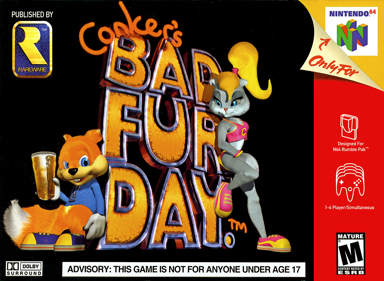
So tonight’s pair of hooks rhyme rather neatly. In Twycross, Tim Stamper is rescuing the physical evidence — a banner that may be older than the game’s bad behaviour. On Microsoft’s servers, the remake is acquiring the modern evidence — achievements, mouse and keyboard support’s sibling features, a fresh reason for a new generation to trip over this strange, sad, filthy, brilliant game. Conker’s Bad Fur Day was Rare’s last Nintendo 64 game, the swan song of the barn years, and it has never stopped being rescued, reissued and rediscovered since. It can take it. It’s had worse days. Well. One worse day.
— Sal
For more launches from this date, see This Day in Gaming History: March 5.