
At a glance: Dark Arms: Beast Buster 1999 · Neo Geo Pocket Color · SNK, 1999 · Action RPG · Score: 8.0/10
The pitch sounds like a dare: take the top-down action RPG — the Zelda shape — and replace its sword economy with gardening. In Dark Arms: Beast Buster 1999, a late-1999 SNK original loosely spun from the Beast Busters arcade shooting series, you play an apprentice monster-hunter bound by contract to a demon of the underworld, working off your debt in a realm of the dead. Your weapons are not bought or found. They are grown — from seeds, in soil, watered with the life force of the monsters you destroy.
That system, the Ogre-derived ‘catcher’ economy of the game, works like this: your basic weapon can capture the essence of defeated creatures. Feed that essence to planted seeds and the seed sprouts into a gun — pistols, shot-spreaders, elemental blasters — which can be fed further to evolve down branching paths into stranger, stronger forms. Every weapon in your arsenal is therefore a pet: raised, specialised, yours. It is Pokémon’s emotional trick applied to firearms, and in 1999, on a handheld, it was quietly radical.
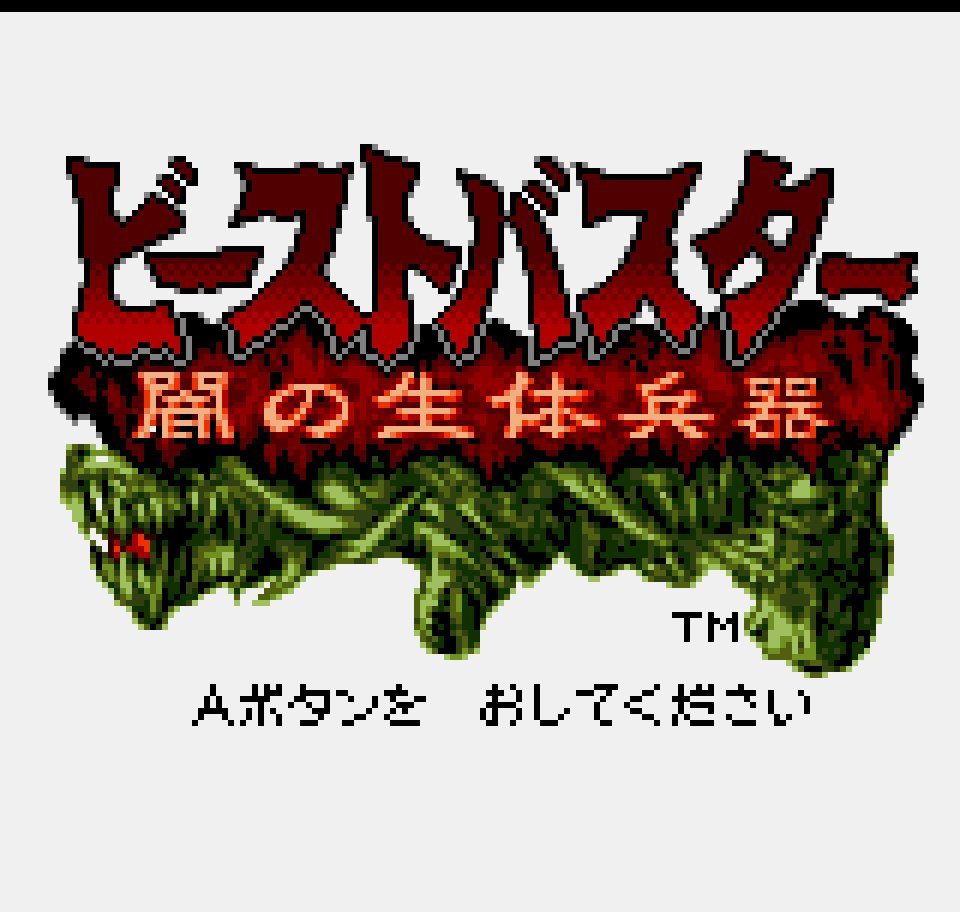
Hunting in the dark
The game around the system is a compact action RPG in the classic mould: a hub village of the dead, a map of themed regions — graveyards, ruins, a haunted mansion’s worth of gothic scenery — gated by keys, boss guardians and your growing arsenal’s abilities. Combat is real-time, your hunter circling and firing in eight directions, and the enemy bestiary runs from shambling basics to genuinely nasty elites whose essence is, of course, the best fertiliser. Day and night cycle through the realm, changing which creatures walk it — an early and effective reason to revisit cleared ground.
Structure is the game’s friend. Regions are sized for handheld sessions, save points are sensibly placed, and the debt-driven plot — work for the demon, question the contract, dig into the realm’s tragedy — gives the hunting a melancholy spine that lifts it above hack-and-slash bookkeeping. The writing, in the English release, has a dry wit about the economics of damnation that still lands.
Every weapon is a pet: raised from a seed, fed on monsters, evolved into something monstrous. Nobody else has copied it. Somebody should.
The rough edges
Dark Arms is the NGPC library’s cult classic partly because it is unfinished-feeling in instructive ways. The map could be bigger; the back half revisits regions with new keys more than it reveals new ones. Aiming with the stick is good but not great against fast enemies, the elemental system explains itself poorly, and a first-time player can absolutely grow a useless garden and have to grind essence to recover. The difficulty spikes at the guardians are honest-to-goodness 1999 spikes.

And yet the atmosphere carries it: this is one of the moodiest games on a bright little system, all muted purples and graveyard greens, with a soundtrack that leans into the melancholy. Its modern inclusion in the NGPC Selection line-up introduced it to players who had only heard the legend, and the legend, unusually, understates the invention on offer.

The Beast Busters inheritance
The subtitle is a lineage claim: Beast Busters was SNK’s 1989 light-gun arcade game, a zombie-blasting rail shooter that spawned an unlikely Hyper Neo Geo 64 sequel the same year Dark Arms shipped. The pocket game takes almost nothing mechanical from its ancestors — it is a top-down RPG, not a shooter — but it inherits their gothic-horror heart and their conviction that the undead deserve better monsters. Knowing the lineage reframes Dark Arms as an act of world-building across a decade of SNK horror, conducted at pocket scale with a gardening trowel.
Its afterlife suits it. Never a big seller, always a word-of-mouth game, Dark Arms passed hand to hand through the NGPC community as the recommendation for people who had finished the famous games — and each new platform the library reaches, it is the title the veterans name first as the discovery waiting for newcomers. Some games are classics on release. This one became a classic the slow way, seed by seed, which the game itself would surely approve of.
The day-night cycle deserves more than the sentence it got above, because it structures the whole hunt. Creatures keep hours; the realm’s mood shifts with the light; and the essence economy means the night shift is not merely harder but differently profitable — the rare feedstock for your garden’s strangest evolutions walks after dark. Games would later build entire identities around that rhythm. Dark Arms folds it, unboastfully, into a handheld action RPG in 1999, between the graveyard and the mansion, and trusts you to notice.
Length, honestly: a focused player finishes the story in the low teens of hours, with the garden’s completion and the post-game hunting stretching it further. In the modern library-stacking sense that is a virtue — Dark Arms is the rare cult RPG that respects your calendar — and every hour of it is dense with the game’s one great idea, endlessly re-expressed: grow a weapon, test it on the dead, grow it stranger.
A word for the soundtrack, which does heavy atmospheric lifting: minor-key loops that suit the graveyard shifts, shop themes with a music-box melancholy, boss music that quickens without ever breaking the spell. On a system whose speaker usually sells cheer, Dark Arms’ commitment to the gloom is total — and through headphones, on a night train, in 1999 or now, it remains the library’s most transportive audio experience.
Cult classics are usually cult for a reason outsiders can’t see. Dark Arms’ reason is printed on the seed packet: grow your own arsenal, feed it the dead, and walk the underworld with weapons no other player raised quite like yours. Visible at a glance. Plant yourself accordingly.
The underworld’s economy, one last time: your debt to the demon is the game’s quiet masterpiece of framing, turning every hunt into labour and every evolved weapon into wages — until the story begins, gently, to ask what the debt is really for. Few handheld RPGs of any era bother to give their grind a theme. Dark Arms’ whole melancholy power comes from bothering, and from trusting a player with a garden of guns to notice the question buried under the gameplay.
Grow something strange. The dead are waiting, and the soil is good.
Final word: in a library famous for conversions, Dark Arms is the original that out-imagines them all. Grow the garden. Feed it well. The underworld’s strangest arsenal is waiting for a gardener with your name on the contract.
Verdict
Dark Arms is the game NGPC owners describe when they want to convince you the library had range: an original, atmospheric action RPG built on a weapon-growing system the industry never imitated and should have. Rough, short, and utterly singular — an 8.0 with the highest cult ceiling on the system.