
At a glance: Evolution: Eternal Dungeons · Neo Geo Pocket Color · ESP / Sting, 2000 · RPG · Score: 7.5/10
Evolution: The World of Sacred Device was the Dreamcast’s early RPG standard-bearer — a cheerful dungeon-crawler about Mag Launcher, a young adventurer with a mechanical hand called a Cyframe, digging ruins to pay his family’s debts. In 2000, ESP and Sting reworked it for the Neo Geo Pocket Color as Evolution: Eternal Dungeons, and the rework is a fascinating one: not a port but a reinterpretation, rebuilt around randomised dungeons and a structure sized for the pocket.
The essentials survive. Mag, his partner Linear Cannon — the quiet girl with the ocarina and the mysterious past — and the butler Gre Nade return, redrawn in an attractive super-deformed style. The ruins above the town of Pannamnia are now generated fresh for each expedition, answering the original’s most common criticism (its fixed, repetitive dungeons) with the roguelite’s answer: if the floors must repeat, let them at least rearrange. Combat stays turn-based with positional flavour — front and back rows, Cyframe skills, Linear’s healing songs — compressed neatly onto the small screen.
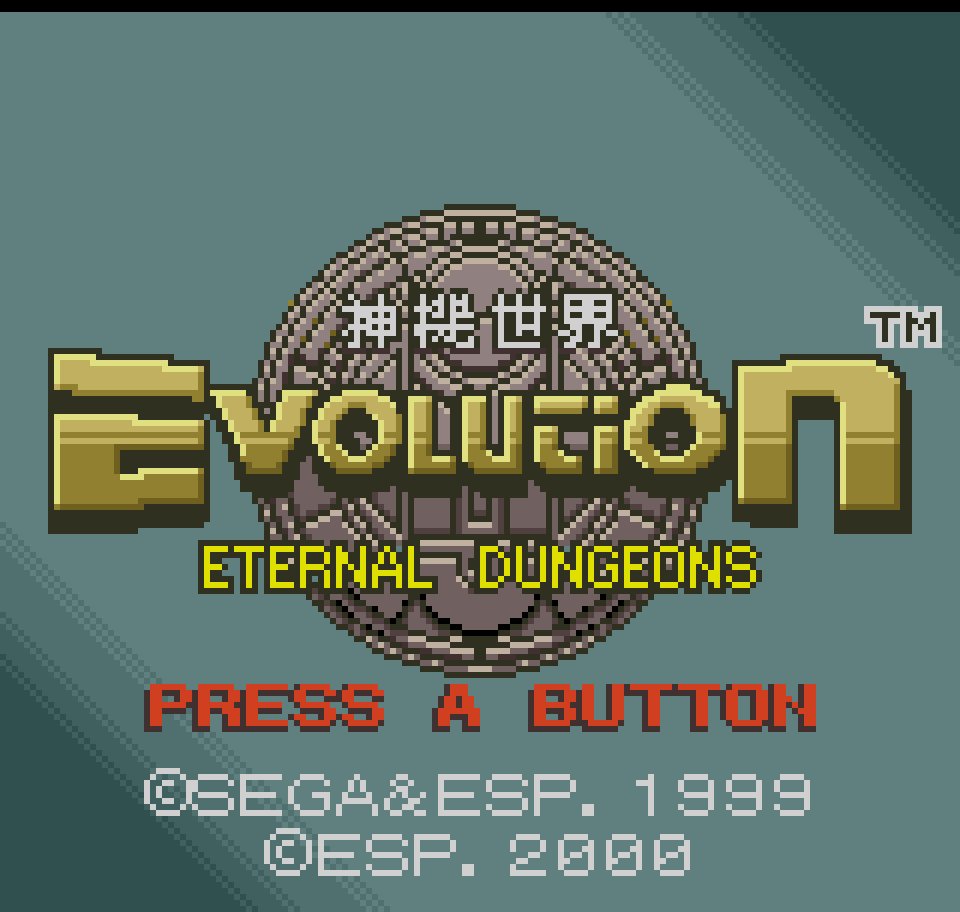
A smaller, stranger Evolution
What the pocket version gains in structure it spends in scope. The Dreamcast game’s 3D dungeons and voiced warmth become clean top-down tiles and text; the story, a genuinely sweet one about debt, family and Linear’s origins, is abridged to its beats. What remains is the loop, and the loop is good: dive, gather artefacts, sell, upgrade the Cyframe, dive deeper. Items and traps give the generated floors their texture, and the difficulty is tuned with handheld mercy — expeditions are short, retreat is survivable, and progress is always banked.
It also became, through no fault of its own, one of the system’s collector dramas. Eternal Dungeons was released in Japan (as Shinki Sekai Evolution) and in Europe in SNK’s clamshell packaging; the North American edition died with SNK’s June 2000 withdrawal before reaching shelves. The English-language European cartridge is consequently one of the NGPC’s recognised treasures — a Dreamcast crossover, an English RPG and a tiny print run in one small black case.
Not a port but a reinterpretation: fixed dungeons out, randomised floors in. The roguelite answer, in 2000, on a cartridge.
The honest account
Set against the NGPC’s other RPGs, Eternal Dungeons is the slightest of the majors. Biomotor Unitron’s engineering and Dark Arms’ invention out-imagine it; the random floors, for all their freshness, blur together visually in a way the Dreamcast game’s themed ruins did not; and the abridged story spends characters the original earned. The translation wobbles occasionally, and encounter pacing in the deep floors belongs firmly to its era.
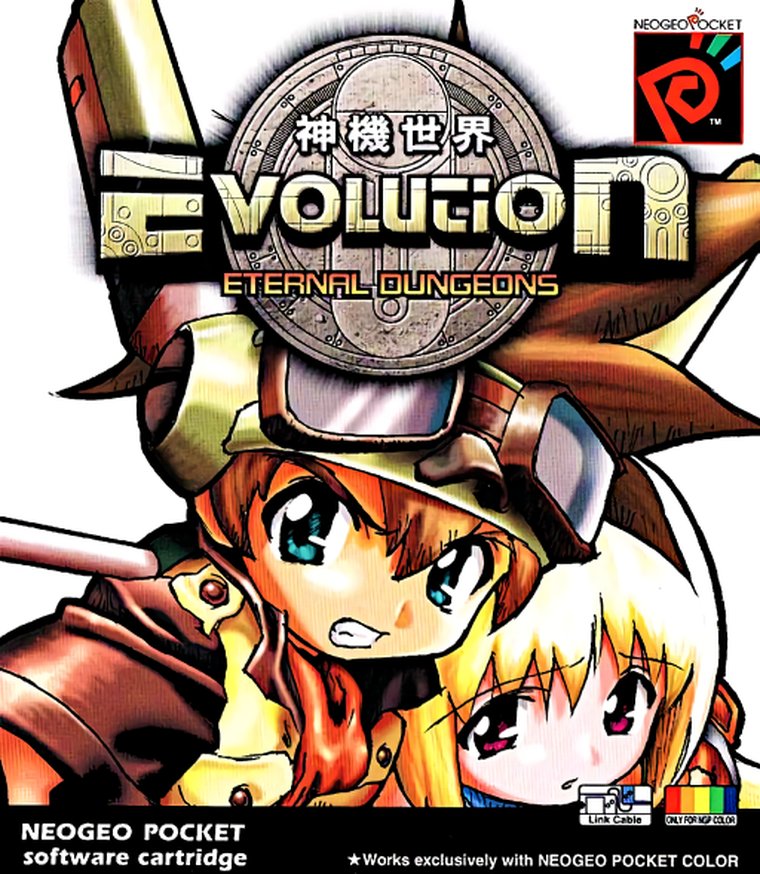
None of that erases its charm or its historical oddity — a Dreamcast game reborn as a pocket roguelite, from the era when ‘demake’ was not yet a word and cross-platform families were built by hand, game by game. For Evolution’s fans it is a companion piece; for NGPC collectors it is a grail with gameplay worth the hunt; for everyone else it is a pleasant, well-made crawl.
Two Evolutions, one family
The cross-format family is the thing to savour. In 1999-2000, a player could own Evolution on Dreamcast — full 3D, voiced, fixed dungeons — and Evolution on the NGPC — 2D, randomised, pocketable — and the two editions genuinely complement rather than cannibalise each other. Sting, the developer behind both lineages, treated format as interpretation: the same characters and world, re-thought for each machine’s strengths. That hand-made approach to a multi-platform series has largely vanished in the age of the single codebase, and Eternal Dungeons preserves it beautifully.
Practically, players meeting the game today should know its save and session design are kind: dungeons are short, the town hub keeps management painless, and the random generation means no two expeditions sulk identically. It is an RPG built for the machine’s battery life and its owners’ bus routes. Judged as the Dreamcast game’s little sibling — proud, smaller, determined to be its own thing — it succeeds on exactly the terms it set itself.
The character work survives the shrink better than you might expect. Mag’s debt-driven cheerfulness, Linear’s quiet mystery, the family’s warmth back in Pannamnia — the pocket script keeps the beats that matter and the redrawn portraits carry real expression. If you arrive from the Dreamcast game, the abridgement feels like hearing a favourite song on a music box: smaller, unmistakably itself. If you arrive fresh, it reads as a well-mannered little epic that knows exactly how much story a dungeon crawler needs, which is rarer wisdom than it sounds.
One purchasing note, since this game’s market is a minefield of its own: the English European edition and the Japanese original differ enormously in price, and loose cartridges in reproduction cases circulate at the expensive end. Buy from sellers who show boards and labels, and remember the hardware is region-free — the Japanese cartridge is the same game with a language barrier, at a fraction of the toll. Either way, Pannamnia is worth the trip.
It is worth stating plainly who this game is for in 2026. Dreamcast loyalists will find a beloved world faithfully miniaturised; roguelite historians will find a startlingly early handheld example of the form; NGPC completists already know its name. Casual RPG players are the only audience we would steer elsewhere first — the system’s Biomotor and Dark Arms offer stranger, richer hours — and even they will find Eternal Dungeons a pleasant debt to repay.
Mag Launcher’s family owed money; the game, in the end, does not owe anyone anything. It set out to carry a Dreamcast epic in a pocket and to fix its dungeons’ repetition with randomness, and it did both, charmingly, in the last year of its company’s first life. Some debts are honours.
There is a final, practical charm to record: the game’s structure makes it the most replayable of the NGPC’s story RPGs per hour invested, because the generated floors forgive the returning player nothing and promise them novelty every dive. Where its shelf-mates are novels, Eternal Dungeons is a card game — same beloved faces, new deal every time. For a machine bought for five-minute sessions, that may be the most honest design of the three, and the reason its small fanbase keeps a save file in permanent rotation.
Pannamnia’s ruins are open. Mind the traps, trust Linear, and pay your debts with interest.
Final word: small, sweet and quietly pioneering — a Dreamcast epic reborn as a pocket roguelite before the word existed. Mag’s adventure deserved a bigger Western stage. Give it yours.
Verdict
Evolution: Eternal Dungeons scores as the library’s most likeable B-tier RPG: charming cast, sound loop, fascinating provenance, and a scope that never quite matches its ambitions. A 7.5 that collectors will chase like a 10 — and when they catch it, they will not be disappointed, merely charmed at pocket scale.