At a glance — Game: Dead or Alive · Developer: Team Ninja (Tecmo) · Publisher: Tecmo · Original release: November 26, 1996 (Arcade, worldwide) · Original platforms: Arcade · Genre: Fighting
The marquee said it plainly: dead or alive. Thirty years ago Tecmo needed a hit the way a fighter on the ropes needs the bell. The company had lost money three years running, it was staring at bankruptcy, and the game it bet everything on turned out to be a promise it kept — for Tecmo first of all.
A company betting the whole arcade
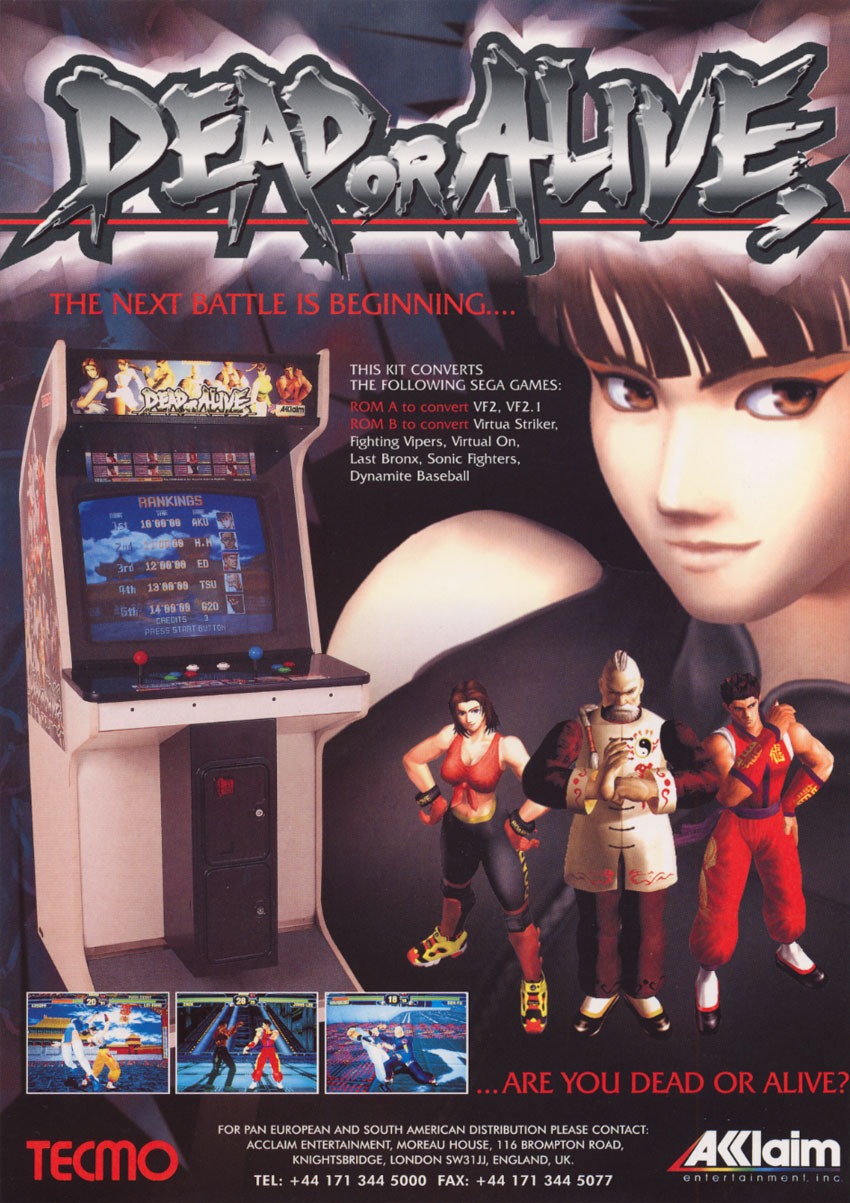
By 1995 Tecmo was in real trouble. Years of heavy investment in sports games had run into EA’s rise, the losses had stacked up for three consecutive years, and the company was close to bankruptcy. Management looked at what was packing Japanese arcades — Sega’s Virtua Fighter series above all — and gave programmer Tomonobu Itagaki a simple brief: make us a fighting game like that, or a racing game like Daytona USA. Itagaki, a Virtua Fighter fan who had joined Tecmo in 1992, chose fighting. He also had no interest in making a polite copy. He wanted his game faster and more provocative than the competition, and every frame of its animation was built from motion capture to sell that speed. The team behind it was Tecmo’s in-house Tecmo Creative #3 — the group that this game would turn into Team Ninja. Few development teams get named by a single project. This one did, because the project worked.
Built on Virtua Fighter’s own hardware
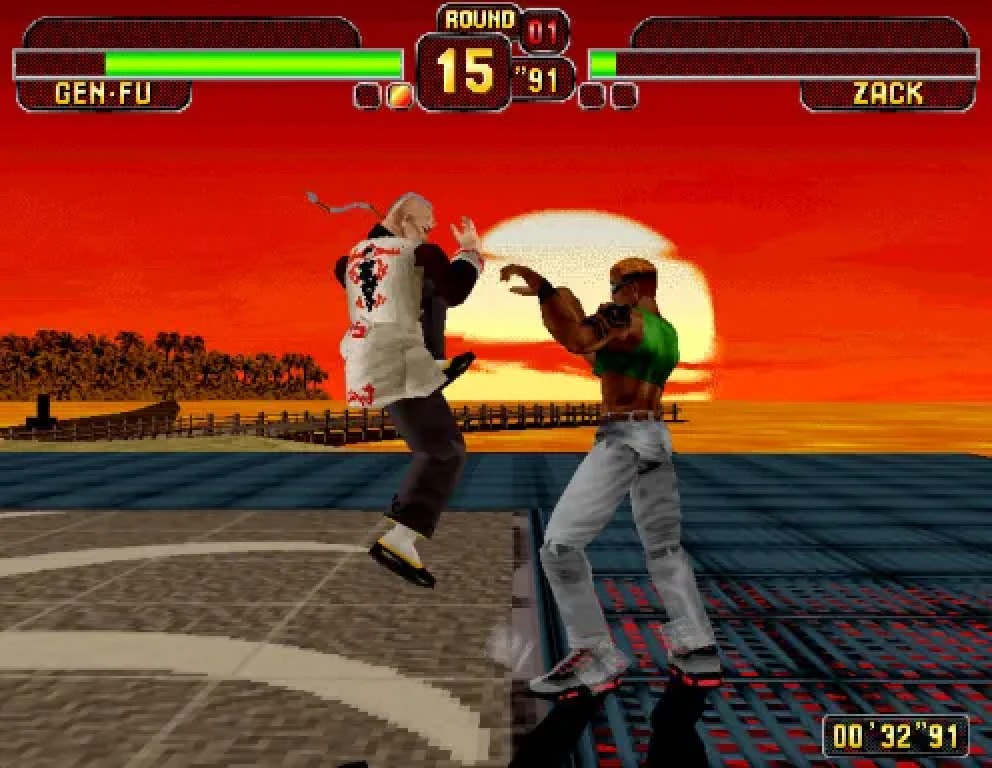
The boldest part of the bet was the board. Dead or Alive runs on Sega’s Model 2 hardware, the exact system that powered Virtua Fighter 2, and it was the first time Sega had licensed that hardware to an outside company. Tecmo unveiled the game at the February 1996 AOU show, as part of Sega’s announcement that Model 2 was opening up to third parties. Running on the same silicon as its inspiration was a risk — side by side, any shortfall would show — but it was also a statement of intent. Dead or Alive used fully polygonal, modelled backgrounds and a graphics engine reviewers noted for its smooth surfaces, and it played noticeably quicker than its rivals, favouring simple commands and reaction time over long, memorised combo strings. It reached arcades worldwide on November 26, 1996, and Game Machine promptly listed it as the most popular arcade game in Japan. The copy had beaten the original at its own cabinet.
Dead or Alive’s hold button rewired the fight
Here is the idea that outlived everything else in the game. Most fighters of the era gave you a guard button: hold it and you block. Dead or Alive replaced it with a hold button. Time it as an attack comes in and your fighter catches the incoming limb — grabs the punch, traps the kick — and turns the exchange around. It was the first countering system in the genre with different commands for different types of attack, split between offensive holds that seize the initiative and defensive holds that shove an attacker away or punish them. Around it grew the triangle the whole series still runs on: holds beat strikes, throws beat holds, strikes beat throws. Rock, paper, scissors, played at sixty frames a second. Reviewers at the time singled it out — Next Generation praised the way it blurred offence and defence into a constant push-and-pull rather than one fighter attacking and the other hiding. It is hard to overstate how modern that feels. Defence in Dead or Alive was never a pause in the fight. It was the fight.
Mind the danger zones
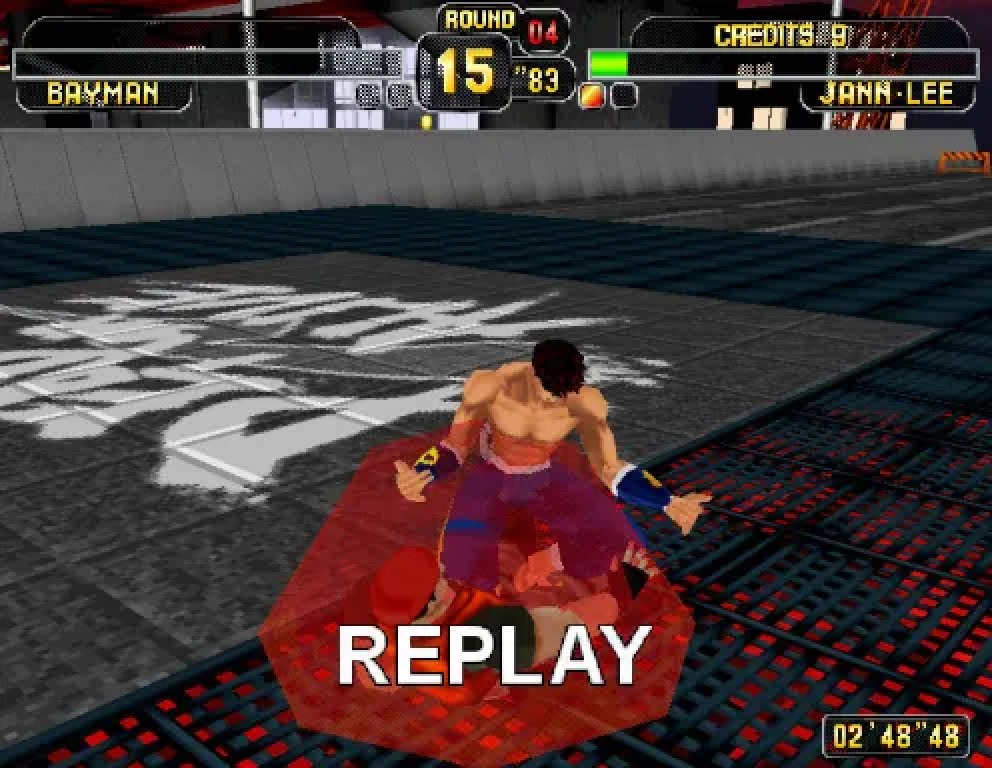
The arenas had a second idea, louder than the first. The fighting area was ringed by danger zones — stretches of floor wired with explosives. Get knocked down out there and the ground itself detonated: heavy extra damage, and the blast launched you into the air, helpless, while your opponent set up a juggling combo on the way down. A defensive roll could get you clear, which only added to the scramble. Position suddenly mattered in a way it hadn’t in a flat 3D ring. Backing up was no longer free, and pushing an opponent towards the edge was a strategy all by itself. Every later game in the series kept some version of the idea — stages you could be smashed out of, through and off — but the original states it the purest: the floor is a weapon, and it belongs to whoever is winning the geography.
Kasumi’s errand, and a roster with range
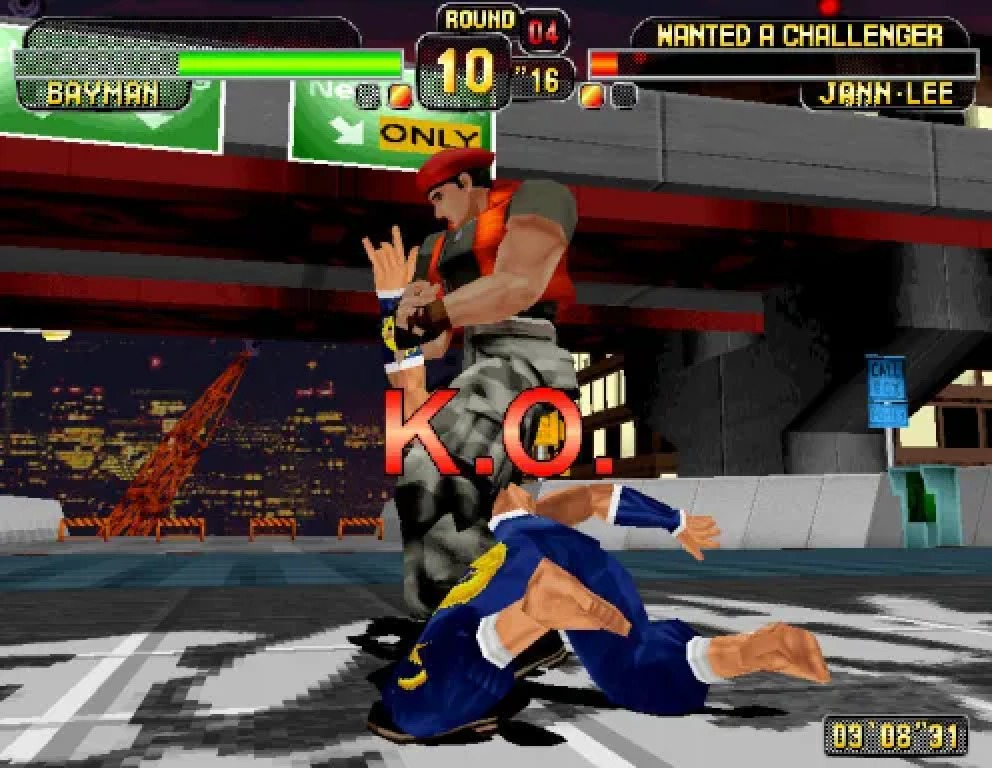
Underneath the systems sat a compact little revenge story. DOATEC, the corporation behind the Dead or Alive World Combat Championship, hosts the tournament; Kasumi, a kunoichi of the Mugen Tenshin clan, abandons her village to enter it, hunting her uncle Raidou, the man who crippled her brother Hayate. She wins, and kills him — and becomes a fugitive for it, since leaving the village without permission carries a death sentence under ninja law. Around her, eight playable fighters covered a lot of ground for 1996: Ryu Hayabusa, borrowed from Tecmo’s own Ninja Gaiden; Tina Armstrong, an American wrestler chasing Hollywood; Jann Lee, a jeet kune do fighter modelled on Bruce Lee; the elderly master Gen Fu, fighting for his sick granddaughter’s medical funds; Leifang, Bayman, Zack — and Raidou himself waiting at the end as the boss. It was a roster built for an arcade: readable at a glance, distinct in the hands.
The home ports, briefly
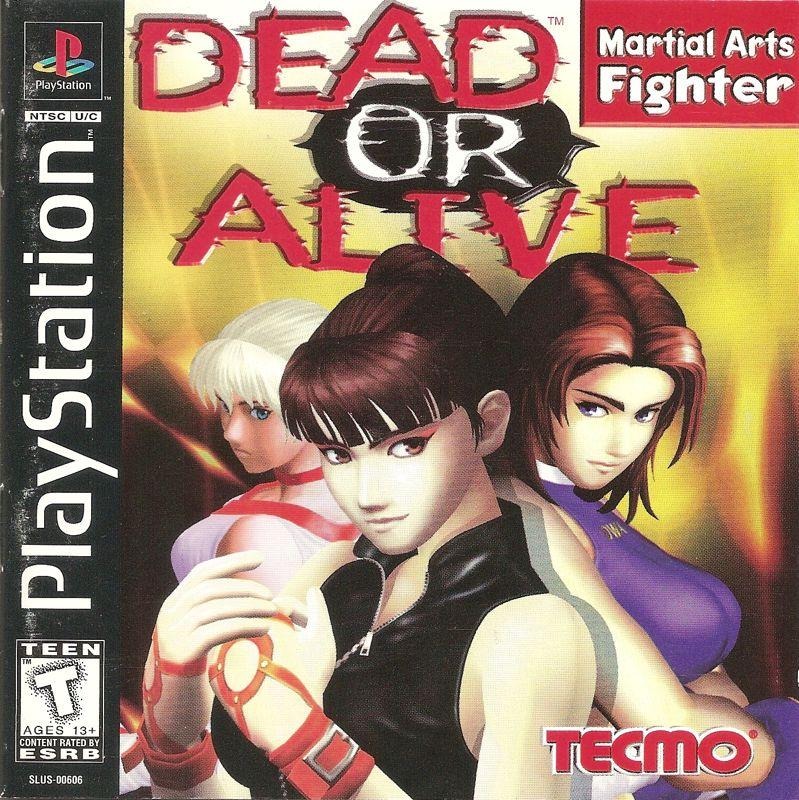
Arcades made the game; homes kept it. The Sega Saturn port arrived in Japan in October 1997, and it was a serious conversion — Gouraud shading to help the character models, bitmap and parallax backgrounds in the manner of the Saturn Virtua Fighter 2, a new rendered intro, and tournament and training modes the coin-op never had. Its first run of 92,000 copies sold out on release day, and it went on to sell more than 161,000 in Japan. Planned North American and European Saturn releases were cancelled as that market faded, which makes the PlayStation version the one most players outside Japan met: released across all regions in 1998, on a reworked engine, with two new fighters — Ayane and Bass Armstrong — plus extra costumes and new music. It was, neatly, the first game built for Sega arcade hardware to be ported to Sony’s machine. Tecmo even folded it back into arcades as Dead or Alive++ in Japan in 1998, and when the original was remade inside 2004’s Dead or Alive Ultimate, Itagaki based it on the Saturn version — his favourite.
Thirty years on, the arcade game is the blueprint
The numbers tell the rescue plainly. Tecmo lost 5.2 million dollars in 1995; in 1996, Dead or Alive helped pull in a profit of 9.2 million, and the company lived. A sequel followed in 1999, and the series — sequels, updates, spin-offs — has run for three decades since, all of it built on what this one cabinet established: speed first, a counter for everything, and a floor you ignore at your peril. Strip away everything the series became later and the 1996 original still stands up as a complete thought. A broke company licensed its rival’s hardware, bet on a young programmer’s refusal to make a clone, and shipped the most alive-feeling 3D fighter of its year. Dead or alive was the brief. It chose alive.
— Chip
For more launches from this date, see This Day in Gaming History: November 26. More from this system: our Arcade hub.