At a glance — Game: Rainbow Islands: The Story of Bubble Bobble 2 · Developer: Taito · Publisher: Taito · Original release: October 1987 (Japan) · Original platforms: Arcade · Genre: Platform
Two cabinets down from the change machine. That is where the Bubble Bobble machine stood in the arcade I grew up in, and it ate my quarters in a friendly way — trap a monster in a bubble, pop it, grab the fruit, next room. The sequel showed up in late 1987 and I walked over expecting more of exactly that. More rooms. More bubbles. Instead: a little boy in a green outfit at the bottom of an island, no bubble wand anywhere. He threw a rainbow. Then he walked up it. Two thoughts, same second — this is not the game I expected, and I need another quarter.
That double-take is the whole story of Rainbow Islands. Taito kept the names, the enemies and the secrets from the most beloved co-op game in its catalogue — and threw out nearly everything else. Tomorrow, November 26, Hamster brings the game back as an Arcade Archives 2 release on Switch 2. Tonight, then. Time to climb it again.
A sequel that changed direction
Taito bothered to write a story this time, so start there. The villain behind the first game — the entity the credits of the era call the Dark Shadow — has struck at the Rainbow Islands and turned their people into Bubble Dragons. Bubby and Bobby, the bubble-blowing dragons of the first game, are back in human form to put it right. One choice, and the feel of everything changes. Bub and Bob were cute mascots you steered. Bubby and Bobby are kids on a rescue mission, and the game dresses like it: bright primary colours, smiling enemies, islands shaped like a child’s drawing of an adventure.
The structure is just as bold a break. Bubble Bobble was one hundred single rooms, cleared one screen at a time. Rainbow Islands is a chain of ten islands, four rounds apiece, and every round scrolls upward. You are not clearing a room; you are climbing a tower with the sea at your heels. Each island wears a theme — insects, combat vehicles, monsters, toys, and on through a late run of islands themed after other Taito games for the players good enough to reach them. A boss waits at the top of every fourth round, oversized and cheerful and perfectly happy to knock you back down into the water.
It is worth pausing on how confident that redesign was. In 1987, the safe move was Bubble Bobble with new levels. Taito instead changed the viewpoint, the verb and the hero, and kept only the soul. Japanese players took to it immediately — Game Machine had it as the second most successful table arcade unit of November 1987 — and the rest of us took a little longer, mostly because we were still standing at the cabinet trying to work out why we could not blow bubbles.
Rainbow Islands gameplay: a weapon you can stand on
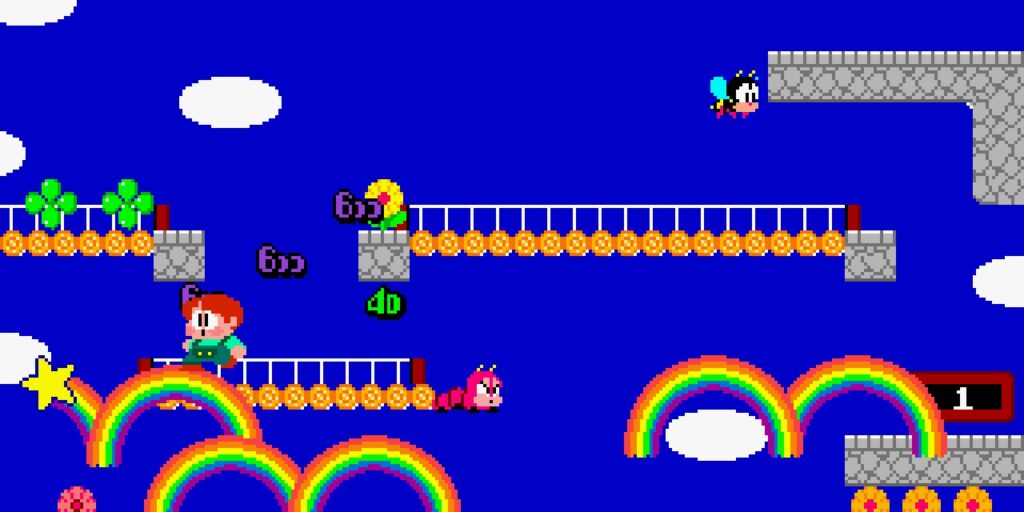
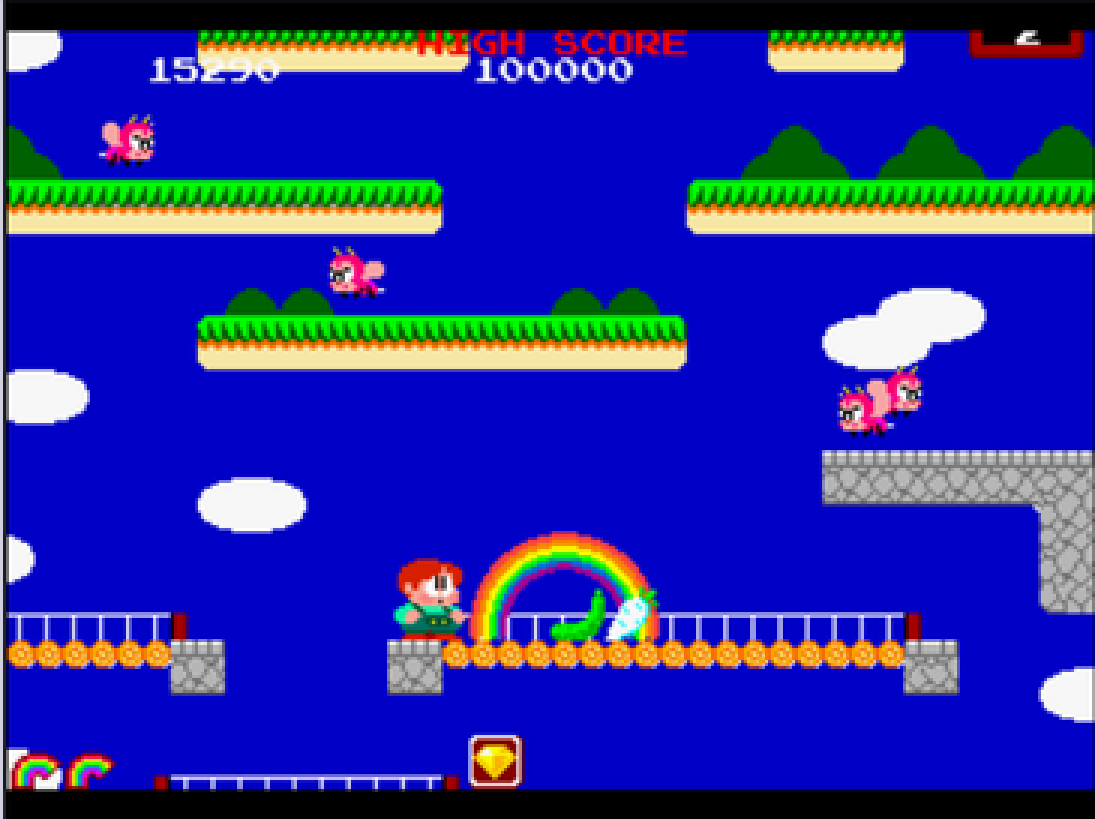
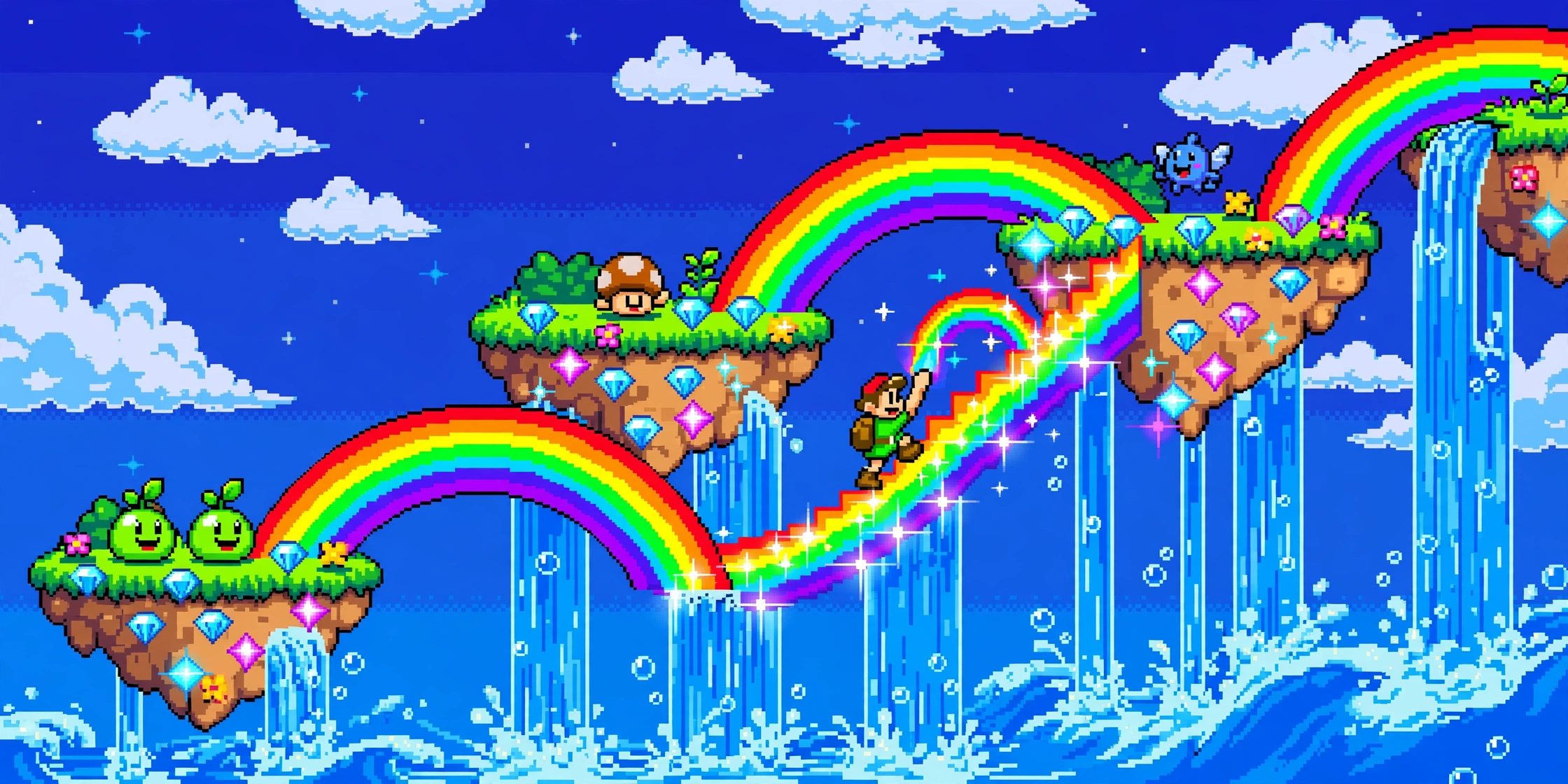
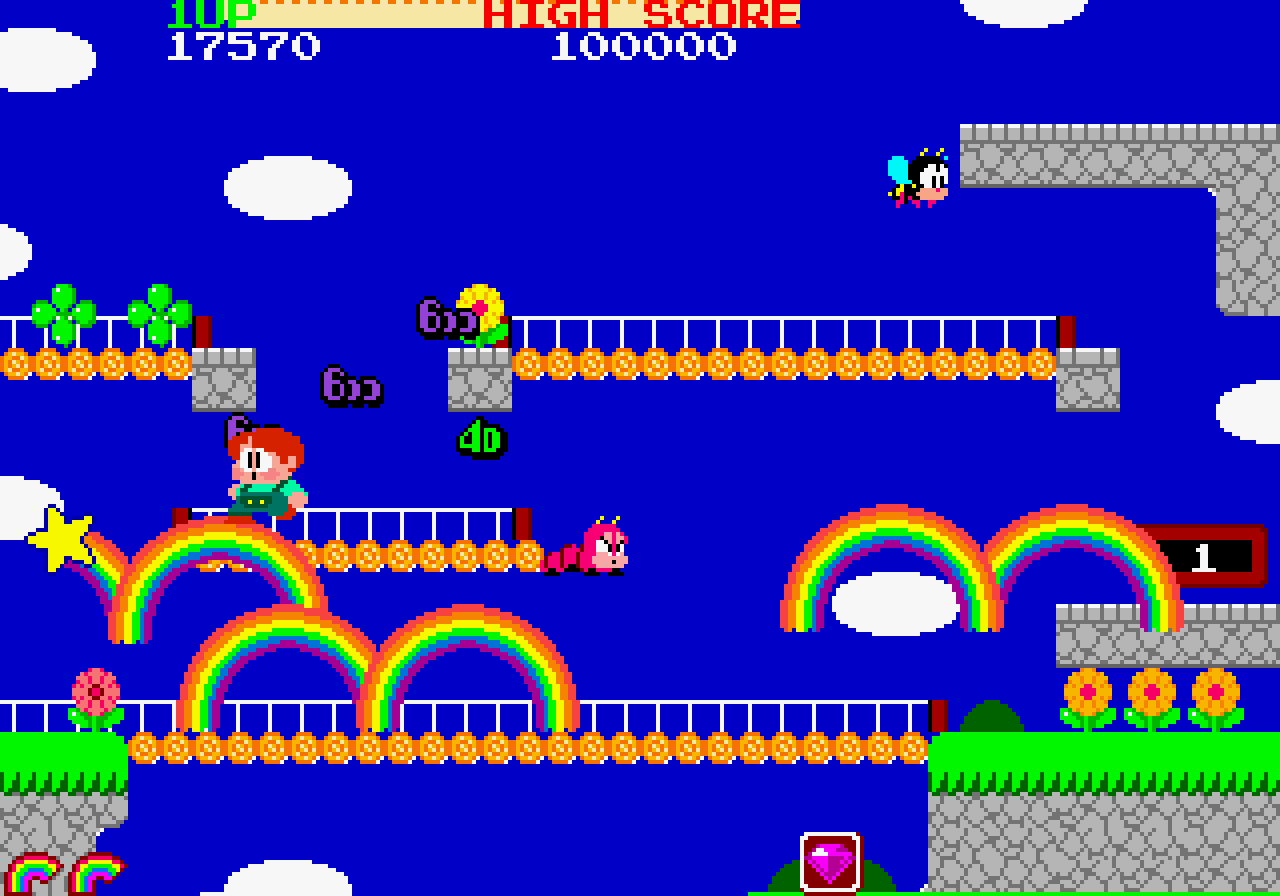
Three jobs, one tool, zero explanation. That is the rainbow. Tap the button and Bubby casts an arc ahead of him; anything it touches takes damage, so it is a weapon. It also stays where it lands, solid — a platform. Cast one above your head, hop on, cast the next, and you have built a staircase out of weather. Jump on a rainbow instead of walking across it and it collapses, dropping a damaging field through everything below. Enemies killed that way do not drop the usual fruit and cakes. They drop diamonds. Hold that thought. The diamonds are the game inside the game.
Power-ups tune the tool rather than replacing it. Red potions add rainbows, up to three arcs at once. Yellow potions make them faster. Magic shoes make Bubby himself faster, which matters more than it sounds, because the islands are timed in the cruellest way an eighties arcade game knew how. Take too long on a round and the sea starts to rise from the bottom of the screen. The water does not care about your score, your diamonds or your feelings. Touch it and you lose a life. Every round of Rainbow Islands is a negotiation between greed — one more enemy dropped for one more diamond — and the waterline coming up to end the argument.
Diamonds, secret doors and the endings you had to earn
Notebook game. That is what this system made of a cheerful platformer, years before most of us kept notebooks. Kill enemies with falling rainbows and they drop small diamonds in seven colours, and the colour depends on where on the screen the enemy lands — the screen is secretly divided into seven bands, and a practised player can aim a kill the way a pool player aims a bank shot. Collect all seven colours on an island and finish it, and the island’s boss yields a big diamond. Collect the seven big diamonds from the seven opening islands, and the game does something wonderful: it keeps going. Three more islands appear, themed after Taito’s own back catalogue, and the road to the real ending — the mirrors, the final confrontation, the islanders restored — only opens to the player who did the diamond work.
The order matters, too. Gather an island’s seven small diamonds in the correct colour sequence and a secret door appears at the island’s end, hiding a permanent power-up — the kind of upgrade that changes how the rest of the run feels. None of this is explained at the cabinet. All of it was passed around playgrounds and arcade corners as rumour first and fact later, which is exactly how Bubble Bobble had taught us to learn a game. Multiple endings hang on all of it: finish cheap, and you get the treasure and a shrug; finish properly, and you get the rescue. Modern players raised on achievement lists should recognise the shape. Taito built a completionist game in 1987 and hid the checklist.
The conversions: brilliant, faithful and occasionally furious
A hit this size was always going home. The computer conversions handled by Graftgold for Ocean — the Commodore 64, Amiga and Atari ST versions above all — are still held up as the gold standard of arcade conversion, close to the coin-op in look, feel and sheer colour. The NES received its own version, in Japan in 1988 and in North America in 1991, rearranged in the way of NES ports of the time. The game has rarely been out of circulation since: it rode the Taito collection discs of the PlayStation 2 era onto modern shelves, which is how a lot of younger players met it — sandwiched on a compilation, stealing the afternoon from the bigger names around it.
Collectors still argue about the music, so it gets its own paragraph. The arcade game’s main theme is a bright, bouncing tune that tips its hat very obviously toward “Over the Rainbow.” Close enough that licensing reality has followed the game ever since — various reissues over the years have altered or replaced the melody depending on platform and territory. Fire up a version and the tune is not the one in your memory? You are not imagining it. You may simply own a different legal department.
How to play it today
The easiest route arrives tomorrow. Hamster’s Arcade Archives page for Rainbow Islands is the publisher’s own home for the game: the Arcade Archives 2 edition launches on Nintendo Switch 2 on November 26, 2026, and the standard Arcade Archives edition is already available on Switch and PlayStation 4 through the same series. Hamster had not announced a price for the Switch 2 edition at the time of writing, so check the eShop listing when it lands rather than trusting a number from us. Prices checked November 25, 2026.
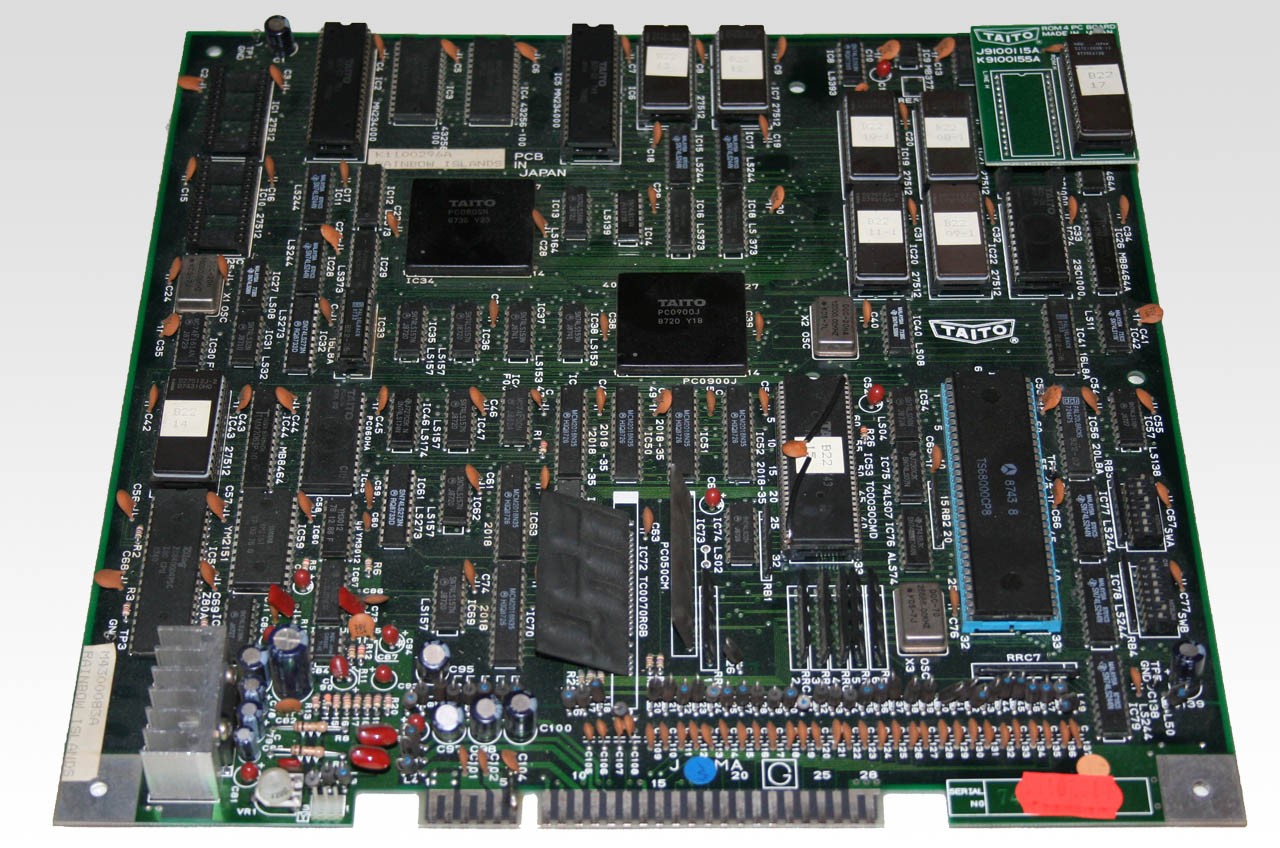
Beyond Hamster, the original arcade board is the collector’s route — the Taito B22 PCB turns up through arcade dealers and auctions, and a working board in a cabinet remains the definitive way to feel the water rise. Earlier official collections on PlayStation 2-era hardware also carry the game for readers who already own those discs. However you climb it, climb it properly: drop rainbows on enemies, mind the colour order, and do not let the sea make your decisions for you.
— Sal
More from this system: our Arcade hub.