At a glance: Donkey Kong · ColecoVision · Coleco, 1982 · Arcade platformer · The console pack-in · Score: 9.0/10
Consoles are sold by the game in the box, and no pack-in ever made its case faster than this one. When the ColecoVision launched in North America in August 1982, the cartridge slotted beside the hardware was Donkey Kong — Nintendo’s arcade phenomenon, the game every rival machine either fumbled or could not license at all. Atari’s 2600 version was a two-stage shadow of the original. The ColecoVision version looked, sounded and played like the arcade had been folded into a cartridge. That single comparison sold the system, and playing it today, it is easy to see why: this is not merely the best home Donkey Kong of its generation. It is the moment home gaming visibly caught up with the coin-op.
The deal behind it matters. Coleco secured the home rights to Donkey Kong and built the console’s launch around it, and the conversion was treated as a flagship rather than a porting chore. Jumpman — Mario, in the naming that would soon stick everywhere — climbs, leaps and hammers his way up after Pauline while the ape rolls barrels down at him. The structure is pure 1981 arcade: short, brutal stages, a bonus timer bleeding away, and one more life always feeling one perfect run away.
Three stages, and the right three compromises
The ColecoVision cartridge contains three of the arcade’s four screens: the girder stage, the rivets stage and the elevator stage. The cement factory — the pie factory, with its conveyor belts and oil-can fires — is the famous omission, and it is an omission worth being honest about: the arcade original is a four-stage loop and this is a three-stage one. In 1982, though, the relevant comparison was not with an arcade board most home players could not own. It was with every other machine on the shop shelf, and against those, three faithful stages beat two compromised ones by a distance.
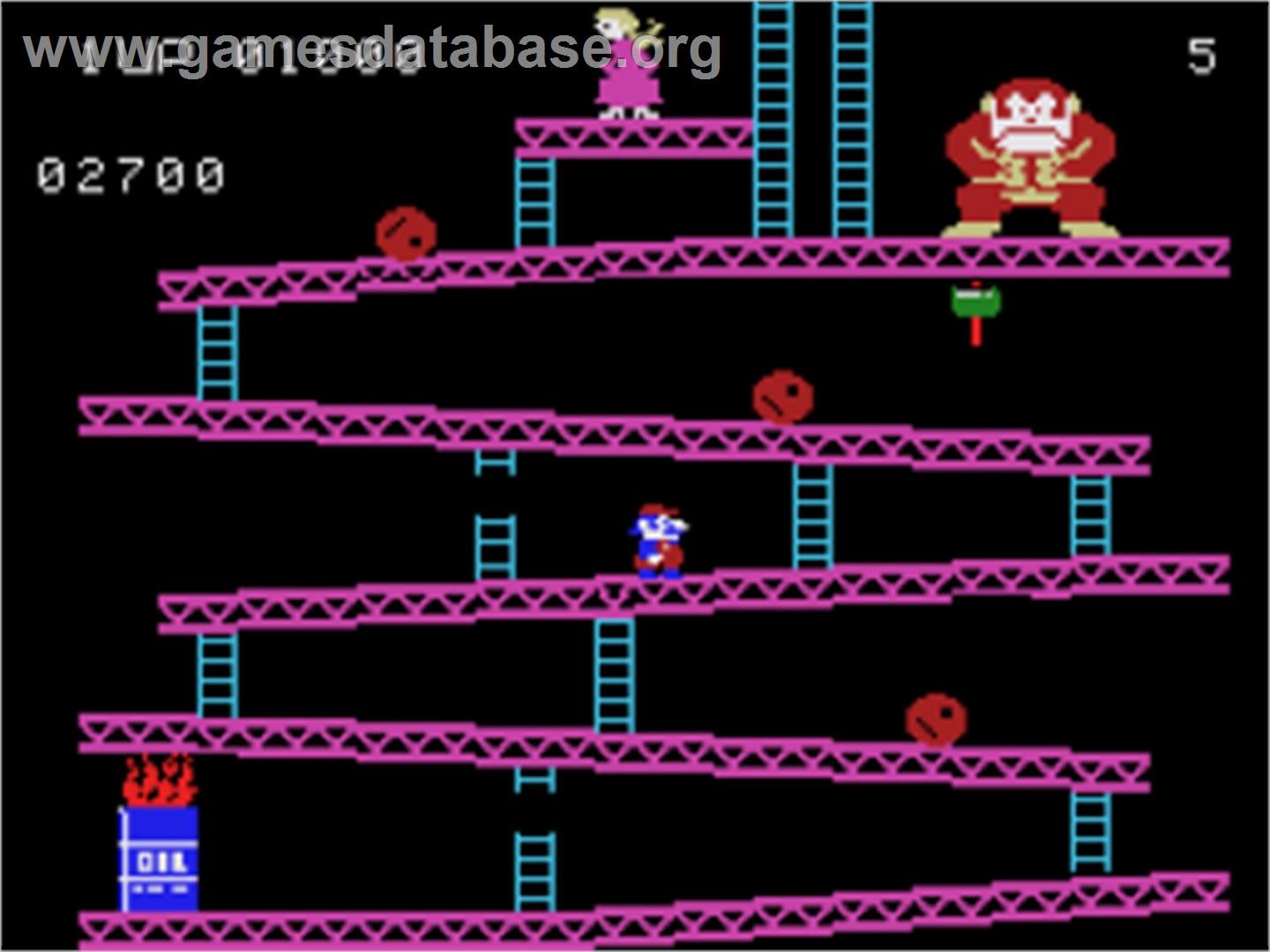
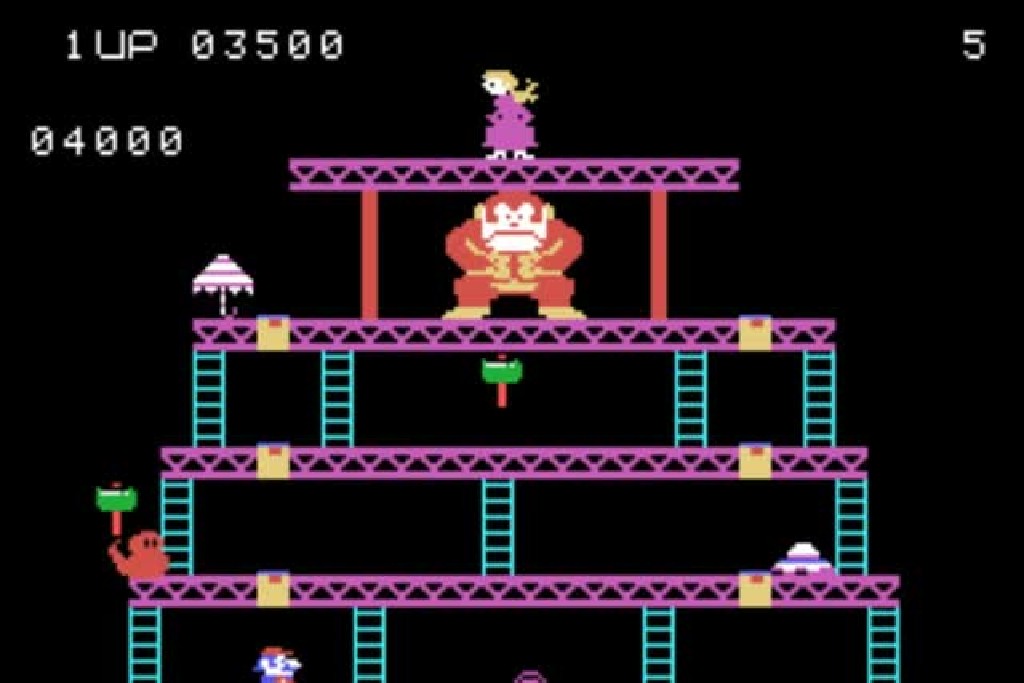
What is here is rendered with real confidence. The girders are the arcade’s vivid pink, the ladders land where the arcade put them, Donkey Kong himself is a big, characterful sprite who fills his perch at the top of the screen rather than shrinking into a brown smudge, and Pauline waits under her score line exactly as she should. The ColecoVision’s graphics hardware — the same Texas Instruments video chip family that powered the machine’s whole arcade-at-home pitch — handles the multi-colour sprites without the flicker compromises that plagued lesser ports. Barrels roll with proper menace, firefoxes patrol the rivets stage, and the elevator stage keeps its spring-loaded rhythm of lifts and lethal bouncing jacks.
How it plays on the ColecoVision pad
The one adaptation every player must make is the controller. The ColecoVision’s rectangular hand controller, with its short joystick and numeric keypad, is nobody’s favourite piece of industrial design, and Donkey Kong asks for precise ladder grabs and pixel-honest jumps. The saving grace is that the game’s demands are mostly four-directional: climb, run, jump. The stick’s diagonals rarely betray you here the way they do in maze games, and the jump button is responsive enough that deaths feel earned rather than administered. Learn to feather Jumpman’s run-up before a barrel jump — the leap is committed, with the arcade’s unforgiving arc — and the game settles into the same one-more-try loop that emptied pockets in arcades.
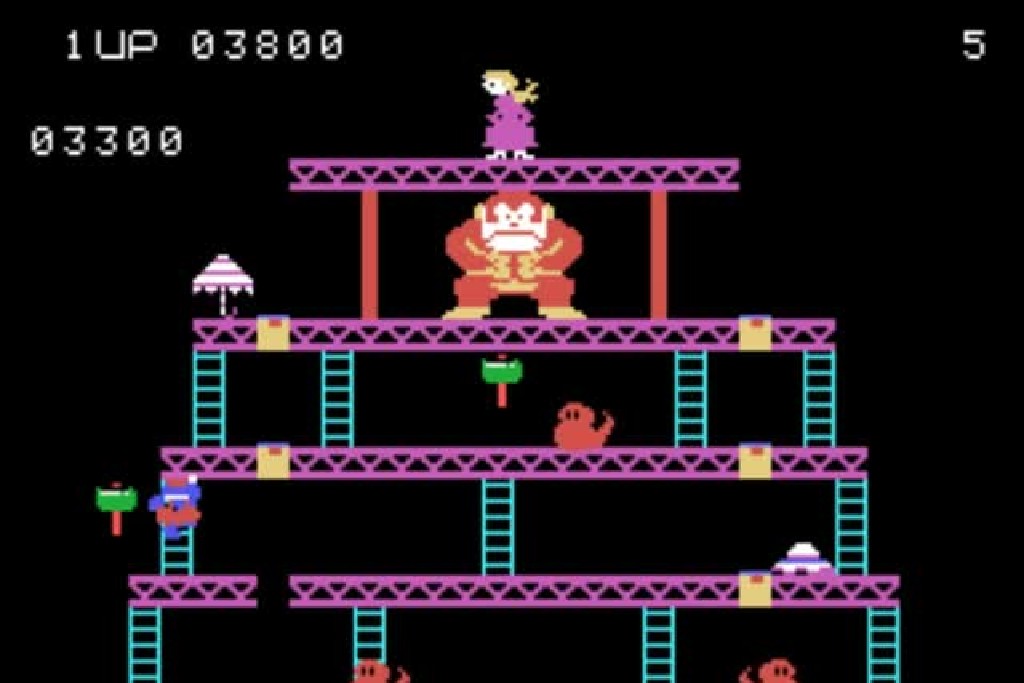
Difficulty is honest arcade difficulty. The bonus timer pressures every climb, barrels double up as the loops progress, and the rivets stage turns from a stroll into a firefight as the firefoxes multiply. Multiple skill levels at the start let new players learn the layouts before the game bares its teeth, which was a thoughtful home-conversion touch for a pack-in that might be a family’s first-ever video game. High-score chasing is the entire endgame, as it should be: this is a game about shaving seconds and surviving one more loop.
The version that defined a machine
Context is not an excuse here; it is the point. Played beside its contemporaries, ColecoVision Donkey Kong is a rout. The sprites are large, the colours are the arcade’s colours, the hammer works, the intermission touches survive, and the whole thing moves at the arcade’s pace. Later and larger conversions on other hardware would eventually restore the fourth stage and refine the details, but in the living rooms of 1982 there was nothing else in this class. It is also historically pivotal in a second way: a Nintendo game, licensed in a deal struck before Nintendo had any home hardware of its own in the West, became the spearhead for a rival’s console — and proved the size of the audience Nintendo would soon chase itself.
Playing it today
Original cartridges are common — it was the pack-in, after all — and the game holds up as a pure score-attack platformer: three stages, perfect information, no mercy. On original hardware the picture is at its best through a well-sorted video output, but the game reads clearly even over RF, a benefit of those bold arcade colours. One caution for collectors: because it shipped in the box, loose cartridges vastly outnumber complete boxed copies, and the box is the harder part of the set to find in good shape.
Learning the three stages properly
Mastery in this conversion is a matter of stage-specific craft. On the girders, the golden rule is to keep climbing: barrels commit to their lanes early, and a Jumpman who keeps moving upwards forces the game to aim at where he was. The hammer is a trap as much as a tool — while you hold it you cannot climb, and its swings are automatic, so grab it only when a barrel stream genuinely blocks the route, and plan where you will be standing when it expires. On the elevators, patience is the skill: the lifts run on fixed cycles, the bouncing springs telegraph their arcs, and every death there is a death of impatience. The rivets stage is the score stage — clear it methodically, lure the firefoxes away from the rivets they guard, and take the final rivet with the bonus timer still fat. Across all three, the game rewards the player who treats the bonus counter as the real health bar: speed is survival, and survival, repeated across loops, is the score.
The pack-in effect
It is difficult, at this distance, to overstate what it meant that this cartridge came in the box. A family unboxing a ColecoVision in 1982 went from purchase to a recognisable, colourful, responsive arcade game in minutes, with no second purchase and no asterisk. Retailers demonstrated the machine with it; television advertising was built around it; and the comparison shoppers made in stores — this game, on this machine, against the rival versions on theirs — was the whole sales pitch in a single screenshot. Games bundled with hardware have launched many consoles since, but Donkey Kong on ColecoVision remains the template: the right licence, converted properly, at the exact moment it mattered.
The verdict
Donkey Kong on ColecoVision does the most important thing a launch conversion can do: it keeps the promise the advertising made. One stage short of the arcade, yes — but recognisably, thrillingly the same game, on a machine you could take home. Every ColecoVision collection starts here, because the console itself did.
Score: 9.0/10 — The definitive home Donkey Kong of its era, and still the first cartridge this console asks for.