
At a glance — Game: Dragon Quest VIII: Journey of the Cursed King · Developer: Level-5 · Publisher: Square Enix · Original release: November 27, 2004 (PlayStation 2, Japan) · Original platform: PlayStation 2 · Genre: Role-playing
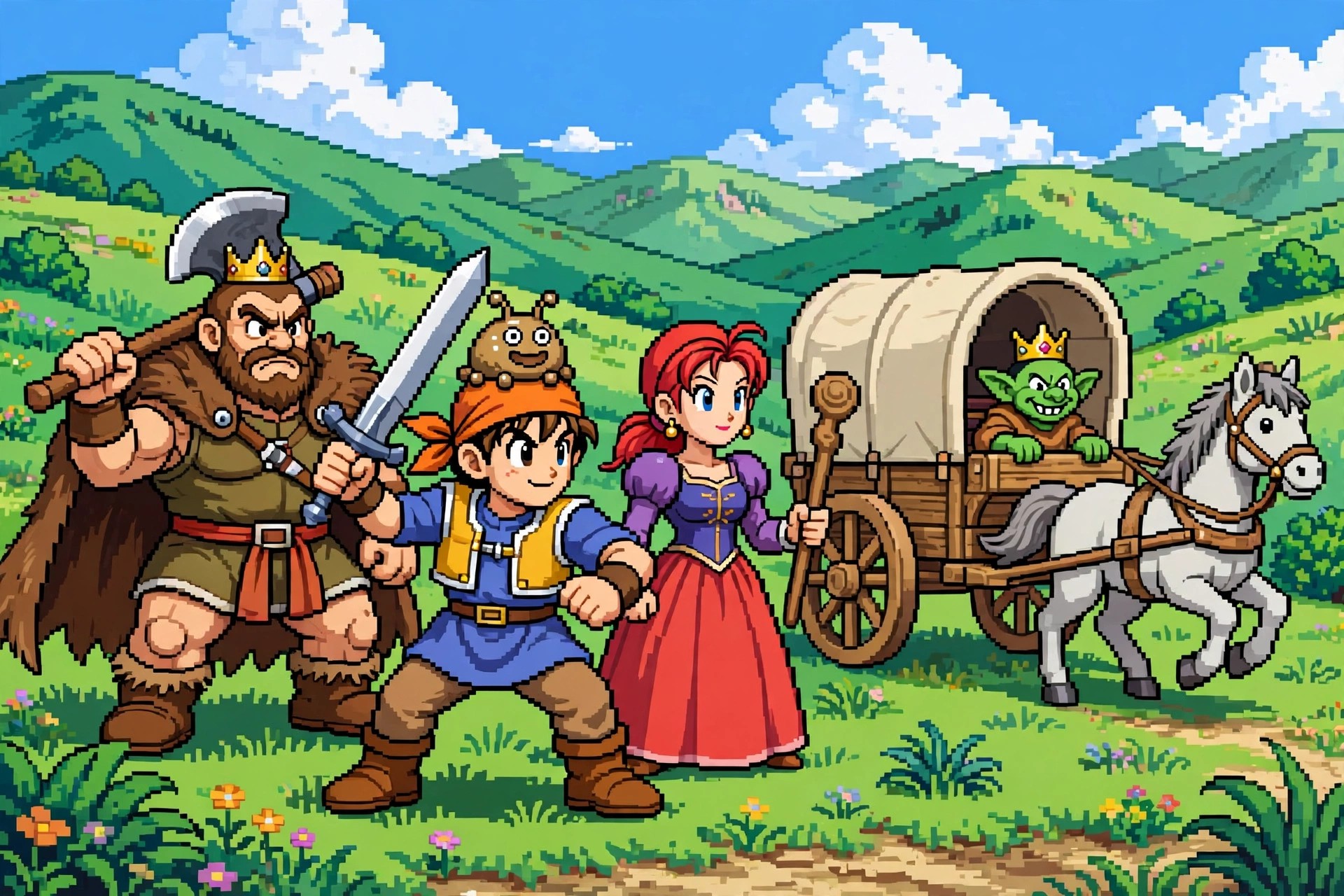
The whole game fits in one wagon. A king turned into a little green troll. A princess turned into a horse. A castle staff turned into houseplants. And one young guardsman who somehow got missed when the curse went off, walking the whole mess across the kingdom because nobody else can. Twenty-two years on, that wagon is still the best front door the JRPG ever built.
Launch morning in Shibuya
Dragon Quest launches were national events in Japan, and this one had theatre. The game went on sale on the morning of November 27, 2004, with a celebration at a Starbucks in Shibuya that started at 6:30 a.m. Series creator Yuji Horii showed up. So did Square Enix president Yoichi Wada. The first buyers in line went home with a toy Slime, which tells you everything about the mood.
The numbers matched it. The game sold 2,167,072 copies in two days, three million in three days, and became the fastest-selling PlayStation 2 game Japan had seen. It finished as the best-selling PS2 game in Japanese history, full stop. It had been four years since Dragon Quest VII, it cost ¥8,800, and an entire country had clearly been saving up for it.
A jester, a sceptre and a very long walk
The story is a road movie wearing a fairy tale’s clothes. Dhoulmagus, the court jester of Trodain, steals an ancient sceptre from the castle vault and uses it to curse everyone in reach. The Hero sets out with King Trode and Princess Medea to hunt him down and undo it, and the road keeps handing them people. Yangus, a bandit with a heart and a magnificent accent, joins over a life debt. Jessica, a sorceress from Alexandria, is hunting Dhoulmagus for her murdered brother. Angelo, a Templar knight with a gambling habit and a wandering eye, joins when the jester burns his abbey down.
What makes Dragon Quest VIII’s plot stick is the turn in the middle. The party catches Dhoulmagus and kills him, and the curse does not lift. The sceptre was never really his. It holds Rhapthorne, a lord of darkness sealed away by seven sages long ago, and he has been steering every fool who picks the thing up toward killing the sages’ descendants and setting him free. The second half of the game is a race to protect people who do not know they are targets, and it gives a simple story real dread to carry.
Level-5 gets the keys to Dragon Quest VIII
The safest pair of hands in Japan did not make this game. The series had always come from Chunsoft or Heartbeat. For VIII, Square Enix handed its crown jewel to Level-5, the young studio behind Dark Cloud, with studio head Akihiro Hino directing. That was a genuine gamble. Dragon Quest was not a franchise you experimented on.
What did not change was the trio at the top. Horii wrote the scenario and designed the game, as he always had. Akira Toriyama designed the characters and monsters, as he always had. Koichi Sugiyama composed the score, as he always had. Square Enix changed the builder and kept the architects, and Level-5 repaid the trust by building the biggest world the series had ever had.
Toriyama’s drawings, walking around in 3D
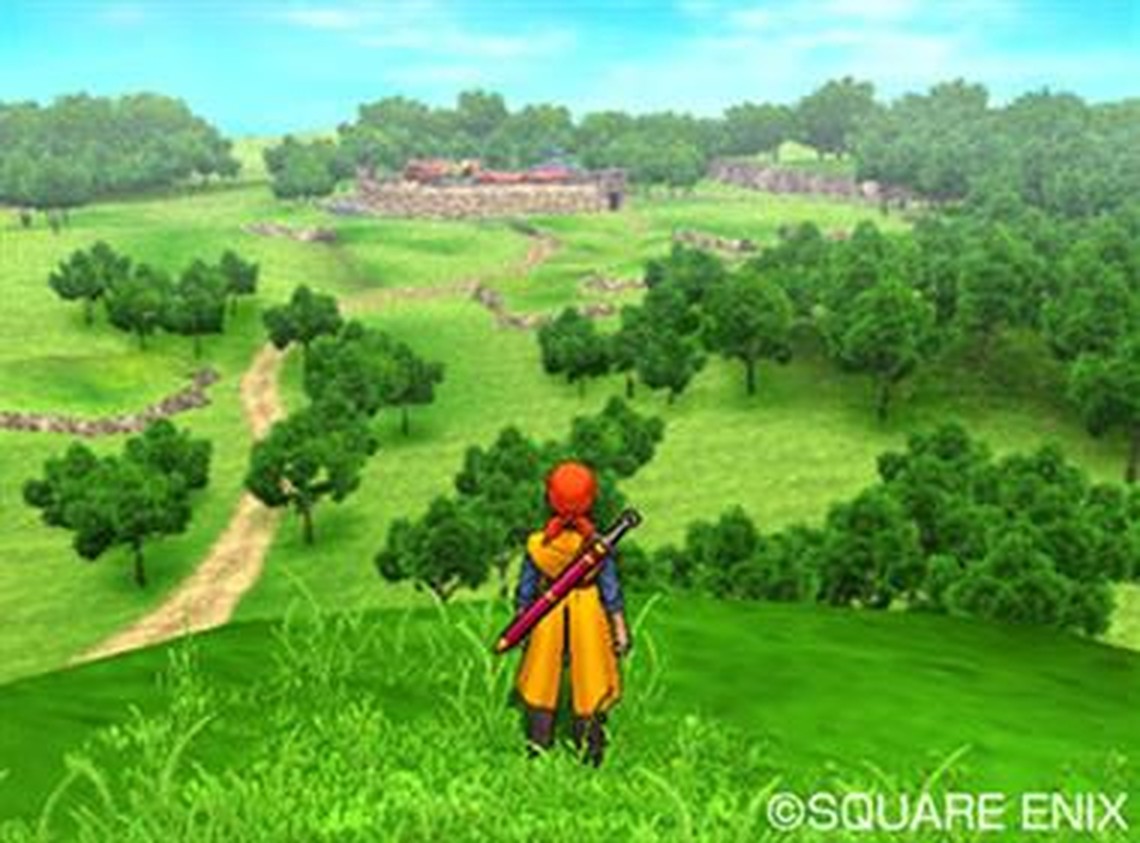
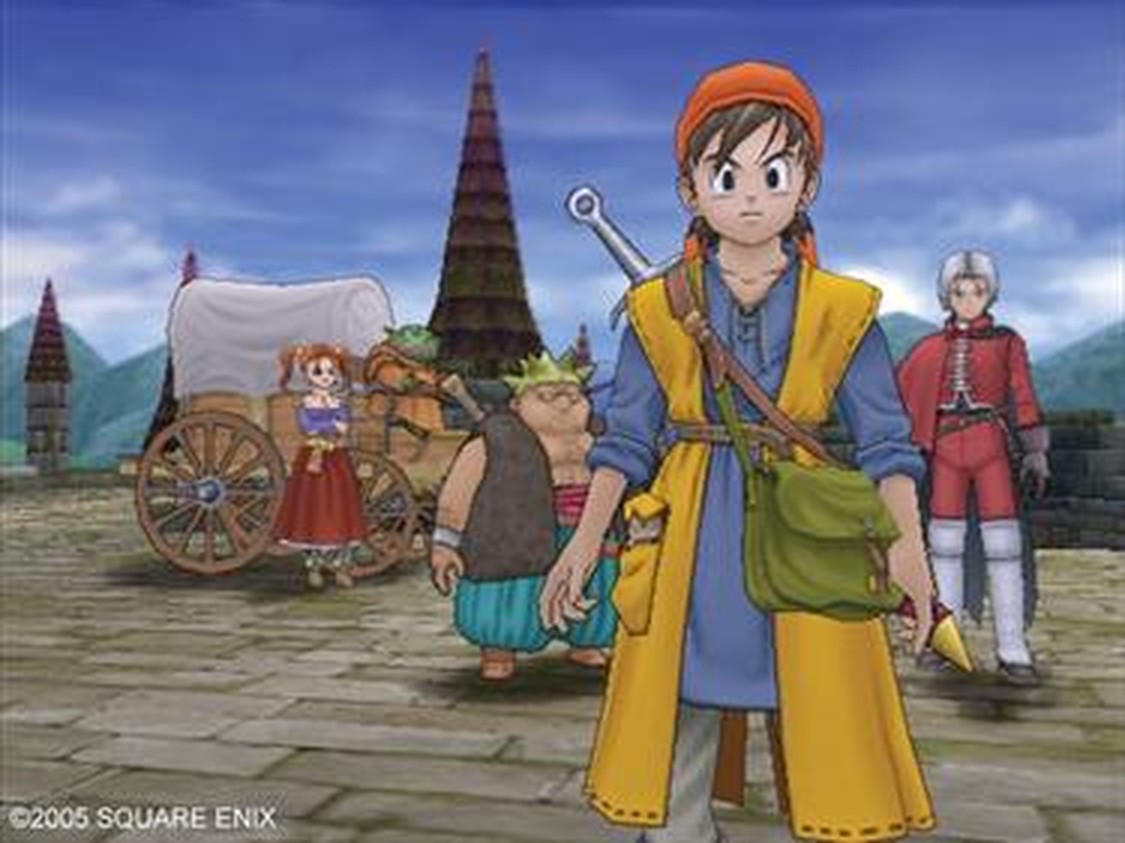
Every Dragon Quest before this one was drawn flat. VIII is the first game in the series with fully 3D environments and character models, and the risk was obvious: Toriyama’s art was the series’ identity, and early 3D had a habit of sanding the personality off everything it touched.
Cel shading saved it. The characters are shaded like cartoon cels, so the Hero looks like a Toriyama drawing that learned to walk. Towns are full-size places you stroll through instead of icons on a map. The world runs on in one piece, the camera swings a full circle, and the hills keep going to the horizon. Reviewers at 1UP suggested players stop mid-journey just to look around, and compared the map’s size and detail to San Andreas. That was not a comparison anyone expected to make about Dragon Quest.
Old soul, new tricks
Under the paint, this is a proudly traditional game. Turn-based battles. Menu commands. Random encounters. Level-5 and Horii had no interest in apologising for any of that, and they were right. The familiarity is the point. You always know what Dragon Quest VIII is asking of you, which frees you up to enjoy where it is asking you to go.
The new tricks earn their place, though. The tension system lets a character spend a turn psyching up, stacking the charge until the next attack lands for multiplied damage. Psych up four times and your fighter is glowing and the numbers get silly. The alchemy pot rides in the wagon and cooks two items into a better one while you walk, which turns junk loot into a hobby. Skill points arrive as you level and let you shape each fighter across five tracks. And out on the map, certain monsters can be recruited after a fight, feeding the Monster Arena and, later, your own battle team.
The West got a bigger game
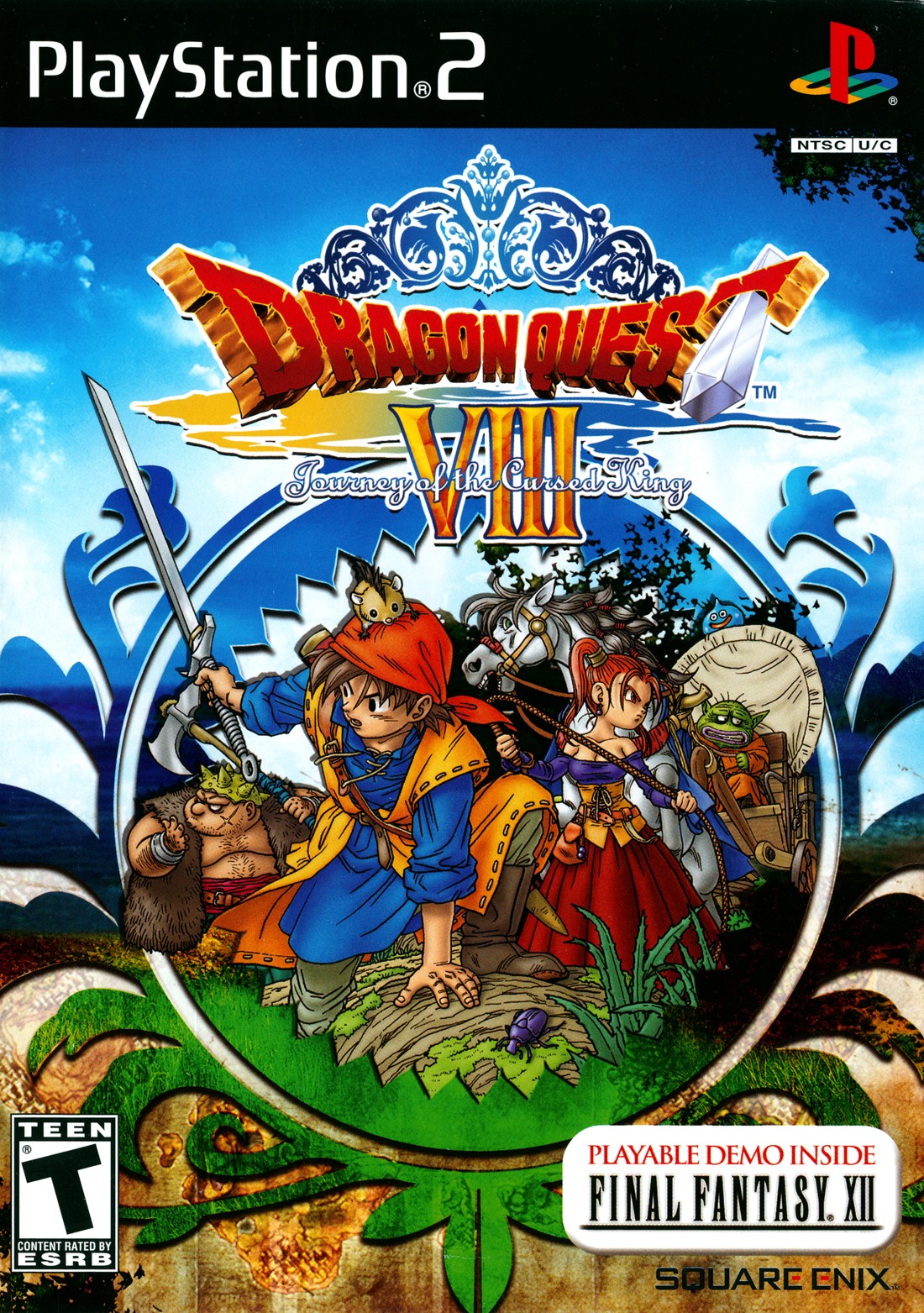
North America waited a year and got the deluxe version of everything. The game arrived on November 15, 2005 at $49.99, with a playable Final Fantasy XII demo in the box. It was the first Dragon Quest released in North America under its real name instead of Dragon Warrior, a trademark workaround the series had carried since the eighties.
The changes were not cosmetic. For the first time in series history, the game had voice acting, and the English script leaned hard into British voices and British humour. Yangus calls the Hero “guv” and steals every scene he is in. The clunky old menus were replaced with a modern interface. And the music got the full treatment: where the Japanese original used sequenced music, the Western release swapped in the Symphonic Suite performed by the Tokyo Metropolitan Symphony Orchestra, with Sugiyama himself conducting. The back of the North American box brags about exactly that, and it should.
Europe got a mainline Dragon Quest for the first time ever in April 2006. Critics, meanwhile, were kind everywhere: a 39 out of 40 from Famitsu, the first Dragon Quest to score that high, a 9 from IGN, a 9 from GameSpot, and an 89 on Metacritic. Worldwide shipments passed 4.9 million copies by September 2008.
The 3DS version changed the rules
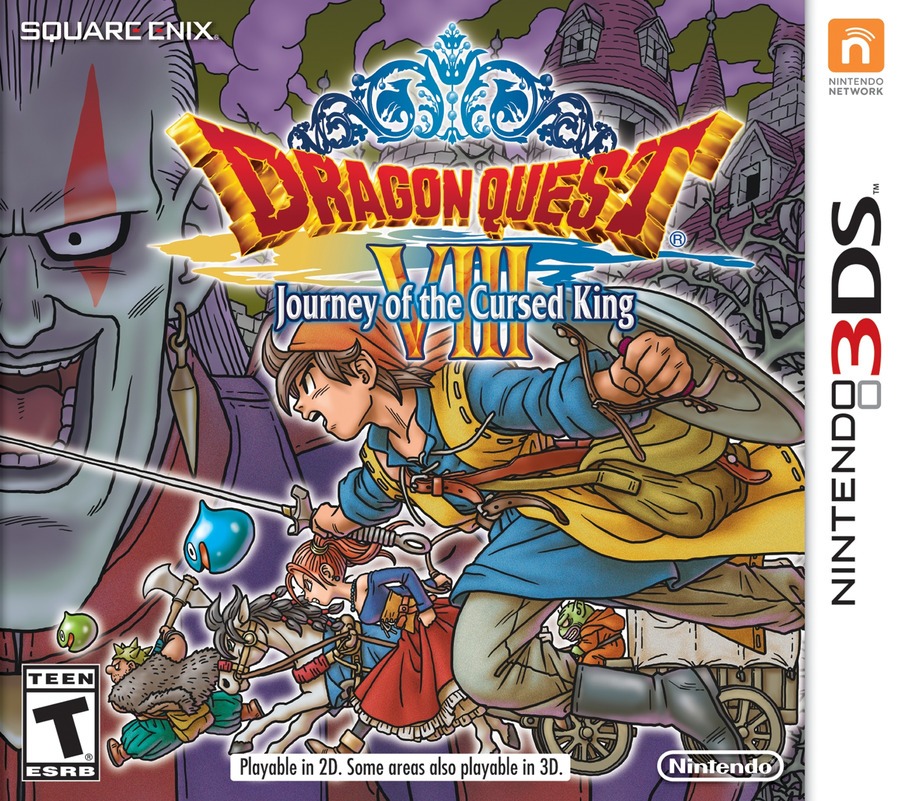
A decade later the game came back different. The Nintendo 3DS version launched in Japan in August 2015 and reached the West in January 2017, published by Nintendo outside Japan. It is not a straight port. Random encounters are gone: monsters walk the field where you can see them, chase them, or give them a wide berth. Red the bandit and Morrie the Monster Arena owner join the party as full playable characters. Battles can run at double speed. You can quick-save anywhere.
Its best idea is a camera. A photo mode ties into more than a hundred challenges from Cameron’s Codex, sending you out to snap rare monsters and hidden spots across the world. There is a new dungeon and a new ending to earn. The trade-offs are real: the draw distance shrinks, and the Western 3DS version swapped the orchestral score back to sequenced music, a mirror image of what happened in 2005. It still scored an 85 on Metacritic, and plenty of players will tell you it is the best version of the game.
Twenty-two years later, Dragon Quest VIII is still the series at its most confident: a fairy tale that trusted simple systems, drawn by a master, in a world you could walk across.
Twenty-two years on
The Hero turned up in Super Smash Bros. Ultimate as one of the four Dragon Quest protagonists sharing the Hero slot, and the development team has said he was picked partly because VIII was the most popular entry in the West. Jessica, Angelo and King Trode cameo in Dragon Quest IX. The Hero’s outfit was handed out free in Dragon Quest XI. The characters never really left.
Two of the three architects have. Sugiyama died in 2021 and Toriyama in 2024, which gives the game a weight now that it did not have in 2004. What they made together here is the warmest version of a formula all three men spent their lives refining. What the game still does not have, oddly, is a modern console release. The PS2 original has never had an HD remaster, and after Square Enix rebuilt VII as Dragon Quest VII Reimagined this past February, the question of when VIII gets its turn has only got louder. The wagon deserves it.
How to play it today
Start on your phone. Square Enix sells the full game on the App Store and Google Play for $19.99 (checked November 26, 2026), and it is the whole sixty-hour adventure in one payment, with no in-app purchases after it. It plays in portrait with touch controls, the alchemy pot and the casino are intact, and it is by far the easiest copy to start tonight. Know the trade before you buy: this version follows the Japanese original, so there is no voice acting and the score is the sequenced version rather than the orchestra.
The feature-richest version is the Nintendo 3DS release. Visible monsters instead of random battles, Red and Morrie in the party, the photo quests, the extra ending. The catch is finding it. Nintendo closed the 3DS eShop in March 2023, so the cartridge is the only route now, and secondhand prices for it have climbed well past what it cost new. If you already own it, congratulations: you own the one that keeps going up.
The original experience is still the PlayStation 2 disc, and for the Western release that means the voiced, orchestrated, big-menu version. A complete copy in the box runs about $40 (PriceCharting, checked November 26, 2026). It asks for a PS2 or an early backwards-compatible PS3 and a free evening. Both are worth it.
One last curiosity. Square Enix rebuilt Dragon Quest VII from the ground up as Dragon Quest VII Reimagined, and it launched this past February on every modern platform. VIII is the bigger game in the West and the one fans ask about most. Nothing has been announced. But the remake line has to walk past that wagon eventually.
— Sal
For more launches from this date, see This Day in Gaming History: November 27. More from this system: our PlayStation 2 at 20 retrospective.